

Game Development for Social Networks and Content Platforms
Social networks and content platforms have long ceased to be just places for communication — they are channels where users spend hours every day.
A game built into this familiar flow solves several business tasks at once: it holds the audience's attention, engages them in interaction with the brand, and creates a reason for viral distribution.
We help clients use this potential by developing games that fit naturally into the platform's ecosystem while delivering measurable results.
Unlike ordinary content, a game gives the user an active experience: they don't just watch or read, they participate, compete, and achieve goals.
This is why games for social networks and content platforms show high engagement and conversion — a person spends minutes interacting with the brand, not seconds.
We take on the entire cycle: from idea and prototype to launch and support, so you get a working growth tool, not just "another game" on a page.
Unity development is our specialty, and over 10+ years we have gained experience that allows us to make games quickly and without surprises.
We work remotely, use professional tools and well-tuned processes, so you get a predictable timeline, a clear budget, and a result that can be measured in metrics: time in game, number of sessions, share of repeat visits, subscriptions, and sales.
If you need a game that will become a growth point for your business — you've come to the right place.
Business Benefits: Increased Engagement and Loyalty
Game mechanics are one of the most effective ways to hold the audience's attention on social networks.
Unlike ordinary content that is scrolled past in seconds, a game immerses the user in the process: they return to improve their result, compare themselves with friends, and spend noticeably more time with the brand.
Such interaction directly affects loyalty. When a user enjoys the process, positive emotions transfer to the brand. This works more softly and effectively than direct advertising: the person chooses to participate on their own, so trust grows naturally.
Gamification helps collect leads without intrusive forms. For example, a game challenge can be a step toward subscribing to a newsletter, registering for an event, or receiving a promo code.
The user performs the desired action not because they are asked to, but because they find it interesting — the conversion ends up higher.
An additional value is brand recognition. Games often go viral: participants share results, invite friends, and post screenshots. This gives the brand extra reach without spending on advertising. And if the mechanics are tied to the brand style and identity, they are remembered for a long time.
The comprehensive effect of game mechanics is noticeable not only in short-term metrics. Community activity grows, the number of repeat visits increases, and a contact base for future communications appears.
This is a tool that simultaneously solves the tasks of engagement, loyalty, lead collection, and brand strengthening — which is why it pays off in the long run.
Development Formats: From Quizzes to Virtual Worlds
Game formats differ not just in scale — each has its own purpose. A quick 5-minute quiz engages a subscriber and generates reach, while a narrative game brings users back several times a week.
The main thing is to choose mechanics that match a specific goal: increase brand awareness, build a contact base, or retain a customer on the platform.
| Format | For whom | What it gives the client |
|---|---|---|
| Quizzes and trivia | Marketing department, new product launches | Viral reach: completion takes 2 minutes, every second participant shares the result |
| Adventure games and arcades | Brands with frequent promotions | Attention retention: 7-10 minutes of gameplay, gamification of special offers without discount fatigue |
| Casual economic games | Info-business, educational platforms | Product immersion: the user "lives through" the scenario and arrives at the right decision on their own |
| Virtual showrooms and spaces | Showrooms, real estate, car dealerships | The effect of personal presence: clients explore the object interactively, without traveling |
| Corporate simulators | HR and staff training | Skill practice in a safe environment: the scenario is repeatable, mistakes don't cost the company money |
How to Choose the Right Format
There is no universal recipe, so at the first stage we analyze your audience and platform. If you need to quickly spark a wave on social networks — we take a quiz with a prize pool.
If you are solving a long-term retention task — we build a mini-universe with levels and achievements.
Importantly, any format works on the professional Unity engine. This means that both a simple quiz and a large-scale virtual scene work equally stably across different devices.
You get a predictable result and a clear timeline — from a week for a quiz to three months for a full-fledged simulator.
Ultimately, format is not decoration but a business tool. We select mechanics that solve your specific task and accompany the project from idea to launch and analytics. Describe the scenario — we will offer the optimal solution within your budget and timeframe.
How the Project Goes from Brief to Launch
We built the process so that you see the result at every step and can influence it before launch. No "black box": you always know what is happening with the project, what it costs, and when it will be ready.
- Brief and task. We define the goals of the game on social networks or content platforms: what it is for, who the audience is, and what result you expect — reach, engagement, repeat visits.
- Plan and estimate. Based on the brief, we propose a concept, timeline, and fixed cost. You receive a clear document that outlines the stages and what is included in each.
- Concept approval. We show the game mechanics and visual style, discuss them, and make changes before development starts. We adjust what matters for your audience.
- Development and intermediate builds. We build the game in stages: first the core mechanics, then content and design. You see working versions and give feedback — no surprises at the finish.
- Integration and testing. We connect the game to your page or platform and test it in real scenarios: how quickly it opens, whether it works on phones, and whether players get lost.
- Launch and support. We deploy the game, monitor initial metrics, and promptly fix any issues. After launch, we stay in touch and refine the mechanics based on player behavior data.
The client receives not a "source code handover" but a working product that generates reach and brings users back. This is why most clients return with new projects — the process is transparent and predictable.
Delivery Package: What Will Be Included in the Project
You get not just a game, but a working tool for your business. We assemble the package so that from day one you can manage the project independently, without constant dependence on developers. Everything created during the project is fully transferred to you and documented.
Here is what is included in the delivery:
- Project source code — full rights to all written code, without hidden restrictions. You can develop the product with any team or in-house.
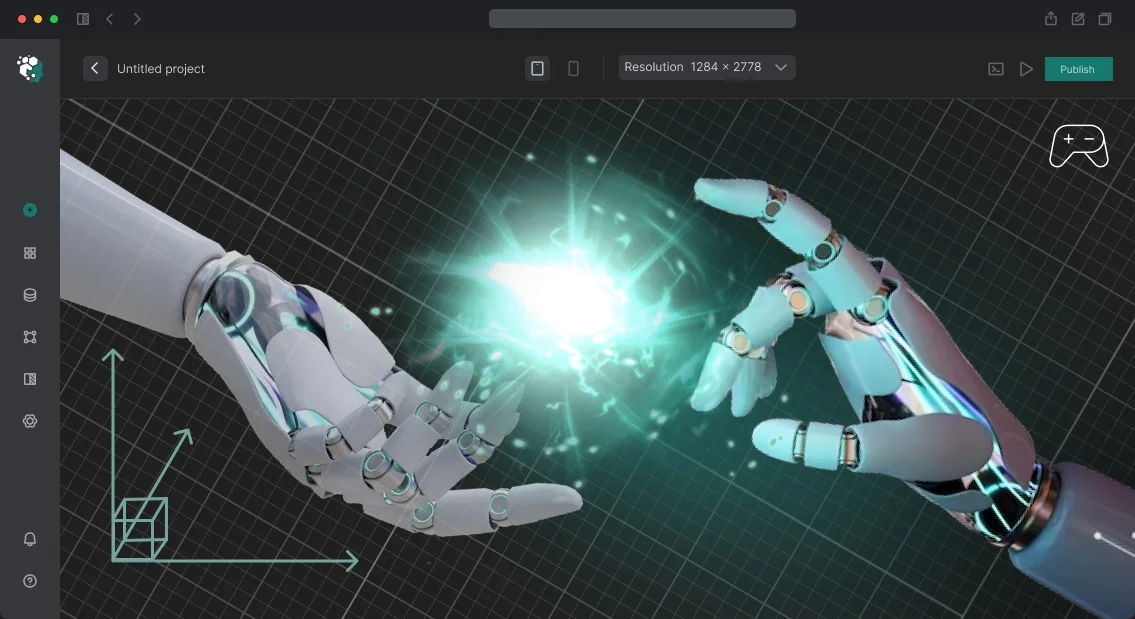
- Management console — an intuitive interface for configuring content, promotions, levels, and game economy. No programmer needed for changes — everything is done through visual settings.
- Clear documentation — a description of the architecture, operating logic, and all functions. This is not a "technical file for developers" but a guide for your team: how things work and how to make changes.
- Training materials and team training — recorded lessons and live sessions so your managers and marketers can confidently work with the project.
- Launch and update guidelines — step-by-step instructions for publishing updates and adding new content. You are not tied to the contractor's schedule.
- Post-launch warranty support — we stay by your side after handover: we fix bugs, answer questions, and help with improvements during the agreed period.
This package removes the client's main fear — losing control of the product after the work is done. You get an asset, not a "black box": code, knowledge, and management tools remain with you.
Moreover, we treat the handover as a full project stage: we accept the work against a checklist, show you how to use the console, and make sure your team feels confident.
After that, you are ready to develop the game on your own, bring in new contractors, or change strategy without losing accumulated value.
Case Study: A Quiz Game for a Social Network
On social networks, holding attention is difficult — the feed throws new content every second. Regular contests and posts no longer deliver the needed engagement, but an interactive quiz makes a subscriber stop and test their knowledge. We made such a quiz for a topic-focused community to turn a passive audience into an active one.
For development, we chose Unity — it ensures smooth game performance across different devices and embedded browsers, meaning every participant gets the same experience: fast loading, no freezes or errors.
The result was a quiz game with questions on the community's topic and instant result display with vivid animation — exactly the kind of result people want to share.
What the Client Got
The main goal — engagement — was achieved. Over two weeks of active placement, more than 15,000 participants completed the quiz, and the average completion time was three minutes — a person has time to answer all the questions without losing interest. Average time on the page grew fourfold compared to a regular post.
The quiz worked as a viral mechanic: nearly every third participant shared their result in stories or added it to their feed. This generated organic reach that didn't have to be paid for with advertising and brought new subscribers to the community.
Repeat Order
After the first game, the client ordered two more quiz seasons — this time with new questions and personalized results. This confirms that the format pays off and delivers measurable results that are easy to scale to other topics and platforms.
If you need the same kind of tool to retain your audience and boost activity on social networks — we will develop a quiz game for your task. Tell us about your audience and goals, and we will offer a solution that brings measurable metrics.
How to Choose the Right Format for Your Task?
Choosing a game format for a social network or content platform starts not with visuals but with your business task. What do you want to achieve: more subscriber engagement, increased awareness, distribution of promo materials, or audience retention?
The answer to this question determines which format will work better: a short quiz, casual mechanics, or a multi-level game with a competitive element.
The second step is the platform's audience. People come to different platforms with different expectations: some are ready to play in short three-to-five-minute bursts, others prefer to immerse themselves in a story for a long time.
We analyze who your users are, how often they return, and what feels natural on that platform. This allows us to choose a format that doesn't resist their habits but rather picks them up and draws them into the game.
The third step is integration tasks. If you need to collect preference data, surveys and tests in a game wrapper work well. If you are promoting a new product, it's better to make it part of the gameplay.
If the goal is long-term loyalty, seasonal events and cumulative mechanics are suitable. We look at the game as a marketing tool and help you choose a format for the specific metric you want to improve.
That's why at the start we don't write code — we do a short analysis: your goal, audience, hypothesis, and usage scenario. Together we determine how much time the user will spend in the game, how they will find it, and what emotion they will take away.
Based on this data, we propose one or two most suitable formats and explain why they will work for you. This way you get a game that solves a business problem, not just an "app for show."
Addressing Common Doubts Before You Start
Starting any game project is a step into the unknown: what if it doesn't launch, what if the rights stay with the contractor, what if there's no one to solve problems after handover.
We have been developing games for social networks and content platforms for years, so we've gathered answers to the doubts we hear most often.
What if the finished project doesn't launch?
We are responsible for the result: before handover, the game undergoes testing on target platforms, and after launch we stay in touch until full stabilization. If something goes wrong, we fix the issue within warranty obligations at no additional cost.
Who owns the rights to the game?
All intellectual property — code, graphics, script, branding — transfers to the client after the final settlement. We sign a transparent contract with closing documents, so you are legally protected from the first day of cooperation.
How are our data and idea protected?
We sign a non-disclosure agreement before even discussing details, and project access is granted only to the dedicated team. Your developments and plans will not reach competitors — confidentiality is fixed in the contract, and we fully comply with it.
How does post-launch support work?
We don't disappear after release. We help with updates, promptly fix bugs, and advise on project development. You choose the format: one-time improvement, ongoing maintenance, or consultations — all under clear conditions and for the duration you need.
If you still have doubts — ask us directly: we will discuss the risks and show timeline expectations before you make a decision.Leave a Request for Game Development — Get a Cost Estimate
Leave a request on this page — and within one business day you will receive a preliminary cost estimate for game development.
We specialize in projects for social networks and content platforms, so we immediately see how a game will strengthen your marketing and hold the audience's attention.
You don't need to understand technical details. After your request, we will contact you, clarify your goals, audience, and platform format, and then prepare a clear proposal: what the game will do, what it will cost, and what the delivery timeline will be.
What you get after submitting your request:
- A cost estimate for your task, broken down by stages with clear comments.
- A consultation on choosing game formats and mechanics that work best on social networks.
- A timeline assessment: from the initial task description to launch, including testing and revisions.
- Examples of our games and projects for similar audiences and platforms.
- Recommendations on user engagement and game monetization.
- A proposal for integration with your page, application, or website.
- Post-launch support: fine-tuning, updates, and analysis of initial results.
You will receive all items in writing within one or two business days. This is free and places no obligation on you. You can calmly compare terms, ask questions, and make a decision — without pressure or hidden conditions.
Leave your request now — and get the full picture of your project. We will answer all your questions, clarify the details, and help you start with minimal risks.