


Professional Retraining Centers Struggle to Retain Students
Students come to a professional retraining center to gain a new profession, but after a few weeks they lose interest.
Ordinary lectures and tests don't convey the feeling of real work — and the center faces attrition: groups shrink, planned cohorts have to be rescheduled, and reputation suffers due to skeptical reviews.
It's not about people's motivation. Adult learners want to apply knowledge in practice faster and see results — that's what keeps them until the end of the course.
When there is no practice, the student doubts their choice and looks for alternatives, and the course program loses value despite high-quality theoretical material.
Game simulators close this gap. The learner gets into an environment close to the future work setting — conducting negotiations, managing a process, or handling an emergency situation.
Every action receives immediate feedback, so learning becomes meaningful practice rather than memorizing rules.
For a retraining center, this approach directly affects student retention. Group completion rates rise, graduates feel more confident and are more willing to recommend the program to colleagues.
This strengthens the reputation, ensures enrollment in new cohorts, and generates repeat inquiries from corporate clients.
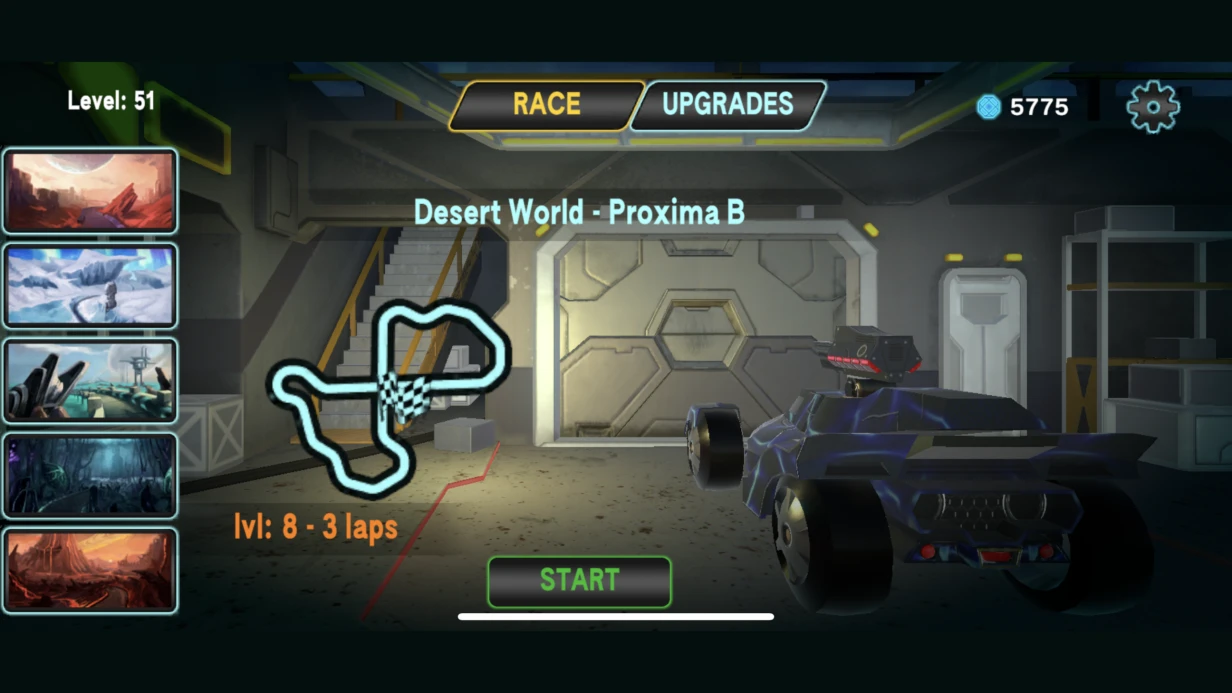
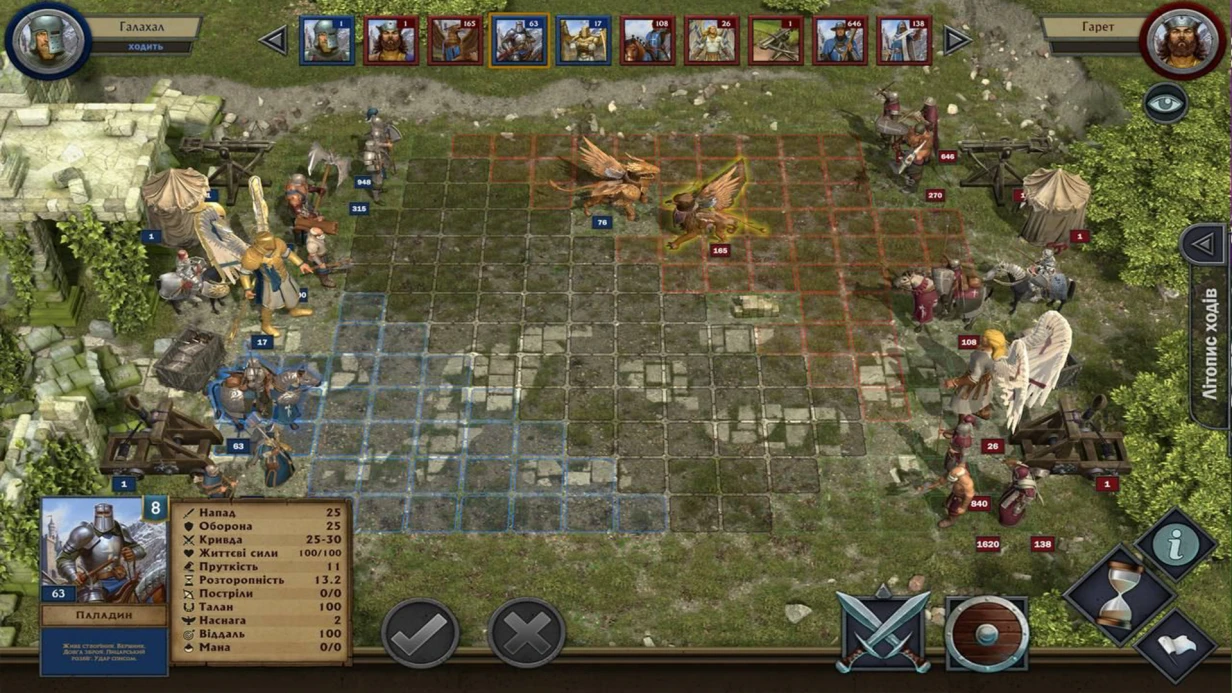
We develop simulators in Unity for the specific goals of your course and support the project from script to launch.
You don't need to understand the technology — we handle the entire cycle, and the result is measured by your graduates' practical skills and a steady intake of groups.
What Game Development Outsourcing Gives Your Training Center
Students come for knowledge but stay on emotion. When a course includes game mechanics and interactive trainers, engagement grows manyfold: instead of passively watching lectures, students go through scenarios that reinforce material through action.
This reduces dropout and increases motivation — and that means you get satisfied graduates who recommend your center to colleagues and friends.
The second result is brand recognition. Educational games and simulators are shareable content: students show their achievements, post screenshots and videos, and mention your center.
This way your training program starts attracting new audiences without an additional advertising budget. Each such post is organic advertising and growing brand trust.
The third practical outcome is direct leads for courses.
Interactive elements make it possible to collect contacts before program purchase: a game demo, a test assignment, or a guest scenario on the site — all these are ways to demonstrate training quality and get inquiries from potential clients at the same time. A person who has already tried your product is much more likely to sign up for the full course.
Finally, outsourcing removes the burden from your team: you don't search for specialists, don't dive into technology, and don't control the development process.
We take care of everything — from idea to implementation — and deliver a working solution fully adapted to your goals and deadlines. You get a modern program that makes the center stand out from competitors and systematically increases enrollment.
Cooperation Formats for Different Center Needs
Professional retraining centers solve different tasks: one course ends with a small project, another requires a full-fledged simulator for practicing practical skills.
Together with you, we select a development format to fit the learning goal, timeline, and budget — from a compact course project to a multi-level online trainer.
To make it easier to choose, we have assembled the main development formats into a table. See what fits your training program — during the discussion we will clarify details and create a work plan.
Development Formats for Center Needs
| Format | When to choose | What it gives the client |
|---|---|---|
| Course project | For students learning Unity | Clear structure and a ready-made educational case: the student gains practical experience, the department gets a result for credit. |
| Thesis project | For graduates preparing a final project | A complete project for defense that confirms competence and raises the graduate's status. |
| Online trainer | For distance programs and independent study | Practice not tied to a classroom, automated scenarios, and knowledge assessment at a comfortable pace. |
| Simulator | For fields with high skill requirements | Safe practice of real situations: a mistake in a virtual environment doesn't lead to risks. |
Need not a simulator but a short trainer? We'll take the simplest format and add only the necessary mechanics. If the task grows, we'll expand it to a full-fledged simulator.
In any format, we lock in deadlines and stages. You get a predictable result: students submit the project on time, and the center gains a ready-made educational product that can be used in future cohorts.
How Game Development Works for Your Program
To make the game a real tool of your retraining program, not just an "arcade game", we have built a transparent process. We work in Unity — a popular platform, so the game is easy to develop and update. You see results at every stage and can make edits without waiting for the final version.
- Brief. Together with you and your methodologists, we analyze program goals, the students' specialty, and the skills that need to be practiced. We record requirements and evaluation criteria — this is the foundation for all development.
- Game prototype. In a short time, we assemble an interactive draft with basic mechanics and screens. You try it out, see how key scenes work, and make edits before full development.
- Approval. We approve the game scenario, visual style, level structure, and scoring system. We sign a document so further work follows the agreed plan without surprises.
- Implementation. We develop the full version of the game: tasks, feedback scenarios, progress statistics. We regularly show intermediate versions, so you see the game come to life.
- Testing and launch. We run the game with your students, fix bugs, calibrate difficulty. Then we adjust the game to your schedule and train instructors.
- Support. After launch, we don't disappear: we promptly resolve issues, answer questions, and update content if the program changes. Many clients order new modules or expansion of the game to other specialties.
This approach gives you a predictable result: the game is ready on time, aligns with the program, and is actually used in training. You don't spend time on control — the process is managed through clear stages and approvals.
What Is Included in Project Delivery for Retraining
For a retraining center, what matters is not just a game but a ready-made educational product that can be immediately integrated into the program and used for years.
Therefore, the delivery includes not "bare" code, but a package of six mandatory elements — from source code to rights transfer.
- Game source code with a clear structure and comments in Russian. Your instructors will be able to review it with students and, if necessary, refine it for specific educational tasks.
- Full documentation: description of game mechanics, scenarios, settings, and logic. This is a kind of "user manual" that makes it easy to understand how everything works, even if the development team changes.
- Methodological materials for instructors: ready-made lesson plans, practical assignments, sample lab works, and evaluation criteria. The instructor doesn't need to invent anything — just open the package and conduct the lesson.
- Instructor training: we conduct a series of online workshops where your specialists learn to manage the project, make changes, and understand the game's architecture. After training, they confidently work with the code on their own.
- Project rights: you receive a perpetual right to use the game for educational purposes — including modification, adaptation, and incorporation into your courses. No restrictions on the number of students or reproductions.
- Technical support at launch: during the first months after implementation, we stay in touch, answer instructors' questions, and help resolve technical details.
This package addresses the main pain point of retraining centers: you get not a one-off project, but a full-fledged educational tool that is easy to reproduce with each new cohort.
The source code and documentation remain yours forever — this is your property, not a rented solution.
Case Study: How a Training Center Increased Course Enrollment
Training centers often invest money in advertising but get a flow of "cold" leads without understanding of the profession.
A visitor scrolls through the course description, doesn't feel practical value, and leaves for competitors — few inquiries, while the advertising budget melts away.
We found a way to show the profession through experience: we developed an interactive simulator in Unity that immerses an applicant in the real work tasks of the course.
Instead of abstract promises — a short scenario: the person tries, makes mistakes, gets a result, and understands whether the specialty suits them.
How the Simulator Changed Conversion
For one of the professional retraining centers, this format became the main tool for turning interest into inquiries.
The simulator was placed on the course page and immediately started "selling" on behalf of the manager: in 3–4 minutes, a visitor goes through a mini version of the future job and sees a concrete result.
The effect proved measurable. Conversion to inquiry almost doubled, and engagement grew manyfold: instead of 40 seconds on the page, users spent 8 minutes and didn't run off to competitors.
Leads became higher quality — students arrived with a firm desire to learn, so repeat inquiries also increased.
That's why our team offers simulators not as an "expensive toy", but as a measurable tool for enrollment growth. You get not just development, but a ready-made acquisition channel that is clear to your audience and pays off through increased sales. This way training becomes tangible value, and the center becomes the obvious choice for applicants.
How to Choose a Format for Your Program?
The choice of format depends not on technology but on three criteria: what students should learn, in what timeframe, and with what budget. For a retraining center, it's important that the game solves an educational task rather than being just a "pretty toy". So first we define the goal — skill practice, intermediate test, or final assessment.
If the goal is to quickly test an idea and show results to management, a prototype is enough. If the game is to become part of the curriculum and be used for several years, it's wiser to order the full development cycle right away.
Our Unity projects run reliably on any student device, but the key is choosing the format that fits your task.
| Format | For whom | What it gives the client |
|---|---|---|
| Pilot prototype | Centers testing a new training program | Fast idea validation, minimal budget, clear result in 2-3 weeks |
| Ready-made game with customization | Programs with typical tasks and limited launch timeline | Saves time and money, adapts the educational scenario to your cases |
| Turnkey development | Unique retraining programs with certification | Trainer precisely aligned with the curriculum, technical support, content updates |
| Series of mini-games | Modular courses where several skills need to be covered | Flexibility: each module can be changed separately without rebuilding the entire program |
Assess your own resources too: are there methodologists who can describe the educational scenario, and who will support the game after launch?
For centers without a technical team, turnkey outsourcing is convenient — we take on everything from script to integration of the game into the learning process, and you train on a ready-made tool.
To avoid guessing, send us a short description of your program for a free consultation. Within a couple of days, we'll come back with a specific recommendation: which format fits, how long development will take, and what results you can expect from students.
We Answer Common Client Concerns
Concerns of clients in the professional retraining field usually relate not to game mechanics but to the process: will deadlines be missed, will instructors be overloaded, who will support the game after launch.
We address these issues in advance — we formalize agreements in the contract and provide clear guarantees.
What about guarantees for meeting deadlines?
Deadlines are fixed in the contract with a stage-by-stage plan and mutual responsibility. A project manager is responsible for each stage — you see progress in a convenient format and don't depend on the availability of a specific developer.
Will development overload our team?
We take on all game content: exercise scenarios, interface, build, and testing. From the center's side, only one contact person is needed for 30–60 minutes per week — to approve tasks and accept stages.
What about technical support after launch?
After project delivery, we sign a maintenance agreement: updating materials for new courses, adapting to different student groups, and fixing user-reported issues. Support stays with you as long as needed, not just for the warranty period.
What quality guarantees do you provide?
We formalize the acceptance scenario, performance criteria, and response times for feedback in the contract.
Before the project ends, you receive test builds and evaluate for yourself how well the game meets the learning objectives — rather than accepting the finished result "as is".
We understand that every center has its own questions — that's why we hold a separate discussion of concerns before the start. If you're worried about deadlines, workload, or support, we'll respond specifically using your program as an example.Start Your Project Today: Submit a Request for an Estimate
To launch a project without delays, a client needs not just a developer but a clear plan and an accurate estimate.
We provide both: even before work begins, we send a cost estimate with stages and deadlines, so you can approve the budget within your organization and avoid redoing the project after the first demo.
Over nearly ten years of work, our team has completed dozens of projects for professional retraining centers, so we'll offer a realistic plan for your workload and help design a game specifically for your training programs' objectives.
After submitting your request, you will receive:
- a cost estimate fixed for the entire project, with no hidden surcharges;
- a development plan with stages and dates — from a training prototype to the final version;
- recommendations on the simulator or trainer format for your program;
- a team composition proposal: developers, designer, methodologist;
- integration options with your platform or accounting system;
- exact timelines confirmed by the contract.
A specialist will respond within one business day, ask a couple of clarifying questions about the number of groups and desired functionality — and the very next day you'll receive the estimate. No prepayment for consultation: value first, decision later.
Submit your request through the form on the page — we'll start with a short call or correspondence, during which we'll review your scenario and show how the game will fit into the learning process.