


Idle games require constant content — you can't manage without a team
Idle games live off constant content: new mechanics, events, levels, and rewards keep players coming back every day. But most studios don't have a dedicated team that handles only updates.
Developers work on other projects in parallel, content ships with delays — and the audience leaves for competitors. This is the main problem of idle games: the player loses interest as soon as they stop seeing progress.
Even one missed update reduces audience retention by a few percent, and winning it back afterward is almost impossible. Regular events and reward balance are what distinguish a living game from an abandoned one.
Without a content release system, the project bogs down in routine, and profit falls faster than new mechanics appear.
Outstaffing developers solves this problem without expanding headcount or hiring costs. You bring in a team that takes over scheduled updates: from mechanic prototype to testing and release.
You remain the product owner, and we cover the need for resources to develop idle games of any scale — from a small event to large seasonal content.
We've been strengthening teams that build long-lived games for years now. Our C# programmers know the specifics of the idle genre: how to design progression so the player doesn't hit a ceiling, and how to keep interest alive after hundreds of hours of play.
As a result, you get a steady stream of updates, and audience retention stays high — without dragging a manager into the routine.
What outstaffing developers gives your project
Outstaffing developers closes the main pain point of game projects: constant hiring slows down launch, and an overloaded team loses quality.
An external team starts working from day one — no need to spend weeks on interviews and onboarding, and you get specialists with experience specifically in the idle genre. They understand how to retain a player, set up progression loops, and monetization without a long warm-up.
Speed is not just a quick start, but the ability to scale as the project grows. You can expand the team at the launch of new mechanics and just as quickly shrink it when the task is done. You pay only for actual hours worked, not for keeping staff idle.
This flexibility lets you ship updates more often and react to audience behavior faster — competitors don't have time to catch up.
Quality is ensured not by a single developer, but by a team assembled for the task: game designers, programmers, and testers who have worked on similar projects.
They bring ready-made solutions and proven approaches, so your product looks cohesive from the first release and doesn't crumble under load.
The client gets not "outsourced hands," but mature experts who are accountable for results and know how to balance speed and game stability.
Transparent management is another benefit. The team has a dedicated manager who tracks tasks, reports on status, and handles all communication. You participate in key decisions but don't drown in the details of day-to-day development.
As a result, the internal team focuses on strategy and launch, while the external team focuses on execution — and this delivers a predictable pace and high quality for every sprint.
Working with us, you get a team that has already gone from prototype to commercial launch of idle games. We help quickly validate an idea, ship a minimum viable version, and grow functionality without losing controllability.
If you need development that doesn't require maintaining a large staff yet matches an internal team in results — this is exactly the format.
Outstaffing formats for Idle games
Every Idle game has its own path: someone needs a full turnkey team, while someone wants to strengthen their existing team with experienced specialists.
That's why we offer different outstaffing formats — you choose the collaboration model that fits your task, budget, and timeline.
We don't tie you to a single template: task boundaries, team size, and work schedule are defined for the specific product. This lets you launch a working prototype faster and without unnecessary infrastructure costs.
| Format | For whom | What it gives the client |
|---|---|---|
| Dedicated team | Projects from scratch when you need to launch an Idle game quickly | An assembled team of Unity developers, a game designer, and a tester works only on your task — without being distracted by other projects |
| Strengthening your team | You have your own team but lack hands or expertise | We supplement the staff with proven specialists — they quickly integrate into processes and close bottlenecks |
| Full support | You need support for a finished game: updates, balance, new mechanics | We take on regular refinements and fixes, while you focus on marketing and product growth |
Any of the outstaffing types can be combined and changed as the project progresses. Each format comes with a single point of contact and regular reports — you always know what stage the game is at and what comes next.
This reduces risks and makes collaboration transparent, and most importantly — you get a result measured in a working game and its economy.
How a project goes with us: from brief to launch
A game project is always a balance between idea, timeline, and budget. Outstaffing is complex because you need to establish interaction between your team and external developers.
We structure the process so that at every stage you see the result and can influence the work — as if the team were part of your business.
Below is a typical project path from the first brief to launch and post-release support.
-
Brief — we discuss your idea: what audience the game is for, what mechanics, what target metrics matter. We record tasks, constraints, and definition of done to avoid misunderstandings at the start.
-
Plan and estimate — we select a team composition for your tasks (Unity developer, artist, game designer) and propose a phased plan. You get realistic timelines and an understanding of what will be ready at each checkpoint.
-
Approval — you approve the work plan and reporting format. We agree on regular status updates so you can see progress and focus on your own tasks.
-
Iterative development — every one to two weeks we deliver working versions of the game. You test them, leave comments, and we immediately factor them into the next cycle. This way, revisions don't pile up toward the end of the project.
-
Launch — we prepare the game for release: integrate payment and analytics services, build versions for target platforms. We help with publishing and passing app store moderation.
-
Support and growth — after release, the team stays with you: we monitor metrics, fix bugs, release updates, and add new content so the game keeps delivering results.
What's included in the deliverable: a complete package for the project
When you bring a Unity developer into outstaffing, it's important to understand exactly what you get at the end. We deliver not just lines of code, but a ready-to-work result: a built project, documentation, support, and transparent reports. This removes the risk of "foreign code" and lets your team quickly get up to speed.
The deliverable package for an Idle game project includes:
- A working version of the game: the current build you can run, test, and show to investors or first users.
- Source code with comments: structure and logic are described so your developers understand what and where to change.
- Technical documentation: description of architecture, core mechanics, economy parameters, and settings — everything needed for further development.
- Configured development tools: a single code repository, task system, and working rules — your team gets a ready environment, not scattered files.
- Results reports: regular summaries on stages, timelines, and plans so you always understand which stage the project is at.
- Support after handover: for an agreed period, we stay in touch, fix bugs, answer questions, and help with refinements.
- Training for your team: if you plan to grow the game further, we pass on knowledge and consult your internal developers.
This package lets you launch an Idle project without surprises, continue work with your own team, or scale it if necessary. You get not a temporary contractor, but a predictable result with documentation and support.
Case study: how outstaffing accelerated project growth
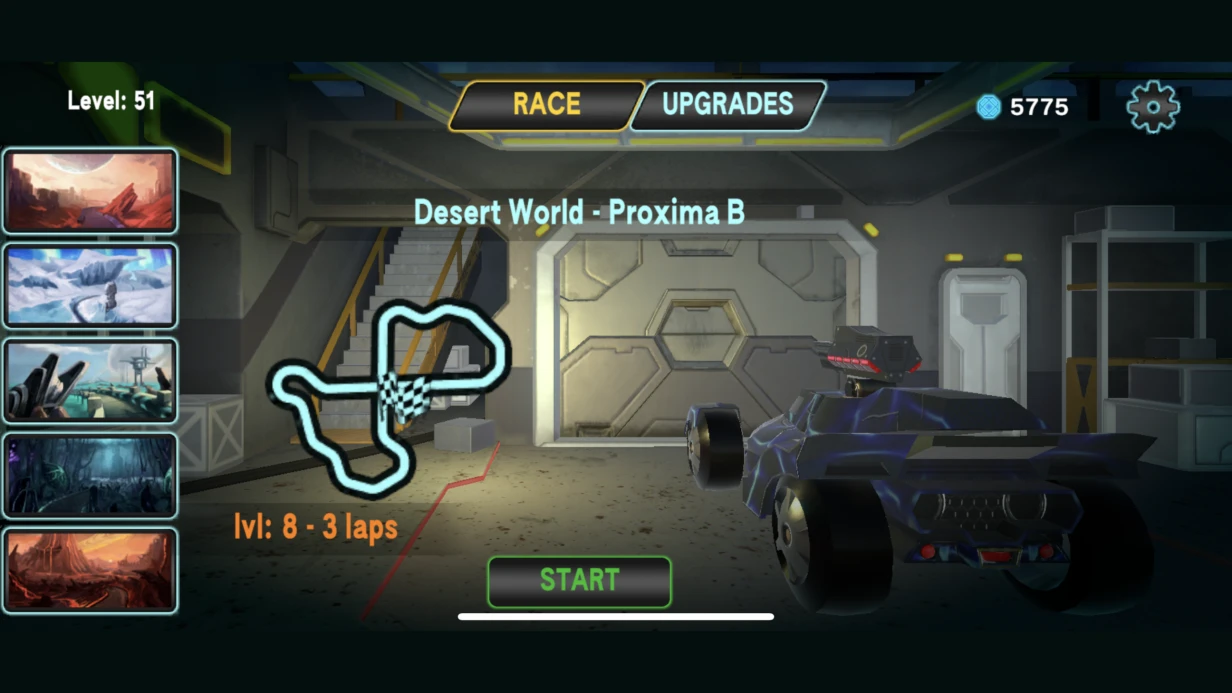
We brought an outstaffing team of Unity developers into a studio that was making the idle game Idle Tycoon: Spaceport. The client didn't have enough in-house hands to ship content updates every two weeks, and a pause in releases immediately hurt player retention.
Instead of a long hiring process, we filled the positions with three turnkey developers in two weeks: they knew the genre's specifics and quickly integrated into current processes.
Outstaffing allowed the team to scale without expanding headcount or HR costs. The developers took on content generation, economy balance, and client-side optimization.
The studio focused on level design and marketing, while we handled quality control and deadline adherence — in effect, the contractor became an extension of the internal team.
Development results
Over six months of collaboration, the release cadence grew from monthly to every ten days. We shipped 18 new events, 40 balance patches, and two major updates with new mechanics.
The load on internal developers dropped by a third, and feature implementation speed increased 2.5 times. Over the period, the game grew its audience by more than 500 thousand installs, and repeat in-game purchases rose by 22%.
Client testimonial
The project lead noted: "We tried outstaffing for the first time and were satisfied. The team quickly got up to speed and worked as a full part of the team. Most importantly, they covered our pain points: stable releases and live communication. Now we're planning the next iteration."
The client continued the collaboration and expanded the team to five developers. For us, that's the main indicator: outstaffing works when the client comes back for expansion.
How to choose the outstaffing format for your project?
There's no single "right answer" here — it all depends on how project management is set up and what exactly your team is missing. The first criterion is whether you have a lead who can assign tasks, accept work, and take responsibility for the product.
If such a person exists, outstaffing Unity developers into your team becomes a natural solution: the specialist quickly integrates into the workflow and focuses on the backlog without being distracted by organizational matters.
If there's no technical lead and the project needs to be brought to release, it's wiser to hand the task to a turnkey team — it will propose the architecture, role division, and milestone plan itself.
The second criterion is the project stage. At the start of an Idle game, prototyping and mechanic discovery matter most, which means flexibility and quick response to tests.
Outstaffing is convenient here: you can easily change priorities, bring in additional developers, or reduce their number without renegotiating the budget.
At the polishing and regular update release stage, stable performance is critical, so it's more beneficial to have permanent specialists already familiar with the codebase.
The third factor is budget. Outstaffing involves hourly payment and transparent tracking of labor costs: you pay for actual hours and see what they're spent on.
If the budget is fixed and you're not ready to increase it mid-development, it's better to choose a format with a clear fixed price per stage. This protects your budget, but you give up some process control — it's important that this decision is deliberate.
Also assess the work horizon. For long-term support of an Idle game, where updates ship every one to two weeks, outstaffing pays off faster: the specialist becomes part of your team, dives into the product, and requires no knowledge transfer time for each new task.
For a one-off prototype or a short content release, a turnkey project will reduce your management overhead.
The main thing is to honestly decide what function you want to hire: a person for tasks or a team for results. At the consultation, we always ask exactly these questions — stage, timeline, whether you have your own product owner, and attitude toward hourly payment.
This helps choose a model that delivers results, not one that just looks convenient on paper. If you're unsure, send us a task description — we'll assess it and propose a format that fits your budget and expectations for launch speed.
Frequently asked questions about working with outstaffing
Idle game clients rarely come with a ready-made staff — more often there's an idea of mechanics, monetization, and a desire to launch quickly.
That's why the same questions come up before the start: will deadlines be missed, how to control the process, what happens to the code after release. We answer the main objections so you understand how working with us is structured.
How do you guarantee code quality and meeting deadlines?
We work in short iterations: every 1–2 weeks you get a working version of the game or individual features. Code goes through internal review, and progress is tracked in a task management system. You see the status in real time and can influence priorities — no "black box."
What happens if a developer isn't a good fit for the task?
We select specialists based on Idle game specifics: balance, upgrade loops, offline income, event mechanics. If after a trial period it's clear the person can't handle it, we replace them within a few business days. Nobody just "hangs" on a project — what matters is that you get results.
How does communication work with remote collaboration?
A dedicated team or developer is assigned. Daily short calls, a shared chat, and edits in the tracker — everything is transparent. We answer your questions within a couple of hours, not "someday." For you, it's the same staff, just without hiring and tax hassle.
What guarantees exist for code security and game rights?
We sign an NDA, work in private repositories, and rights to the code and all artifacts transfer to you after payment. Your mechanics and ideas remain only with you — this is the basic rule of outstaffing that we follow.
What happens after release?
We hand over documentation, build and launch instructions. If needed, we stay for support: bug fixes, content additions, event work. You're never left alone with a finished product — we're there as much as needed.
If you still have doubts, ask directly. We'll answer honestly, and if we understand that outstaffing isn't right for you, we'll say so right away. Your task is to launch an Idle game and generate profit; ours is to make this path predictable.Submit an outstaffing request and get a cost estimate within 24 hours
Submit an outstaffing request — and the very next day you'll receive a cost calculation for your task. We handle the selection of a developer with the right Idle game experience, code review, and process organization. All you need to do is formulate the task and approve the plan — we take care of the rest.
What's included in the commercial proposal:
- Cost and timeline estimate for your project, with no hidden items.
- A candidate with Idle game experience who starts work within the agreed timeline.
- A work schedule comfortable for your team — full day, part-time, or task-based.
- An interaction model: a project manager is your point of contact, not a "black box."
- Transparent feedback: weekly reports on progress and hours spent.
After receiving your request, we follow a simple checklist:
- We contact you within a business day to clarify project details.
- We select 1-2 candidates for your stack and tasks.
- You conduct an interview and ask questions to the developer personally.
- We agree on terms and launch the work.
- We begin with a trial period — you see results before full payment.
This way, you get a clear process without surprises: a quick estimate, live feedback, and a developer who can join the project as early as tomorrow. Submit an outstaffing request in the form below — we'll get back to you with a cost estimate within 24 hours.