


Why Management Game Development Stalls Without a Strong Team
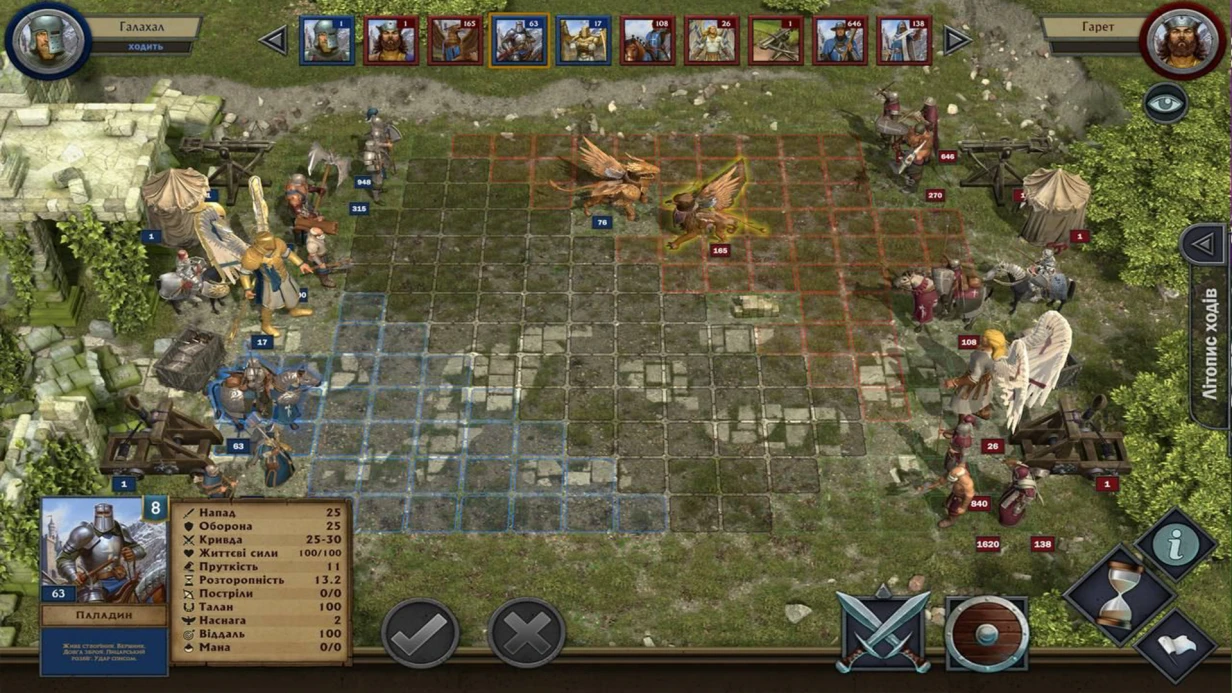
Management game development is a marathon where not only the idea matters, but also the assembled team. Management simulators require well-thought-out economy, balance, and interface — which means many iterations and precise decisions. Without a strong team, the project quickly turns into an endless cycle of rework.
Starting the search for Unity developers is only the first barrier. The market is overheated, strong specialists are already taken, and interviews and test assignments stretch out for weeks.
As a result, you start active development in 2-3 months, even though you planned to start in a month. In such conditions, it's hard to maintain pace and quality.
Then game development timelines come into play: while you're looking for people, competitors are already releasing similar projects. A delay of a couple of months can cost you the audience's attention, and the release gets pushed back by six months.
This hits your ROI and development plans. This is especially painful for management games, where the audience closely follows new releases and quickly loses interest in delays.
The budget doesn't stand still either. Each week of downtime means salaries, rent, and taxes. Sudden departures of key employees or the need to redo modules with a new contractor increases the budget by 30-50%.
And a management simulator is a product with a long cycle, where overspending is especially noticeable.
Unity outstaffing helps mitigate these risks: you get proven C# developers for specific tasks, without a long search and within a planned budget. We handle the selection and onboarding — you focus on the product, not on hiring.
What You Get by Bringing in Our Unity Developers
By bringing in Unity developers on an outstaffing model, you get not just "hands for the project," but a manageable result.
We've been solving the task of team growth without losing control for over 10 years: you know who is doing what and when they'll deliver.
Here are the main benefits you get:
- Speed to market. You don't spend months searching for and onboarding new employees — the team is already assembled and works according to your processes. The project starts within a week, not a quarter.
- Code quality and predictability. We're responsible for the stability of the result: code goes through internal reviews, and key milestones are coordinated with you. You get not a "black box," but a transparent development process for management games.
- Transparency in statuses and time. You always have access to tasks, current workload, and plans. You see where hours are going and can reprioritize without losing context.
- Scaling flexibility. Need one developer for reinforcement — take one. Workload grew — expand the team in a couple of days. Finished a sprint — scale down just as quickly without compensation or downtime.
- Reduced HR and organizational risks. Vacations, sick leave, turnover — these problems stop being yours. We provide replacements and seamless task handover, while you stay focused on game mechanics and project economy.
In essence, you get a team of developers that works like your in-house department, but without the administrative burden. At the same time, you retain full control over priorities and the final product.
Want to test how we work before a large-scale engagement? Start with one developer for two-three weeks — and see the difference in pace and quality.
Collaboration Formats for Management Game Development
For management game development, we offer three collaboration formats: turnkey project, dedicated team, and hourly billing. Each solves its own task: sometimes you need a predictable result in tight deadlines, sometimes flexibility and continuous product evolution. Below is a comparison so you can immediately see what fits your business.
| Format | For whom | What the client gets |
|---|---|---|
| Turnkey project | If you need a finished product with a fixed budget and timeline | Full cycle of management game development: from idea to release, without diving into details. You get a turnkey result and don't worry about processes |
| Dedicated team | If the game is already launched and needs further development | A separate team that works only on your project. Quick response to market changes and new features, you manage priorities |
| Hourly billing | If you need targeted effort: refinement, consultation, audit | Pay only for actual hours. Suitable for one-off tasks and cost control |
Each format is not just a payment scheme, but a way to solve a specific business task. For example, a turnkey project reduces risks: you know the budget and timeline in advance, and we take all risks upon ourselves.
A dedicated team accelerates development — team members are already immersed in your product and don't waste time on ramp-up.
It's important that the format matches your project's stage. We help you choose it during a free consultation: we'll look at the task, assess the scale, and propose the optimal option — with clear terms and no hidden fees.
How Collaborative Work on Your Project Proceeds
We've structured the process so you always understand what stage the project is at and what comes next. No "black boxes": each stage ends with a clear result and a checkpoint — you control the progress, while we handle all the technical work.
-
Brief and game goals. We define the mechanics, genre, target audience, and project economy. We determine which metrics matter most to you — retention, donations, number of sessions — and use them as a basis for development.
-
Plan and estimation. We detail the scope of work, breaking it into 1-2 week sprints. We coordinate timelines, priorities, and readiness criteria for each stage — you see the plan for the entire project before it starts.
-
Prototype and approval. We create a playable prototype with core mechanics. You test it against real scenarios and make adjustments — at this stage, it's easiest to change course without losing budget.
-
Development and regular demos. The team works in sprints, showing the finished result every 1-2 weeks. You see progress live, not in reports: what already works, what's in development, what risks we see and how we propose to address them.
-
Integration and launch preparation. We set up analytics, payments, server infrastructure, test load, and pass reviews. You get a built version for the store with clear release instructions.
-
Launch and support. We help with publication, monitor metrics and critical errors. After release, we stay in touch: fixing bugs, refining balance, and shipping updates according to your priorities.
In the end, you get not just code, but a manageable process: from the first brief to a stable game in production. We respond to messages within the business day, and all agreements are documented in writing — so the collaboration stays transparent at every stage.
What's Included in Deliverables When Ordering Outstaffing
When ordering outstaffing, many expect just "a developer for hours." But if the process isn't structured, a few months later you get code that no one can maintain, and complete dependence on the contractor.
We work differently: each stage ends with the delivery of a concrete result — and by the finish, you have not a report, but a ready-made asset.
What's included in the deliverables under the contract:
- Project source code — the entire logic of management games in full, without hidden modules or artificial restrictions. This is your company's property.
- Technical documentation: description of the architecture, key systems, and their interconnections. A new developer will get up to speed in days, not months.
- Automated tests and verification protocols — confirming that mechanics work stably and that refinements don't break existing functionality.
- Guides for your team: instructions for launching, configuration, and typical modifications. Written in Russian, focused on practical application.
- Repository access with change history — you can see who changed what at any time and can bring any specialist into the project.
- Demo build and publishing instructions — you understand how the product looks and how to release it to app stores on your own.
In essence, you get not "hours of work," but a standalone product and the full set of rights to it. This removes the risk of the project stopping when the team changes and allows you to scale the game without depending on the contractor.
Real Case Study: Game Development for a Global Client
For a global client — a management game developer with an audience in dozens of countries — we acted as an outstaff partner and covered critical roles.
The client needed a team that would quickly immerse itself in the existing project and start delivering results, rather than spend three months on ramp-up.
How the Work Was Structured
We assembled a group of three Unity developers for specific tasks: game world economy, interfaces, and client-side optimization.
The first two weeks went into getting familiar with the codebase and the client's processes, after which the team worked in sync with in-house specialists.
Over six months, we added several new mechanics and over a hundred content elements to the game. Key point: the server side remained under the client's control; we were responsible for the client logic and user experience.
Result Numbers
The main outcome — update release timelines were reduced by 30%: previously, a major patch came out once a month; now it comes out every two-three weeks. Team productivity grew: the client received twice as many finished game mechanics for the same budget.
This development case study shows how outstaff becomes part of the product, not a temporary substitute. The client was so satisfied that they extended the contract for another year and expanded our role: now we participate in planning new seasons and help with balance.
Ongoing projects are the best signal that the project's metrics satisfy the client and that the collaboration is beneficial for the business.
Want the same result for your game? Contact us — we'll tell you more about this Unity case and show you how to speed up your development.
How to Choose the Right Outstaffing Format for Your Task?
Choosing an outstaffing format is not a question of "who's better," but "what exactly do you need." The same client task can be handled by one developer on a short engagement or by a team that takes it on entirely with responsibility for the result. So start with a clear formulation of the task: scope of work, timelines, regularity of workload.
If the task is limited to a specific module or refinement, one or two developers are enough. They'll quickly get up to speed and won't require management effort.
For developing a management game — constant updates, new mechanics, working with feedback — a stable team that doesn't lose knowledge between versions is important.
The next criterion is depth of immersion. For a targeted fix, you need a specialist with strong expertise; for strategic changes, you need someone who understands the game as a whole. The more context involved, the more important a consistent team is. Experienced teams often work with a project longer than planned because tasks evolve.
Finally, decide who manages the process. In classic outstaffing, you set priorities and accept deliverables. If you want to offload operational management, choose a format with a dedicated project manager.
Start with a short brief: describe your task, timelines, and expected outcome. We'll propose a suitable format and justify the choice — so you get a team for a specific goal, not just executors.
Addressing Common Concerns Before You Start
Before a project starts, every client has concerns: will deadlines be missed, will the code be reliable, what happens after release. We hear these questions constantly, so let's address the main fears — briefly and to the point. Below are answers to what worries clients most often.
What guarantees do you provide?
We document all obligations in the contract: timelines, scope of work, and payment terms. We work in stages — you see the result at each step and pay only for the accepted stage. If the team doesn't meet the agreed schedule, we handle the plan adjustment at our own expense. This way, your risks are minimized.
How do you control code quality?
We have an established internal review process: every developer submits code for review, followed by testing of key scenarios. This allows us to catch errors before they reach production. For you, this means stable game performance and no urgent fixes after release. You get a product you can be proud of in front of players.
What happens after launch — do you help with support?
Yes, we stay with you after release. You can add a maintenance plan: monitoring, bug fixes, updates for new devices and platforms. If new features are needed, our team already knows the project and will implement changes quickly. Support isn't "later" — it's a full-fledged part of the collaboration.
What if a developer leaves the project?
You work with a company, not an individual. Each project has a dedicated team: team lead, developer, tester. If one specialist drops out, we seamlessly hand over tasks to another within the team.
All documentation and code are stored in the repository, so your project is protected from the "human factor."
If you still have questions — ask us directly, and we'll respond within the business day. You'll get not just a team of developers, but a partner that takes responsibility for the result.Submit a Request for Unity Developer Outstaffing
When your management game project needs Unity developers, searching and hiring often stretches out for weeks. Resumes don't show the real skill level, onboarding eats the budget, and the release schedule drifts. As a result, you either slow down the launch or hire random people and risk product quality.
We cover this need with developer outstaffing: we match specialists to your task, they quickly get to work, and operate under your direction. You don't need to hire in-house, pay taxes, or handle onboarding — you get ready-made reinforcement for a specific task.
Submit a request for Unity developer outstaffing — and get:
- Consultation — we'll analyze your task and advise how many people you need and for how long for a management game.
- Transparent selection — we'll show candidates with experience specifically in such projects, not just those familiar with Unity.
- Startup plan — from brief to first result, you see timelines and stages, with no surprises.
- Clear terms — a fixed rate per specialist, no hidden surcharges.
- Support — a manager stays in touch, promptly handling organizational matters.
- Trial period — start with a small stage, verify the quality, and only then scale up.
Submit your request — we'll get in touch within the business day, discuss the details, and prepare an outstaffing proposal for your management game. Start your project without unnecessary pauses.