



How to Avoid Failure in Strategy Game Development: Client Pain Points
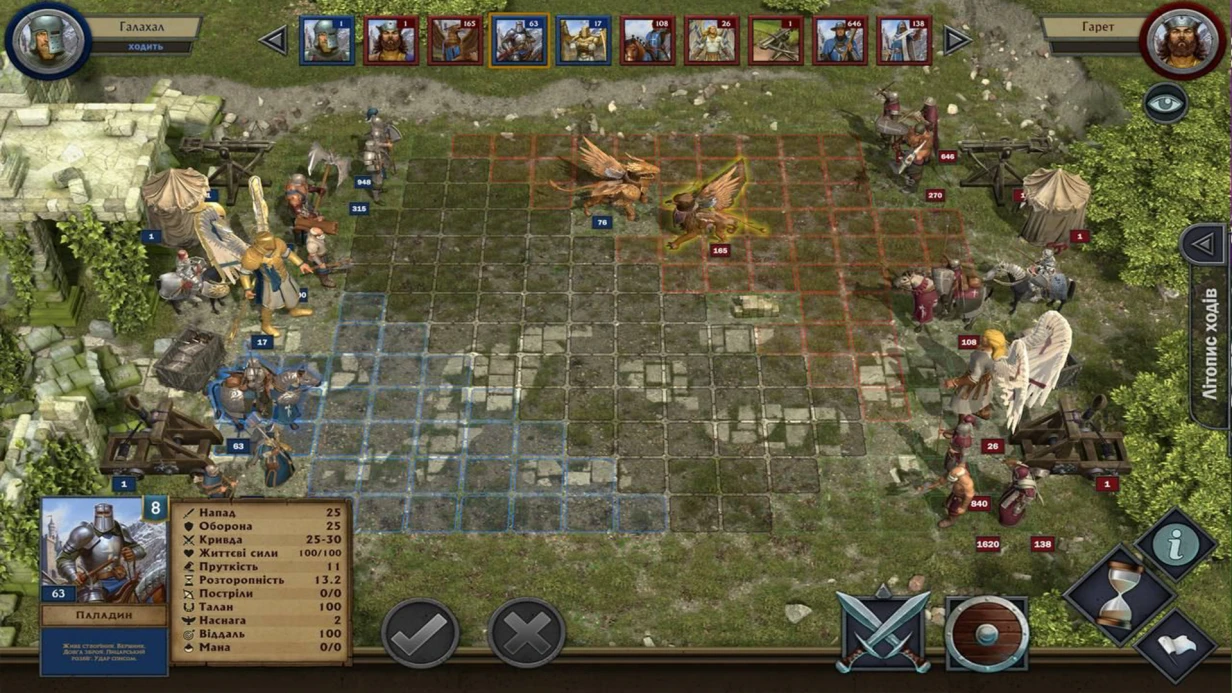
Strategy game development is one of the riskiest genres in game dev. Here you can't rely on "we'll assemble a team in a month and launch in three": strategies require complex balance, thoughtful enemy AI, and an economic model that won't fall apart in the late stages.
Without deep expertise in Unity and game mechanics, the project turns into an endless cycle of rework — and instead of a release, you get missed deadlines and a blown budget.
The peculiarity of strategies is that errors don't show up immediately. First prototypes may look promising, but when system integration begins, an inexperienced team hits architectural problems.
Rewriting code, endless bug fixes, lost combat mechanics — all of this is familiar to those who tried to save on expertise. As a result, the client pays twice: first for poor-quality development, then for fixing someone else's mistakes.
Failures in game dev rarely happen because of a "bad idea" — more often because of a weak team that can't plan resources and manage complexity.
Unity outstaffing only saves you in this sense if you get specialists who have already been through releases of strategy projects.
A proven development team sees risks at the briefing stage, not after the first gameplay test, and is therefore able to meet deadlines without losing quality.
We build outstaffing for strategies with exactly this focus: we don't just hand out programmers, we cover the task with a team that understands the genre.
Your project gets developers with experience in combat mechanics, procedural generation, and asynchronous sessions — and you get a predictable process and a result you won't be embarrassed to show to players.
5 Key Benefits of Outstaffing Unity Developers
Strategy development is a long and complex process where every delay hurts the launch and budget. Instead of building an in-house team and losing months on hiring, you can bring in a ready-made team of Unity developers on an outstaffing basis.
We've been strengthening game development projects for over 10 years — here are five benefits you get right away.
-
Accelerated development — specialists already work at your pace, they don't need time to get up to speed. You integrate them into the project within a few days and get ready game mechanics for strategies faster than with in-house hiring.
-
Budget savings — you pay only for hours actually worked, without costs for taxes, benefits packages, and equipment. This significantly reduces production costs and frees up funds for marketing and promotion.
-
Team flexibility — you scale development to the task: two people are enough at the prototype stage, ten for polishing. Outstaffing lets you change team size without lengthy firing and hiring processes, adapting to the project's stages.
-
Experience in the strategy genre — our developers have worked on turn-based and real-time strategies, so they know how to implement complex unit systems, AI, and balance. This reduces technical risks and cuts the number of iterations.
-
Transparent control — you manage tasks through familiar tools, see progress reports, and can adjust priorities at any time. No "black boxes" — only the result you approve yourself.
Cooperation Formats for Strategy Game Development Within Your Budget
Strategies are one of the most extensive genres: you need to work out the economy, enemy AI, balance, and multiplayer. For the client, this means budget and deadlines easily "slip away" if the wrong team works on the project.
That's why we offer flexible cooperation formats — from a single developer to a dedicated team — so you pay only for the scope you need at the current stage.
Below is a comparison of formats for your budget. Choose based on project size and level of control, and we'll structure the process so the result is predictable.
| Format | For whom | What it gives the client |
|---|---|---|
| Single developer | Strategy prototype, focused tasks: combat system, AI, balancing | Quick reinforcement without in-house hiring; pay only for actual work |
| Mini-team (2–3 specialists) | Game in active development: need game mechanics, programming, and graphics | Cohesive work without full-team costs; easy to expand the team |
| Dedicated team (4+ specialists) | Full cycle: from strategy concept to release and support | Control over deadlines and quality; turnkey project management and predictable budget |
The most important thing is that the format isn't set in stone: we can start with a single developer and smoothly expand the team once the strategy proves its viability. This lets you optimize the budget without losing momentum.
How We Work: 7 Steps from Brief to Release of Your Strategy
We understand: in strategy games, deadlines and predictability decide everything. That's why our outstaffing process is built transparently — you see progress at every stage and control the deadlines.
No "black boxes" or surprises: from the first brief to release, your strategy is accompanied by a team that reports according to the work plan.
-
Brief and project immersion. We gather requirements, discuss the genre specifics of your strategy, target audience, and key mechanics. We lock in scope, deadlines, and acceptance criteria — so everyone works from the same plan.
-
Team selection for your task. We select Unity developers with experience in strategy games, not just "programmers." You meet the candidates and approve the team before the start — this removes the risk of incompatibility.
-
Work plan and control points. We break the project into development stages, agree on a schedule and intermediate results. You get a roadmap that shows what will be ready in a month, in two, and by release.
-
Development with regular demos. Every one to two weeks, we show a working version: gameplay, interface, new mechanics. You respond at early stages, when changes cost next to nothing, rather than at the end, when rework hits the budget.
-
Testing and balancing. We test the gameplay, strategy economy, and interface on real scenarios. We collect feedback and make changes before the project goes to release.
-
Release preparation. We optimize performance, build a version for your target platforms, and prepare instructions for the team. The result is a product that can be launched without any "last-minute" fixes.
-
Post-release support. We stay in touch: we ship updates, fix bugs, and help with new mechanics for your strategy. You're never left alone with the product.
The entire outstaffing process is transparent: you see task status, progress reports, and actual timelines. This lets you manage the team as confidently as your own — without unnecessary calls and bureaucracy. Deadline control is our responsibility.
What's Included in the Delivery: A Complete Package to Launch Your Project
Good outstaffing isn't just people — it's a steady delivery of results. That's exactly how we work: each stage ends with a package of artifacts, and we hand over the full set at the end of the project. So you don't wait for the result until the end — you see it from the first weeks.
These are the results of outstaffing: code, documentation, tests, and instructions. Nothing extra — only what your team needs to launch and grow the strategy.
- First stage — a working prototype: source code and a buildable version. You can already see the mechanics and adjust course.
- Each sprint — a report and updated documentation: what was done, how long it took, what's next. Transparency without unnecessary calls.
- Mid-project — tests of key scenarios: balance, economy, unit behavior. Errors are cheap when caught early.
- Pre-handover stage — complete architectural documentation and launch instructions. Your technical specialist can figure it out without our team's involvement.
- Final stage — the complete package: source code, tests, instructions, a working demonstration, and answers to questions. Everything needed for independent project development.
After handover, you're not dependent on us: the team owns all the artifacts, and you own control over quality and deadlines.
Case Study: How We Helped a Studio Release a Strategy on Time
The studio Strategy-Lab approached us when less than three months remained until the strategy's release, and the key mechanics were still not ready.
The in-house team couldn't handle the workload, and the risk of postponing the date was becoming real — which meant broken contracts with the publisher and loss of player trust.
We audited the project and realized: a single specialist wasn't enough — we needed a cohesive group with experience in strategies. In two weeks, we assembled a team of four Unity developers who quickly integrated into the processes and completed the most complex tasks.
This outstaffing format allowed the studio to keep control over the project without spending time on hiring and onboarding.
Project Results
Two months after the team joined, the game shipped on time — for the first time in the studio's history without postponements. Production ran in parallel with polishing: while some developers finished the enemy AI, others optimized the balance and interface.
As a result, the release happened on the planned date, and the collected metrics showed that players complete the average campaign in 20 hours — exactly what was set in the design document.
Three months after release, the strategy attracted over half a million installs, and the share of repeat launches in the first week reached 35%. According to the studio's head, this was the best result among all their projects.
That's why after the release they kept our team for support: we continue developing the project, adding content, and preparing updates.
This development case confirms the main point: outstaffing is a way to cover critical areas of work without inflating headcount or losing momentum. For the studio, this meant a predictable release date, preserved budget, and confidence in quality.
The successful experience with Strategy-Lab became the foundation for cooperation with other clients in the strategy genre.
How to Choose the Right Outstaffing Format for Your Task?
Choosing an outstaffing format for a strategy game starts not with technology but with two questions: how large is the task and what deadlines do you have.
If the project is at the prototype stage and you're not yet sure about the game mechanics — you need team flexibility, not a rigidly fixed scope of work.
If the mechanics are validated and the task is to ramp up production toward the release date, it's more convenient to go with a dedicated team that works under your management.
The second criterion is the level of involvement on your side. With outstaffing, you get developers who integrate into your process: you assign tasks, review intermediate results, and change priorities. This is the choice for those who want to keep control over the product and implementation details.
The project format fits when you're ready to hand over the full task definition and get a turnkey result — but in the case of strategy games, where balance and iterations decide everything, full handover usually leads to extra iterations.
The third criterion is predictability. If the budget and deadlines are fixed and the requirements are clear from day one, project work gives clear boundaries.
If you expect the task to be refined along the way (which is normal for strategy games), outstaffing is safer: you pay for the process, not the final delivery, and it's easier to make changes.
Plus, you keep a team that already knows the project — there's no need to retrain them for the next stage.
The good news is that formats can be combined. Start with outstaffing at the prototype stage, and once the mechanics are confirmed — lock some tasks into a project with a clear outcome.
We help choose the optimal scheme for your scale and deadlines: we'll calculate the workload, propose a team configuration, and explain where it's worth saving and where it isn't.
Reach out for a consultation — we'll find the right format for your specific situation, without unnecessary costs.
Answering Common Client Questions
Before entrusting Unity strategy game development to an external team, clients want to understand how we work and what guarantees we provide. We answer the key questions — about quality, control, security, and compatibility with your team.
How do you guarantee code quality?
Each stage goes through code review and automated tests. We build a working version of the game every few days — you see the result, not just a report. If something is wrong, we fix it immediately before moving to the next task.
How can I control development if the team is remote?
You'll have a personal manager, access to the task tracker, and regular demos. You always know which strategy mechanics are ready and which are in progress. If needed, we set up video calls and reports on key metrics.
How safe is it to share the source code and game ideas?
We sign a non-disclosure agreement before work begins. The source code and all work-in-progress remain your intellectual property. Only the project's specialists have access to the data, and all communication is protected.
Can you integrate into our existing team?
Yes. We use familiar tools: version control systems, task trackers, shared chats. At the start, we dedicate time to diving into your codebase and processes; after that, we work as a full part of the development team.
Ready to Discuss Your Project? Get a Commercial Proposal
Leave a request, and within one business day you'll receive a commercial proposal with calculated timelines, budget, and team composition for your strategy. We don't send "generic brochures": every calculation is made for a specific project, its mechanics, and goals.
What you get after submitting a request:
- Stage-by-stage work plan: from the combat system prototype to polishing and release — you see what you're paying for at each step.
- Cost calculation for your budget: we'll match the team size and timelines to meet your expectations, with no hidden surcharges.
- Developers matched to strategy tasks: a dedicated programmer for the economy, for enemy AI, for multiplayer — not a "universal specialist."
- A personal project manager: they handle communication, reports, and making sure the result matches your expectations.
- Timeline and risk forecast: we'll identify bottlenecks before the start — for example, complex balancing or analytics integration.
- Legal protection: NDA, a clear contract, and code rights — you get a product, not "dependence" on the vendor.
- A trial period in the first weeks: you evaluate code quality and the work process before the team goes into full development.
No lengthy approvals or technical descriptions — send your idea, and we'll ask clarifying questions and offer options ourselves. After that, you make the decision: start or adjust the team and budget.
Leave a request right now — and tomorrow you'll have a commercial proposal with a plan, an estimate, and a team ready to build your strategy.