


Creating Game Graphics-Based Advertising Creatives
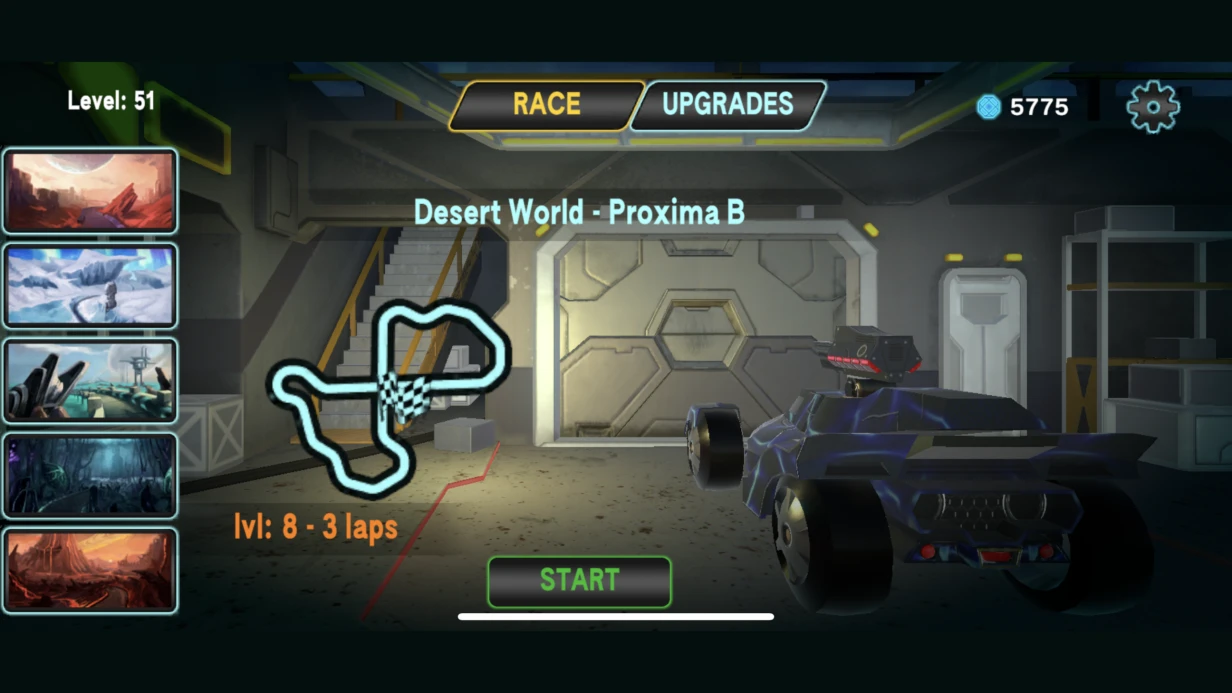
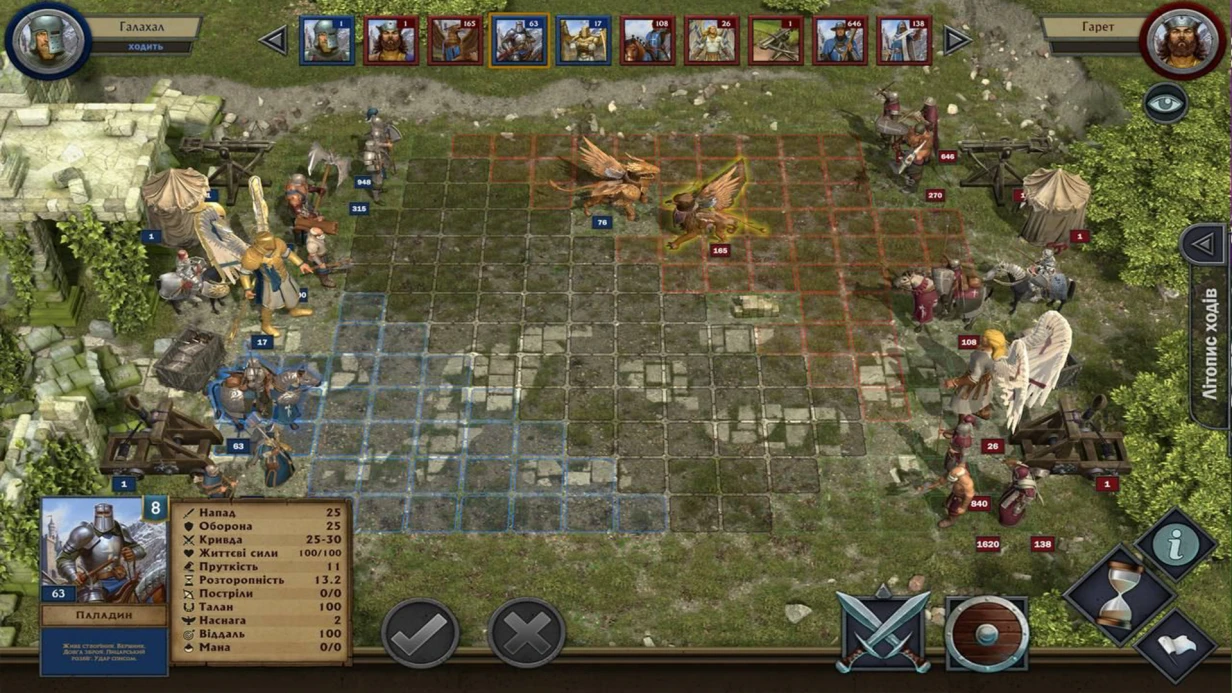
We create advertising creatives using your game's graphics. A static screenshot in Meta Ads yields a CTR of 0.5–1.2%, while a video creative with gameplay and professional editing reaches 3–6% — videos outperform static banners by up to 5 times in CTR. That three-to-five times difference translates directly into savings on your ad budget. We specialize in maximizing returns from your graphics: selecting the right format, tweaking framing, adding hooks and subtitles for each platform.
Building a working creative is not just cutting gameplay footage. You need to know each platform's technical limits, how to prepare scenes without UI, set lighting and post-processing. We have dozens of successful projects behind us—from hyper-casual games to midcore RPGs. We guarantee every creative passes moderation and is optimized for the target audience.
How do we obtain source material for creatives?
There are three ways to acquire graphics: gameplay recording, engine rendering, and static assets. We combine them based on the task.
Gameplay recording is the fastest route. We use Unity Game View Recorder or native screen capture on the device. But UI, HUD, and coin counters in the recording distract focus. The solution: a dedicated ad scene in Unity where UI is disabled and gameplay runs under controlled conditions. This is standard among major mobile publishers.
Engine rendering is for showcase shots without gameplay. In Unity, we use Timeline + Cinemachine with separate lighting and Post-processing Stack maxed out—Bloom, Depth of Field, Color Grading. We employ a custom tonemapping curve and HDR rendering, outputting at 4K resolution then downsampling to reduce noise, achieving quality far beyond real-time.
Static assets—PNG sprites, UI elements, backgrounds—are compiled in Photoshop or After Effects for banners and GIF animations. Formats for Meta/Google Ads: 1080×1080, 1080×1920, 320×480, 728×90. We prepare each size individually—auto-scaling produces poor quality.
What creative formats are used for each platform?
For Meta Ads (Facebook/Instagram), the key format is vertical video 9:16 up to 15 seconds with a hook in the first 3 seconds. The hook is a moment that sparks a question or surprise: an unusual situation, a fail moment, an unexpected effect. Most viewers watch without sound—subtitles are mandatory.
For Google UAC, you upload a set of assets: videos of different formats, static images, texts. The algorithm tests combinations. Minimum: 5 videos, 5 images of different formats. More variations lead to better optimization.
For TikTok Ads: native vertical content mimicking user videos. Overly polished editing performs worse than real phone-recorded footage with live commentary.
Playable ads—interactive HTML5 mini-games inside the ad. Built on Cocos Creator or pure JavaScript, WebGL, size up to 5 MB. Production is 3–5 times more complex, but CTR and install rate are higher for a properly made playable. We use them for hardcore and midcore games.
| Format | Typical CTR | Production Complexity |
|---|---|---|
| Static banner | 0.3-0.8% | Low |
| 15-second video | 1.5-4% | Medium |
| Playable ad | 2-6% | High |
Our playable ads achieve 2-6% CTR, which is up to 4 times higher than static banners. Our pipeline reduces production time by 20-30% compared to standard workflows.
Included Deliverables
- Source files for all creatives (Premiere/Photoshop projects, templates).
- Adaptation to all popular platform formats.
- A/B testing of 5–10 concepts with a report. We use the Fisher exact test to determine statistical significance at a 95% confidence level, and a multi-armed bandit approach for dynamic budget allocation based on real-time CTR.
- Consultation on creative optimization based on metrics.
Technical Production Pipeline
A standard pipeline for a studio producing creatives systematically:
- Session Capture – record 10–20 game sessions in the ad scene, varying conditions (win, loss, rare events).
- Trimming and Selection – from 30 minutes of footage, select 3–5 minutes of useful material.
- Editing – Adobe Premiere or DaVinci Resolve. Fast editing (cut on beat), text overlays, arrow pointers, music. Videos are encoded in H.264 at 25 fps with a variable bitrate target of 5 Mbps for 1080p, using a constant rate factor of 18 for maximum quality.
- Export – H.264, different resolutions per platform, with and without subtitles.
- Static Formats – done concurrently in Photoshop using templates.
For automation of variations, we use After Effects Expressions or Figma with the Automator plugin—replacing texts, colors, characters within a template.
Creative Testing and Optimization
No test means no working creative. Methodology: 5–10 conceptually different variants in the first week, then scaling the 2–3 winners. Meta Ads Manager shows CTR, CPI, IPM (installs per mille) per creative. IPM is calculated as (installs/impressions)*1000; we compare against industry benchmarks: for hyper-casual, IPM > 3 is good; for mid-core, IPM > 1 is acceptable. We stop anything with IPM < 1.5 for casual, < 0.5 for midcore. Replacement cycle: 30–50% of creatives every 2–4 weeks due to audience fatigue. For reference, industry standards are cited in the Meta Ads Official Help Center.
We analyze metrics according to the recommendations of Meta Ads Manager.
| Creative Type | Production Time |
|---|---|
| Set of static banners (6–8 formats) | 2–4 days |
| Video creative (15 seconds, 3 formats) | 3–7 days |
| Playable ad (HTML5, basic gameplay) | 2–4 weeks |
| Full UA launch package (video + static + A/B variants) | 2–3 weeks |
Pricing is determined individually. A typical set of 6 static banners starts at $500, and a full UA launch package from $3,000. For a typical UA package costing $3,000, a 25% time saving translates to approximately $750 in reduced labor costs. We'll evaluate your project within 1–2 days.
Why Choose Us
Over 5 years in the game dev market. We've delivered creatives for 30+ projects—from hyper-casual to RPGs. We use a proven pipeline that cuts production time by 20-30%. We guarantee moderation approval. Contact us for a consultation and get examples tailored to your niche.
Examples of Our Work
Upon request, we provide a portfolio of creatives for games across various genres.