

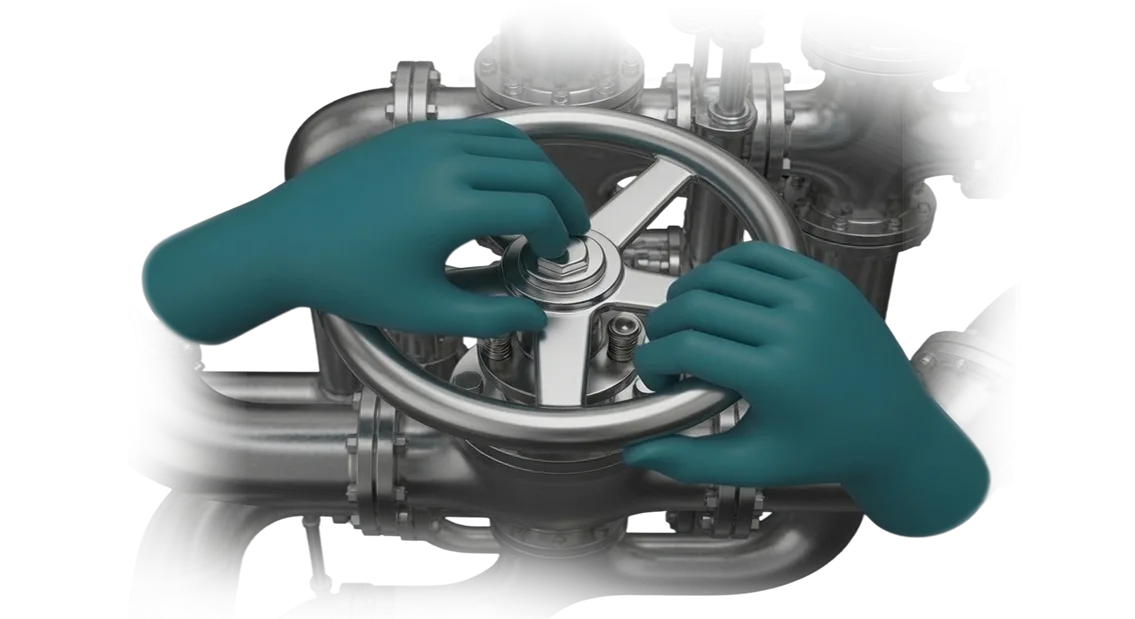
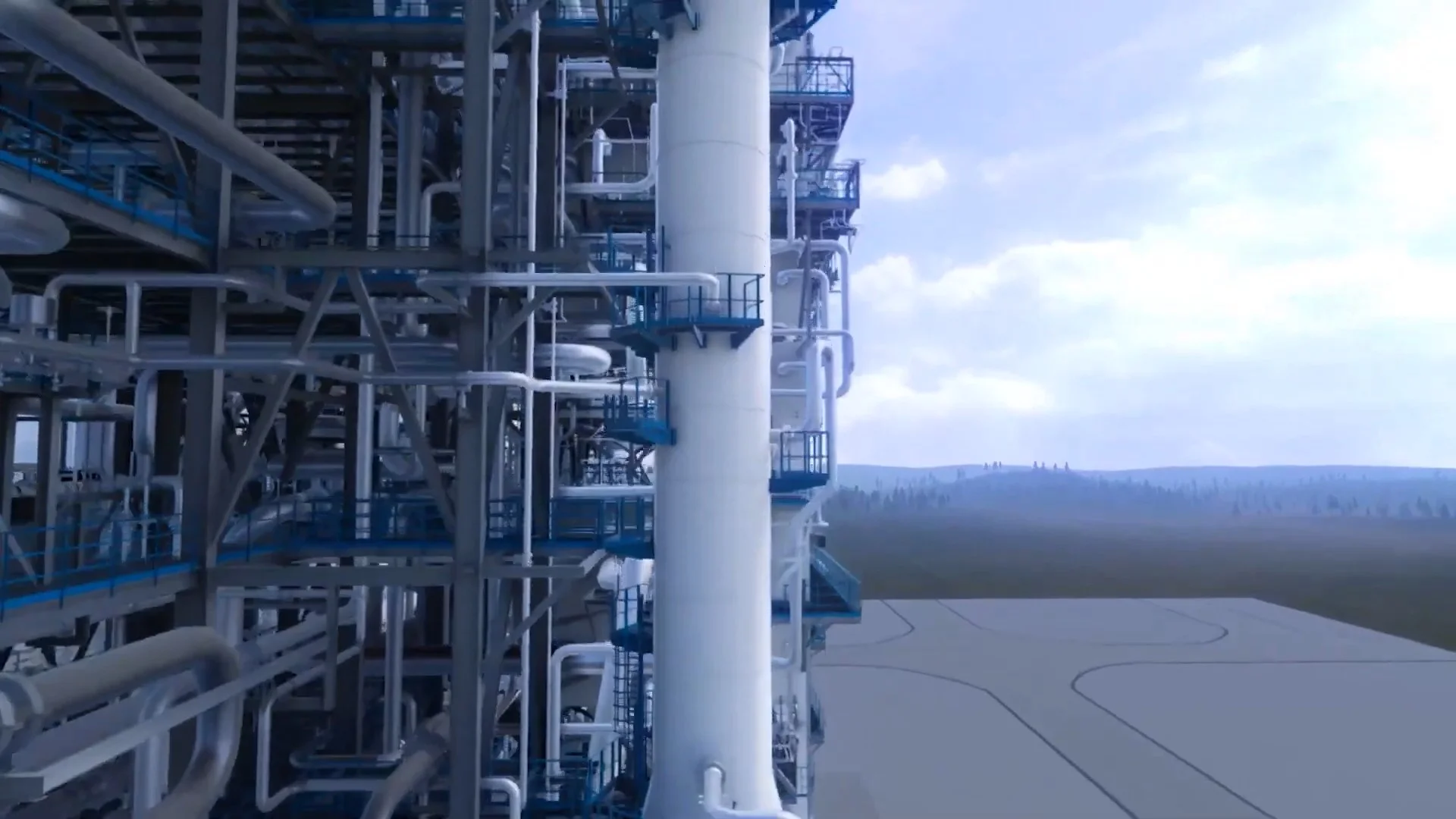
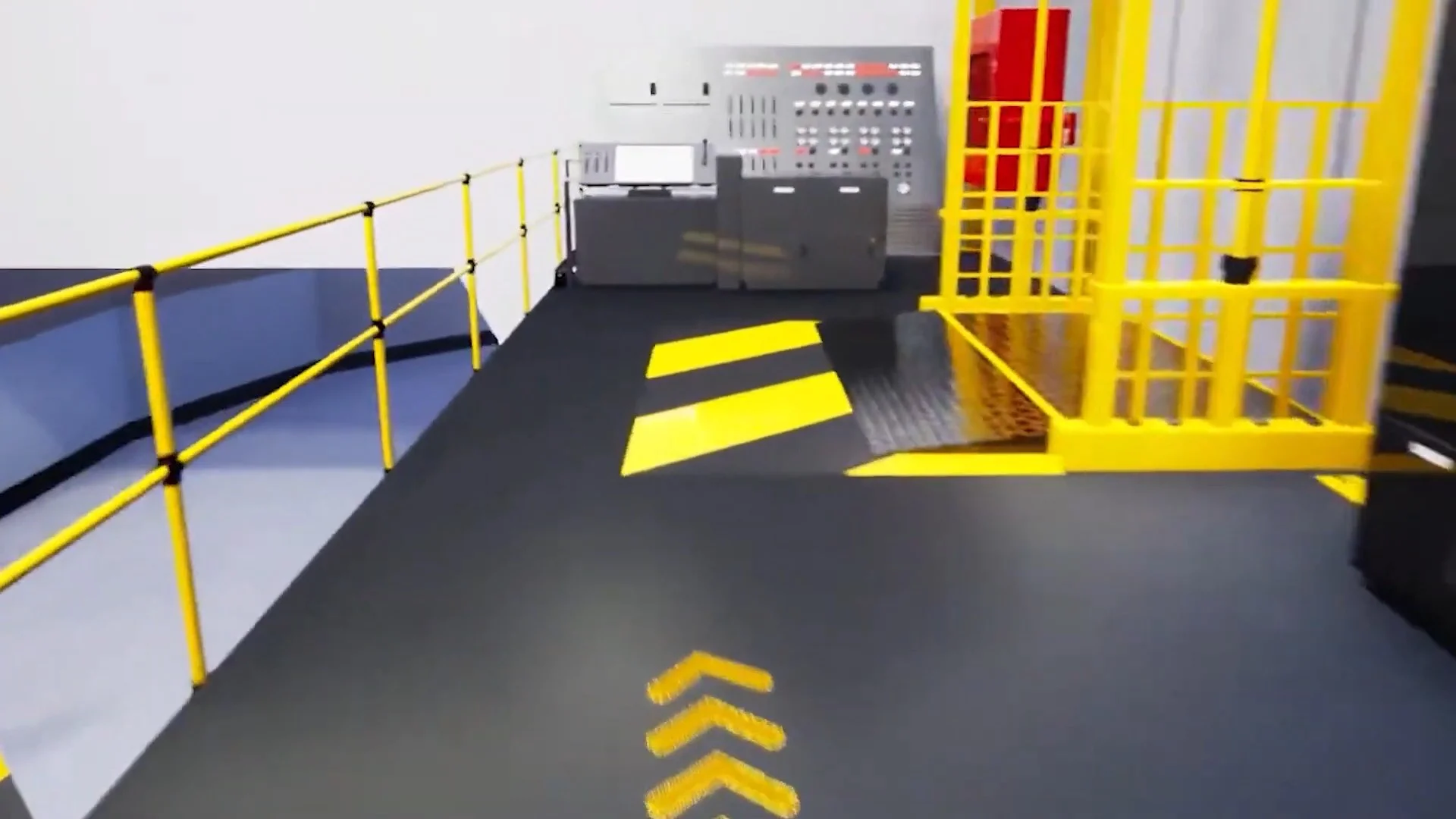
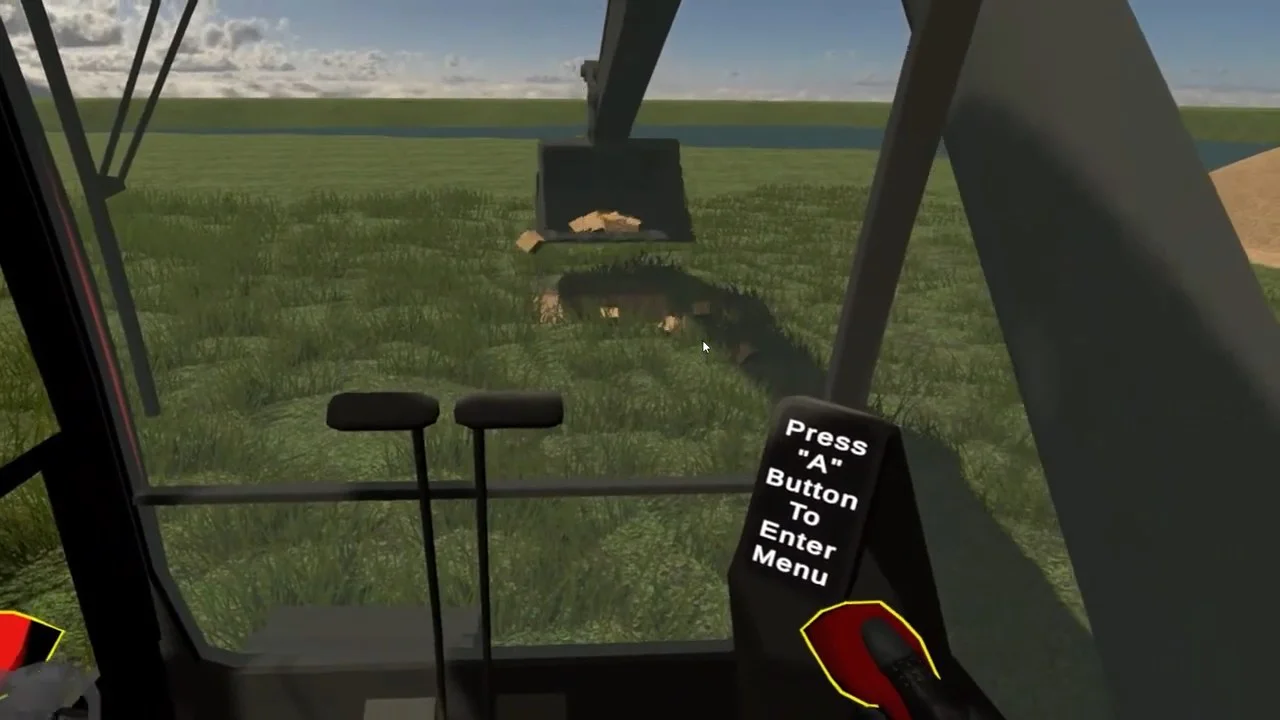
Why 3D Rocket Visualization Is Critical to Enterprise Success
When working with rocket hardware, the price of a mistake is measured not in penalty points but in human safety and the enterprise's reputation. Poor personnel training leads to damage to expensive equipment, missed deadlines, and accidents that carry enormous financial risk.
Traditional briefings and paper procedures cannot make an employee feel the real complexity of processes, especially in emergency situations.
A VR simulator with high-quality 3D rocket visualization bridges that gap. The specialist works with an exact copy of the unit: sees every component, studies the sequence of operations, and hones actions in a safe environment.
A mistake in virtual space has no consequences, but it builds the correct skills that transfer to real work. This is exactly the VR simulator for industry that enterprises choose to reduce risks.
We design 3D rocket visualization so it is not just a pretty picture but a working tool. High detail and realistic physics let the employee master operations to the point of automation, and let the instructor objectively assess progress.
As a result, the enterprise gets predictable training safety: minimum downtime, no equipment damage during training, and confident personnel ready for emergency situations.
Losses from poor training are not visible right away, but they accumulate: minor mistakes, rework, injuries, and staff turnover. We help eliminate these costs at the preparation stage—with VR simulators and well-thought-out 3D rocket visualization.
The customer gets not technology for technology's sake, but a measurable result: reduced costs, improved safety, and a team ready to operate without failures.
What You Get from Implementing VR Simulators
The benefits of VR simulators for industrial enterprises appear in three key areas: safety, savings, and training speed. A manager gets a tool that simultaneously reduces production risks and increases personnel readiness for real tasks.
The virtual environment allows practicing emergency and abnormal situations without risk to life or equipment. An employee can make a mistake and see the consequences on the digital model rather than on the real installation.
This reduces injuries, minimizes downtime, and builds correct action algorithms for workers under stress.
Cost reduction is achieved because training doesn't require stopping production or writing off raw materials and resources. The same scenarios can be run an unlimited number of times—making skills development massive without spending on consumables.
At the same time, VR training effectiveness is significantly higher than traditional briefings: the employee actively immerses in the environment rather than listening to a lecture, so the material is absorbed more deeply and stays in memory longer.
Simulator implementation pays off quickly: new employees reach working condition in weeks instead of months, and experienced ones master new technologies without risking equipment.
As a result, you get a stable team ready for real tasks and a transparent competency assessment system. We handle the entire process—from scenario design to deployment at your enterprise.
VR Simulator Formats and 3D Rocket Visualization: What to Choose
The first thing a manager faces when choosing a VR simulator is not knowing which format solves the task. Off-the-shelf solutions are usually cheaper and faster to deploy, but they don't account for the specifics of your production processes. Custom solutions reflect real equipment more accurately, but require more time and budget.
3D rocket visualization helps you choose between them: even before development starts, you see the model, evaluate scenarios, and make decisions based on hands-on experience rather than abstract descriptions.
A clear comparison of formats is the basis for the right choice. The table below shows who each option suits and when.
| Format | For Whom | What It Gives the Client |
|---|---|---|
| Off-the-shelf VR simulator | Companies with standard operations and procedures | Fast launch, predictable cost, ready-made training scenarios |
| Custom VR simulator | Enterprises with unique processes and non-standard equipment | Exact alignment with your procedures, practice of real situations and emergencies |
| 3D rocket visualization | Managers and engineers at the solution selection stage | A clear assessment of the future simulator and scenario testing before budget commitment |
Here, 3D rocket visualization acts as a decision-making tool. You see what the future simulator will look like, check model detail, and try interacting with the equipment.
If requirements change, the visualization is adjusted before the main development begins—saving time and money.
Our engineers help you select the format for your industry and show in advance on a 3D model how the simulator will work in your environment. This way, you avoid overpaying for unnecessary features and get a tool that genuinely improves employee skills.
How a VR Simulator Development Project Works
Every project starts with questions: how to train personnel faster and reduce the risk of errors. We have structured the VR simulator development process into clear stages so you see results from the start and control every step. Below is the path the customer takes with us.
-
Development brief. We discuss production tasks: which operations to practice, which mistakes to prevent. We record scenarios, evaluation criteria, and measurable training outcomes.
-
Project approval. We prepare the simulator concept and structure: modules, timeline, cost, success metrics. You approve the plan—and only then do we start work.
-
Creating 3D models and the virtual environment. Using blueprints and videos, we transfer your equipment, tools, and procedures into the virtual environment. This allows employees to fully immerse themselves in a realistic work environment.
-
Programming scenarios and logic. We configure actions, feedback, and assessment. The simulator prompts when a correction is needed and records statistics for review with the instructor.
-
Testing with your specialists. Engineers and instructors check how accurately the simulator reproduces real processes. We make adjustments and ensure compliance with standards and procedures.
-
Simulator launch. We install the equipment, configure it for your infrastructure, and train trainers to work with the system. You receive a finished tool with instructions and procedures.
-
Support and development. We update scenarios to new procedures, add modules, and monitor performance. After the project is completed, you stay in touch with our team.
What's Included in a Turnkey VR Simulator Delivery
Often the customer receives "hardware" and then has to figure things out on their own. As a result, the simulator sits unused or requires constant developer support. We assemble the package as a ready-made turnkey solution—from launch to training your instructors.
What's Included in the Delivery Set
-
Software and content. Scenarios for your operations—normal, abnormal, and emergency. Plus an instructor interface for monitoring exercise completion and reviewing mistakes. Updates are available by subscription.
-
Equipment. Headsets, controllers, tracking stations, and a computer platform. Professional hardware with a reliability margin and replacement during the warranty period.
-
Installation and configuration. Engineers deploy and calibrate the system to fit your workshop or classroom. You receive a ready-made zone without diving into the technical details.
-
Working documentation. Procedures for startup, daily maintenance, common faults, and training scenarios. All in Russian, with checklists for operators.
-
Personnel training. We prepare your instructors and technical specialists. They independently run sessions after brief training on your simulator.
-
Support and warranty. A support line, remote diagnostics, and a backup headset in case of failure. 12-month warranty, extendable on request.
In the end, you receive not just a device but a working training process that is immediately integrated into your training system.
Case: 3D Rocket Visualization Delivered Real Savings for the Enterprise
A rocket is a complex product: assembly, control, launch preparation. Training personnel on real equipment is expensive and dangerous: an error at the test stand costs a fortune.
That's why 3D rocket visualization is not a special effect but a working tool—operations can be safely practiced in a digital copy.
For Vympel Design Bureau, we created a VR simulator based on an accurate 3D model of the rocket. Assemblers and engineers see the product as they would in the workshop and physically connect the modules, check systems, and prepare for launch.
Up to ten people can go through the simulator in 2 hours—previously this scenario took a week to practice on mock-ups.
Implementation Results
- Substantial savings on a single training cycle: no need for test stand rental, consumables, or equipment downtime.
- Specialists arrive at the workshop already trained—the number of errors during real assembly dropped by a third.
- The time to bring a newcomer up to line standard shrank from three weeks to three days.
After the pilot, the customer ordered two more simulators for adjacent production lines. That is the best sign that the VR simulator case pays off rather than simply "looking modern."
Why This Applies to You
If you have complex equipment where precision is critical, the same kind of simulator reduces training time and eliminates accident risks. We will calculate the savings based on your numbers and show how 3D rocket visualization will pay off.
How to Choose the Right VR Simulator Format for Your Task?
Choosing a VR simulator format starts not with "what's trendy" but with "what problem are we solving." If you need to quickly train line personnel to work with equipment, short scenarios in a standalone headset that can be launched right in the workshop are sufficient.
If the task is practicing rare emergencies or complex sequences of actions, full immersion with maximum process detail is required.
The selection criteria are clear and straightforward: the number of employees to train, how often scenarios repeat, the need for results monitoring, and budget.
For mass training, ease of launch and low cost per workstation are important; for practicing abnormal situations, realism and the ability to record every action matter. The more accurately you describe your requirements before the start, the less rework there will be later.
We never offer a "one-size-fits-all" solution because every production operation has its own individual requirements.
At the first stage, together with you, we define the target audience, expected skill level, and success metrics: error reduction, task execution speed, and pass rate. Then, based on those parameters, we select the format—from mobile scenarios to stationary systems with feedback.
The right format choice is when training delivers a measurable result: less scrap, faster shift readiness, and higher safety. That's why we approach the selection as designing a solution around your production culture, not as purchasing equipment.
Frequently Asked Questions and Concerns Before Ordering
Before ordering a VR simulator, a manager is usually held back not by price but by concerns: will the equipment break, will production have to be stopped for implementation, and who will be responsible for the system after launch. These are reasonable questions, so we answer them directly—as colleagues, not salespeople.
What if the equipment breaks?
We use professional equipment that is tested on site before launch. If a breakdown occurs during operation, our engineer will help remotely or come to the site. Equipment replacement happens within a few business days, so the training process won't stop.
Is it hard to integrate the simulator into workshop operations?
No. We don't just create 3D visualization of a rocket or complex machine; we build scenarios around your procedures. Implementation happens without stopping production: employees train during off shifts, and instructors run sessions themselves after brief training.
What guarantees do you provide?
We contractually commit to timelines, system functionality, and the support package. After launch, we stay in touch: update content, refine scenarios for new tasks, and monitor equipment health. You get a supported product, not a "box."
Will our employees be able to handle it?
VR simulators are built with an interface that a person without technical experience can understand. Training takes 15–20 minutes; after that, the employee works intuitively. If needed, we adapt the controls to your specifics: large labels, voice prompts, color markers.
If you still have questions, below we've gathered a full list of concerns and answers. In any case, the decision is clear: with our support, the simulator will become a working tool that pays off through safety and the speed of personnel training.Request a Consultation and Cost Estimate
A consultation and cost estimate let you eliminate the main project risks in a single conversation: understand the real budget, implementation timeline, and impact on your production.
We don't "sell a pretty picture"; we analyze your task and show how the simulator will pay off through reduced errors, faster training, and improved safety.
At the meeting, you'll get a clear action plan and answers to the questions that most often concern managers:
- Preliminary cost and timeline estimate—tailored to your specifics and scale, with no hidden surcharges.
- An assessment of whether a VR simulator fits your equipment and work scenarios.
- Format recommendations: full immersion, mixed reality, or augmented reality—which will deliver the fastest result.
- A free demonstration of solutions based on real cases from our team—you'll see the level of detail and realism.
- Clear agreements at the start: what you get, in what timeframe, and by what metrics we evaluate effectiveness.
The consultation is non-binding and takes no more than an hour. You'll receive an estimate you can use to make a decision—even without any further cooperation.
Leave a request: name a convenient time, and we'll prepare a personalized proposal. This way, you can compare conditions, ask questions to our engineers, and finally resolve the personnel training issue.