

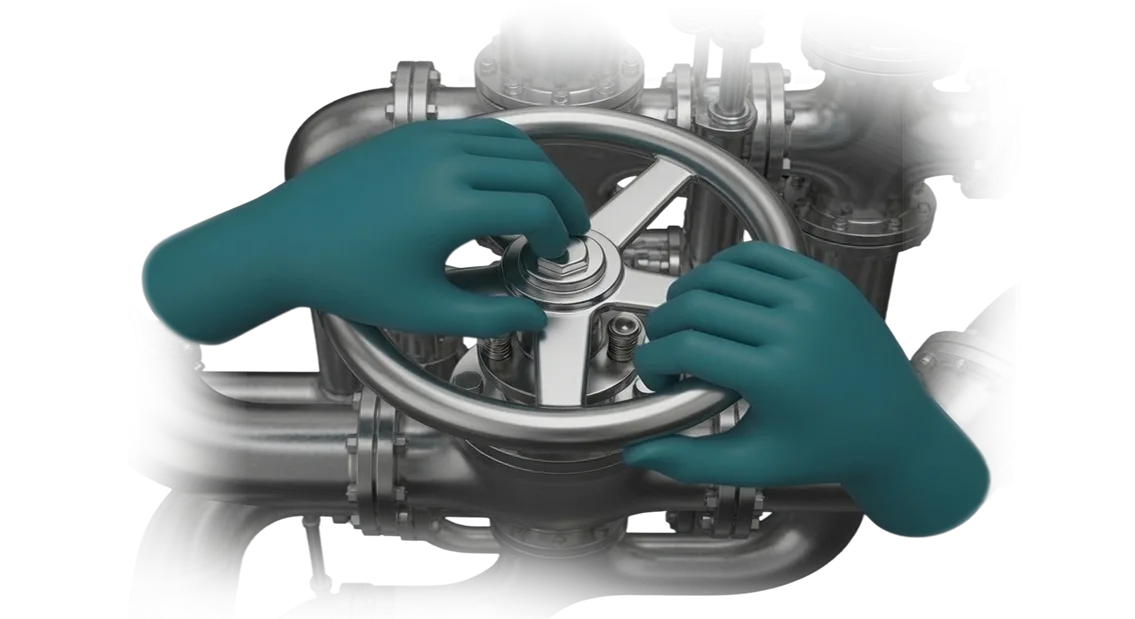
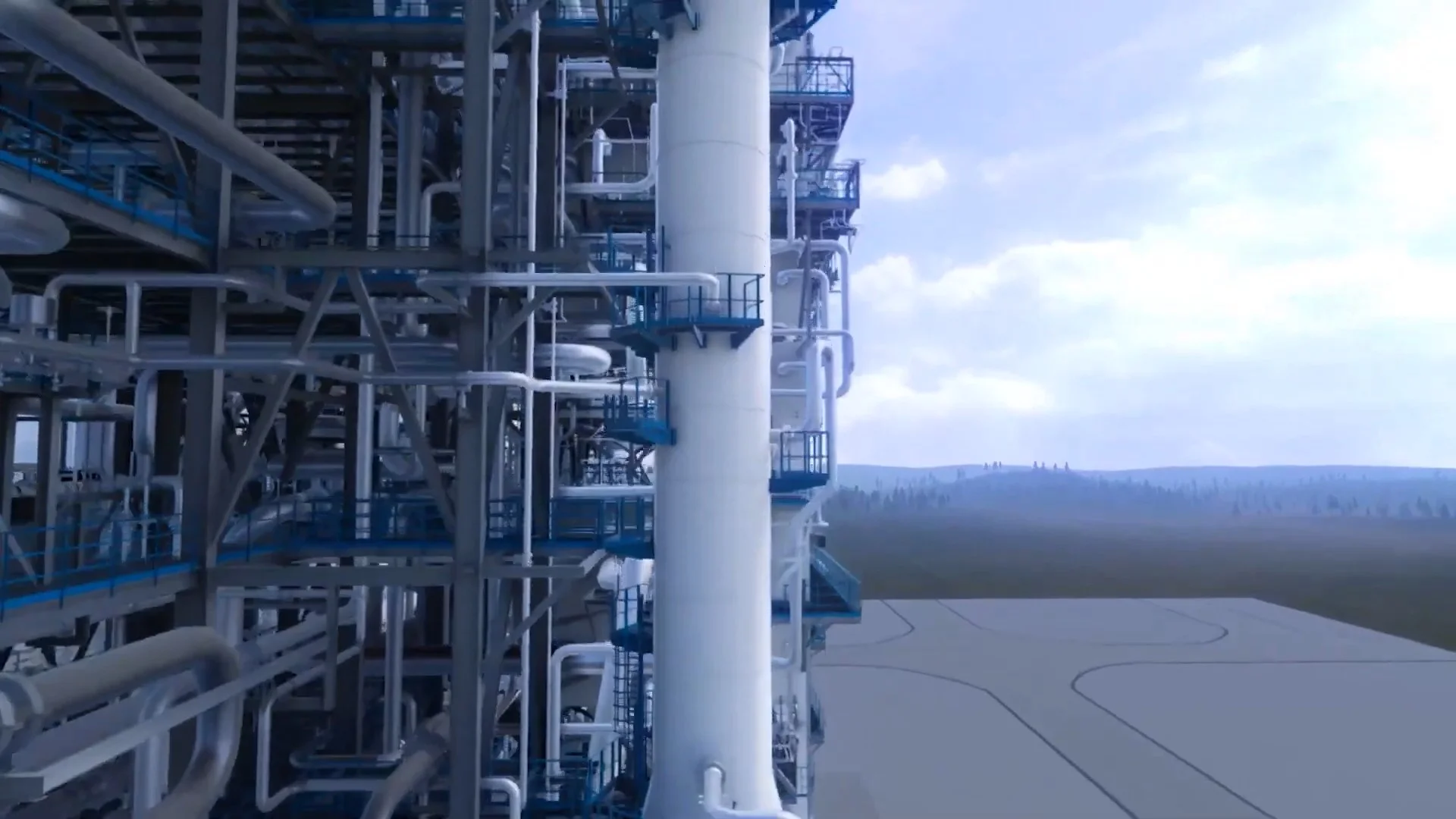
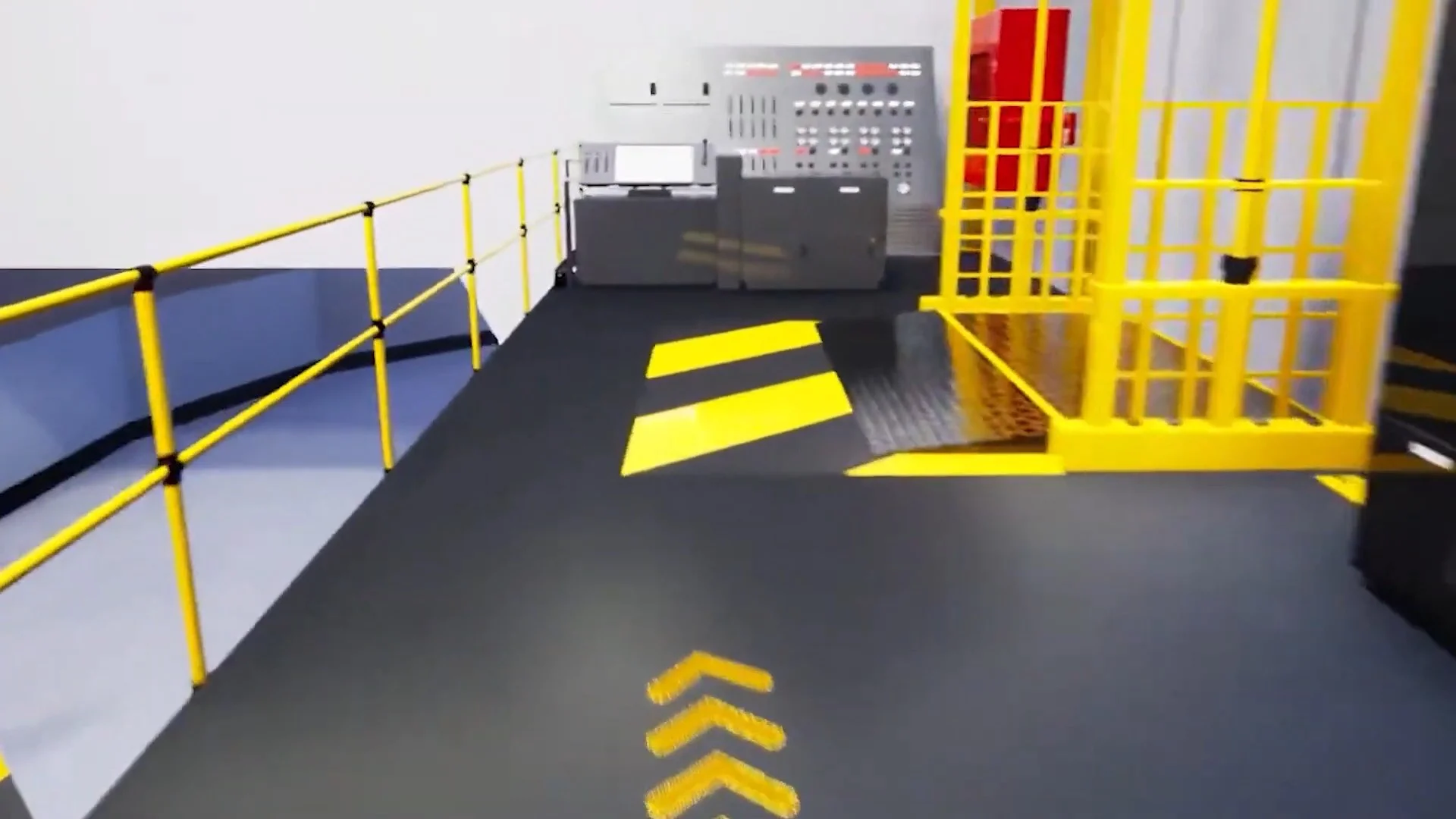
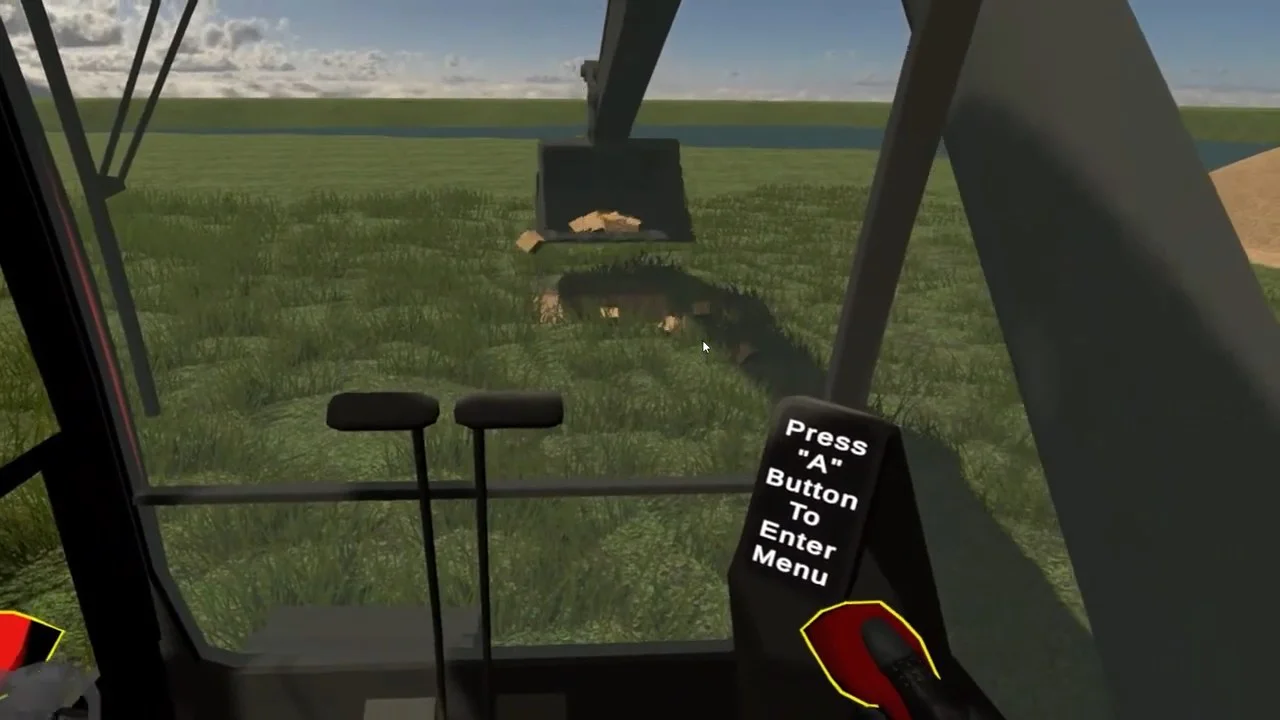
Robotics simulation: why your production needs it
Imagine this: a robotic line is stopped, a team of setup specialists is digging through the code, and every minute of downtime costs a lost order.
This is what happens when a new operation or program is tested directly on the production floor for the first time—any mistake becomes expensive and obvious.
Virtual testing allows you to move debugging into a digital environment, where a collision or failure will not lead to equipment damage or employee injury.
Without prior robotics simulation, an enterprise is forced to learn from its own mistakes: an incorrectly calculated trajectory, conflicting work zones, unexpected mechanism behavior.
These are not only direct losses from repairs, but also missed shipping deadlines and, in the worst case, a threat to personnel safety. A robot is powerful and fast, and the cost of its mistake is measured not in parts but in people's health and customer trust.
Simulation solves this problem before launch. You get a digital twin of the line where you can test any scenario: from tool replacement to emergency stop. Here the robot works in a virtual workshop, and engineers see all risks on screen rather than in reality.
This reduces downtime because setup takes hours instead of weeks, and it improves the safety of robotic processes, backed by proven algorithms.
There is also clear value in staff training. Operators and process engineers practice skills on a simulator without stopping the production line or risking equipment. A new employee masters complex operations in days rather than months and arrives at the site already prepared. In this way, virtual testing becomes a competence management tool, not just a technical option.
We help enterprises address this need: we design simulation around your tasks, integrate it with current processes, and support you after launch. As a result, you get predictable robotics operation, peace of mind for management, and protection of the most important asset—people.
What you gain from implementing a VR simulator
Industrial enterprises lose money at every stage: long employee onboarding, errors during setup, downtime, and accidents. A VR simulator moves training into a safe environment: personnel practice skills without stopping production, and you get a predictable result. World leaders such as Siemens already use this approach—we adapt it to your tasks.
Faster line startup
When a new line is launched, every day of downtime costs revenue. In VR, operators master the sequence of operations before the physical launch, so the line reaches capacity two to three times faster.
Reduced accident rate
Most incidents are the result of human factors. A VR simulator allows employees to safely practice abnormal situations, and the employee remembers the correct responses before meeting a real risk.
Training savings
Training on real equipment requires material consumption and mentor time. In VR, a mistake costs nothing, and the skill is reinforced just as it is on the production floor.
Increased productivity
A skill honed to automaticity shortens the time of every operation. The operator works without prompts, and output volume grows without additional investment.
Improved quality
In VR, employees learn to notice deviations and respond in time. This reduces the share of rejects and complaints, which directly improves financial results.
Robotics simulation formats for different industrial tasks
In industry, robots are used in different ways: one trains an operator, another is integrated into a line, a third requires integration with existing systems. There is no universal simulation format for all cases. The right format reduces downtime and the risk of errors on real equipment.
We have collected the main scenarios into a table. Choose the row closest to your task—each option delivers a specific business result.
| Format | Suitable for | Tasks it solves |
|---|---|---|
| Operator training | New employees, shift workers | Safe practice of actions before working with a real robot, reducing errors and injuries |
| Algorithm testing | Software engineers, process technologists | Verifying control logic and sequences without stopping production |
| Commissioning | Service engineers, commissioning teams | Setting up and checking equipment operation before physical launch, reducing time to commissioning |
| ROS integration | Teams using the open robotics platform | Connecting simulation to existing control systems without reworking the entire loop |
| Single robot or entire line | Production departments, planners | Choosing the project scale: from a single robot to full line simulation for evaluating bottlenecks and utilization |
How the project goes: from setting the task to launch
We structure the project according to a transparent scheme: you always understand what stage you are at and what you will get next. The approach has been refined across dozens of implementations—from robotics simulation to operator training—so every step is aimed at results.
- Brief and task definition. We analyze the production situation, goals, and scenarios. The output is agreed success criteria.
- Plan and requirements alignment. We fix timelines, cost, and stages. You make edits before development starts—this protects the budget.
- Prototype development and refinement. We create a basic version with key scenarios, show it to you, and clarify details: interface, difficulty levels, industry specifics.
- Hands-on testing. We test the simulator with future users. We ensure that scenarios are stable, controls are clear, and errors do not carry over into real work.
- Commissioning and training. We install the system, train employees, and hand over instructions. You receive a ready-made tool, not a “raw” product.
- Support and development. We answer questions, update content, and refine the simulator for new tasks. If processes change, we change the simulation.
This order protects the budget and deadlines: each stage ends with a result that you personally accept. Launch happens without surprises, and the simulator starts working immediately after handover.
What is included in the VR simulator delivery
A VR simulator delivery is a complete training solution, not just a program file. The package includes everything needed to launch training at your site and achieve measurable results.
- Training scenarios: typical technological processes, commissioning work, emergency situations. Scenarios are built according to your regulations, so the skill is immediately transferred to the workshop.
- Accurate 3D models of your equipment: machines, robots, and lines are reproduced with the same dimensions and operating logic. The sense of presence helps employees get oriented before entering the workshop.
- Integration with equipment: we use the specifics of your machines and robots so that actions in the simulator match reality. The transition from VR to the workshop is stress-free.
- Complete documentation set: instructor’s manual, operator guide, and occupational safety reminders. Everything needed for a training program.
- Training for your staff: we set up VR zones and transfer skills to instructors so that sessions can be conducted independently from day one.
- Support and updates: we adjust scenarios when equipment changes and add new exercises. The simulator works alongside your production.
- Admin panel: you can see who has completed training, where mistakes were made, and which topics need reinforcement. Full control over staff training.
Case study: how we reduced accident rates in production
For a large metal structures plant, accident rates were a chronic problem: frequent errors by crane operators led to line downtime and injuries. Staff training took weeks, and the result still did not guarantee safe work.
We proposed a pilot VR simulator project that reproduced real production scenarios without risk to people or equipment.
The UralStalProm team selected the five most accident-prone areas of the workshop. Our engineers digitized them into a virtual environment with accurate physics of load movement and constraints, just like at the real production site.
Operators learned to work in extreme situations—from a sudden gust of wind to brake system failure—in a safe virtual setting.
Project results
Within three months, we recorded a 30% reduction in operator errors. The time to bring a newcomer up to speed was cut in half: instead of two weeks of theory and hands-on practice with a mentor—five days of VR sessions and one shift on the real site.
Injury rates at the sites dropped to zero, and equipment downtime caused by human factors stopped completely.
Return on investment
For the customer, this translated into tangible financial results: less downtime meant more of the plan fulfilled, no injuries meant lower insurance premiums and payouts. The reduced training time allowed shifts to be covered faster and without overtime.
By our estimates, the investment paid back within five months—thanks to lower costs for replacing tooling that was previously damaged by rigging errors.
The plant’s management was so convinced of the effectiveness that they ordered an expansion of the program to a neighboring workshop. For us, this is the main success metric: when a customer returns for another part of the solution, not for fixing errors.
Frequently asked questions about VR simulators for industry
Managers considering a VR simulator for robotics simulation ask the same questions: will production have to stop, how much does it cost, and when will results appear. We answer briefly and to the point—without technical details.
Will we have to stop the workshop to install the simulator?
No. The VR simulator is a separate training module that does not connect to production systems. Our engineers configure scenarios based on your drawings and photographs, and employees can begin training a few days after installation.
How much does development cost and when will it pay off?
The cost depends on the number of scenarios and the complexity of the simulation. After a brief description of the task, we give an exact figure—this is free and non-binding.
As a rule, the simulator pays for itself in 6–12 months through savings on materials, reduced accidents, and less downtime.
Will the simulator be compatible with our equipment?
Yes. We model specifically your machines and robotic lines, so compatibility does not depend on brand or year of manufacture. The simulator runs autonomously and does not require modification of production systems.
How much time do employees need for training?
The basic scenario can be learned in 20–30 minutes. The program guides the newcomer step by step and immediately shows errors, while the instructor sees progress in real time. Retraining when a process changes takes from a few hours.
What happens after launch—who will support us?
We do not abandon the project after handover. We update scenarios to reflect process changes, add new operations, and answer operator questions. Technical support is available during working hours, and the average turnaround time for modifications is from one week.
Order VR simulator development
Every day of downtime on a production line costs a significant amount, and training on real equipment distracts operators and creates a risk of damage.
A VR simulator eliminates these costs: the employee masters robotics in a safe virtual environment, while the workshop continues to produce. We plan the launch so that you get a working tool within 1–2 months after the start.
When you order development, you get not a “pretty picture” but a training system that can be embedded into the enterprise’s current regulations. Here is what the work looks like step by step.
| Stage | Duration | What you get |
|---|---|---|
| Audit and brief | 2-3 days | Project plan, cost estimate, and implementation recommendations |
| Scenario prototype | 1-2 weeks | Demonstration of the simulator on your operations |
| Development and testing | 4-8 weeks | Ready-made program with your standards |
| Launch and handover | 3-5 days | Instructor training and working documentation |
We honor individual conditions: we fix the price after the brief and do not impose unnecessary options. Our practice confirms this—nine out of ten projects end with a repeat request.
What you get immediately after ordering:
- Free consultation—we analyze your task and assess the impact on training.
- Accurate cost estimate with no hidden fees—you know the price before work starts.
- Trial version of a scenario—you see the result before the final stage.
- Training kit for instructors—your employees conduct trainings themselves.
- Dedicated project manager—he or she is responsible for deadlines and approvals.
- Post-launch support—we help integrate the simulator into the shift schedule.
Calculate the cost of a VR simulator for your enterprise. Leave a request through the form on the website—we will call you back within one business day, answer your questions, and prepare an individual proposal.
We will take on both a standard simulation and a non-standard scenario—the main thing is that the training brings value to your production.
How to choose the right simulator format?
Choosing a simulator format starts not with technology, but with the tasks you want to solve. Teaching an employee a standard sequence of operations is one thing; practicing actions in an abnormal situation or assessing skills before permitting work is another.
This determines whether you need a simple on-screen scenario or full immersion with maximum realism.
In practice, comparing formats comes down to three criteria: the number of employees to be trained, the complexity of typical tasks, and the required level of immersion.
If you need to quickly prepare dozens of people for work on standard equipment, a lightweight format that does not require powerful computers and scales easily will work.
If you are dealing with hazardous production or rare emergency situations, it is better to choose a fully immersive format where the cost of a mistake in training is minimal.
The main mistake when choosing is trying to “try on” someone else’s experience or taking the most expensive solution without a clear goal. We recommend starting with the business result: what the employee should be able to do after training and how you will check it.
Based on this, we propose one or two suitable formats, not the entire range of options—so you pay only for what actually works for your task.
Therefore, the best way to avoid a mistake is an expert consultation before making a decision. We analyze your situation, answer questions, and give a recommendation on format, timeline, and budget.
You do not need to understand the details—just describe the task, and we will select a solution that delivers the desired result without overpaying or delays.