

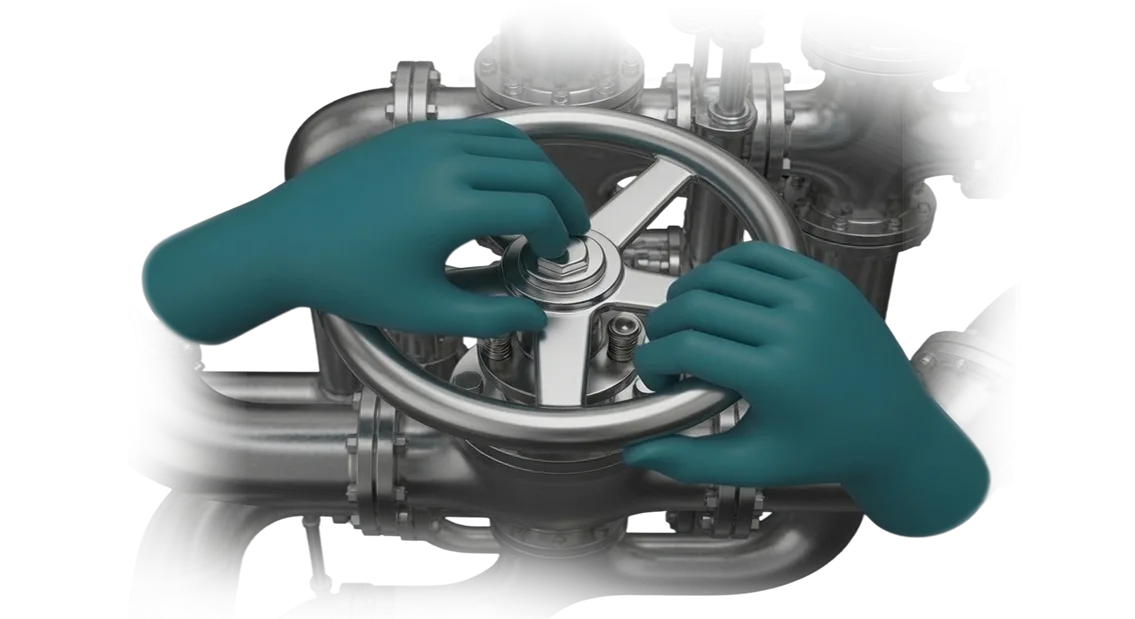
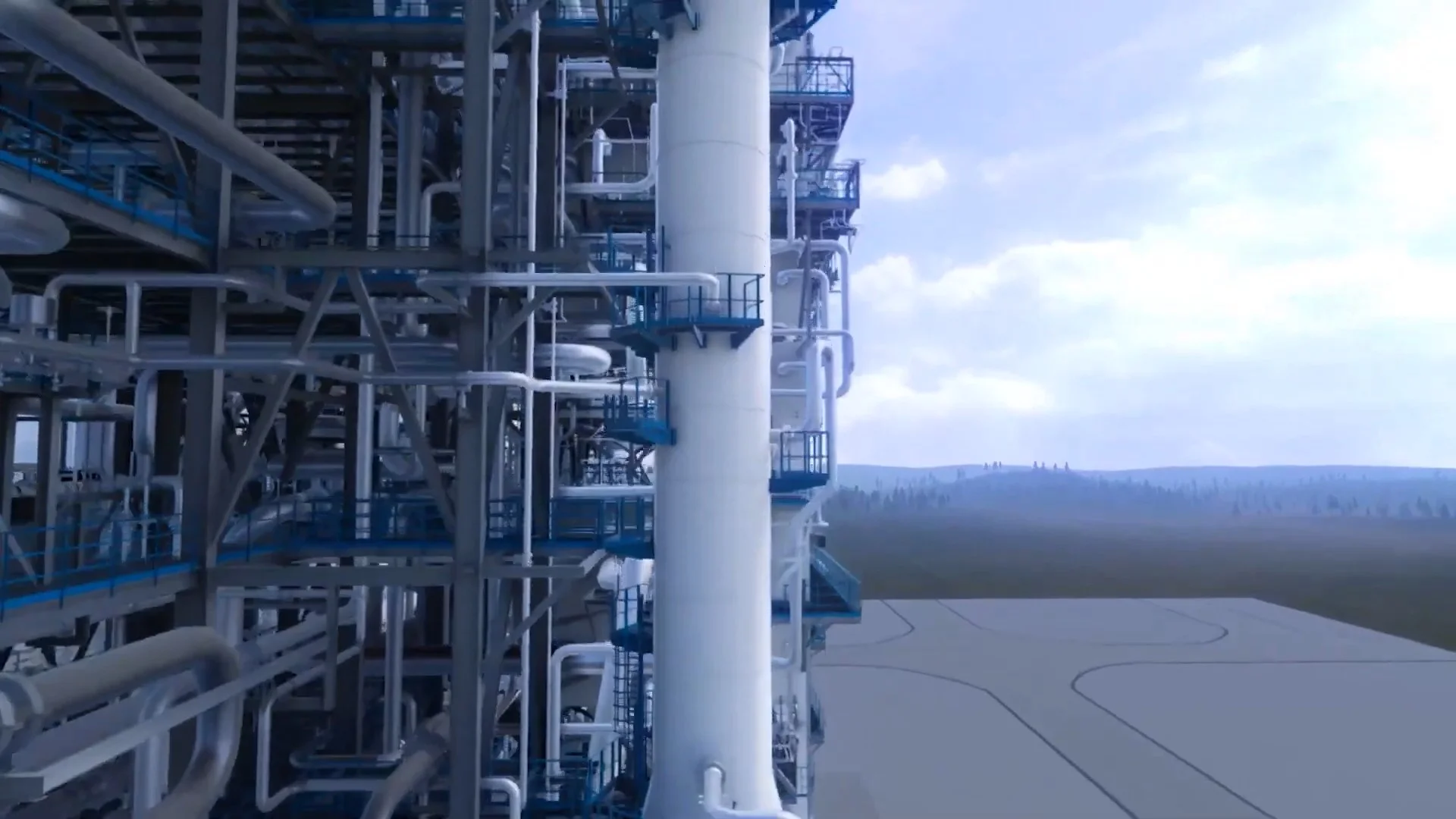
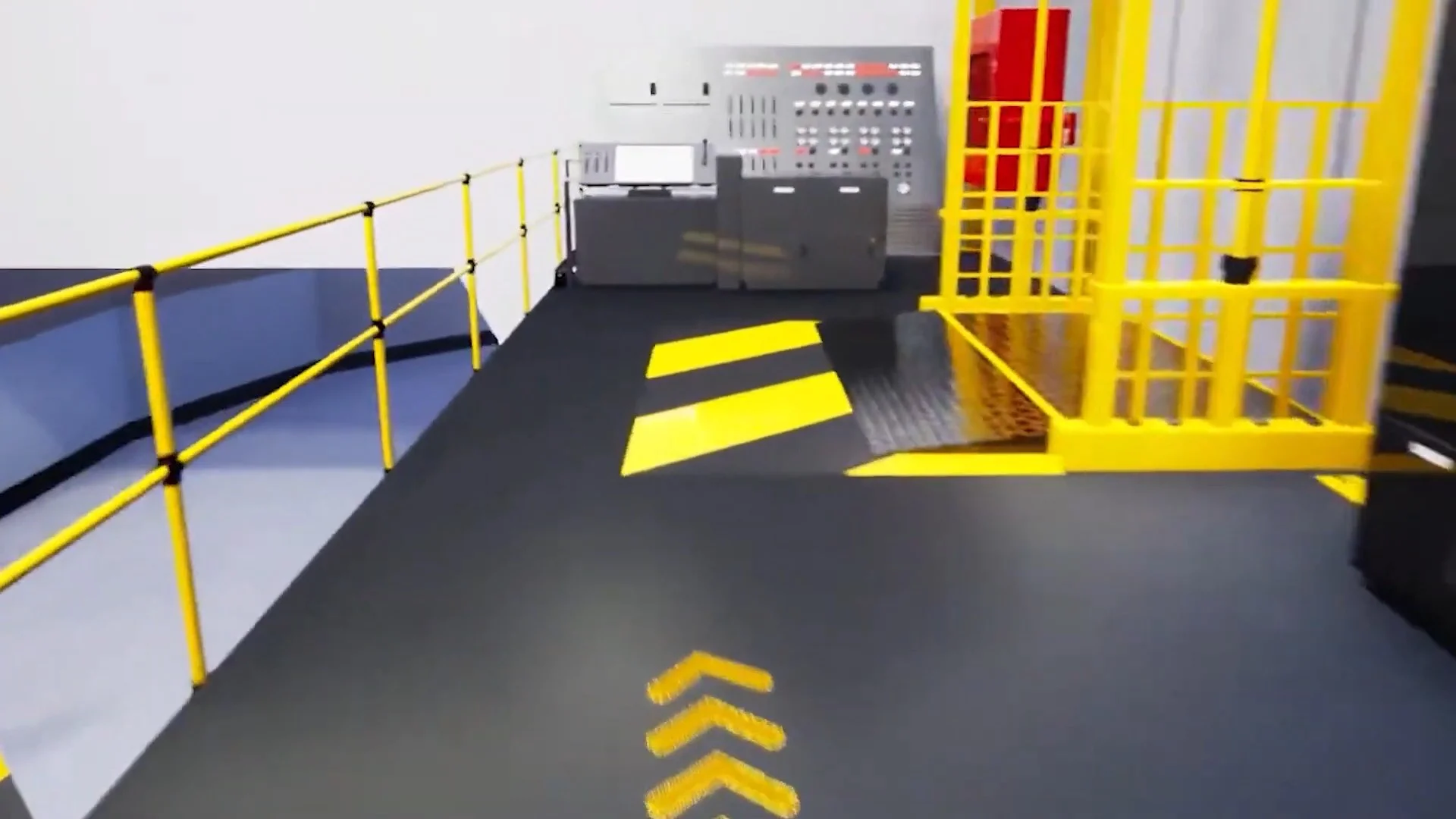
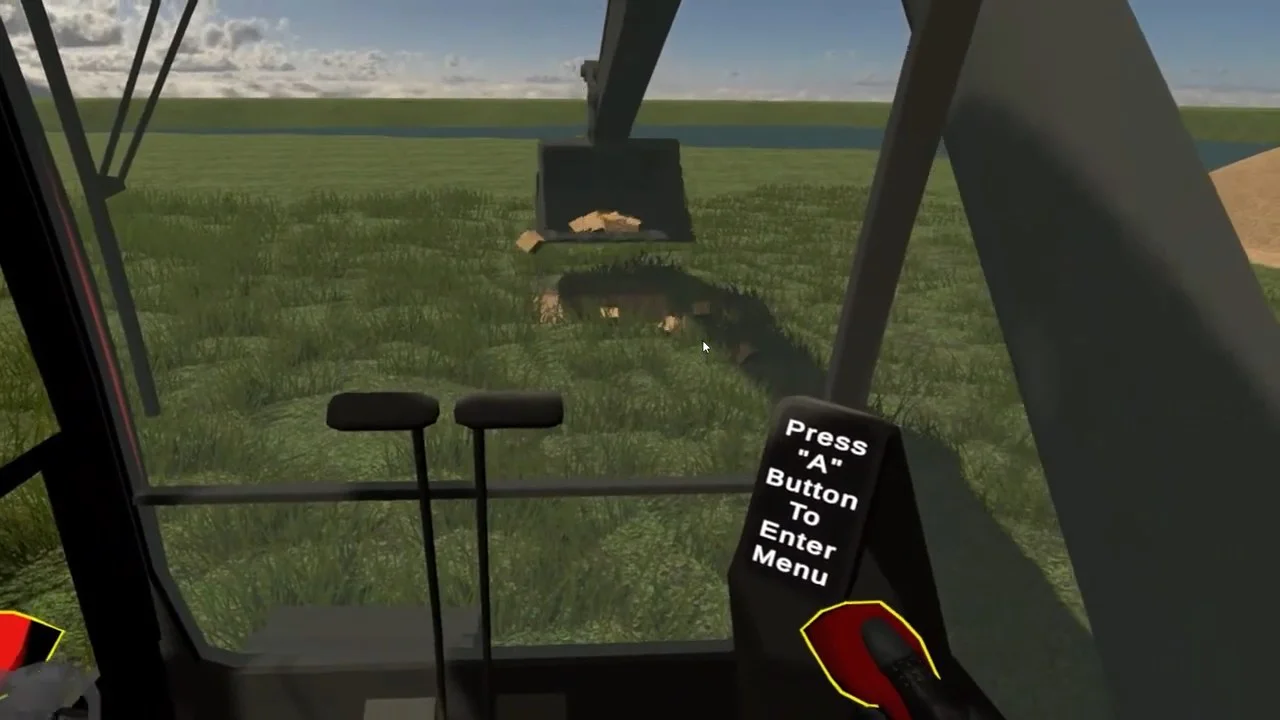
Why Enterprises Need VR Equipment Simulators
Classic personnel training on real equipment is always a compromise between safety and quality. Training on expensive machines and units leads to defects or downtime, while instruction without practice does not build lasting skills. Newcomer mistakes cost an enterprise hundreds of working hours and additional repair expenses.
Virtual equipment simulators solve this problem. An employee enters a digital copy of the production environment where any actions can be practiced safely — from standard operations to complex emergency procedures.
Industrial trainers provide the same muscle memory and process understanding, but without stopping real production.
VR personnel training delivers measurable results. The system records every employee action, execution time, and number of errors, allowing managers to make decisions based on data rather than impressions. This makes the training process transparent and manageable.
Industrial enterprise leaders choose virtual trainers also for cost efficiency: one scenario can be used an unlimited number of times without spending on consumables, and training a single specialist takes significantly less time. In addition, injuries are reduced, which decreases losses from downtime and compensation.
We develop VR trainers for your equipment and procedures, immersing employees in scenarios that are as close to real conditions as possible. This allows enterprises to move training to a new standard without unnecessary risks or investments in physical training stands.
What VR Trainer Implementation Delivers for Industry
In industry, the cost of a mistake is people's health, downtime, and reputation. Training on real equipment takes time and involves risks. VR trainers give employees hands-on experience without these risks.
Safety Without Risk to Personnel
An employee practices abnormal and emergency situations in a virtual environment where mistakes cost nothing. On a real site, such scenarios are either impossible or dangerous. As a result, the enterprise gains personnel with ready-made skills for acting under any conditions.
Fast Ramp-Up and Less Downtime
Training runs in parallel with production rather than stopping it. Newcomers arrive on the floor prepared, experienced specialists are not distracted from their tasks, and equipment changeover takes less time.
Expertise Stays Within the Company
The experience of the best mentors is turned into standard training scenarios. Even after a veteran leaves, their knowledge remains available to every employee — this is insurance against the loss of key competencies.
Saving Training Resources
No consumables, site rentals, or business trips are needed. Equipment does not wear out for the sake of training, and the time required to prepare new employees is reduced severalfold.
The implementation pays off through lower accident rates and higher personnel efficiency. We develop realistic VR trainers for specific production lines — from scenario design to on-site launch.
VR Simulator Formats for Production Tasks
Every production line is unique: one company needs to train a newcomer on a single machine, while another needs to coordinate an entire shift's actions in an emergency situation.
That is why we do not offer a "universal VR trainer" but instead match the format to the specific equipment type, personnel skill level, and budget. From a single virtual stand to a full digital copy of a site — each option solves its own task.
Below are the standard formats we work with and what they give an enterprise.
| Format | Who it is for | What it gives the client |
|---|---|---|
| Standalone VR trainer (one machine, one process) | New employees, trainees, operators | Fast onboarding, practicing basic skills without risk to equipment or people |
| Virtual stand (a group of operations, multiple modes) | Experienced workers, maintenance services | Mastering complex scenarios, studying rare emergency situations, personnel certification |
| Comprehensive trainer (workshop, production line, multiple workstations) | Shifts, teams, supervisors | Coordinated actions, practicing interaction between roles, lower accident rates |
| Full virtual copy of the production facility | Managers, engineers, occupational safety service | Testing scenarios before launch on real equipment, bottleneck analysis, safe drills |
The more complex the equipment and the higher the cost of error, the more comprehensive the format that makes sense.
You can start with a single trainer and gradually expand it to a full copy of the workshop — this allows you to spread the budget and get the first result within weeks.
In any format, we stay on the client's side: we capture your procedures, build them into scenarios, and hand over a system that personnel can use without special training.
How VR Trainer Development Works: Stages and Timelines
Trainer development looks like a "black box" until you are part of it. We remove that uncertainty: every stage has a deadline, a responsible person, and a control point where you see the intermediate result and make a decision.
- Brief and technical specification — we record training goals, scenarios, number of workstations, and result requirements. The output is a document understood by both the production manager and the operator.
- Scenario design — together with your technologists, we break down the real process, operation sequence, typical errors, and emergency situations. We approve the trainer logic before development starts — this saves up to 30% of the timeline.
- Development of 3D models and environment — we model your equipment, workshop, and tools. At this step, you receive the first visualizations and verify how accurately the trainer reflects the real facility.
- Assembly of interactive logic — we connect models and scenarios into a working simulator. The system evaluates the trainee's actions and provides feedback — just as an instructor would on a real site.
- Testing and refinement — your experts and experienced operators test the trainer. We collect feedback, make corrections, and ensure the training process is accurate and safe.
- Launch and support — we install the system at workstations, train your instructors, hand over documentation, and remain available for scheduled updates.
A typical project from brief to launch takes 8–16 weeks, depending on equipment complexity. What you get is not a "prototype in six months" but a predictable process with a fixed price and clear control points. At every stage, you see a working result and understand what you are paying for.
We have gone through this process dozens of times for production facilities across various industries — from mechanical engineering to energy. That is why we take on project management: you do not monitor every step but receive a finished product by the agreed deadline.
Contact us — we will assess your scenario free of charge and propose a development plan with accurate timelines.
What Is Included in the VR Equipment Simulator Delivery
A VR equipment simulator is not a "bare" program but a complete working solution. The delivery package includes everything needed to launch training at your enterprise within the first week — from configured scenarios to the preparation of your instructors.
- Ready-made training scenarios — standard, abnormal, and emergency situations adapted to your equipment. The operator practices actions to automation without any risk to production.
- Methodological materials for instructors — lesson plans, evaluation criteria, recommendations for error analysis. Your specialist can run sessions immediately, without developing a program from scratch.
- Instructions for operators — built-in hints, reference cards, and guides inside the trainer itself. An employee can figure out the interface without technical assistance.
- VR documentation — trainer passport, operating manual, maintenance regulations. Reporting and inspections proceed without delays, and the training department has a complete audit base.
- Integration with results tracking — export of data on scenario completion, error counts, and execution time. You see the progress of each employee and the entire group in a convenient format.
- Operator and instructor training — on-site or remote format. A practical course until full proficiency, so your team works with the trainer independently.
- Technical support and updates — for the entire service life. Scenarios are adjusted to reflect changes in procedures or your production specifics at no extra charge.
After handing over the package, we do not disappear: during the warranty period, we help with setup, answer questions, and update content if needed.
You receive not just a simulator as such, but a working training system with clear instructions, neutral documentation, and a prepared team — all that remains is to fit it into your personnel training schedule.
Implementation Example: Reducing Accident Rates in Production
At one industrial enterprise, we encountered a typical situation: a high accident rate among new employees, expensive training on real equipment, and production line downtime while personnel acquired skills. Every newcomer mistake resulted in downtime, repairs, and risk to people's health.
When they came to us with a request to "reduce accident rates," we proposed not lectures and briefings but an environment where mistakes are possible without consequences. We developed a VR trainer that fully simulates the work process and emergency situations.
New employees train in a safe virtual environment, without risk to themselves or the equipment. This allows them to practice emergency response as many times as needed, until full automation — on real production, such an opportunity costs a lot.
The implementation results exceeded expectations. Accident rates dropped by 40% in the first six months, and employee onboarding time was cut in half.
Training costs decreased by a third — the enterprise stopped halting production for training shifts, and trainees distracted mentors less.
After the first phase, the client expanded the program to all workshops and ordered an additional trainer for experienced personnel to practice responding to rare emergency situations.
We continue to support the project: we update scenarios for new procedures and help measure training effectiveness.
This allows the enterprise not only to save money but also to systematically improve its safety culture, while employees gain confidence in their actions before ever stepping onto the real production floor.
How to Choose the Right Simulator Format for Your Task?
Choosing a VR simulator format starts not with technology but with three questions: what task are we solving — training, certification, or practicing emergency scenarios; how many employees need to be trained; and what is their current skill level. The budget, launch timelines, and measurable results for production all depend on the answers.
For mass training on standard operations, a workstation with a realistic 3D model is sufficient: the employee runs through the scenario on screen, and the system records errors.
For rare emergency situations and complex, expensive equipment, choose full immersion — a VR headset provides the "sense of presence" that turns theory into a lasting skill. For certification, a hybrid is optimal: simulation plus instructor oversight.
| Format | Who it is for | What it gives the client |
|---|---|---|
| Full immersion (VR headset) | Operators of complex equipment, emergency scenarios | Skill is practiced without risk to people or machinery and is retained long-term |
| Workstation (3D model on screen) | Mass training of workers, initial preparation | Fast coverage of all shifts without purchasing expensive headset kits |
| Hybrid (VR + instructor) | Certification and retraining | Objective assessment of actions, targeted closing of employee skill gaps |
We select the format for the specific task rather than selling a universal solution.
At the start, we audit work processes, calculate the number of trainees, and define success criteria together with you — for example, reduced onboarding time or fewer operator errors.
You then receive a pilot scenario on your real equipment and see the result before paying the full project amount.
During the pilot, we fine-tune the scenario to match your personnel's skill level — the result is a trainer that is actually used in training, not one that gathers dust after launch.
What Happens If the Trainer Equipment Breaks Down?
Broken equipment is no reason to stop training. We design trainers so that a failure in one part of the system does not affect the entire program: backup copies and industrial-grade components rated for intensive loads are used.
If a breakdown does occur, the client gets a fast return to operation. Warranty service covers repairs and component replacement, and technical support is available remotely or on-site — depending on the complexity of the situation.
What to do if the VR equipment fails?
Contact us — it takes a couple of minutes. We then follow our procedure: diagnose the problem, restore data from a backup if necessary, and replace the faulty component.
Importantly, the training process does not stop: you retain access to materials and instructions, and after the repair, the trainer continues working with the same settings.
Recovery time depends on the complexity of the failure, but for typical cases we return to service within a few working days.
Order VR Simulator Development for Your Enterprise
VR trainers for industrial enterprises are not just a modern training tool but a direct way to reduce costs and improve the quality of personnel preparation.
Our clients have already seen how simulating real equipment reduces the risk of accidents and accelerates the onboarding of new specialists.
We handle the full cycle — from analyzing your task to launching the finished solution. First, you receive a consultation: we analyze which training scenario fits your specific production.
Then we prepare a pilot project — a compact version of the trainer — so you can see the result with your own eyes on your equipment.
What you get by contacting us:
- expert consultation on VR training implementation — no fluff or technical overload, only practical value for your enterprise;
- a pilot demo that can be tested with real employees before purchasing the full version;
- cost calculated after audit: we fix timelines and budget before work begins, with no hidden charges;
- integration with your current training programs — employees continue working in your familiar reporting system;
- support at every stage: from development to launch and ongoing support;
- transfer of all materials to your team — you will be able to update the trainer without our involvement.
Leave a request to order a VR simulator for your enterprise. Within one business day, we will get back to you with an action plan.
We will show examples of projects for your industry, answer your questions, and propose a solution that pays off through reduced errors and faster personnel training.
We will start with a free consultation — and you will decide for yourself how useful a VR trainer is for your production.