

Spacecraft Construction Simulator: Fewer Errors
Spacecraft construction is a process where the price of a mistake is measured not only in money, but also in deadlines, reputation, and team safety.
Every incorrect action at a real facility can damage expensive equipment, halt operations, or even threaten the lives of specialists.
That is why classic on-site training costs an enterprise too much: it requires time from experienced employees, carries risks of accidents and downtime that can stretch over days.
VR training changes this approach. A spacecraft construction simulator lets engineers and workers practice complex operations in a virtual environment as close to reality as possible.
Here you can make mistakes without consequences: repeat assembly steps, learn the sequence of operations, respond to emergency situations — until the skill becomes automatic. Meanwhile, equipment is not idle, and newcomers do not disrupt the production process.
The key results are safety and savings. An employee arrives at the real facility already prepared, understanding the technological sequence and potentially dangerous areas.
The number of incidents caused by human factors decreases, downtime due to errors is reduced, and the speed of onboarding increases many times over. The enterprise gains a stable training process without disrupting core operations.
We develop such simulators to meet the needs of a specific enterprise: taking into account your technological operations, equipment, and requirements for specialists.
Our engineers create a VR trainer that fits into your existing training system and delivers measurable results after the very first sessions. This is not an experiment, but a working tool that replaces the risks of real-world training with predictable, safe practice.
Benefits for the Enterprise: Safety, Speed, and Savings
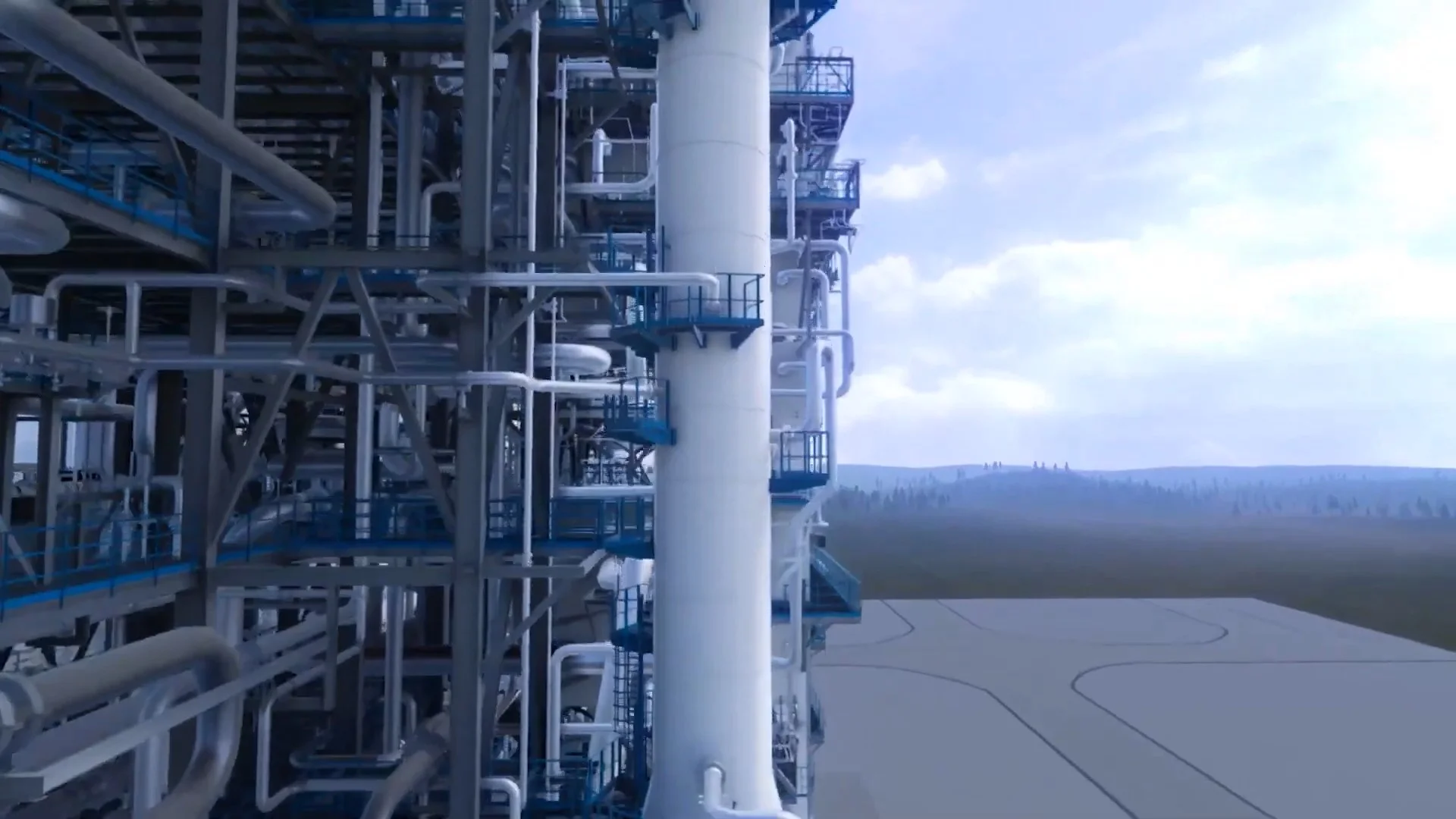
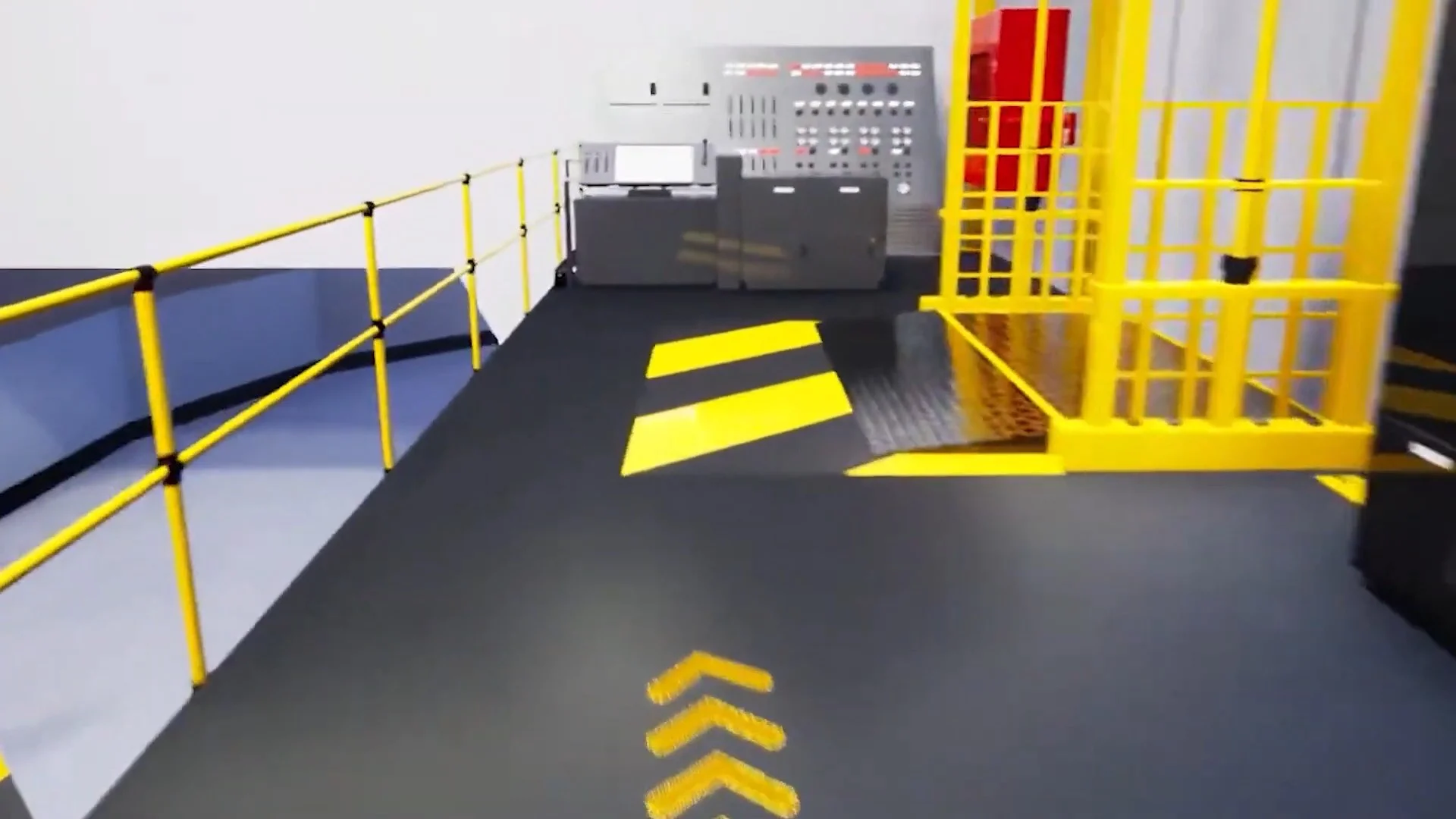
The spacecraft construction simulator moves the training of engineers and workers into a virtual environment that reproduces the real workshop with high accuracy.
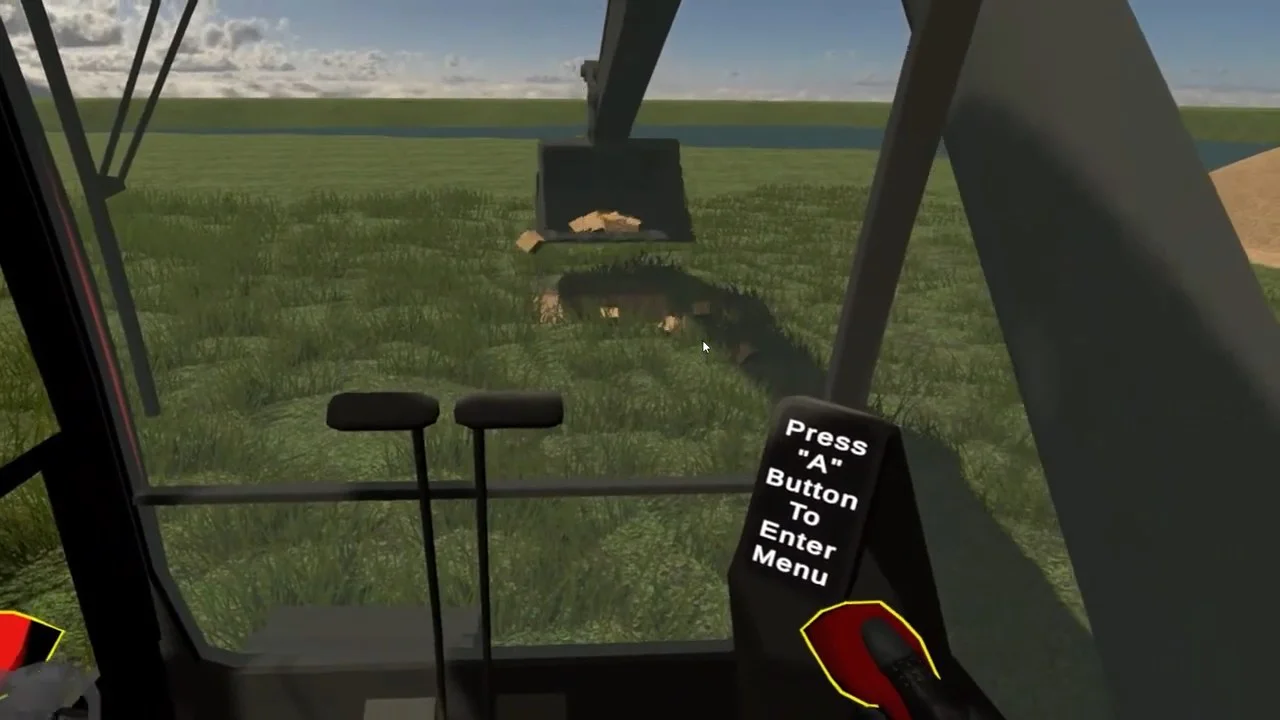
We build the trainers on professional VR systems HTC Vive, ensuring stable performance and full immersion, just like at an actual production site.
Training on real equipment always involves risk: an error during spacecraft assembly can cost lives or lead to huge losses.
In the trainer, these mistakes have no consequences — the worker hones actions to the point of automaticity, while the enterprise reduces the number of injuries and accidents. Fewer accidents mean less downtime and fewer payouts.
The speed of training increases many times over. If a skill takes months to develop at a real facility, virtual scenarios condense the experience: emergency situations, rare operations, and work under tight deadlines.
Newcomers reach full productivity faster, and experienced employees retrain without stopping the production line.
Repeatability is the key to quality. In the simulator, every component of the spacecraft can be practiced to the perfect sequence without risking damage to parts.
This both reduces the defect rate and saves materials — the virtual environment only requires electricity, while costs for real components disappear. The trainer pays for itself quickly.
Spacecraft Construction Simulator Formats
For an industrial enterprise, the spacecraft construction simulator solves different tasks: quickly bringing a newcomer up to speed, honing an assembler's actions to automaticity, or vividly demonstrating the process to customers and project teams.
That is why we do not sell a “box” — we select a format to match your production goal, from a compact scenario to a full assembly cycle.
Each option includes a virtual instruction, error control, and statistics for every employee. The difference between formats lies in the scope of operations, implementation timelines, and budget. Below are typical solutions that cover the main business tasks.
| Format | Who it is for | What it gives the client |
|---|---|---|
| Compact trainer — one operation | For rapid training at a specific workstation | Minimal VR entry, launch within weeks, error rate reduced to technological tolerances |
| Modular simulator — several assembly operations | For practicing an entire technological section | Flexible adjustment to changes, training without stopping production |
| Full spacecraft assembly cycle | For comprehensive crew training and presentations | Unified quality standard, process demonstration to contractors, reduced risk of costly errors |
We determine the exact configuration at the briefing: we will advise which format will pay off faster and deliver results in the coming months. The comparison is free and non-binding.
How We Develop a VR Trainer: Project Stages for the Client
We do not start with code. First, you describe which operation needs to be practiced and where people make mistakes. Using this approach, we have launched dozens of trainers, including KosmoStroy — and each subsequent stage brings the trainer closer to your real production task. Below are seven steps with clear outcomes.
- Brief and process immersion. We study regulations, photos, and videos from the workplace. The result is a document with the trainer's objectives, a list of operations, and evaluation criteria.
- Scenario design. We turn the technological process into a virtual sequence of steps: correct actions, mistakes, and hints. You see the logic before development and make edits in advance.
- Prototype approval. We present a simplified 3D model and interaction logic. Most corrections are made at this stage — they cost many times less than rework later.
- Development and assembly. We create realistic graphics, physics, and sound using professional equipment. At the same time, we prepare an employee action assessment scale for your technologist.
- Testing with your specialists. Your technologists and workers go through the scenario in the headset; we record inconvenient moments and refine them before launch.
- Deployment and handover. We set up the system on your equipment, train instructors, and hand over documentation for working with the trainer.
- Support and development. We collect completion statistics and help update scenarios to meet new standards and safety requirements.
What Is Included in the VR Trainer Delivery Package
When you order a VR trainer, you receive a comprehensive solution ready for use from day one. We put together scenarios, documentation, training, and support for you — nothing will need to be purchased or developed separately.
The standard delivery package includes:
-
Training scenarios tailored to your production tasks. For example, a spacecraft construction simulator: from feeding components to assembly quality control. We adapt the scenarios to your documentation and regulations.
-
Software with an employee interface. The software runs on professional equipment, launches easily, and does not require special technical knowledge from staff.
-
A complete documentation package. Operating manuals, methodological materials for instructors, setup and administration instructions.
-
Training for your employees. We provide hands-on training for key specialists: they master the system and will be able to train new operators independently.
-
Warranty support and updates. During the agreed period, we support the project: we fix issues, answer questions, and update scenarios and software when your regulations change.
This package allows you to launch training quickly and avoid dependence on external contractors. You get a well-tuned tool that pays for itself by reducing employee training time and lowering risks at real facilities.
Case Study: How a VR Trainer Cut Assembly Time by 30%
Our client is an instrument-making plant that assembles spacecraft housings. Assembling one component took up to 40 minutes, and training a newcomer meant several weeks of work on a real part.
Any mistake meant a defective product and line downtime, so mentors did not let trainees work on independent assembly.
We built a virtual simulator of the assembly area for Progress. The operator in the headset sees an exact copy of the workshop, tools, and the correct sequence of actions, while the system highlights any mistake immediately.
Training can be done without stopping production and without risking damage to an expensive housing — an ideal environment for practicing a complex operation.
Metrics the Customer Saw
One month after the simulator was launched, the average time to assemble a component dropped from 40 to 28 minutes — a 30% reduction. The share of installation errors fell by 1.8 times, and newcomers reached independent work in one week instead of three.
The plant calculated that savings from reduced defects covered the cost of the trainer in less than a year.
We are currently scaling the solution to two neighboring workshops and preparing a separate scenario for the test group.
The client has already placed a repeat order — for us, this is the main proof that the simulator solves a real problem rather than simply looking impressive in a demo.
How to Choose the Right VR Trainer Format for Your Production?
Choosing a VR trainer format is not a question of “like it or not,” but a question of matching your specific production task.
If the goal is to practice actions in conditions that are dangerous or expensive to reproduce in reality — for example, assembling a spacecraft from blueprints in a confined space — full immersion with simulation of all working operations will suit you.
If you need to quickly train an employee in a sequence of steps on real equipment, a lightweight format with hints and error control at each stage is more effective.
We always start by analyzing what exactly is slowing down your work: beginner mistakes, long onboarding, or a shortage of mentors. Based on that, we propose a format: from a compact 15-minute scenario to a full-fledged trainer with several difficulty levels and a final test.
This approach lets you avoid overpaying for excessive detail where basic skill practice is enough, and get a result measured in the speed and quality of your specialists' work.
The right format is when training becomes part of the production process rather than a distraction from it.
We help you choose a solution that can be easily integrated into your current personnel training system, and we support the implementation until your employees begin working confidently on their own.
As a result, you get a trainer that pays for itself by reducing the defect rate and accelerating a newcomer's path to full productivity.
Frequently Asked Questions About Ordering a VR Trainer
Before ordering a VR trainer, managers usually weigh three things: timelines, guarantees, and the complexity of switching to a new technology. We have collected answers to the main questions — without technical details, in plain words.
What if the equipment fails?
The warranty covers the entire package: equipment, software, and the management system. For the duration of the project, we assign a support engineer who can connect via video call to help with setup or resolve the issue remotely. We replace components under warranty at no extra charge.
How long will simulator development take?
The timeline depends on the complexity of the scenario: a basic trainer is ready in two weeks, a full cycle takes several months. Before we start, we create a detailed plan with dates so you can see progress at every stage.
How quickly will employees learn to use the trainer?
The interface is designed for an average employee: an instructor conducts the first session, and built-in hints guide the user from there. A specialist can begin working independently after the first session, and the entire cycle is mastered in one day.
What happens if the technological process changes?
The trainer is built on a modular principle: a change in the process does not require starting from scratch. We add steps, adjust parameters, replace equipment — and give an honest estimate of the time and cost for modifications.
Get a VR Trainer Cost Estimate for Your Task
Every trainer is unique — tailored to your equipment, regulations, employee skill levels, and specific scenarios. That is why we do not sell a “box” with standard modules.
Instead, we calculate the project based on your task: what exactly needs to be simulated, where it should be used, and what result you want to measure.
Submit a request for an estimate — within one business day, we will prepare a selection of solutions, timelines, and a commercial proposal. You will receive a transparent cost estimate with no hidden work and can compare options before the project starts.
What Is Included in the Estimate
- Analysis of your task — we study the production process, typical errors, and growth areas so that the trainer addresses exactly your pain points.
- Format selection — an immersive VR trainer, a simulator for a standard PC, or a hybrid solution tailored to your budget and equipment fleet.
- Cost and timeline estimate — we fix the scope of work, stages, and price; the estimate does not change during the process without your consent.
- Implementation plan — how the trainer will fit into your current training: who will use it, where to install it, and how to track results.
- Engineer consultation — our specialists will clarify the details and propose the optimal solution, not the most expensive one.
What You Get After Submitting a Request
You will receive a selection of 2-3 implementation options with a description of the benefits of each, an accurate budget and timeline estimate, and a pilot launch plan for a small group of employees. This allows you to make a decision without risk or unnecessary expenses.
Submit a request — and in one day you will know how much the trainer costs for your specific production. The consultation is free and non-binding: even if you decide not to start the project, you will receive useful recommendations on employee training.