

Why Current Train Driver Courses Don't Reduce Accident Rates
Traditional train driver training is built around studying instructions and standard scenarios: routes, signals, procedures. But real work is different — emergency braking, sudden obstacles on the track, equipment failures, severe weather.
It is in these situations that decisions are made that affect lives and cargo safety, yet practice for handling them is either absent from ordinary courses or carried out formally.
As a result, railway accident rates persist, and every incident leads to downtime, repairs, fines, and loss of trust in the carrier. Managers invest in training programs and update handbooks, but statistics change slowly.
The issue is not the number of hours or instructor motivation, but that knowledge without experience in decision-making under pressure does not turn into lasting skills.
The problems in staff training here are systemic: theory is tested with quizzes rather than actions, mistakes are not analyzed, and stressful scenarios are practiced only in memory, not in a simulated environment.
A train driver encountering an abnormal situation for the first time has to act on guesswork — and the price of such improvisation is far too high.
We close this gap with VR simulators that reproduce real conditions and allow repeated practice of actions in any abnormal situation — safely, without risk, and with complete error analysis.
This way, train driver training stops being a formality and begins to directly reduce accident rates and downtime.
What Implementing a Simulator for Train Driver Training Will Deliver
Train driver training traditionally requires hours of practice on real rolling stock, fuel consumption, and constant instructor involvement. Every mistake by a beginner is a risk to people, equipment, and the schedule.
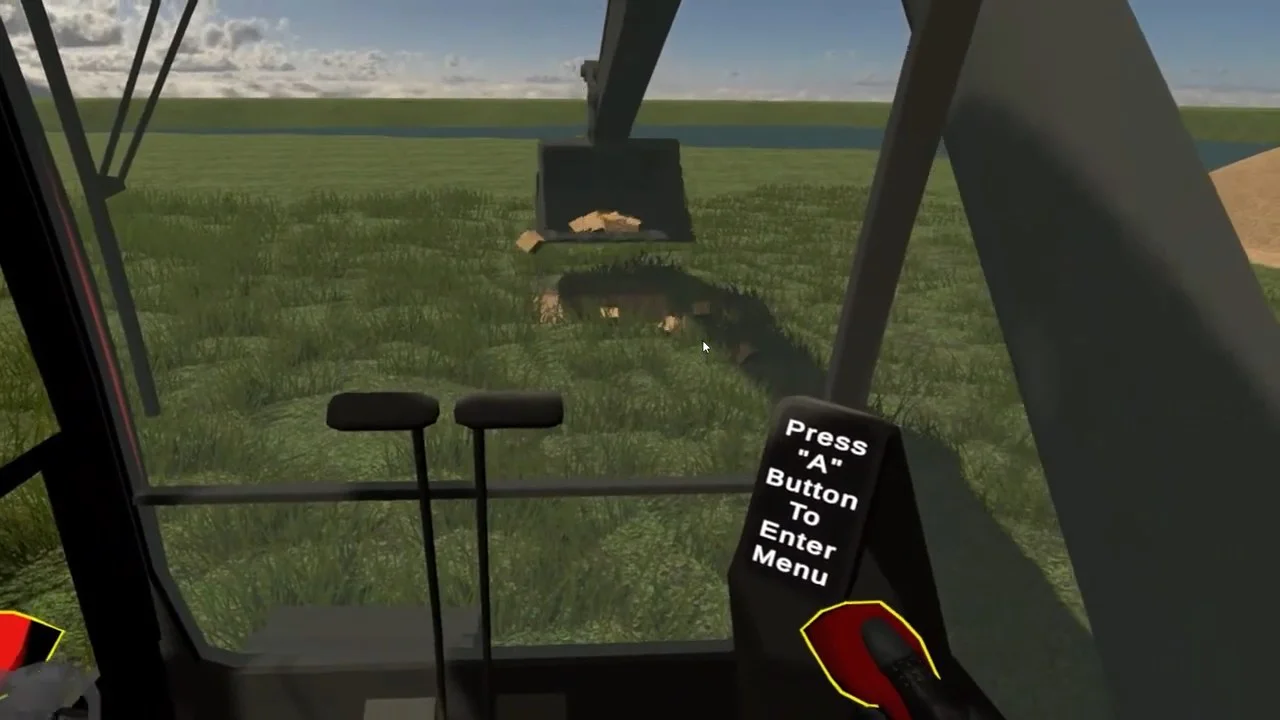
A VR simulator for train driver training moves learning into a safe virtual environment where mistakes cost nothing and skills are solidified just like on a real train.
Safety becomes the key benefit. A trainee can practice emergency braking, equipment failures, severe weather, and abnormal situations — things that are dangerous or nearly impossible to reproduce in real life.
At the same time, the instructor sees every action and reviews the mistake immediately, without waiting until the end of a shift.
Cost savings come from several areas: less spending on fuel, locomotive depreciation, and instructor time. One simulator replaces hours of track practice and allows training without interrupting operations.
Based on our experience, enterprises recoup their investment through lower accident rates and faster onboarding.
Training speed increases: the trainee repeats a scenario until the skill becomes automatic, and the system objectively assesses readiness. The training program becomes standardized — all drivers receive equally thorough coverage of typical and rare situations. This shortens the time to independent work and simplifies quality control of training.
We design simulators around the enterprise's needs: we model specific track sections, rolling stock, and regulations. Implementation takes a few weeks, and the result is measured in reduced risks and consistently qualified personnel.
VR Simulator Formats for Different Budgets and Tasks
It is not always worth investing in your own VR system right away. Some need to quickly certify train drivers, others need to embed a simulator into an ongoing training program, and some simply want to test how the technology affects training quality. The optimal implementation format and development cost depend on these needs.
We cover all these scenarios: from short-term VR simulator rental to turnkey development. We offer options so that you pay only for what you actually use.
VR Simulator Formats
| Format | For whom | What it delivers |
|---|---|---|
| VR simulator rental | Companies that need to train a group of employees once, run an exam, or hold a demonstration | Quick launch without capital expenditure, pay for the period of use, all equipment and support are ours |
| Ready-made standard VR simulator | Enterprises with standard routes and typical train driver tasks | A proven solution at a fixed cost, minimal implementation time, known economics |
| Turnkey development | Enterprises with unique routes, specific rolling stock, or internal regulations | The simulator replicates the enterprise's real conditions, is integrated into training and certification processes, and you own the solution |
| Pilot project | Companies that want to evaluate VR effectiveness before scaling | A narrow scenario at one site at a low cost, clear metrics for deciding on wider rollout |
The key is to choose a format based on the task, not the technology. If training and safety are needed continuously, rental quickly becomes more expensive than owning a simulator. If you only need a one-time skills check, there is no point in launching a full turnkey project.
Our engineers help you calculate the economics of each option at the brief stage: we show how the format affects launch time, cost per training hour, and instructor workload. As a result, you get a VR simulator that pays off in your conditions, not just an attractive showcase.
After you choose a format, we fix the scope, timeline, and price in the contract — and do not change the terms along the way.
Stages of Launching a VR Simulator: From Brief to Staff Training
We have enough experience in launching VR simulators for transport and industry that every project follows a clear scheme. You know in advance what the stages will be, how long they will take, and what we are responsible for versus what you do.
- Brief and task immersion. We study your work instructions, regulations, and the real situations train drivers face. We define training goals: practicing standard actions, responding to abnormal situations, or staff certification.
- Technical specification and work plan. We fix the scenarios, visual requirements, parameters for evaluating employee actions, and development stages. We agree on the timeline and budget — this makes the project predictable.
- Development of the virtual environment. We create a model of the control cab, track environment, and typical situations: weather conditions, signals, sudden track obstacles. We develop the simulator's action logic.
- Integration with equipment and verification. If necessary, we connect your controllers and control panels so staff work on familiar equipment. We conduct internal testing against the technical specification.
- Testing with your instructors. We show a working version and gather feedback from instructors and experienced employees. We make corrections to scenarios and the assessment system.
- Launch and staff training. We install the simulator and configure it to your instructor training program. We hand over manuals and a short course for system administrators.
- Support and development. After launch, we stay in touch: we update scenarios, add new situations, and help expand the number of workstations.
This approach gives you not a "box" at an unclear stage of readiness, but a phased result with checkpoints at every step. You see how the simulator fills with content and can influence the outcome in time.
The launch happens without missing deadlines or panic, and staff begin training on a simulator already verified against your own regulations. Want to discuss starting? Write to us — we will prepare a brief within two working days.
What Is Included in the Delivery of a VR Simulator for Railways
The result of our work is not "software in a vacuum" but a ready-made turnkey solution that can be immediately integrated into the training process. You receive the full package for launch and daily operation without involving intermediaries.
Delivery Set and Support
- Working VR simulator "turnkey". A fully configured scenario (from train driver preparation to emergency situations), adapted to your infrastructure. Your employees put on the headset and begin practicing skills — no fiddling with settings.
- Learning management system. The administrator does not need to be a programmer. Through a clear interface, you manage tasks, assign scenarios to groups, track progress, and monitor completion of mandatory checks. All statistics in one window.
- Training materials. Instructions on using the system for instructors and administrators. Your specialists will get up to speed in a day, not a month.
- Technical documentation. Installation, operation, and maintenance guides — ready-made procedures for your IT department.
- Training program for your staff. We train key employees: how to conduct sessions, generate reports, and quickly respond to common difficulties. You gain independence — no need to wait for us to launch a new scenario.
- Support and warranty. One year of support: prompt troubleshooting, stable operation under load, regular scenario updates. The simulator is a working tool that must be reliable, not "a gift for the shelf."
In the end, you get not just a simulation, but a full-fledged training ground for train driver preparation. With a fixed budget, a clear implementation timeline, and support that actually responds to requests instead of disappearing after the acceptance certificate is signed. Contact us — we will show a demo version and calculate the cost for your tasks.
Case Study: How We Reduced Train Driver Errors by 67% in Six Months
Training train drivers on real equipment is expensive and risky: a trainee's mistake on the line means hours of downtime, repairs, and safety threats.
On a simulator, you can make mistakes without consequences, but many solutions remain "toy-like" and fail to provide real experience.
When a major railway carrier's training center Логистик Транс approached us, the request was clear: turn virtual classes into a full-fledged replacement for part of the practice on real rolling stock.
We built a train driver VR simulator that replicates real work scenarios: emergency braking, crosswind, equipment failure. The trainee acts just as in the cab: monitors instruments, makes decisions, and is responsible for the train. After each episode, the system shows mistakes and suggests how to fix them.
What changed after six months
The training center measured the result: the number of errors when passing qualification standards decreased by 67%, and the average reaction time to an abnormal situation fell by a quarter.
The share of trainees who passed the exam on the first attempt grew to 91%, compared to 58% before the simulator was introduced. Fuel consumption and rolling stock wear also dropped — some hours were moved from real trips to virtual ones.
Department managers received a clear picture after each session: how many errors a specific driver made, which scenarios were the most difficult, and who needed additional training.
Based on this data, the training center adjusted the program and nearly doubled its training efficiency — in terms of attempts per skill.
The customer also appreciated the economics: about 40% of practical hours were replaced by the simulator without losing quality. That is why after the pilot, we received a repeat order for simulators for freight trains and the metro.
We are ready to make a similar calculation for your scenarios and demonstrate the effect on your numbers.
How to Choose the Right Simulator Format for Your Enterprise's Needs?
The right simulator format is not a question of technical preference but a question of tasks, deadlines, and budget.
One enterprise wants to prepare train drivers to work on a new line within a month, another needs to assess an employee's stress resistance, and a third needs to practice actions in an abnormal situation that is dangerous to rehearse live. Each scenario has its own optimal level of immersion and its own cost.
The main selection rule: the simulator must pay off. A full cab simulator with a 360-degree field of view delivers maximum immersion but requires more time to build the virtual scene and fine-tune it.
A simplified version based on a realistic 3D model and control logic goes into operation faster and costs noticeably less, while still covering 80% of training tasks: practicing routes, regulations, and typical faults.
We select the format based on the specific task rather than pushing the most expensive option. At the first stage, our engineers and your technologists record the list of skills that staff must practice and the frequency of training.
Then we estimate the scope of work and offer two or three configurations with different timelines and budgets — from a quick start to maximum immersion.
This allows the enterprise to choose a reasonable balance between price and result. For example, if you need to train hundreds of drivers in standard actions, a module with simplified graphics but accurate control logic is enough.
For practicing rare emergency scenarios and assessing reaction in a critical situation, full immersion with realistic noise, vibration, and abnormal instrument readings is required.
In both cases, you get a measurable result: error statistics, reaction time, and the number of successful attempts. Based on this data, you can easily adjust the training program and confirm driver qualifications.
Tell us what tasks your training center faces — we will suggest a format that meets them within the required timeline and budget.
Answers to Frequently Asked Questions About Implementing Simulators
Introducing a VR simulator for train driver training is a significant step, and you likely have questions: will the solution fit our specific tasks, what will happen to the equipment in a year, who will maintain it.
That's normal — we address such concerns on every project and record the agreements in the contract in advance.
Below are answers to what enterprise managers most often ask before launch.
What if the simulator does not suit our specifics?
Before development, we audit your regulations and typical situations, then create a demo version on a real scenario. You see the product before final payment and can make changes.
If after the demo we understand that the task can be solved differently — we honestly tell you, even if we lose the contract.
What quality guarantee do you provide for the simulator?
We guarantee the result: the simulator must accurately follow the algorithms you approved. At acceptance, you test it on control scenarios, and only then sign the certificate. Any defects found during the warranty period are fixed at our expense.
Who will maintain the simulator after launch?
We sign a support agreement: scenario updates, consultations for instructors, and technical maintenance. Our engineers connect to the system remotely and solve most issues within the working day. For the enterprise, this means stable operation without needing your own VR specialist on staff.
How long does it take to train staff?
Learning the simulator takes a couple of days: we train your instructors, and they pass the knowledge on to other employees. The whole process is supported by training materials, so the launch does not distract people from their main work for long.
If you have other questions, leave a request — we will explain how the simulator fits into your training system and what results it will bring on your routes.Ready to Improve Safety and Training Speed? Leave a Request
Every production stop caused by staff error means hours of downtime, fines for missed schedules, and reputational risk.
Instead of spending months searching for new train drivers, you can train them on a safe simulator in just a few weeks — one that replicates all the conditions of your route.
Tell us about your task — we will offer a solution that pays off through fewer accidents and faster employee readiness. Usually the first conversation takes no more than 30 minutes, but that is exactly what gives you a full understanding of the project's cost and timeline.
What you get after contacting us
We do not ask you to sign a contract immediately — first we get to know the task and propose a plan:
- Free consultation and task analysis. You describe the problem; we clarify the details and suggest which simulator format is right for you.
- Cost estimate for your scenario. We prepare a transparent budget without hidden fees — you know the price before the work starts.
- Free demo. We show the capabilities of the VR solution on your scenarios or typical situations so you can assess realism and value.
- Implementation plan and schedule. We set out stages, deadlines, and responsibilities: what we do and what is required from your side.
- Training for your instructors. We share the methodology so you can conduct sessions independently and monitor employee progress.
- Post-launch support. We help with scenario updates and simulator refinements for new requirements.
This approach lets you launch the project without unnecessary approvals or legal disputes: you see the full picture in advance — from the first concept to the training of your staff.
Leave a request for the simulator — we will call you back within one working day, answer your questions, and prepare a preliminary estimate. Start with a short conversation that can save months of searching for ineffective solutions.