

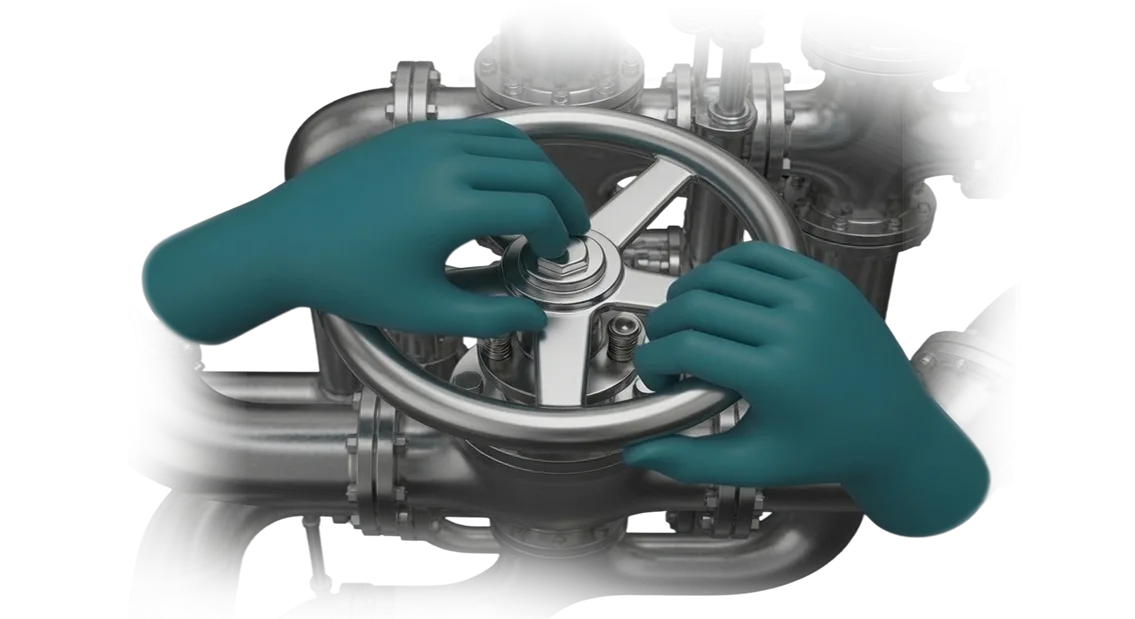
Personnel Training at a Gas Distribution Station: The Cost of Error
An operator error at a gas distribution station is not just a workflow failure. It is a risk of gas leaks, accidents, production shutdowns, and serious administrative consequences. A single such mistake can cost an enterprise more than a year-long training program.
The problem is that classic personnel training does not provide the required level of readiness. Theory does not build skills for handling emergency situations, and practice on real equipment is dangerous and requires shutting down technological processes.
It is practically impossible to check how an employee would behave during an accident without risking people and property.
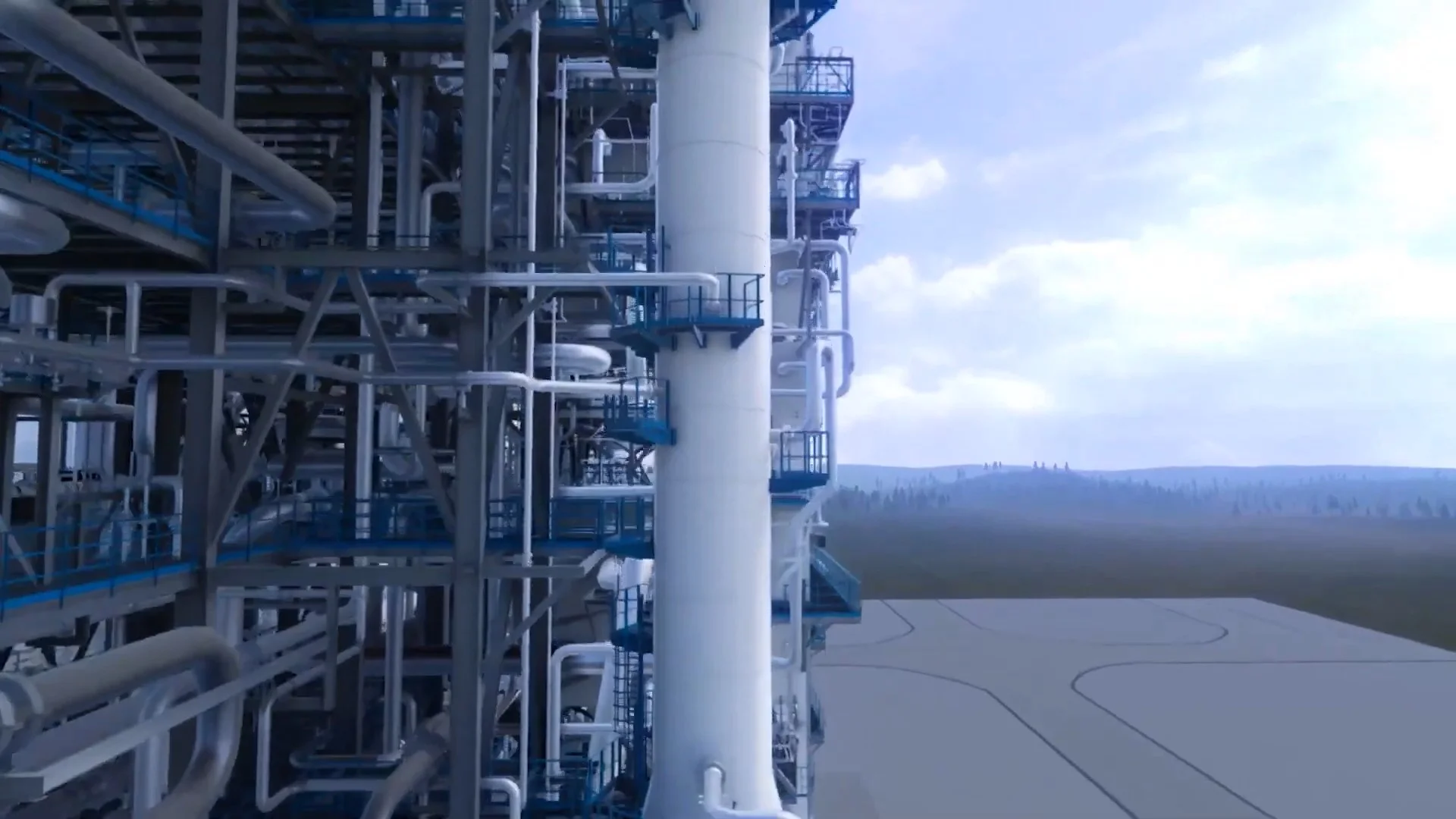
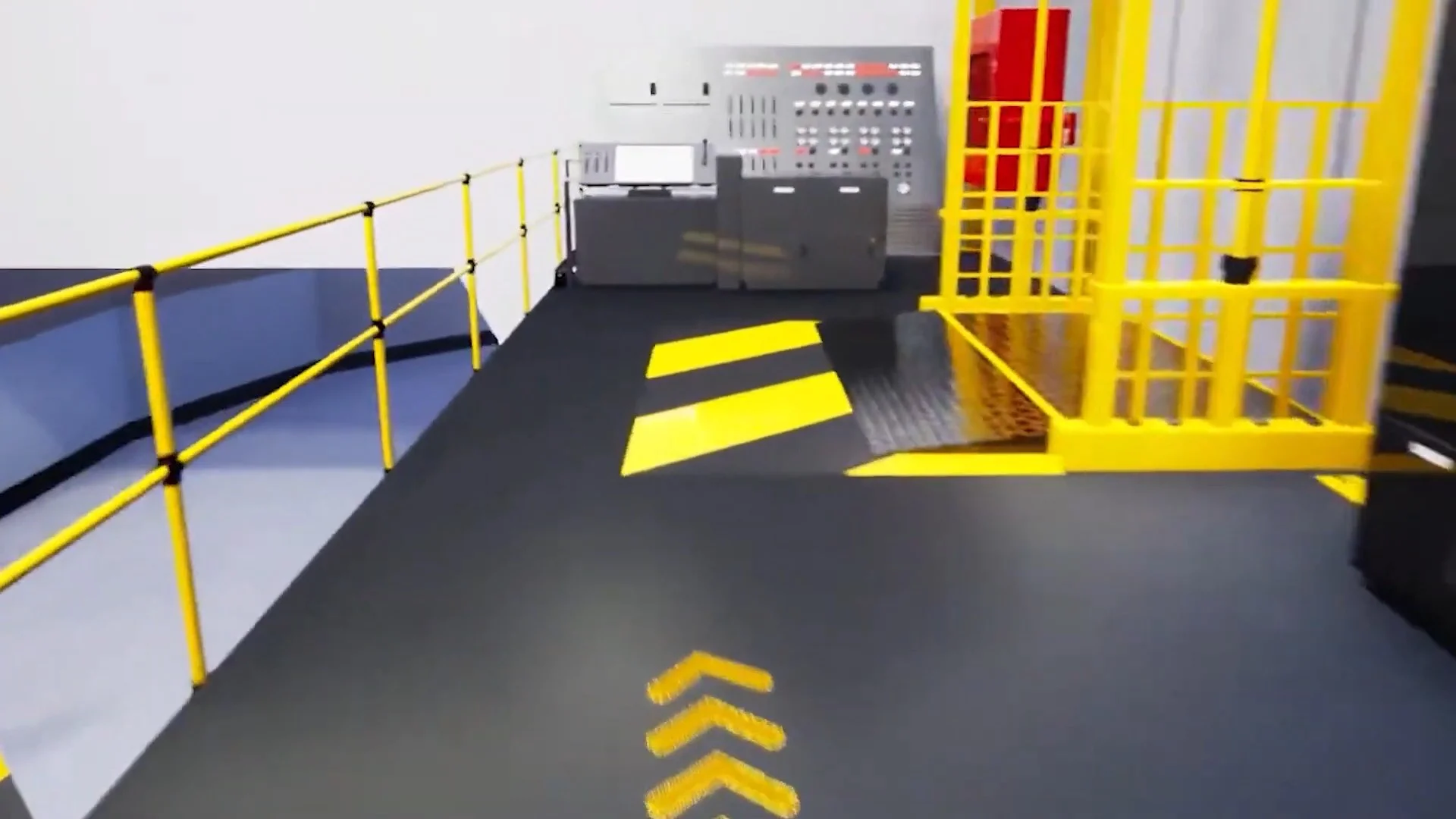
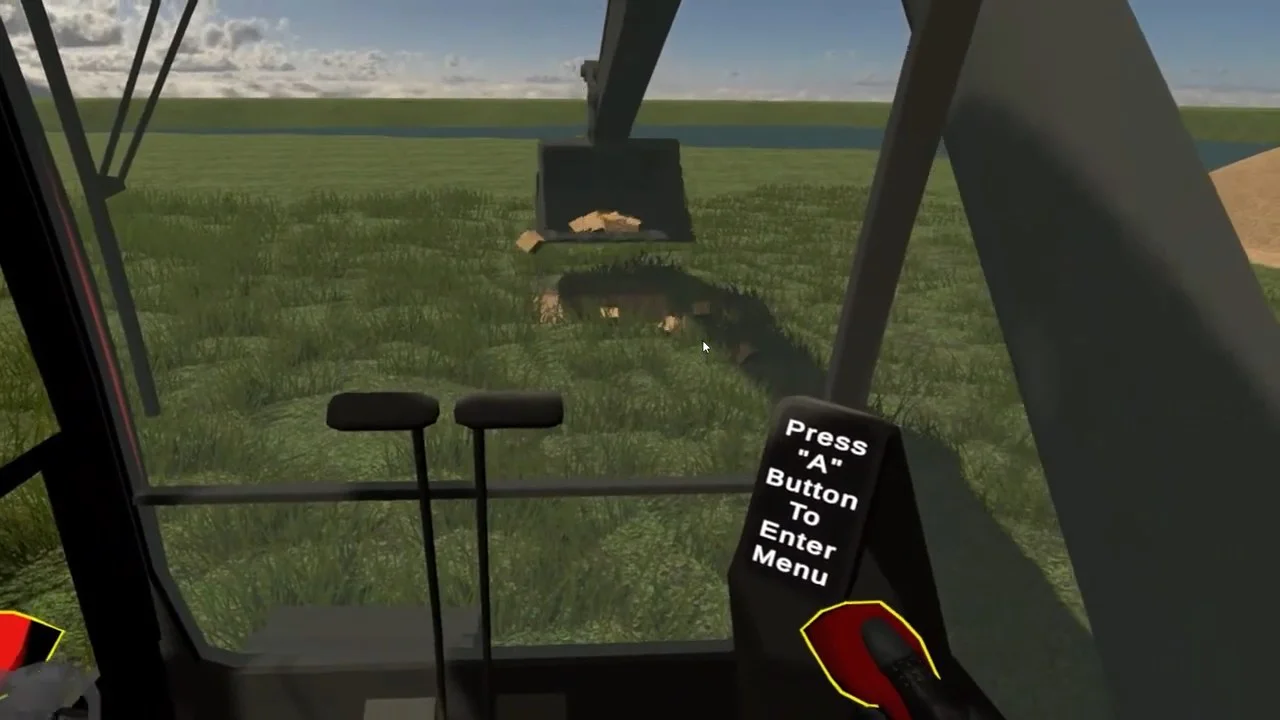
This is where VR training helps. The simulator recreates a virtual copy of the gas distribution station where the employee practices standard and emergency scenarios in a safe environment.
Personnel mistakes here do not lead to real consequences, but they are remembered just as vividly as real ones.
Personnel training on such a simulator allows employees to replay complex situations multiple times until their actions become confident and correct. The program records every decision, provides assessments and recommendations — something no classroom can offer.
We develop VR simulators for enterprises so that personnel training for work at a gas distribution station happens without risks or downtime. A prepared operator knows how to act in an emergency, and the enterprise is protected from costly mistakes.
What a VR Simulator Gives an Industrial Enterprise
Industrial safety starts with training that puts neither people nor equipment at risk.
A VR simulator allows employees to practice actions on a digital copy of the gas distribution station: the employee learns the algorithms in a safe environment and only then is allowed access to real facilities.
This reduces the risk of errors in the first months of work and decreases the number of incidents on site.
Employee training stops depending on the availability of an instructor and free equipment. Instead of long lectures, workers receive a scenario at any convenient time: they launch the simulation, repeat complex operations, and the system records the result.
Preparation takes fewer shifts, beginners start working independently faster, and mentors spend their effort only on the most subtle points.
Professional development becomes systematic. Experienced personnel reinforce skills on rare, emergency modes that no one would deliberately practice in real life.
Young specialists go through a unified training standard, and the manager sees objective readiness indicators for each worker instead of relying on a "rough" assessment.
All together, this directly reduces accident rates. Employees act more confidently, make critical errors less often, and the enterprise cuts downtime and costs for dealing with consequences.
VR training pays off not in the long run but already after the first shifts: safety stops being an abstract concept and becomes a measurable result.
Formats of VR Simulators for a Gas Distribution Station
Different training tasks at a gas distribution station require different immersion formats. Some need a quick introduction to the rules, others need to practice actions in an emergency situation, and some need a full simulation of a work shift.
We select the format for a specific goal so you don't overpay for unnecessary complexity and get a measurable result.
Unlike traditional briefings, the VR format provides practical experience without risk. Training takes place in conditions as close as possible to the real station, so employees memorize algorithms faster and act more confidently.
| Format | For whom | What it gives the client |
|---|---|---|
| VR briefing | New employees, contractors | Quick introduction to the facility and safety rules, reduced risk on the real site |
| Standard operations simulator | Operational personnel | Practicing daily procedures until automatic, fewer errors at work |
| Emergency scenarios | Emergency response teams, dispatchers | Reaction to leaks and failures without risk to people or equipment, clear action algorithms |
| Full immersion | Engineers, shift supervisors | Comprehensive shift simulation with time and resource control, competency assessment |
| Individual training | All employee categories | Personal pace and feedback, progress tracking for each specialist |
All formats run on professional VR equipment and are adapted to your regulations. We will help you choose the best option for your tasks and budget. If necessary, we combine formats: for example, start with a briefing and then move on to full immersion.
Turnkey VR Simulator Development Stages
To ensure the simulator really solves the personnel training task, we structure the work as a single project — from brief to launch and support. You see results at every stage. Below are five steps.
-
Brief and task audit. We determine which operations at the gas distribution station need to be practiced and which personnel errors need to be eliminated. The output is a simulator scenario and training program requirements.
-
Scenario design. Together with your experts, we describe standard actions and emergency situations. You approve the logic and evaluation criteria — the simulator becomes immediately clear to instructors.
-
Virtual simulator development. We create equipment models, the interface, and an action control system. The result is a realistic visual, correct prompts, and error statistics for each employee.
-
Implementation and launch. We install the simulator on your computers or headsets, configure it for your network, and run test sessions. We help integrate training into your current personnel development system.
-
Support and development. After launch, we update scenarios, add new inputs, and change regulations. You get a stable tool rather than a one-time delivery.
This procedure guarantees that VR simulator implementation does not turn into "bought and forgotten." Each stage is monitored by deadlines and results.
The turnkey project delivers a measurable effect: faster personnel training, fewer risks at facilities, and higher employee readiness for emergencies.
What Is Included in VR Simulator Delivery
A quality VR simulator for a gas distribution station is not "a headset and a couple of scenes." It is a complete training system that becomes operational immediately after installation.
We put together a package so the client gets the full cycle: from software launch to employee knowledge control and technical support.
The delivery includes:
- Simulator software — a fully Russified product with a virtual model of the gas distribution station, standard operation scenarios, and emergency situations. It runs on desktop PCs and VR equipment already available at the enterprise or supplied turnkey.
- Methodological materials for instructors — ready-made lesson scenarios, recommendations for evaluating employee actions, and analysis of typical mistakes. Instructors don't need to create the training program themselves.
- Guides and instructions for personnel — clear memos on working with the simulator: how to launch a scenario, how to behave in the virtual environment, how the exam works. Suitable for employees without prior VR experience.
- Results tracking system — automatic reports for each employee: completion time, errors, number of attempts. You can monitor training progress and compile summary data by shift or workshop.
- Administrative module — scenario configuration to match your enterprise's regulations: changing operation sequences, adding local instructions, adjusting difficulty.
- Technical support and updates — support for the entire service life, installation of new software versions, consultations by phone and remotely. We process requests within a business day.
- Training for your instructors — we hold a personal session for responsible employees: we show how to launch lessons, review reports, and adapt scenarios. After that, the enterprise works with the simulator independently.
This package answers the manager's main question: "Who will use all this and support it?" You get not just a program but a ready-made training tool that works without constant involvement of the developer.
Case Study: VR Simulator Implementation in the Oil and Gas Industry
For oil and gas enterprises, the cost of an error at a gas distribution station is measured not in money but in people's safety and uninterrupted supply.
Traditional operator training takes weeks and requires equipment shutdown — that means downtime, additional costs, and high stress for beginners.
Our client — Siberian Gas Company — approached us with the task of shortening personnel training time and reducing accident risk. We developed a VR simulator that reproduces standard and emergency station scenarios: from planned switchovers to emergency depressurizations.
After practicing such situations in a virtual environment, an operator arrives at the facility with ready-made response skills — without risk to themselves or the equipment.
What the Client Got
The time to bring a new employee up to speed was reduced by 40%: instead of the previous two months, three weeks of simulator practice is enough. The accident rate among first-year personnel dropped by a third — people don't panic but act according to a practiced scenario.
The company also saved on logistics: previously, operator groups had to be gathered from across the region at a training ground; now sessions are held remotely with progress monitoring for each employee.
Training center managers see how reaction speed grows — as confirmed by a repeat order for a new simulator module.
We stay in touch after project delivery: we add new inputs to the simulator, adapt it to regulation changes, and help organize regular skill checks. This is not a one-time delivery but a tool that works alongside the business.
Answers to Frequently Asked Questions About VR Simulators
Before launching a VR simulator, clients have the same questions: is it safe, when will results appear, and is the simulator compatible with current enterprise processes?
We answer the main ones so you understand how the technology will fit into station operations and what it will give personnel.
Is it safe to train employees in virtual reality?
Yes. The VR simulator reproduces the real environment, but an error in virtual space does not lead to an accident, injury, or equipment damage.
An operator can practice emergency situations — gas leaks, fire, automation failures — as many times as needed until the skill is fully consolidated.
How long does simulator development and launch take?
A typical scenario can be prepared in a few weeks. We work in stages: scenario approval, creation of the station's virtual model, debugging, and launch.
Implementation runs in parallel with the enterprise's current operations, so there is no need to stop training or production processes.
Is the simulator compatible with our equipment and regulations?
Yes. We adapt the simulator to a specific gas distribution station — its layout, equipment composition, and applicable instructions. If necessary, we integrate the VR module into the existing training system so it complements briefing programs rather than replaces them.
If you still have questions — about implementation details, facility requirements, or class formats — write to us. We will consult you free of charge and show how the simulator will fit into your personnel training program.Order VR Simulator Development for Your Facility
You send a request — and within one business day we call you back to discuss your task and deadlines.
Then you receive a preliminary solution for your gas distribution station: which training scenarios can realistically be covered, which simulator format is more convenient for personnel, and what budget to include in the plan.
We hold the meeting online: we show examples of completed projects and answer questions from engineers and managers. No obligations — only specific details for your facility and the next step: a pilot module or immediate full implementation.
Where to start right now:
- Cost and timeline calculation based on your facility's characteristics;
- Scenario selection: standard operations, planned maintenance, emergency situations;
- Format recommendation: a stationary VR classroom or autonomous headsets for on-site work;
- Assessment of compliance with your regulations, instructions, and safety requirements;
- Implementation roadmap — from the first module to training the entire shift;
- Direct contact with the development team — you communicate with those who will build the project.
Every month of waiting is additional load on instructors and a risk of personnel errors. The simulator pays off by reducing preparation time and lowering emergency situations. Start with a short consultation — that is enough to understand whether the VR format suits your station.
Leave a request now — we will come back with a calculation and proposal, and you decide whether to move forward or not.
How to Choose the Right VR Training Format?
Choosing a VR training format starts not with technical specifications but with questions: what exactly do employees need to learn and how regularly? For a gas distribution station, this could be standard operating modes, planned diagnostics, or rare emergency situations.
Emergency situations that are dangerous to demonstrate at a real facility require a full-immersion scenario. An employee experiences the incident and remembers the action algorithm.
For regular operations, short modules that can be repeated often without long time away from the shift are more effective.
The next criterion is who will be trained. Beginners need a step-by-step scenario with prompts to build the correct operation sequence. Experienced specialists need non-standard inputs and hidden deviations to refine attentiveness and reaction speed.
The trainer sees each person's results: number of errors, time, and critical actions. This allows the program to be adjusted. The training location also matters: a mobile format — for distributed facilities, a stationary one — for a training center.
We help choose the format at the very first discussion: we analyze training tasks, employee composition, and operating conditions, then propose a scenario that will quickly deliver a measurable result.
For a gas distribution station, this is a simulator tailored to personnel training requirements, without overpaying for extras.