

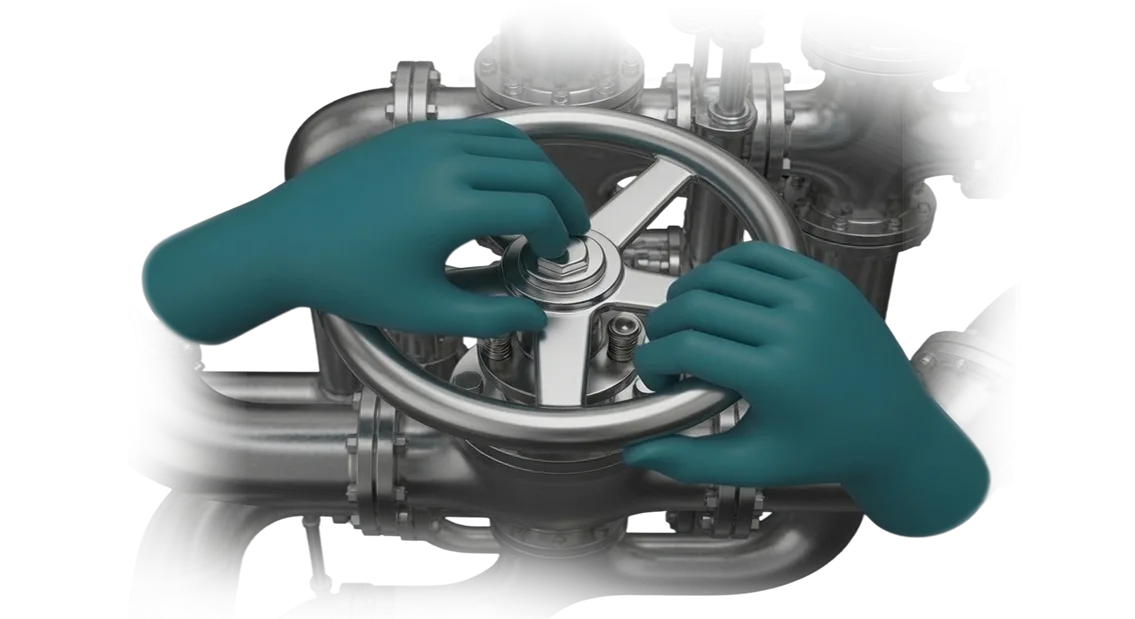
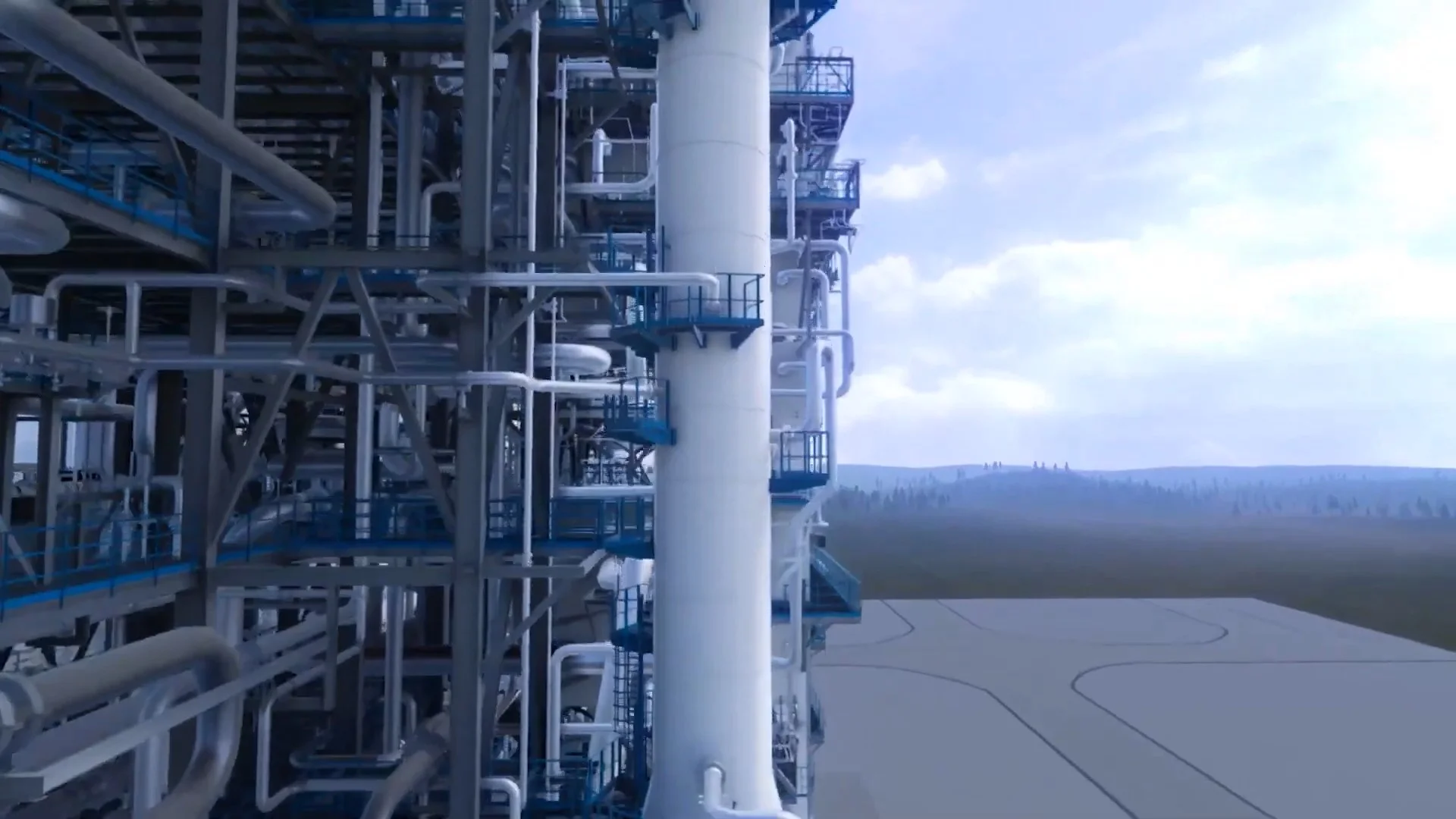
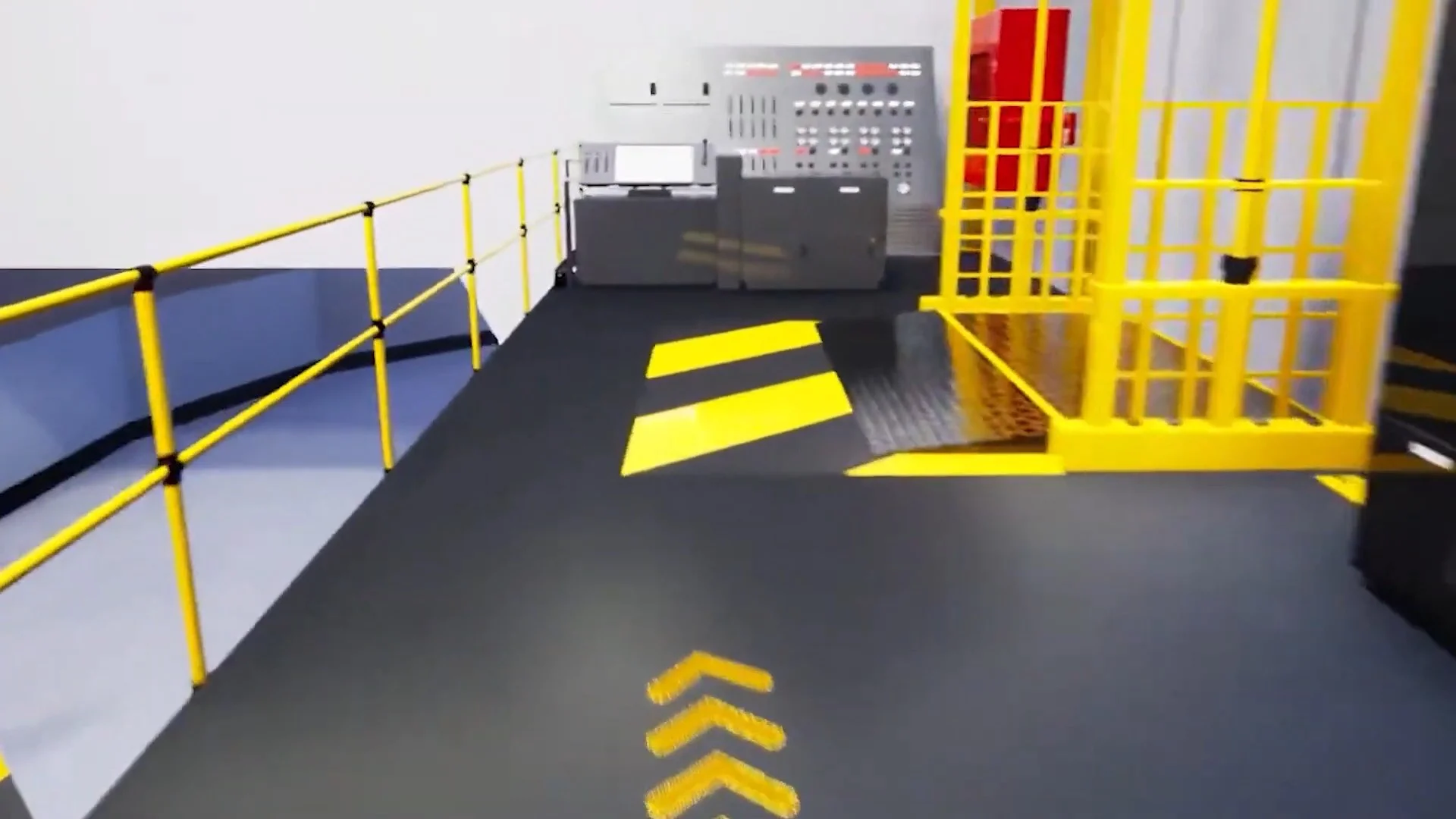
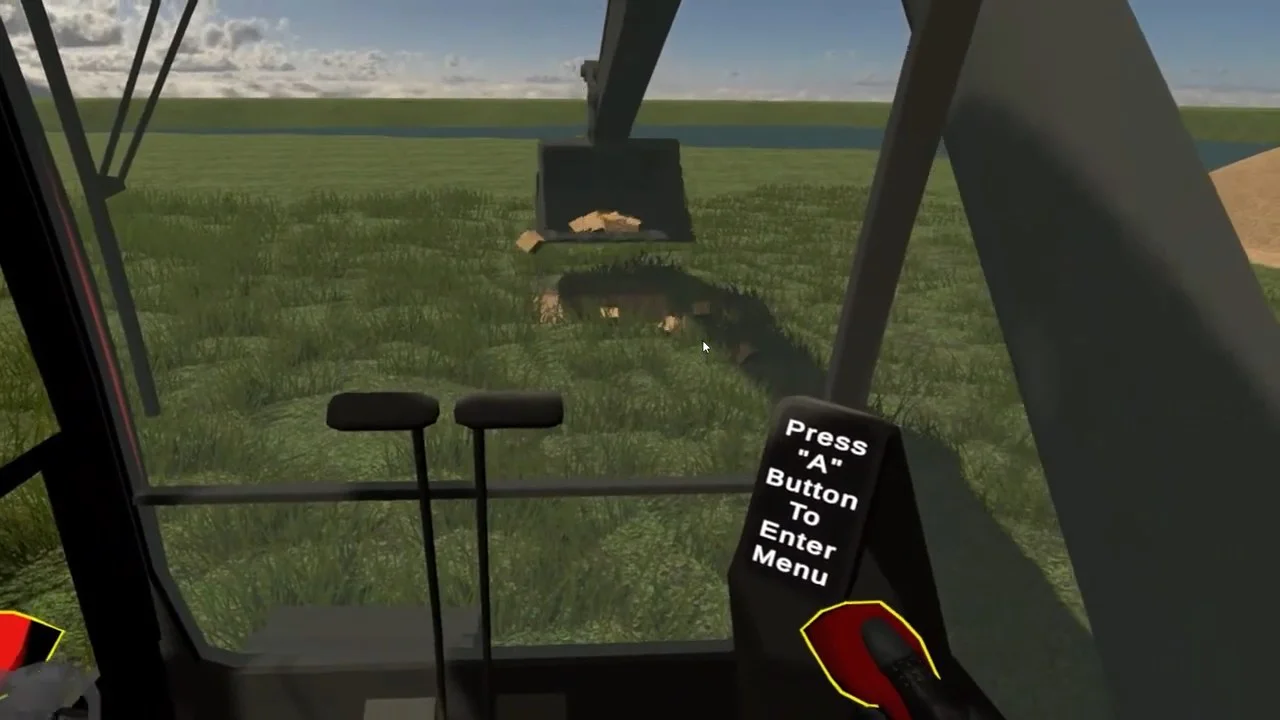
Why injuries and downtime grow without a VR hydraulic press simulator
Every day without proper operator training for the hydraulic press is a risk. An employee error results not just in a defective part, but in injury and a production line stoppage.
Equipment downtime leads to missed deadlines, emergency workloads, and additional expenses that no one planned for in the budget.
Most often, training comes down to a lecture and a couple of shifts with a mentor. That's not enough: in a stressful situation, a person acts on reflexes, not by the instructions.
Misjudged the distance, forgot to secure the workpiece, missed the moment to lock the zone — and now the line is stopped, and the employee is heading to the hospital. Most industrial accidents happen precisely because of the human factor, not equipment failure.
We address this need: a VR hydraulic press simulator gives the employee a safe environment to practice skills before working on the real machine. A mistake in the virtual cabin is just another attempt, not an injury and downtime. This way, we build the right reflexes without harm to people or production.
The simulator is built on professional equipment and accurately replicates the control logic of a real press. The employee brings the sequence of operations, press-zone control, and emergency response to automaticity.
After a few sessions, they work confidently in the real workshop — without fear and unnecessary prompts.
For business, this means predictability: fewer injuries, fewer unscheduled downtimes, faster onboarding of new employees to the line. We support the project from scenario setup to instructor training without stopping your production cycle.
What benefits does an enterprise gain from implementing a VR simulator
Implementing a VR hydraulic press simulator is not a replacement for theory, but a way to eliminate the enterprise's main losses: the risk of accidents, the waste of expensive materials, and the slow onboarding of beginners.
Instead of learning on real equipment at the cost of mistakes, the employee practices actions in a safe virtual environment. From day one, they see the consequences of their decisions without stopping production or damaging tooling.
The main advantage of VR training is reduced accident rates. The operator gains experience in emergency situations: leaks, overloads, automation failures — and learns to react instantly.
Research and enterprise practice show that after simulator training, the number of errors in real work drops noticeably because the correct sequence of actions is fixed in memory, rather than "whatever happens."
Reaction speed and skill quality grow through repetition. In VR, a complex scenario can be replayed dozens of times, bringing movements to automaticity without consuming hydraulic fluid, electricity, or press wear.
The system records every action — the manager sees where the employee hesitates or makes mistakes and adjusts the training program precisely. Skills don't fade: the simulator is always available for periodic checks and re-certification.
Savings come not only from saved materials but also from reduced equipment downtime. While the real press works on orders, beginners master the technology on the simulator — in parallel, without risk, and at a comfortable pace.
As a result, the enterprise gets an independent operator faster, rather than after months of practice with a mentor.
Implementing a VR simulator is an investment in production predictability: lower accident rates, faster reaction times, and documented skills for every employee. You get a tool that pays for itself by reducing losses and improving personnel training quality.
If you want to assess the effect on your scenario, start with a demonstration — we'll show you what your press and your instructions look like in a virtual environment.
VR simulator formats for industrial tasks
VR simulators can be implemented in different ways: from a single workstation to an entire training classroom. This allows the enterprise to start small, assess the effect, and scale the solution without losing investment.
To choose the right scale, we start from your tasks: how many employees need training, how often, and whether collaborative work is required. Below are the main formats we implement.
| Format | Suitable for | What it gives the client |
|---|---|---|
| Single | For practicing standard operations by one employee | Full immersion in the process, error tracking, and skill practice to automaticity |
| Multi-user | For training a team or shift with role distribution | Practicing interaction and coordinated actions in real time |
| Full deployment | For training centers and large enterprises with a constant flow of trainees | A unified training system across dozens of workstations with centralized management and statistics |
Whichever format you choose, we adapt the scenario to your equipment and regulations. The main thing is that the simulator solves a specific production task and delivers measurable results.
We'll clarify the details and propose a solution tailored to your training volumes.
Stages of VR simulator development for your plant
VR simulator development for a hydraulic press follows a structured methodology where each stage ends with approval. This guarantees predictable timelines, a transparent budget, and a result that exactly matches your tasks.
- Brief and process analysis. We study your hydraulic press operating regulations, typical errors, and training requirements. We document which skills need to be practiced and how to measure results.
- Scenario design. Together with technologists, we map out the sequence of actions and evaluation criteria. The scenario is approved before development — this saves time and money.
- Prototype and approval. We show a basic version with key interactions; you try it and make adjustments. This eliminates rework at later stages.
- VR environment development. We create a detailed model of the hydraulic press and the work area. We regularly show intermediate versions so you can control the progress.
- Testing with your employees. We conduct pilot sessions, collect feedback, and refine the simulator. The result is a solution that is clear and convenient for your people.
- Launch and support. We deploy the simulator, train administrators, and hand over documentation. We stay in touch for updates and new exercises.
What's included in the VR simulator delivery
Ordering a VR hydraulic press simulator means you get not just a program but a complete package for launching training. We deliver all the elements needed to work from day one — from configured equipment to ready-made training materials.
- Software — a working system with your scenarios, crash protection, and updates tailored to production needs.
- VR equipment — headsets and controllers configured for sessions, accounting for the number of concurrent users.
- Training materials — session scenarios, instructor guides, and knowledge assessment tests.
- Staff instruction — training for your specialists: launching the simulator, configuring scenarios, and working with reports.
- Warranty service — free repair and replacement of devices during the warranty period.
- Technical support — remote expert assistance and fast restoration of simulator operation.
- Software updates — scenario enhancements for new requirements or production equipment changes.
- Documentation — training logs and reports for assessing employee readiness.
We deliver the entire package with detailed commissioning instructions. You receive a working system without hidden implementation costs.
How the VR hydraulic press simulator reduced injuries
Working on a hydraulic press is one of the most injury-prone operations in production. New employees spend weeks mastering skills, but even experienced operators sometimes make mistakes that lead to serious hand injuries. Each such case means a hospital stay, line downtime, and fines.
To eliminate this pain, the Metallist plant implemented a VR simulator that accurately replicates the operating logic of a hydraulic press. The trainee practices actions in a virtual workshop — without risk to themselves or equipment.
The simulator models standard and emergency situations, so the worker develops the right reactions before ever stepping onto the real line.
Implementation results
The effect exceeded expectations. In the first six months, injuries when working with the press dropped by 80%, and the training time for new operators was cut threefold — from three weeks to one. People arrive at the section with ready skills, and the number of errors in real work plummets.
The head of industrial safety at the Metallist plant noted: "We expected improvement, but didn't think the simulator would pay off so quickly.
The main thing is that people have stopped fearing the press, and that directly affects both work quality and the atmosphere on the shop floor."
This case shows: the VR simulator is not entertainment but a working tool that protects employees and saves the budget. For a business owner, it means predictable training costs and fewer downtimes.
For marketing, it's a strong argument when hiring staff and proof of the enterprise's modern status.
How to choose the right VR simulator format?
Choosing a VR simulator format starts not with technology discussions but with two questions: what problem are you solving and what budget are you bringing to the project. Everything else depends on that — depth of detail, number of scenarios, and implementation timelines.
There's no universal solution, but there is a proven logic that helps avoid overpaying and get a result that justifies the investment.
If the task is to teach an employee to work with a hydraulic press "from scratch" and practice rare emergency situations, you need a full-fledged simulator with high equipment detail and maximum fidelity to the real process.
This format allows safe training for emergency actions that are dangerous or expensive to simulate live in the workshop. It also fits enterprises with high staff turnover where every newcomer needs fast, quality training.
If the enterprise already has a strong training system and only needs to close a gap — for example, verify knowledge before granting work access or practice one specific operation — a compact scenario based on existing equipment is enough.
This is a good option for a limited budget: you get a measurable result on one operation and can scale the solution to other production areas if needed.
The budget primarily determines scope, not quality: the number of designed scenarios, the number of workstations, and the level of support.
We always suggest starting with a pilot module on one section — this lets you assess the effect in real conditions and make a scaling decision based on numbers, not assumptions.
At the consultation, we analyze your specific situation, propose the optimal format for your task and budget, and after the pilot show how to expand the project with minimal costs.
This way, you get a solution that works for your production, not an abstract "simulator for the sake of a simulator."
FAQ about implementing VR simulators in production
Implementing a VR simulator in production is a serious step, so managers tend to ask the same questions: how long will development take, what happens if it breaks down, how is training safety guaranteed? We've collected answers to the main ones — briefly and to the point.
How long does VR simulator development take?
The typical timeframe is 3 to 8 weeks, depending on scenario complexity and the number of simulated operations. We provide an accurate estimate after the brief and analysis of your technological process.
In most cases, we prepare content and program logic in parallel, so you get a working prototype within a couple of weeks after the start.
What happens if the simulator breaks down or stops working?
We provide a warranty on all work and equipment and take on technical support. If a failure occurs, you contact us — and we diagnose the problem remotely. In most cases, updating the software or reconfiguring the system is enough, which takes from a few hours to one day.
In critical cases, we promptly connect to your server and restore operation without an on-site visit.
How is employee safety ensured during training?
The VR simulator is completely safe: training takes place in a virtual environment with no real equipment, pressure, or moving mechanisms. The employee cannot be injured even if they make a mistake.
The scenarios are as realistic as possible, so after simulator training, a person acts confidently on the real production floor. The workspace uses a confined area and a controlled zone that prevents collisions with obstacles.
What guarantees do you provide for results and support?
We formally set out the timelines, simulator scope, and performance criteria in the contract. Throughout the entire cooperation period, you receive technical support and scenario updates for changes in your regulations.
If questions arise after implementation, we stay in touch and help promptly — including remotely, without stopping your production cycle.
If you still have doubts — ask us directly, we'll find a solution for your specifics and show how the simulator can be integrated into your existing training system.Order a VR simulator for personnel safety
Training employees to work with a hydraulic press is not just the cost of briefings — it's also the risk of mistakes that result in downtime and injuries.
Even a small reduction in accidents at one section pays back the investment in a simulator within a few months, and most importantly, it restores staff confidence and reduces turnover.
We'll prepare an individual offer for you: you'll receive a cost calculation, budget breakdown, implementation plan, and commercial proposal adapted to your workshop and press model.
There's no need to fill out complex technical briefs — just submit a request, and we'll ask a few clarifying questions to calculate equipment load, employee numbers, and training scenarios.
What you'll receive after submitting your request
- Preliminary cost calculation — we fix the price before work starts, with no hidden fees or "surprises" along the way.
- Stage-by-stage budget — scenario development, 3D content, programming, testing, and commissioning: you see what you pay for at every step.
- Implementation plan — how the simulator will fit into current training, how long operator adaptation will take, and which regulations need updating.
- Commercial proposal — with terms, timelines, payment stages, and warranty obligations.
- Schedule — from brief to launch: you know the dates and milestones from start to finish.
- Format recommendations — desktop VR or a full kit for your budget, number of simultaneous trainees, and production logistics.
This is not just numbers in an email: we send documents that let you immediately align the decision with management and safety officers.
And if the project is already approved, within a few days you'll have a ready basis for a contract and internal approval with the occupational safety department.
Submit your request on the page — within one business day we'll get back to you with the calculation and answers to your questions. No obligations until the budget is approved: first you see the plan and numbers, then you make the decision.