

Why a Chemical Reactor Simulator Pays Off
Training chemical reactor operators on real equipment is always a compromise between safety and efficiency.
A trainee's mistake can lead to an accident, downtime, or damage to expensive raw materials, so most skills have to be learned through theory, while real practice is postponed for months.
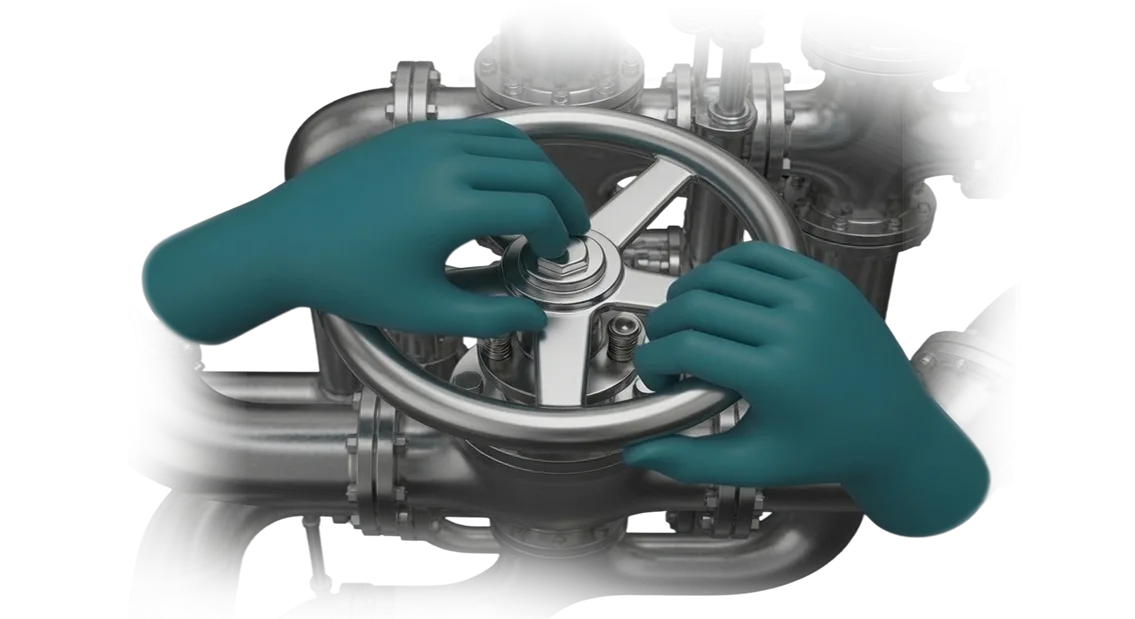
A virtual simulator solves this problem. The operator works with a digital copy of the reactor, where any situation can be simulated — from routine startup to emergency depressurization.
A mistake in the virtual environment costs nothing but provides the same experience as working with real equipment and teaches the operator to act according to procedures.
From a cost standpoint, this is direct savings. There is no need to stop production for training or spend reagents and energy on training cycles.
Training runs in parallel with the production process, so it does not affect revenue and allows a new employee to move to independent work faster.
The main value of such a solution is industrial safety. The simulator makes it possible to practice abnormal scenarios that cannot be safely demonstrated in reality: depressurization, pressure buildup, sensor failures.
The operator learns to follow instructions calmly and accurately, which directly reduces the accident rate at the plant and lowers risks to people and equipment.
Ultimately, the simulator pays for itself within the first months: fewer shutdowns, lower raw material consumption, lower probability of accidents and related fines.
It is not just a training expense item, but an investment in the reliability and stability of the entire production.
What Results the Enterprise Will Achieve After Launch
After launching the VR chemical reactor simulator, the enterprise gets a measurable business result, not just a modern training tool.
The effect is visible within the first months: employees master procedures faster, make fewer mistakes, and management receives transparent data about personnel readiness.
The first and main benefit is production safety. Practicing emergency scenarios on a virtual copy of the reactor allows personnel to act clearly in abnormal situations without putting people and equipment at risk.
Mistakes that are costly in reality become a learning experience on the simulator: they can be analyzed and practiced until automaticity.
Personnel training is accelerated severalfold. The standard time required to bring a new employee up to the role is shortened — instead of months of adaptation, a few weeks of focused training are enough.
Training runs without stopping production: the virtual reactor is always available, requires no raw materials, and takes up no shop-floor space.
Skill assessment becomes objective and transparent. The system records every operator action, reaction time, and number of errors — the exam is based not on a subjective instructor but on clear criteria.
The manager sees the training level of each specialist and can assign additional practice where needed.
Resource savings come from several components. Costs for consumables, raw materials, and energy — inevitable with practical training on a real reactor — are reduced.
In addition, the probability of defects and emergency downtime caused by unqualified actions decreases, which is direct savings on repairs and lost output.
Taken together, these results provide quick return of the unit to process operation after repairs and shutdowns, fewer personnel errors in daily work, and steady growth of the safety culture. The enterprise gets a managed training process that directly affects operational efficiency.
Virtual Simulator Formats for Different Tasks
Every process unit differs in complexity and risks, so a single universal simulator for all tasks is a compromise that poorly prepares production personnel. The operator either learns simplified actions or drowns in unnecessary details, while time for real mentoring is limited. The right approach is to match the format to the specific training task.
We develop VR simulators for chemical reactors and other facilities on a modular basis. This makes it possible to combine short emergency scenarios with detailed study of equipment in a single package that is easy to integrate into an existing personnel training system.
| Format | For whom | What it gives the client |
|---|---|---|
| Short emergency scenarios | Operators, shift dispatchers | Practicing actions in abnormal situations in one training session, reducing reaction time |
| Chemical reactor simulator | Production personnel, technologists | Learning units and modes without stopping equipment or risking people |
| Full plant copy | Shift supervisors, maintenance services | Training in startup, shutdown, and commissioning on an accurate production model |
| Combined package | Enterprise training centers | Scaling training to all shifts while reducing briefing costs |
We select the format after analyzing the process regulations and typical personnel errors. If the enterprise only needs a reactor simulator for an internship period, we create a local scenario.
If the task is to retrain all shifts and reduce accidents, we build a full virtual copy of the unit.
Ultimately, the customer gets not a standalone program but a training tool that addresses specific risks: fewer emergency shutdowns, faster adaptation of new employees, and a uniform action standard for all personnel.
How Simulator Development Goes from Request to Launch
Developing a VR simulator for a chemical reactor should not be a black box. We have structured the process so that you understand at every stage what is happening and how it affects the training result. Below is the typical path from request to launch.
- Brief and process study. We meet with your technologists, examine the operating procedures and work scenarios — routine and abnormal. This allows us to build a simulator that follows the logic of your specific reactor.
- Technical specification and scenarios. We document operations, error states, and hints. The technical specification protects you from misunderstandings — you know exactly what you will receive.
- Prototype and approval. We show the key scenes of the simulator so you can evaluate the visuals and logic. Revisions are made before large investments, saving cost and time.
- Full simulator assembly. We create all training scenarios, embed tasks, tests, and automatic feedback. The employee does not just watch a video but controls the actions himself.
- Pilot testing. We deploy the simulator with a group of your employees, collect feedback, and refine details. This ensures the program will be convenient and useful for production.
- Implementation and support. We install the system, prepare instructors, and hand over training materials. After launch, we update scenarios and keep the simulator up to date.
What Is Included in the Chemical Reactor Simulator Delivery
The chemical reactor simulator delivery package includes everything needed to start training from day one: the unit model, scenarios, evaluation system, and support.
You receive not just a program — a ready-to-use system that will immediately be integrated into personnel operations.
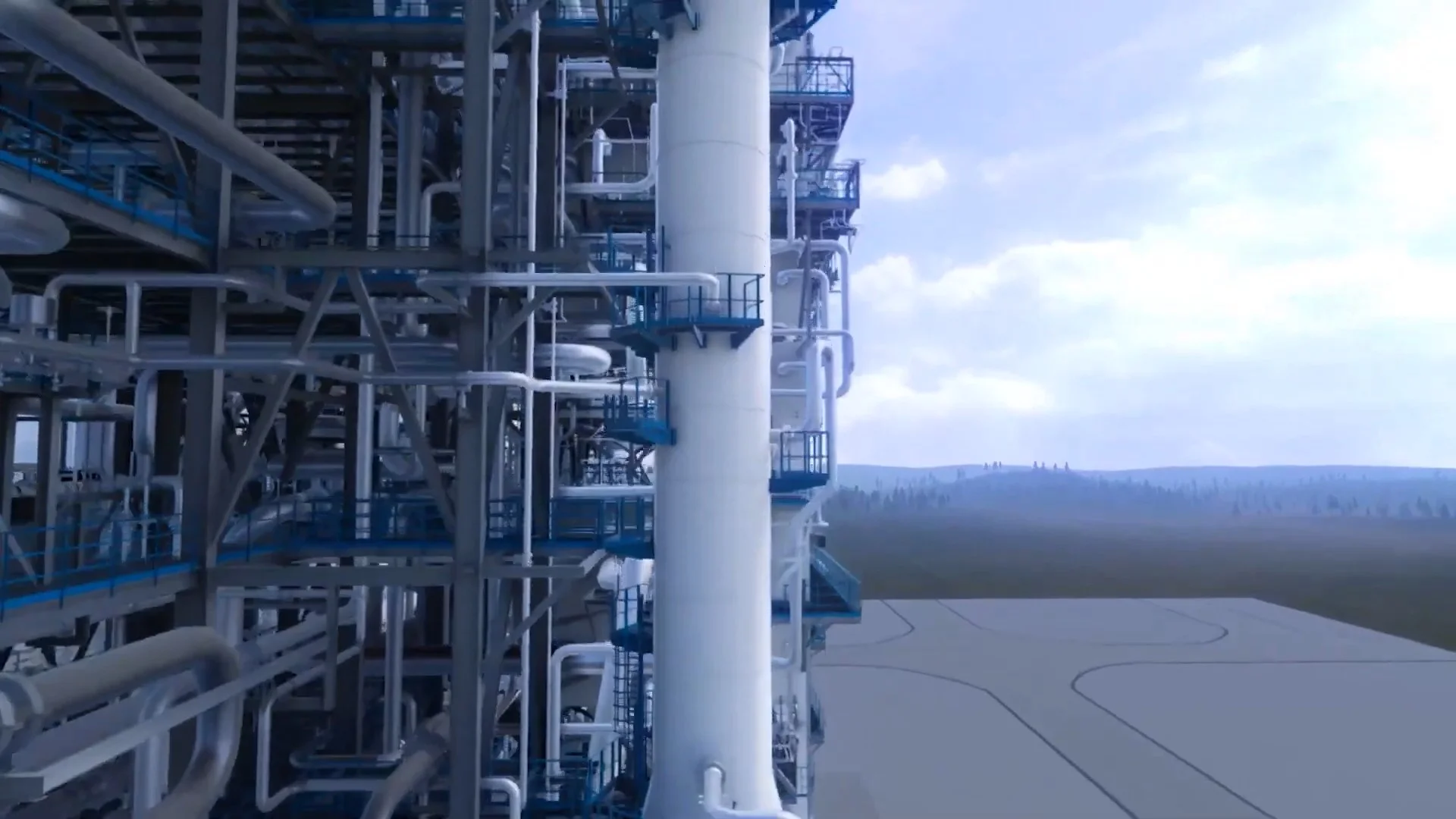
- Digital copy of the unit. The employee studies the layout of components and piping and can "look inside" the reactor to see processes that are hidden on the real shop floor.
- Scenario library. Routine operations and abnormal situations — leaks, pressure buildup, equipment failure. Practicing actions in a safe environment reduces accident rates.
- Evaluation system. Automatically records actions and reaction time, generates a report. It is immediately clear who is ready for independent work and who needs more training.
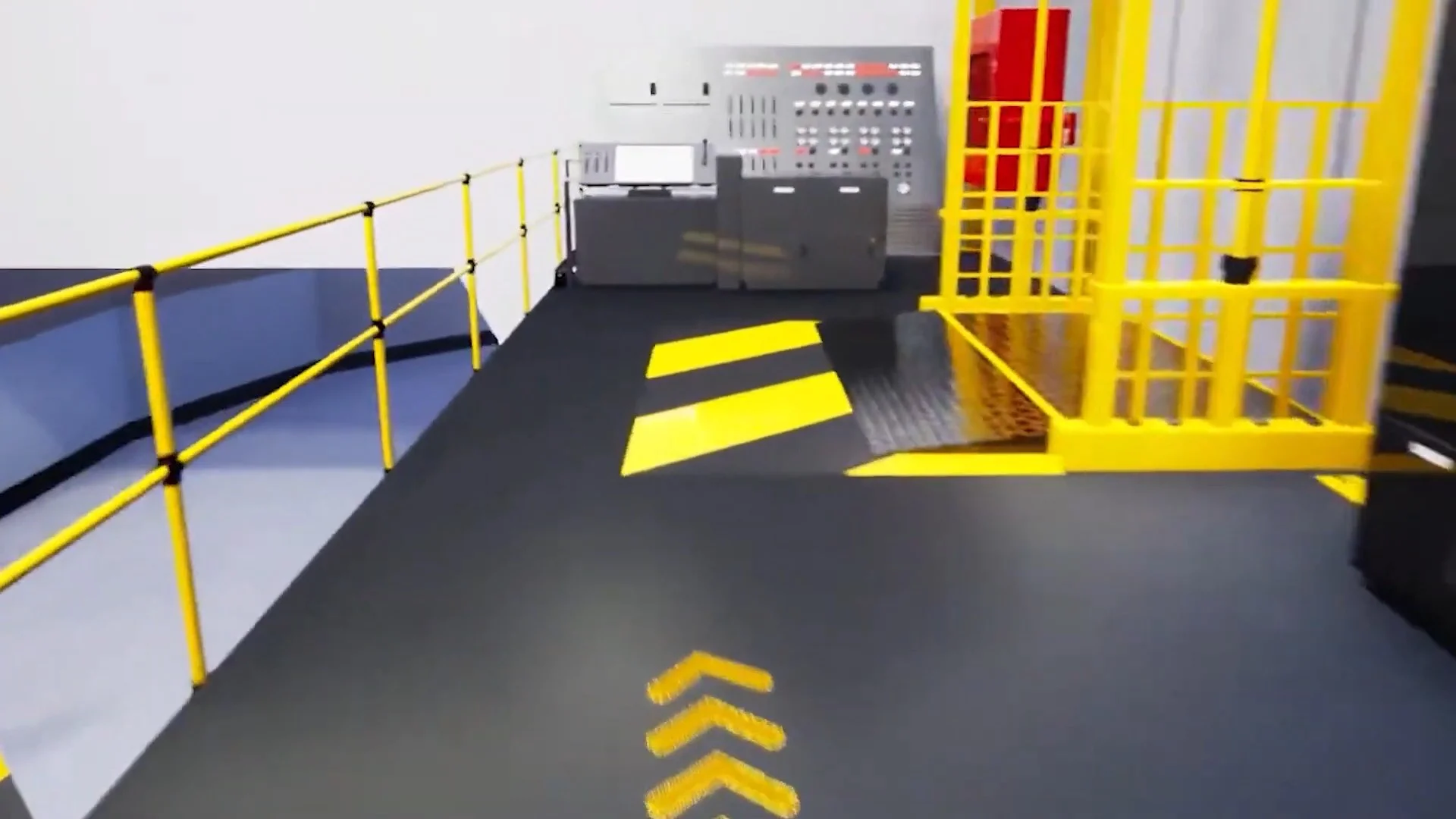
- Instructor workstation. Configure scenarios and difficulty levels, monitor trainees in real time.
- Training materials. Manuals, checklists, analysis of typical mistakes — employees prepare independently, without involving developers.
- Simulator support. Updating scenarios to new regulations, consultations, and model refinement to the enterprise's needs. The simulator does not become obsolete along with the instructions.
The delivery package is transparent: you know the composition, scope, and implementation order in advance. Staged expansion of the simulator to specific areas of your production is possible.
Case: How the Simulator Reduced Operator Errors
One of our clients, KhimProm-Tech, an industrial customer with multiple sites, faced a pain typical of the industry: during reactor startup, operators made mistakes in the sequence of operations.
Every mistake meant line downtime, safety risk, and losses for the rest of the shift. Instruction-based training and mentoring did not provide stable results: employees knew the theory but acted incorrectly in stressful situations.
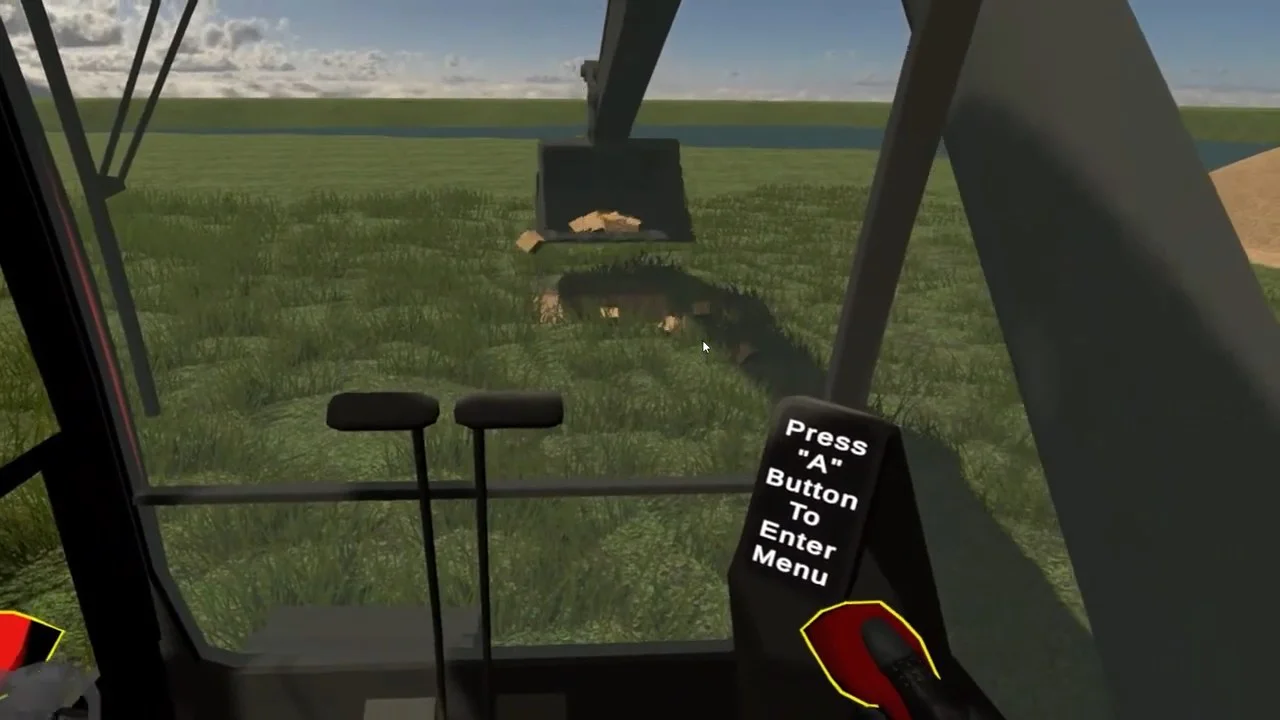
We proposed closing this gap with a VR simulator that replicates a real chemical reactor startup. Operators train on scenarios that are dangerous and expensive to practice in real life: reagent feed failures, pressure fluctuations, abnormal shutdowns.
The simulator records every action and immediately shows where a deviation from procedures occurs — this is the core training result: understanding your own mistakes before they lead to an accident.
The effect of implementation was visible after the first groups. The number of errors during reactor startup decreased threefold, and the time to train a new operator was cut from two weeks to three days.
In one month, 40 employees completed training, and all successfully passed the qualification exam for work authorization.
For the enterprise, this is direct savings: less downtime, lower reagent consumption, faster onboarding of new staff. After the pilot launch, the customer expanded the program to all shifts and ordered an additional scenario — emergency reactor shutdown.
We continue to support the simulator: updating scenarios to procedure changes and adapting training to new sites while maintaining the same level of error reduction.
How to Choose the Right Simulator Format for Your Production?
Choosing a simulator format is choosing the skill the employee must master and how the training fits into your production cycle. A full simulator is needed when it is important to practice the entire technological process from startup to shutdown, including abnormal situations.
A module is justified when the task is narrow: one operation, one action algorithm, or a short scenario.
For a technological process, the sequence of operations becomes the deciding factor. If an early mistake leads to downtime, defects, or an accident, a full simulator is better: it allows all stages to be safely repeated several times and develops a stable skill.
If you need to train a specific action — say, responding to a signal or switching modes — a module is enough, and it is easy to integrate into the existing training program.
Also assess how many people will be trained and how often. For regular training of shop-floor shifts and qualification checks, a full simulator with session history and reports is more effective.
For quick adaptation of new hires or periodic refreshers, a module is sufficient — it launches faster and requires fewer resources.
We help you choose the right format for your process: we analyze scenarios, number of employees, risks, and control points. If needed, we assemble a combined solution — a full simulator for complex areas and lightweight modules for repetitive operations.
This way, you get training that addresses your production's real tasks without paying extra for unnecessary functionality.
Common Customer Concerns Before Starting a Project
Every customer asks similar questions before starting a VR chemical reactor simulator development project: how accurate will the model be, how long will development take, is it hard to integrate the simulator into current training, and will enterprise data leak. We have collected the most common concerns and answer them directly.
How closely does the virtual reactor match the real technological process?
Simulator accuracy is our top priority. At the start, we study your process regulations, parameters of the specific reactor, and typical operator work scenarios.
What matters is not the external image but the model's behavior: heating rate, pressure, sequence of operations, and responses to abnormal situations.
The virtual model replicates the key dependencies of the real process. This lets the operator practice actions that are expensive or dangerous in real life — with the same result and without risk to production.
How long does simulator development take?
The minimum time to create the base version ranges from several weeks to a couple of months. Exact numbers depend on the complexity of your reactor, the number of training scenarios, and the need to integrate with an existing learning system.
At the briefing stage, we set a realistic plan with key milestones. You always know what stage the project is at and when you will receive the finished simulator.
Is it difficult to integrate a VR simulator into an existing training program?
No. We prepare a complete launch kit: installation on the required equipment, instructor instructions, methodical materials, and an admin panel for tracking each employee's progress. All you need to do is allocate time in the training schedule — we handle the rest.
The simulator works equally well as a standalone course for self-study and as part of an in-person session with an instructor. Integration does not require reworking your training programs.
Are enterprise data safe when using the simulator?
Yes, information security is a mandatory condition of our work. The simulator is deployed on your servers or within the enterprise's protected network; data is not transferred to third parties. Only the administrator you designate has access to training results.
We do not ask for unnecessary information, and all materials are coordinated with your security department before launch.
Order Simulator Development for Your Technological Process
Every technological process in production is unique: its own regulations, equipment, abnormal situations, and personnel requirements. A generic simulator cannot prepare employees the way a simulator built for your specific task can.
We develop VR simulators based on your process maps and scenarios — training becomes realistic, safe, and measurable.
After contacting us, you will receive a plan, timeline, and cost calculated after audit. The package includes:
- Audit of your technological process and training goals.
- Selection of a simulator format — from introductory to a full cycle with emergency scenarios.
- Project roadmap: stages, timelines, responsible parties.
- Cost calculated after audit and team composition.
- Recommendations for implementing training and evaluating results.
- Examples of similar solutions for your industry.
Here is how work on an order usually proceeds:
- Consultation — we discuss the task, audience, and expected result.
- Documentation analysis — we study regulations, instructions, and scenarios.
- Scenario design — we define key skills and evaluation criteria.
- Simulator development — we build the virtual environment and process logic.
- Testing with your experts — we make revisions and achieve accuracy.
- Training implementation — we configure, launch, and hand it over to employees.
To order a simulator for your technological process, leave a request. We will contact you within one business day, answer your questions, and prepare a commercial proposal with a plan and timeline.