

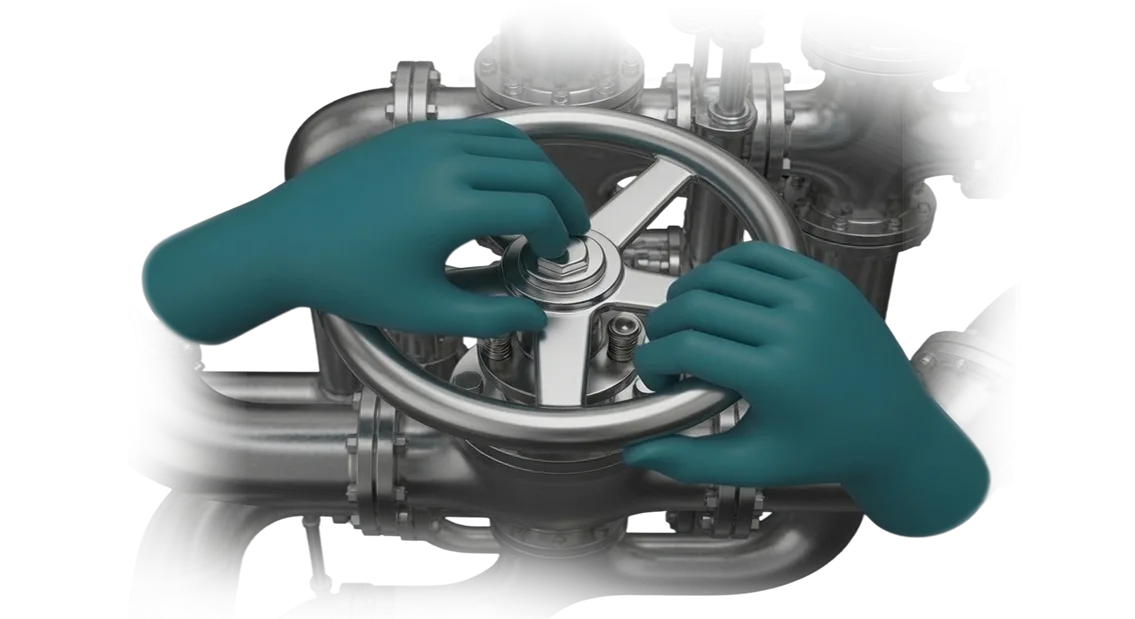
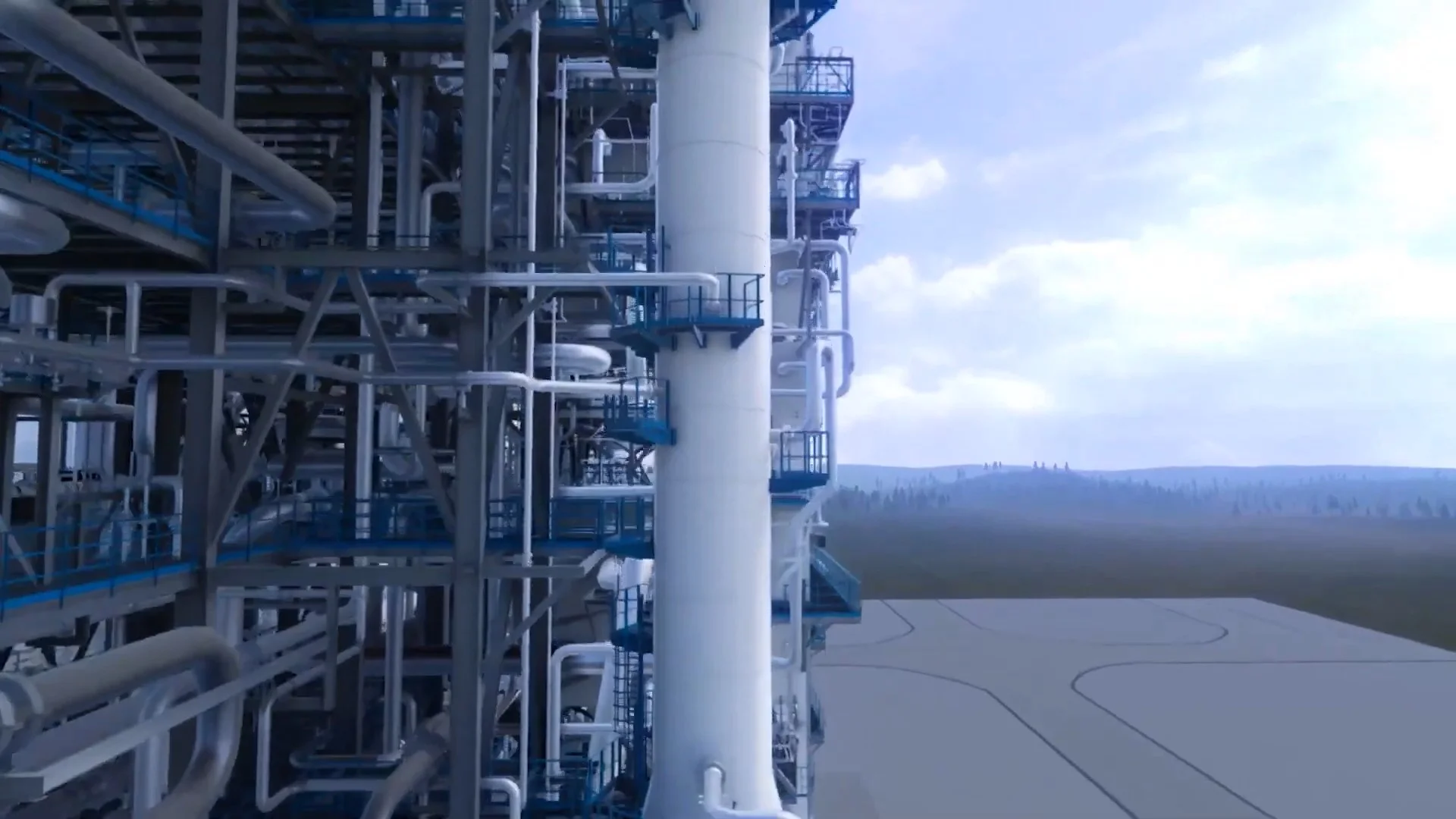
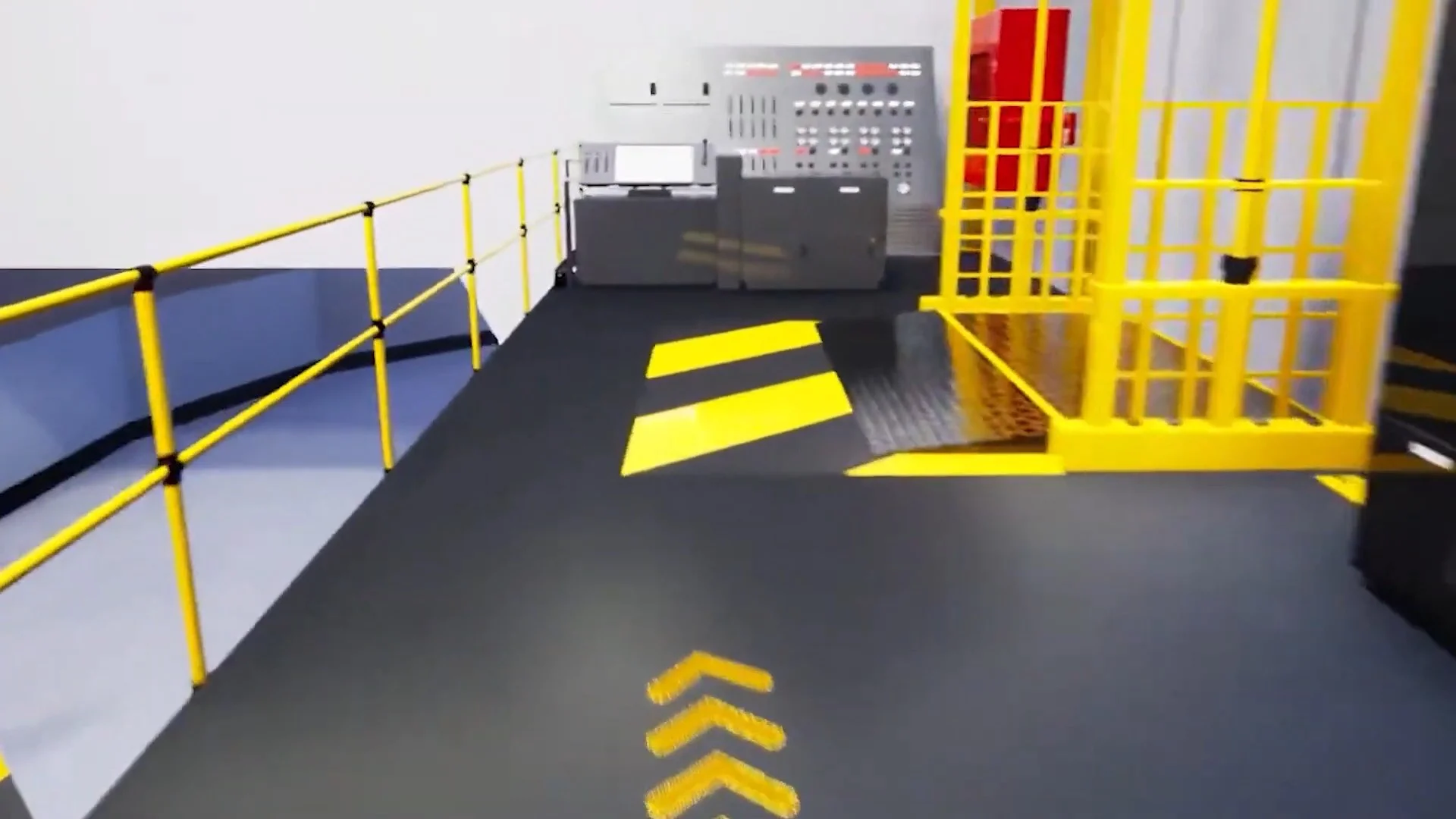
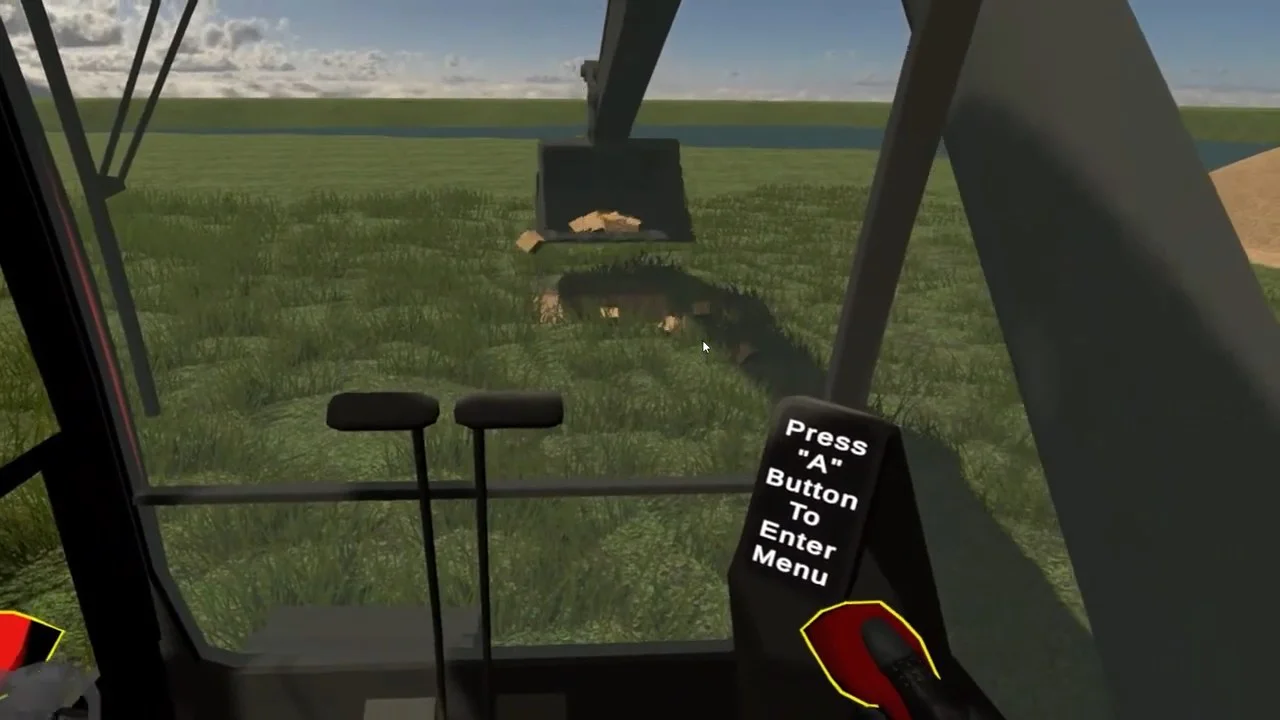
Compressor Station Accidents Caused by Weak Personnel Training
An accident at a compressor station is not just broken equipment. It means extended downtime, disrupted supply, regulatory fines, and in the worst case, a threat to employees' lives.
Most often the cause is human error: the operator fails to react to parameter changes in time, misses a signal, or incorrectly follows procedures in an emergency.
The cost of such a mistake is severe, and the consequences take months to resolve. Traditional training—briefings and paper procedures—does not instill the skill of acting under pressure, in conditions of stress and time deficit. An employee may know the theory but is not ready for a real accident when every second counts.
A VR simulator solves this problem: the operator practices emergency scenarios again and again until the correct actions become automatic. In a safe virtual environment, they learn to notice the first signs of deviations and bring the algorithms to reflex level.
This reduces the risk of real accidents, cuts downtime, and protects the most important resource—the life and health of people.
What You Get from Implementing a VR Simulator
Implementing a VR simulator is not a replacement for the instructor, but a system that reduces risks before an employee sets foot on a real site. You gain the ability to practice emergency scenarios without stopping production or endangering people.
The key result is an employee who has already encountered an abnormal situation in a safe environment and knows how to act.
Training in virtual reality is 2-3 times faster than classic lectures and briefings.
An employee does not wait for equipment to free up, does not depend on weather or shop floor schedule—they enter a digital copy of the compressor station and practice operations as many times as needed.
This accelerates the onboarding of new specialists and reduces the time spent by experienced mentors.
Direct savings come from several areas: fewer consumables, lower equipment wear, no downtime due to beginner mistakes. All mistakes are made in a virtual environment rather than on a real site, so you do not pay for repairs and fines.
At the same time, the simulator pays for itself after the first groups of trainees—especially if you deal with high staff turnover or seasonal hiring.
Another advantage is standardization of knowledge. Each employee goes through the same scenario with the same evaluation criteria. You know in advance what skills a person has before granting work authorization, and you can build a transparent certification system. This eliminates the “human factor” in training and makes the quality of preparation predictable.
In the end, you get not just impressive technology, but a working tool for managing staff safety and efficiency. Fewer accidents, faster onboarding, a unified skills standard—all of this directly affects the uninterrupted operation of the enterprise and its reputation.
Invest once in a simulator, and it will deliver value for years, adapting to changes in your procedures.
VR Simulator Formats for a Compressor Station
For a compressor station, VR training is not entertainment but a working tool. It lets you practice staff actions before a mistake leads to a shutdown or accident.
The key is to choose a format that matches your task: quick onboarding of beginners, advanced training, or knowledge control.
We have been creating VR simulators for industry for over 10 years and see that each task requires its own format. Below are three proven options for a compressor station.
| Format | For Whom | What It Gives the Business |
|---|---|---|
| Introductory tour | New employees, contractors, students | Quick and safe introduction to the facility, reduced onboarding briefing time |
| Branching scenario | Operators and maintenance personnel | Practice of emergency situations without stopping production, increased confidence in actions |
| VR exam with assessment | All station personnel | Objective skills verification, automatic recording of results, basis for work authorization |
Each format integrates into your training program and does not require stopping equipment. Staff train in a safe virtual copy of the station, and you get measurable results—completion time, number of errors, and employee readiness for real work.
If you are not sure which format suits you, send us a description of your task and we will propose a solution that fits your budget and timeline.
How VR Simulator Development Works: A Step-by-Step Plan
We have structured the process so you control every step and see results at each stage. From the initial brief to launch and support, you always know what is happening and when you will receive the finished simulator. The stages of developing a VR simulator for a compressor station are as follows.
-
Brief and task audit. We meet with you and your technical experts and analyze which skills need to be practiced: from emergency shutdowns to scheduled maintenance. We clarify equipment specifics, regulations, and training requirements so the simulator solves exactly your task.
-
Methodology and scenario. Together with your specialists, we create a detailed scenario: what steps the operator performs, what errors should be recorded, and how the hint and evaluation system works. We also define the criteria for successful completion—so you get a clear knowledge control tool.
-
Prototype and approval. We show a working prototype of the simulator with simplified graphics but full control logic. At this stage, you already see how interaction with the equipment looks and can make changes before full development begins—this saves time and budget.
-
Simulator development. Based on the approved prototype, we create a full version: a detailed model of the compressor station, realistic simulation of physical processes, an error-recording system, and automatic action assessment. The simulator runs on professional VR equipment—the customer gets a stable, failure-free result.
-
Testing and debugging. We test the simulator together with your instructors and operators in real conditions. We fix any issues found, refine the interface for usability, and make sure training is clear even for employees with no VR experience.
-
Implementation and personnel training. We install the simulator on your computers or set up a ready-made VR class, customize it for your specific equipment model, and train your instructors to work with the system. We launch pilot training for the first employees—you get a working setup immediately.
-
Support and development. After launch, we stay with you: we update scenarios when regulations change, add new exercises, help with technical issues, and keep the simulator relevant. Project support is a long-term guarantee that training does not become outdated.
Each stage ends with a checkpoint: you see the result and decide whether to continue. This approach minimizes the risk of missed deadlines and ensures the simulator exactly matches your production tasks.
VR Simulator Delivery Package: Full Scope of Work
The delivery package includes everything needed to launch training at your compressor station: from a digital model to a set of documents. You get a turnkey solution—no need to refine anything or coordinate with third-party contractors.
-
Virtual model of the compressor station — an exact copy of your equipment and facilities. Employees train on a realistic “digital twin,” so they transfer skills to the real facility without errors.
-
Training scenarios — from standard startup and shutdown to abnormal situations and emergency shutdowns. Choose the difficulty level and number of attempts for each operator.
-
Methodological materials for instructors — ready-made lesson plans, checklists, and evaluation criteria. The trainer does not need to develop a course from scratch—they receive a structured guide.
-
Reporting module and training log — automatic recording of each employee’s actions, number of attempts, errors made, and completion time. Managers see the progress of the entire shift in clear reports.
-
Simulator documentation — product passport, technical description, operator manual, and maintenance instructions. A complete set for smooth operation of the maintenance department and inspections.
-
Warranty and technical support — free scenario updates and consultations during the warranty period. If questions arise, we are available remotely without a site visit.
-
Adaptation to changes — if equipment or regulations at the station change, we promptly update the model and scenarios. The simulator always reflects the current situation.
Thus, the delivery includes not just a program but a complete training system—from model to support. After handover, you can immediately launch training and monitor results without being distracted by technical details.
Case Study: Results of Implementing a VR Simulator in Production
We will share a real implementation of a VR simulator at a compressor station production site. The customer faced a typical industry problem: operator training took several weeks, and errors during commissioning led to accidents and downtime.
Management was looking for a way to speed up training and improve safety without stopping the production cycle.
Implementation Results
Three months after launching the simulator, we recorded measurable changes. The number of emergency situations at the site decreased by 35%, and the average time to prepare an operator for independent work was cut in half.
This means new employees integrate faster, and experienced workers make fewer mistakes in abnormal situations.
The economic impact was also significant: spending on emergency repairs and equipment downtime decreased. The company got not just a “nice VR project” but a working tool that paid for itself in the first months.
Customer Testimonial
The head of the maintenance department assessed the results as follows: “We used to be afraid to let beginners near complex units; now they practice in a virtual environment without any risk to equipment.
Training speed has doubled, and the number of incidents has dropped noticeably. We are already planning to expand the program to other departments.”
After the first stage, the customer ordered additional modules for adjacent areas. For us, this is the main indicator—the client saw the value and is ready to scale the solution.
If you want similar results at your production site, tell us about your task and we will prepare a preliminary assessment.
How to Choose the Right VR Simulator Format for Your Task?
Choosing a VR simulator format starts not with equipment but with the task. Three simple selection criteria will help you decide.
Ask yourself: what should an employee be able to do after training—act in an emergency, understand compressor station procedures, or confidently perform daily operations?
If the priority is practicing rare and dangerous situations, choose a fully immersive format. The headset creates a sense of presence and makes you act exactly as you would on a real site: see readings, hear sounds, react within seconds.
For familiarization with the station layout or knowledge control, an interactive 3D model on a screen is sufficient—it is cheaper and does not require a dedicated space.
The second criterion is the scale of training. When you need to train an entire shift or several departments in a short time, a screen-based format is more convenient: it runs on regular computers in parallel for many employees.
The headset option is justified for individual operator training, where personal reaction and precision of actions are important—this way each trainee’s results are visible separately.
The third criterion is implementation conditions. Clarify where training will take place: in a classroom, at the workplace, or remotely. Choose a format that will not require re-equipping premises and will fit into the current schedule without stopping production.
If you are in doubt, come for a consultation: we analyze your task, show examples of VR simulators for compressor stations, and state the timelines and expected results for each format. You will be able to make a decision based on facts, not technical descriptions.
Answers to Common Customer Questions About VR Simulators
Before ordering a VR simulator for a compressor station, training managers or production directors ask the same questions: will the development turn out to be useless, how to integrate it into the existing program, how much time and budget will be needed.
We encounter these doubts every day—and we answer them before the contract is signed. Below are the most common ones.
What if the VR simulator does not fit our technological process?
We start with an audit of your production and training program: we analyze typical staff errors in compressor station maintenance, dangerous scenarios, and regulations.
We create a scenario prototype as early as the briefing stage—you see the graphics and logic before full development begins.
The result is documented in the contract, and after implementation we provide support: we adjust scenario details if they differ from the actual equipment on site.
How do we integrate VR training into the existing training system?
We build the simulator as a turnkey solution: it integrates into existing courses rather than requiring the entire program to change.
An employee goes through the scenario on schedule, at a comfortable pace, and the instructor sees completion statistics and errors for each student.
It can be used both for initial training of beginners and for regular re-certification of experienced workers—a separate assessment mode is provided for this.
What are the development cost and timelines?
The cost depends on the complexity of the scenarios and the level of equipment detail. A ready basic module takes from two weeks to two months—at the first stage you receive a prototype and can evaluate it on your site.
The estimate contains no hidden items: we specify the scope of work in the technical specification, and the price does not change as long as no new tasks emerge.
If you still have doubts, request demo access to a completed project or discuss your scenario with our engineer. We will show exactly what your employees’ training will look like and answer questions considering the specifics of your production.What You Get After Ordering VR Simulator Development
After ordering VR simulator development, you get a manageable process: an agreed plan, clear milestones, and a single responsible manager. Every week you see what has been done and what decisions are needed from you—no “black boxes” or budget surprises.
At the first stage, we conduct a brief, clarify the operating scenarios for the compressor station, and prepare a preliminary cost estimate. You receive realistic project timelines before work starts, and all changes are recorded in the plan.
Here is what you get as a result:
- Transparent estimate and schedule: you know the cost and timelines from the start of development.
- Working VR simulator of the compressor station: realistic model and scenarios—startup, normal operation, emergency situations.
- Methodological materials for instructors and operators: training launches without constant involvement of your team.
- Skills assessment tool: see which actions employees have mastered and which need repeating.
- Training for your specialists in operating and administering the simulator.
- Technical support: scenario updates and answers to user questions.
To order a VR simulator or calculate the cost for your enterprise, leave a request. We will send project examples and a proposal with exact timelines, and after a short call—a detailed work plan.