

Robot Manipulator Operator Errors Disrupt Production
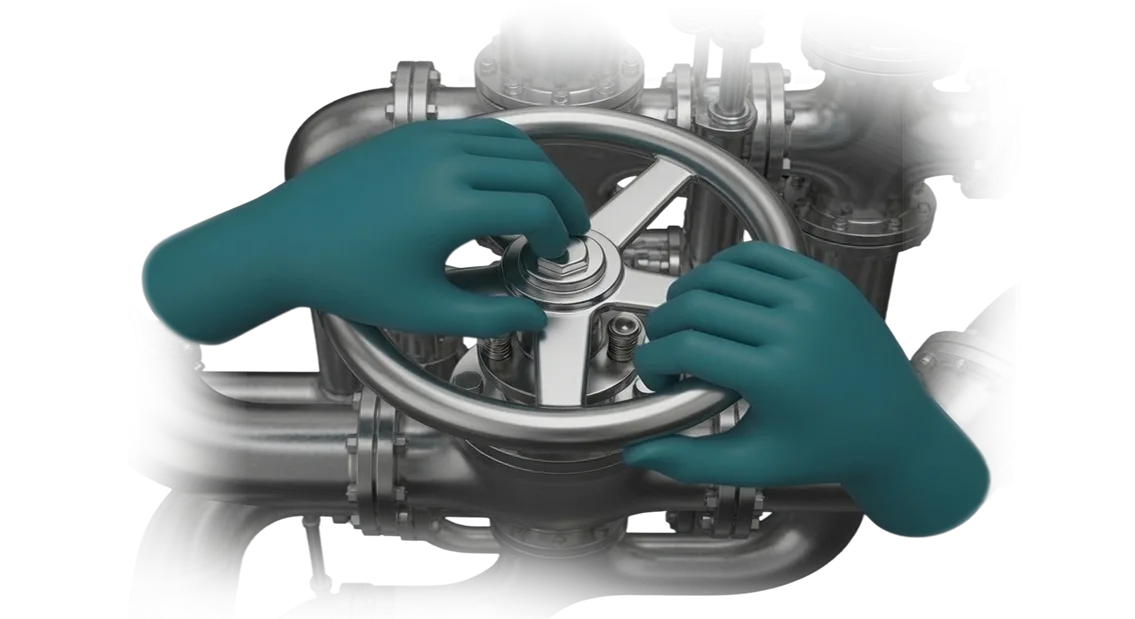
Every new robot manipulator operator is a potential risk to equipment and people. Control errors lead to collisions, damaged parts, line stoppages and, in the worst case, workplace injuries.
This is precisely why training specialists on real equipment requires special caution — and that is always slow and expensive.
Training on a live production line literally stops the workshop: while a newcomer masters the movements, the equipment produces nothing. Moreover, every mistake on a real manipulator means repair costs, material losses and a risk to employee health.
Business pays twice: for the training itself and for the consequences of mistakes. And if you add potential inspections and fines — the price of an unprepared operator becomes even higher.
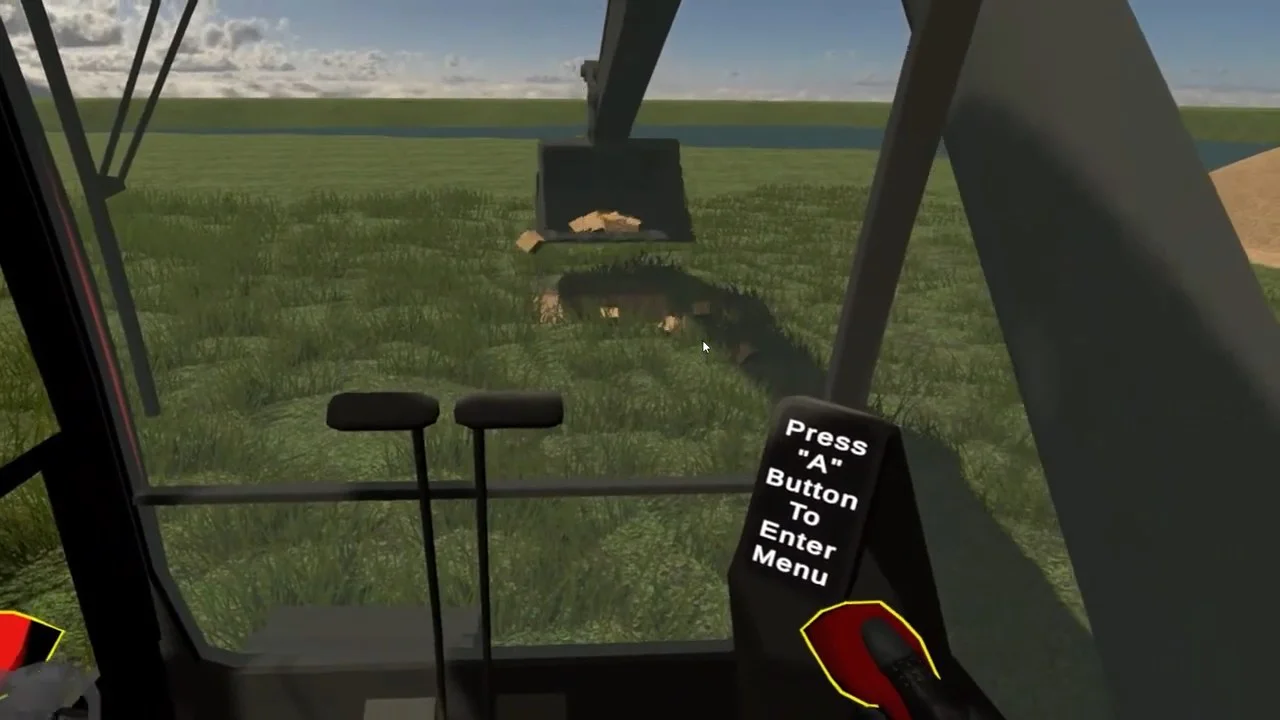
Safe training in a VR simulator solves this problem. An employee trains on a digital copy of the manipulator, where movements, speeds and control logic replicate the real ones. And making mistakes is not scary — the virtual environment does not tear metal or injure people. VR training can be completed right in the classroom without stopping production lines.
The main result is a prepared operator who moves to real work without unnecessary risk. They already know typical scenarios, can respond to non-standard situations and bring actions to the point of automation.
The company gets reduced workplace injuries, less scrap and downtime, and the speed of bringing new employees up to speed ceases to be a bottleneck.
What a VR Simulator Gives Your Enterprise
The main benefit of implementation is training cost savings. Instead of stopping a real line and using expensive materials, an employee practices skills in a safe virtual environment.
This directly reduces the budget: less downtime, less scrap, less spending on training benches and raw materials.
Faster onboarding is the next tangible result. A newcomer masters manipulator control in days, not weeks, because from the very first session they work in scenarios close to real production.
Experienced operators also get professional development: the simulator allows them to practice non-standard situations that rarely occur in the workshop but are costly when a mistake is made.
Fewer accidents is a direct effect of training without risk to people or equipment. Every action is practiced to the point of automation, so on real equipment the employee acts confidently and without unnecessary movements. The enterprise gets fewer breakdowns, fewer injuries and, as a result, fewer unplanned downtimes.
Thus, a robot manipulator VR simulator addresses three tasks at once: it reduces staff training costs, accelerates the time it takes newcomers to reach full capacity and reduces accident rates.
For a manager, this means a predictable result, stable workshop operations and peace of mind about employee safety.
Robot Manipulator VR Simulator Formats
The choice of training format directly affects the speed of staff preparation and the cost of implementation.
One enterprise may find it more convenient to set up a stationary site, another may prefer to bring the simulator to the facility, and a third may need access for all branches at once. We use all three types of robot manipulator simulators to cover any scenario without overpaying.
| Format | Who it is for | What it gives the client |
|---|---|---|
| Stationary VR simulator | Enterprises with a permanent training center and regular recruitment | Full immersion and practicing actions to the point of automation; easy to integrate into an existing training and certification program |
| Mobile VR kit | Companies with multiple production sites and mobile teams | We bring the kit to the facility and train employees without interrupting production; we reduce logistics costs and downtime |
| Cloud solution | Distributed teams, branches and remote work groups | A unified database of scenarios and results; the employee trains from any device, and the manager sees statistics in a personal dashboard |
In short: the stationary format provides maximum realism, the mobile one provides flexibility and deployment speed, and the cloud one provides scaling without purchasing additional equipment.
We will select the optimal option based on the number of employees, budget and current infrastructure, and if necessary, combine the formats into a unified training program.
What Happens at Each Stage of VR Simulator Creation
Developing a VR simulator for a robot manipulator is not a "black box": we have structured the process so that you see the result at every stage and can make changes without missing deadlines. Below are six steps from the brief to launch at your site.
-
Simulator brief. We analyze the task: manipulator operations, employee skill levels, typical errors. This forms the basis of the scenario and saves your time on unnecessary features.
-
Layout approval. We prepare a scenario description: what the operator sees, how errors are assessed. You approve the layout, and only then do we move to development — you control the result in advance.
-
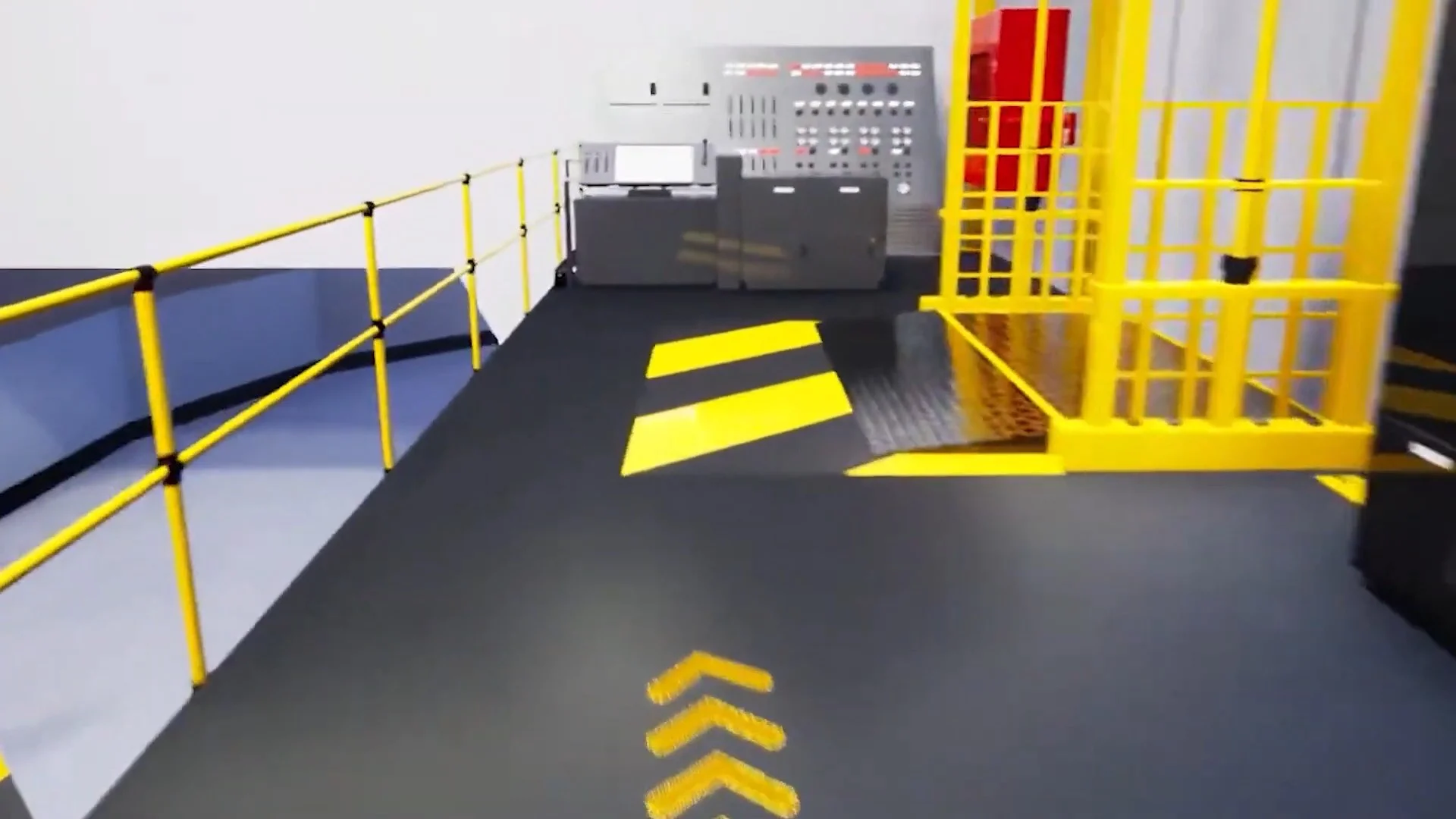
3D model and environment creation. We develop a realistic model of the robot, control panel and work area. Accurate visualization helps transfer skills to real equipment.
-
Interactive scenario assembly. We program the logic: emergency stops, non-standard situations, precise movements. The system records the operator's actions and generates a report for the instructor.
-
VR simulator testing. We conduct trials at your site: we check realism, control convenience and scenario correctness. We take into account the feedback of future operators to make the product as close to reality as possible.
-
Launch and support. We install the simulator, train instructors and provide technical support. If necessary, we update scenarios to reflect changes in production.
As a result, you get a tool integrated into the training system and control progress at every stage.
What Is Included in the VR Simulator Delivery
You receive a ready-to-use tool, not "source files" and promises. The delivery package includes everything needed to launch training at an enterprise from day one — without searching for contractors, buying additional software or dealing with licenses.
Here is what is included in the delivery of a VR simulator for working with a robot manipulator:
- Scenario and operation execution logic. The simulator is built around specific work tasks: setup, maintenance, emergency situations. The equipment replicates the behavior of a real robot manipulator, so a mistake in virtuality does not lead to downtime or breakdown.
- 3D models of equipment and the production environment. The robot itself, work areas, auxiliary mechanisms and tools are modeled. An employee studies all components and their interaction in advance — just as on a real site.
- Methodological materials for instructors. The package includes lesson scenarios, criteria for assessing employee actions, difficulty level settings and recommendations for conducting exams. The instructor does not need to develop anything — only conduct the lessons.
- Software licenses. We transfer all rights to use the simulator on your equipment. No hidden fees or periodic "renewals" — you pay once and work on your own hardware.
- Staff training. We install the simulator and provide training for administrators and instructors. Your people will learn to work with the system and will be able to manage training within the enterprise independently.
- Technical support and maintenance. After the simulator launch, you are not left alone with problems. We help with configuration, update content to reflect changes in regulations and advise employees as needed.
This approach addresses the client's main need: no lengthy implementation and no involvement of third-party specialists. You get a single package where all elements work together — from the virtual scene to staff instruction. This allows you to train employees quickly and reduce risks on the real production floor.
Case Study: How a VR Simulator Reduced Training Costs
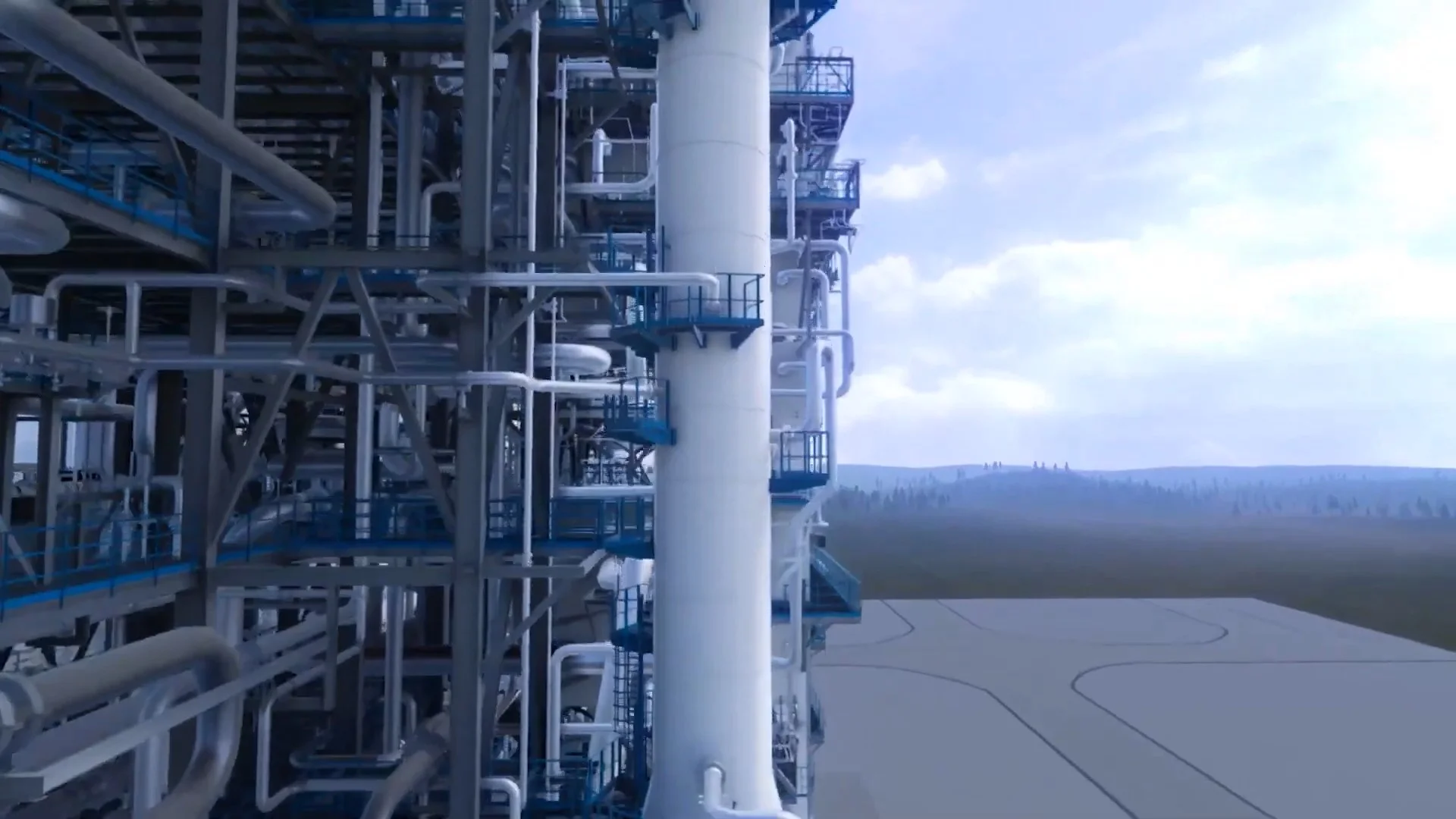
We implemented a VR simulator case for training robot manipulator operators at a large machine-building plant, PromMash. Previously, training one specialist took several months: access to a real line was needed, along with an instructor and time to practice actions.
Any mistake by a newcomer meant equipment downtime and risk to personnel, so only the most experienced operators were allowed near the machines.
We proposed moving the process to a virtual simulator that replicates manipulator work scenarios without stopping production. Employees practice startup, setup and emergency situations in a safe environment, and the skill is automatically transferred to real equipment.
This solution addressed the client's main pain point — the dependence of training on available machines and experienced mentors.
The implementation results speak for themselves: operator training time was reduced threefold, and the number of errors on the production floor dropped by 40%. Training efficiency increased because employees manage to practice many times more scenarios in a single session.
Training costs decreased due to reduced downtime, material consumption and instructor time — without any loss of training quality.
Training cost reduction became systematic: the plant no longer allocates a separate workshop for internships and brings new employees up to speed faster. This case confirms that VR simulators pay for themselves within the first months of use.
We adapt the same approach to the tasks of other enterprises — from a single manipulator to an entire workshop.
How to Choose the Right VR Simulator Format?
There is no one-size-fits-all answer: the effectiveness of a VR simulator depends on how well the format matches your tasks. One plant may need a compact solution for basic operations, while another may need a full-fledged training ground with different manipulator models.
Therefore, the first step is not choosing equipment but defining the criteria by which you will evaluate the result.
There are four key criteria. The number of employees to train per month: a group of five people and a flow of two hundred operators require different formats — from a portable kit to a stationary classroom.
The types of manipulators in production: the more there are and the more they differ, the more important a modular system that allows adding new models without reworking the entire program.
The training location: dispersed workshops require a mobile solution, a training center requires a stationary VR classroom. And investment: the budget must match the scale, so we offer phased expansion starting with a single scenario.
An overly expensive simulator does not guarantee results if it does not address the production task. An experienced contractor helps cut out the excess and direct funds toward functions that reduce shift readiness time and lower error rates.
During a consultation, we analyze your input data: staff numbers, the list of manipulators, training logistics and budget constraints.
We then propose two or three formats — from a quick start with a basic program to a comprehensive turnkey solution — and show how each one pays off. You receive a practical plan tailored to your production context.
Common Doubts Before Ordering a VR Simulator
Ordering a VR simulator for robot manipulator training usually comes down not to technology but to questions of reliability.
"Will the operator understand the interface?" "What if the equipment breaks down?" "Who will support us after launch?" — these are normal doubts if you are introducing simulation into your training process for the first time.
We address them before the contract is signed. Below are answers to the questions we are asked most often before a project starts.
Is the VR simulator compatible with our existing equipment fleet?
We design the simulator for the specific manipulator model you work with. Your in-house engineers and technologists provide the parameters and scenarios — we transfer them into the virtual environment.
As a result, you get a simulator that replicates the logic and controls of your specific equipment, not a "generic picture."
What happens to the equipment if it breaks down?
VR headsets are designed for intensive use, but nobody is immune to force majeure. That is why we take responsibility for repair and replacement of equipment during the warranty period.
If something fails during training sessions, we send a replacement kit and arrange for repairs so the training process does not stop.
Will it be difficult for instructors and students to master the simulator?
The interface is built on the principle of "put on the headset and follow the prompts." An instructor needs only 20–30 minutes to confidently run a session: the simulator itself suggests the next step, highlights errors and records the result. For learners, this is a familiar interaction format — adaptation difficulties are rare.
What technical support is provided after launch?
After project delivery, you have a dedicated support engineer. They answer questions, update scenarios, help with calibration and quickly respond to any failure. Average response time is a few working hours, and most issues are resolved remotely.
Is there a warranty on the simulator itself and its content?
We provide a warranty on the software part and content. If during training you find a discrepancy with the real manipulator behavior or the scenario — we refine it at no extra cost.
The warranty period is fixed in the contract so that you understand your risks in advance, not after payment.
Doubts are logical — what matters is that they are dispelled before work begins. Call us, and we will send written answers to your questions within one working day.Order a VR Simulator for Your Production
Ordering a VR simulator for your production is not buying a "box" but launching a working tool for training and operations control. We handle the entire process: from your request to the moment the simulator is used in the workshop.
At the same time, you know the cost and timeline in advance, and the first steps take no more than two working days.
Getting started takes just five steps, each of which is clear and does not require technical preparation from you:
- Submit a request on the website or by phone — we respond within 30 minutes, clarify the task and schedule a consultation.
- Get a consultation with an engineer and a methodologist — we analyze which operations need to be practiced, where the risks are and how a VR simulator fits into your current training.
- We prepare a commercial proposal with a fixed cost and timeline — no hidden fees, you see the full scope of work and the result.
- We agree on the concept and show a simulator demo — within 2 working days you see what the future product looks like on your scenario.
- We sign the contract and launch development — after launch, we train instructors and support the implementation.
This process allows you to control every stage. The cost of the simulator is calculated after an audit of your specific tasks: the number of operations to practice, the number of workstations and integration with your training standards.
You do not overpay for extras but get exactly the functionality that reduces injuries and accelerates the time it takes newcomers to start a shift.
Now is the best time to order a VR simulator: we provide a free consultation and show a demo on your production scenario. Submit a request — and within two days you will have a commercial proposal and a video example of the simulator on your desk. And then — only results: employees with solid skills and fewer costly mistakes on real equipment.