

Why You Can't Do Without a VR Simulator for a Lathe-Milling Machine
Every time you train a new operator on a lathe-milling machine, you're balancing between the need to pass on experience and the risk of serious losses. A beginner without practice can damage the tool, ruin the workpiece, or get injured.
The consequences of such a mistake are not only repair and material costs, but also downtime of the production area, fines for occupational safety violations, and missed order deadlines.
Unlike many other professions, here the price of an error is measured not in seconds, but in human safety and significant financial losses.
While an employee is mastering real equipment, the machine sits idle — and every hour of downtime means underfulfilled production targets and lost revenue. Enterprises are often forced to allocate entire shifts to training operations, reducing overall productivity.
In the end, staff training costs far more than it seems at first glance, and conflicts between production staff and the training center are inevitable.
Defects also eat up a substantial share of your budget. Incorrectly set parameters, inaccurate feed, or a missed operation turn an expensive workpiece into scrap.
In serial production, this leads to overconsumption of materials, additional setup cycles, and missed customer deliveries. Regular defects undermine customer trust and erode the company's reputation.
A VR simulator for a lathe-milling machine addresses this pain point. It gives the operator the ability to repeatedly practice skills in a virtual environment where an error costs nothing — neither equipment, nor materials, nor health.
Every skill, from turning on the spindle to complex transitions, is practiced to automation in safe conditions, and training time is reduced severalfold. New employees start contributing to results much faster, without creating downtime or defects.
This approach doesn't eliminate practice on a real machine, but it removes the most expensive mistakes at the start.
You preserve your equipment, materials, and mentors' nerves, and the shop floor's productivity no longer depends on who is standing at the control panel for the first time today.
What Benefits VR Training Brings to Your Production
Traditional training of lathe-milling machine operators requires time, material consumption, and inevitably involves risk for the beginner.
We offer a different approach: a virtual simulator that replicates the logic of the machine and allows mastering the profession without stopping production.
Fast training without downtime
The operator trains on a digital replica of the machine: the same controls, the same processing modes, but with no risk of breakdown. Training proceeds at a convenient pace, and the skills transfer to real equipment.
The company gets an employee ready to work in days, not months. Meanwhile, the workshop continues to produce products — machines are not occupied with training.
Reducing the cost of every hour of practice
Real skill practice is expensive: electricity, tools, workpieces, and a beginner's mistakes lead to defects. The VR simulator eliminates these costs — training takes place without consuming materials and does not affect the machine fleet.
More attempts in the same time means more confident skills. A beginner hones actions to automation, and the company doesn't spend its budget on destroyed parts.
Safety as part of the culture
The most dangerous scenarios — tool jamming, incorrect feed, program failure — can cost people their health in reality. In a virtual environment, they can be practiced repeatedly and without consequences.
The operator learns to react correctly to abnormal situations, and this reduces injuries. Real production becomes safer for every employee.
Skills growth and objective assessment
All trainees follow a unified program. The system records every action, so the manager sees the real level of training and makes the decision to allow an operator to the machine based on data, not intuition.
This raises the overall competency level of the workshop and simplifies onboarding for new employees. The company gets predictable operator performance quality.
Implementing VR training is an investment in production launch speed and peace of mind for your people. Contact us to discuss a simulator for your specific machine model.
VR Simulator Formats for a Lathe-Milling Machine
The choice of VR simulator format directly affects the speed of employee training and implementation cost. Some need a full cycle from workpiece to finished part, while others need to practice emergency situations.
Below we break down typical scenarios so you can choose a solution for a specific task — from initial training to retraining.
| Format | Who it's for | What it gives the client |
|---|---|---|
| Interactive machine model | Beginners, students, apprentices | Safe introduction to controls and the CNC panel without risk of breakdown |
| Full machining cycle simulator | Operators, process engineers | Practicing the sequence: workpiece setup, tool change, part removal |
| Emergency situations trainer | Experienced employees, maintenance personnel | Actions during jamming, tool breakage, operator error — without stopping production |
| Comprehensive VR training ground | Training centers, large workshops | A separate virtual area where several people go through scenarios simultaneously |
In practice, two formats are most often combined: a basic simulator for trainees and an advanced one for professional development of current specialists.
We work on professional equipment and proven development tools (including the Unity engine), so we select the format for your task, not the other way around.
How we determine the right format
It all starts with a brief: how many people need to be trained, what level of training employees have, which operations cause the most errors. After that, we propose a scenario structure and the number of virtual hours to cover exactly your production processes.
The main criterion is real benefit for the workshop: reducing onboarding time and reducing the percentage of defects.
Therefore, before launch, we coordinate scenarios with your technologists and, if necessary, refine machine details so that after the simulator, personnel immediately work confidently on real equipment.
How We Create the Simulator: from Brief to Launch
Creating a VR simulator for a lathe-milling machine is not a "black box" but a clear process with fixed stages. We have structured it so that you see the result at each step and control the timeline. Below is the path from the first brief to the simulator running in your training center.
- Brief and immersion. We collect requirements: what operations employees learn, what mistakes are most common, and what level of training beginners have. We set the learning objectives and the criteria by which you will know the simulator works.
- Plan and timelines. We define development stages, approval checkpoints, and delivery dates. You receive a clear project roadmap — without surprises or "floating" deadlines.
- Scenario approval. We approve the machine operation scenarios: the sequence of actions, typical emergency situations, and simulator responses. This is your quality control at an early stage, when changes are inexpensive.
- Virtual workplace development. We create a model of the machine, controls, and production environment. You see intermediate versions, try them, and provide feedback — before the final delivery.
- Pilot testing. We run the simulator on a group of your students or employees. We collect feedback, check how clear the prompts are and whether the action assessment is correct.
- Implementation and support. We install the simulator on your equipment, train instructors, and hand over documentation. Then — technical support and scheduled scenario updates for your new tasks.
In the end, you get not a "presentation prototype" but a tool integrated into the training process. The timeline for each stage is fixed in the contract, and approvals take days, not months — so from brief to launch usually takes a few weeks.
What Is Included in the Delivery of a Turnkey VR Solution
By ordering a VR simulator, you receive a turnkey solution — without the need to assemble equipment, software, and methodologies from different contractors.
We take on configuration for your workshop, installation, and handover to staff, so the first result appears immediately after project delivery.
The delivery set includes:
-
An interactive simulator that replicates the working operations of your lathe-milling machine — the employee practices skills in a safe environment, without risking equipment and materials.
-
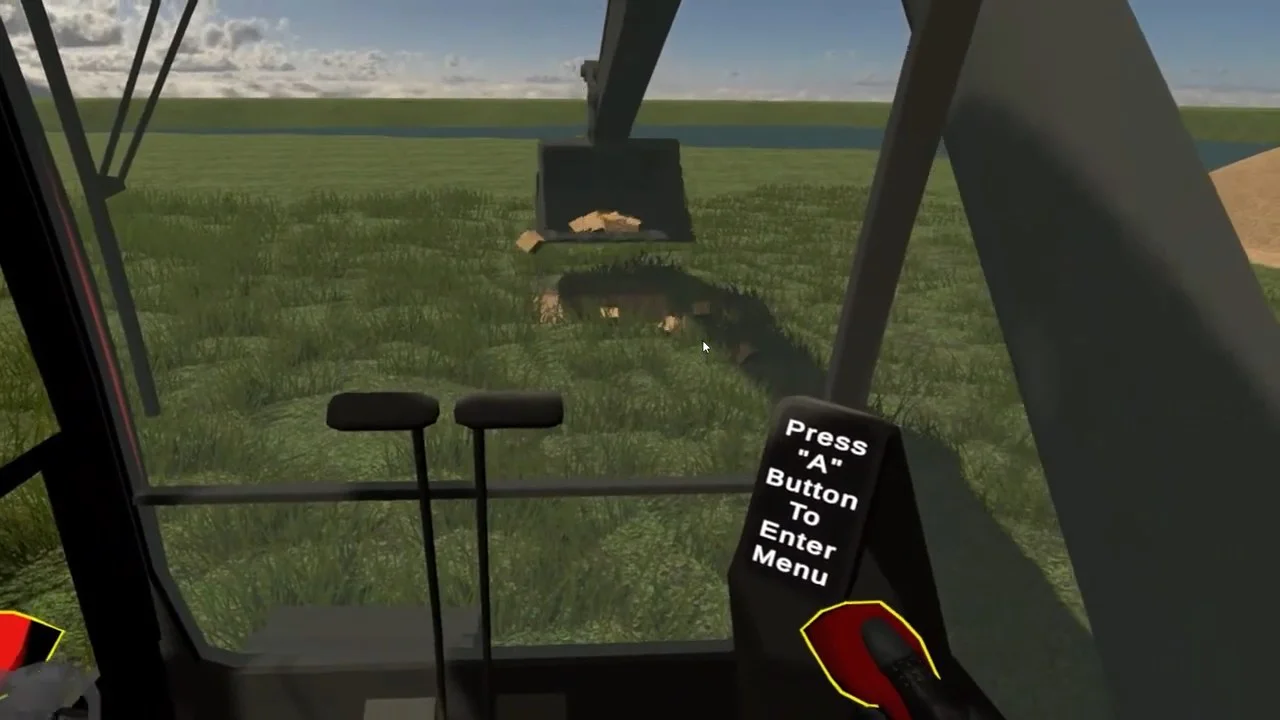
A virtual workplace with realistic graphics and scenarios from startup to final part processing, including emergency situations that are difficult to demonstrate on a real machine.
-
Methodological materials and an instructor's guide — a ready-made training program, assessment criteria, and lesson scenarios for beginners and experienced operators.
-
A product passport and technical documentation for your maintenance department: everything needed for certification, internal control, and scheduled inspections.
-
Installation and setup of VR equipment in a training room or directly on the production floor — we bring the kit, install it, and check functionality before handover.
-
Training for your instructors and technical specialists: after brief support, they conduct sessions and maintain the system independently.
-
Warranty and technical support — phone consultations, remote diagnostics, and prompt component replacement when needed.
If you need additional functionality — recording training results, integration with the HR system, or adaptation to a new machine model — we refine the package to your tasks.
Case Study: How We Cut Operator Training Time
Operators of lathe-milling machines don't learn in a week. Every incorrect movement means a spoiled workpiece, line downtime, and risk to equipment.
This is exactly the pain point a VR simulator addresses: it lets a beginner practice skills without a real machine and without consequences of errors.
We developed a simulator for a machine-building plant that was expanding its machining section. Instead of long training with mentors, the company got a virtual replica of its machine and a set of scenarios — from setup to emergency situations.
Training is built on movement repetition: the brain remembers the correct trajectory just as it does when working with real equipment.
What the implementation achieved
- The time to prepare an operator from scratch dropped by 40% — people reached planned speed one and a half times faster.
- Defects in typical operations halved: techniques practiced in VR transfer to the real workshop without loss of quality.
- Training costs decreased: no need to spend workpieces, cutting tools, or stop a working machine.
The production manager noted that the main result is predictability. Every new operator after the simulator performs work without surprises, and current employees use it for retraining to new modes.
After the first stage, the plant ordered additional modules — the simulator paid for itself through saved time and reduced defects.
How to Choose the Right Simulator Format?
There is no correct answer in a vacuum: the simulator format is determined by the tasks you are solving. One thing is to introduce new operators to the machine's structure, another is practicing actions in emergency situations or improving the skills of experienced employees.
That's why we start not with technology, but with your production process: what skill requirements for personnel exist at the site, where errors most often occur, and what level of training people have.
Production specifics also influence the choice. A large plant with serial part manufacturing is best served by one format, while a repair shop with a variety of operations needs another.
We take into account whether personnel work with different machine models, whether it is necessary to simulate specific controls, and what actions are critical for your equipment.
This allows you to avoid overpaying for unnecessary options and get a tool that solves exactly your problem.
The key criterion is the speed of integrating the simulator into operations.
Training should not take employees away from production for long, so we design scenarios to be as close as possible to real operations and to take exactly as much time as is needed to consolidate the skill. The result — confident actions on a real machine, fewer defects and emergency stops.
We help you find your way at the project discussion stage: we analyze your tasks and propose an option optimal for your conditions.
If you're unsure which simulator format to choose for a lathe-milling machine, tell us about your tasks, and we'll suggest a solution that will work specifically for your production.
Frequently Asked Questions About Implementing VR Simulators
Implementing a VR simulator for a lathe-milling machine is a new practice for most enterprises, so questions before starting are inevitable. We answer the main ones — the way we answer customers on every project: honestly and with numbers.
Will the simulator fit into our training system if the machines have already been purchased?
Yes. The simulator does not require replacing equipment — it runs on a regular office PC or laptop and connects to your training program as a separate module.
We adapt scenarios to the specific machine model and your process sheets, so operators practice exactly the operations they perform in production.
How long does implementation take, and will it stop workshop operations?
Implementation runs in parallel with current processes and does not stop production. We prepare the basic turnkey version in 2-3 weeks: from briefing to installation and instructor training.
After that, you decide how to fit the simulator into your schedule — whether during evening shifts or during equipment downtime.
What about guarantees if the simulator doesn't deliver the desired result?
We record target metrics in the contract: for example, reducing training time by up to 30% and reducing errors during the first work on a real machine. If the metrics are not achieved after the pilot launch, we refine the scenarios at our own expense.
The equipment and software themselves carry a warranty for the entire period of use, with free updates.
Older employees haven't worked with VR — how will they adapt?
The simulator interface is designed so that no technical skills are required: put on the headset — and follow the prompts to perform the operation. Before launch, we train your instructors for free, and they pass on knowledge to operators at their own pace. Usually, the first confident actions on the simulator appear within the first hour.
Who supports us after launch?
After implementation, you are assigned a dedicated project manager. They are available by phone and email, help with updating scenarios for new parts or operating modes, and promptly resolve technical issues.
Response time to an inquiry is one business day, and we conduct regular audits of simulator usage for free.
Ready to Discuss Your Project? Leave a Request
Training operators on a real lathe-milling machine is a risk for equipment, production downtime, and a long path to stable performance.
A VR simulator removes these limitations: employees practice skills in a safe environment, and you get a predictable result without stopping the workshop. We have already implemented such solutions at enterprises and are ready to show you how it works for your specific situation.
Leave a request for a consultation, and we'll prepare an individual proposal within a few days. It will include:
- An engineer's consultation: whether a VR simulator fits your tasks and which equipment is optimal.
- A cost calculation for your scenario — the number of machines, the number of operators, the training format.
- A simulator demo on a real model of a lathe-milling machine, not on slides.
- A pilot launch program with clear metrics: training time, error rate, time to reach shift speed.
- A step-by-step implementation plan with deadlines and responsible persons on your team.
- Post-launch support: assistance with adaptation, content updates, and operator technical support.
We conduct demos on your or our equipment — you'll see the scenario with your own eyes and can give feedback before making a decision. We launch the pilot in a few weeks, and then you get a working training tool integrated into your processes.
Leave a request now — we'll discuss the task, calculate the cost, and agree on a convenient time for a demo. This doesn't obligate you: first we find out whether a VR format suits your production, and then we plan next steps.