

Why the chemical industry loses money on training
The chemical industry loses money on training long before it shows up in reports. Every mistake by an inexperienced operator or lab technician is a risk of an accident, a shop shutdown, a defective batch, or fines from regulatory authorities.
According to industry statistics, direct and indirect losses from the actions of untrained personnel reach a third of a plant’s operating costs, and the reputational damage from an incident is measured in years.
Traditional training does not help: theory does not build muscle memory, and practice on real equipment is dangerous and expensive.
Letting a newcomer near an expensive line “under the supervision” of a mentor is a lottery where the stakes are people’s health, the integrity of the installation, and the environmental safety of an entire region.
Industrial safety today is not just briefings and stands—it is a managed system for practicing skills to the point of automation. We address this need with VR simulators that reproduce your production processes down to the smallest detail.
An employee trains in a safe environment until their actions are perfect—and only then goes to the real site.
What this means for business: accidents become a thing of the past, defect rates drop, equipment downtime shrinks, and staff turnover stops being a disaster—new employees reach target proficiency in weeks, not months.
The chemical industry gets predictable economics and protection from the human factor—the most expensive risk in production.
What benefits a plant gets from a VR simulator
For chemical enterprises, the cost of a mistake is especially high: a leak, fire, or failure to follow regulations can shut down a shop and lead to serious consequences.
At the same time, training directly on the production site is dangerous, and theory does not provide the necessary skills.
A VR simulator moves training into a safe virtual environment—an employee practices actions until they become automatic, but without risk to themselves or the equipment.
Reducing accidents is the main business effect. An operator who has already “lived through” an emergency situation dozens of times in the simulator acts calmly and according to procedure in a real situation. That means fewer incidents, unscheduled shutdowns, and costs for dealing with consequences.
Faster personnel preparation. Instead of long theory and waiting in line for a mentor, an employee immediately enters an interactive environment.
With professional equipment and refined tools, the real scenario is reproduced as accurately as possible, and training takes several times less time.
Higher skill retention. According to PwC, virtual reality training is four times faster and provides deeper memorization than classic formats. Material is absorbed through action, not through notes—this directly affects the quality of staff performance.
An additional bonus is employer brand recognition. A modern approach to training sets an enterprise apart from others: people talk about it as a technologically advanced and responsible employer. This helps attract qualified talent and strengthen its position in the industry.
VR simulator formats for the chemical industry
Different enterprise tasks require different simulator formats—and how quickly employees master skills and what effect training brings to the business depends directly on the choice.
Below are the standard formats we implement in the chemical industry, from the standpoint of their value to you.
| Format | For whom | What it gives the customer |
|---|---|---|
| Process simulator | Operators, technologists, equipment operators | Practice of standard operating modes without risk to production. The employee learns to manage the process “live” rather than from instructions—fewer errors and less waste on the real line |
| Health and safety and maintenance trainer | Maintenance personnel, safety specialists | Safe practice of equipment maintenance and actions according to regulations. Training injuries are eliminated, and the safety culture on site improves |
| Emergency scenarios | Operators, shift supervisors, emergency response teams | Practice of actions during abnormal situations: leaks, depressurization, fire. Personnel act calmly and by algorithm—downtime and accident damage are reduced |
Such a breakdown allows you to launch training in a focused way—cover the most critical area rather than “train everyone in everything.” You get quick results and a visible return on investment after the first groups of employees.
Formats are easy to combine with each other in a single training program. If you are not sure where to start, we will help you select a scenario for your specific needs and budget: send us a request, and we will propose a solution for your task.
How the project goes: from brief to launch
To create a simulator that genuinely improves safety and speeds up personnel training, we have built a transparent process. You understand what is happening at every step and control the result—from the first brief to regular use of the simulator in training.
- Brief and immersion in the task. We study your regulations, typical scenarios, and bottlenecks in staff training. We define goals: practicing emergency situations, procedures for abnormal shutdowns, skill control.
- Scenario design. Together with your technologists and occupational safety specialists, we describe operator actions, error options, and their consequences. We approve the detailed scenario before development starts—you know exactly what personnel will learn.
- Approval of the mockup and mechanics. We show an early prototype of the interface and the simulator’s logic. You see what the training will look like and make edits without extra costs or delays.
- Simulator development. Our team creates the virtual space, models the equipment, and refines the interaction mechanics. You receive intermediate versions for review and feedback.
- Testing with your employees. On a pilot group, we check how understandable and useful the simulator is. We collect feedback from future users and refine details before the official launch.
- Launch and support. We train your instructors, connect a results tracking system, and integrate the simulator into regular training. We stay in touch for scenario updates and technical support.
This process allows you to launch VR training within 6–8 weeks, depending on scenario complexity. You get a predictable result: employees practice skills in a safe environment without risk to production or equipment.
What is included in the VR simulator delivery
The delivery of a VR simulator is not a single “compiled” file, but a complete workable package for launching training. You get everything you need to integrate the simulator into your existing personnel training system and start using it from day one.
- A ready-made training scenario — the simulator is built on real production situations at your enterprise, taking into account regulations and typical staff errors.
- A software license — the official right to use the simulator without restrictions on the number of trainees or the term.
- Equipment on request — if needed, we supply VR headsets and workstations with preinstalled software.
- Instructions for operators and administrators — clear guides for launching, configuring, and maintaining the simulator with your own staff.
- Content updates — regular scenario refinements to reflect changes in regulations, new types of equipment, and instructor feedback.
- Technical support for operators — a dedicated specialist on the line, help with failures, and usage advice throughout the entire service life.
This package removes all implementation concerns: you do not need to find contractors, figure out licenses, or think about what to do after launch.
Instead, you get a tool that works immediately and delivers measurable results—reduced accidents and faster onboarding for new employees.
A real case: how we reduced errors in chemical production
Chemical production does not forgive mistakes. An incorrect sequence of actions when starting a reactor or eliminating a leak leads to costly downtime and a real threat to personnel.
Training skills on a live line is dangerous, and setting aside equipment for drills is almost impossible. The solution is a virtual simulator that mimics emergency scenarios with no risk at all.
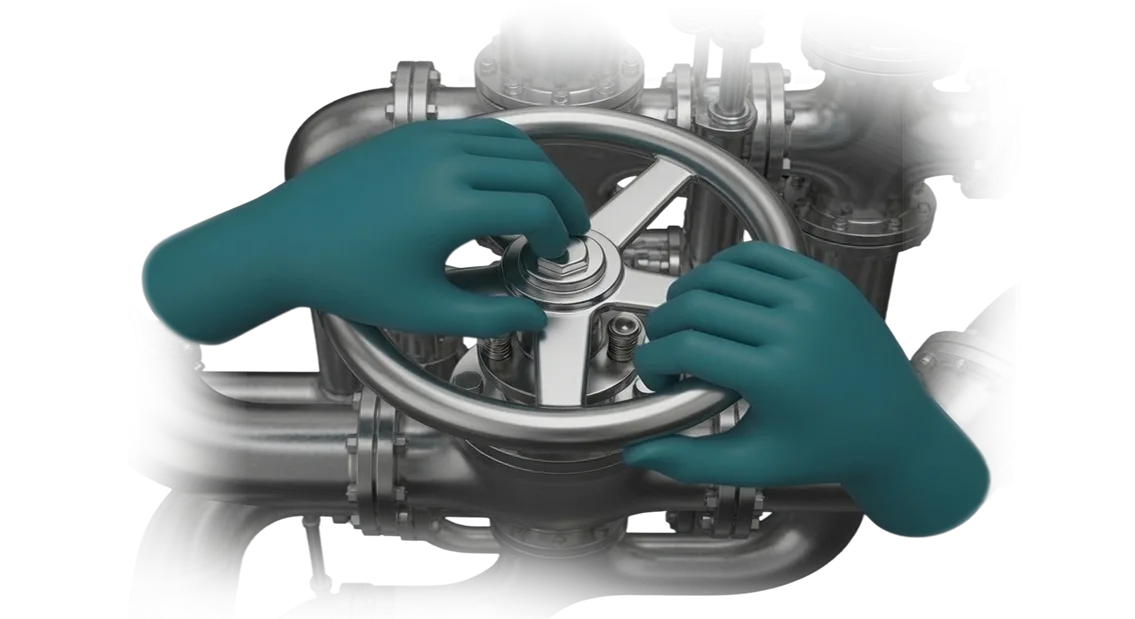
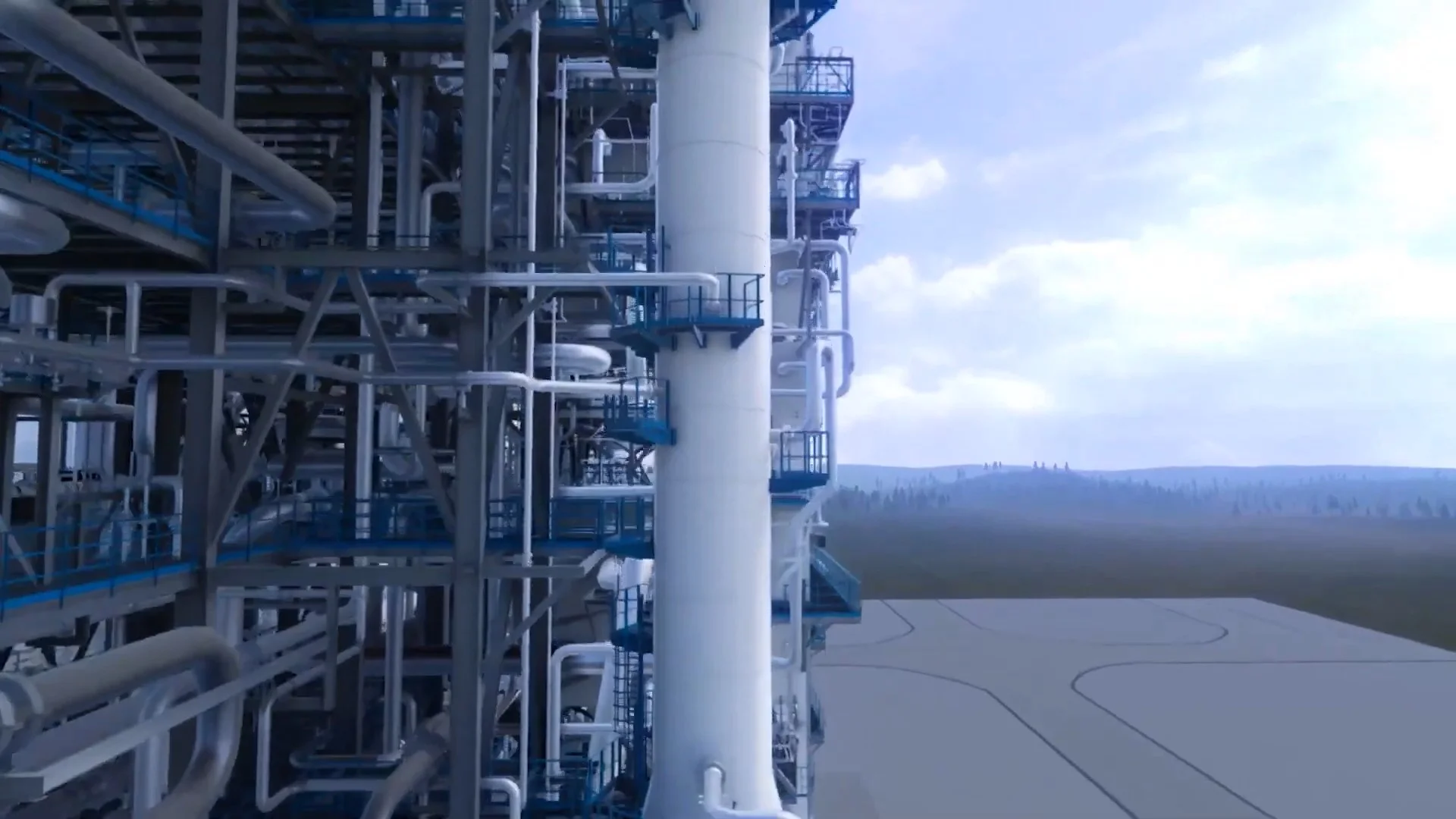
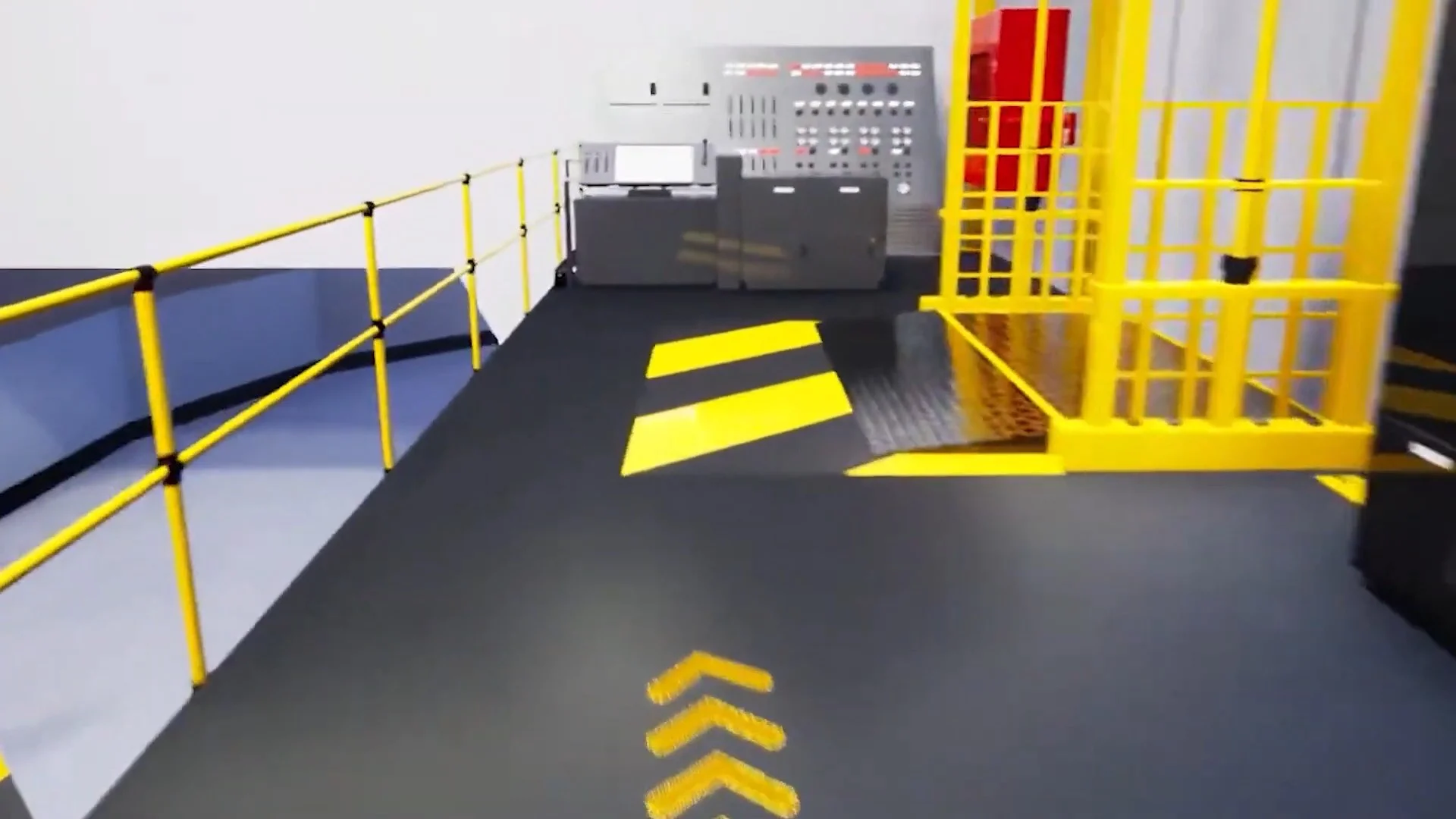
This is exactly the project we implemented for one industry plant. We created a digital copy of the shop: operators put on a VR headset and find themselves in familiar surroundings—the same instruments, pipelines, and control panels.
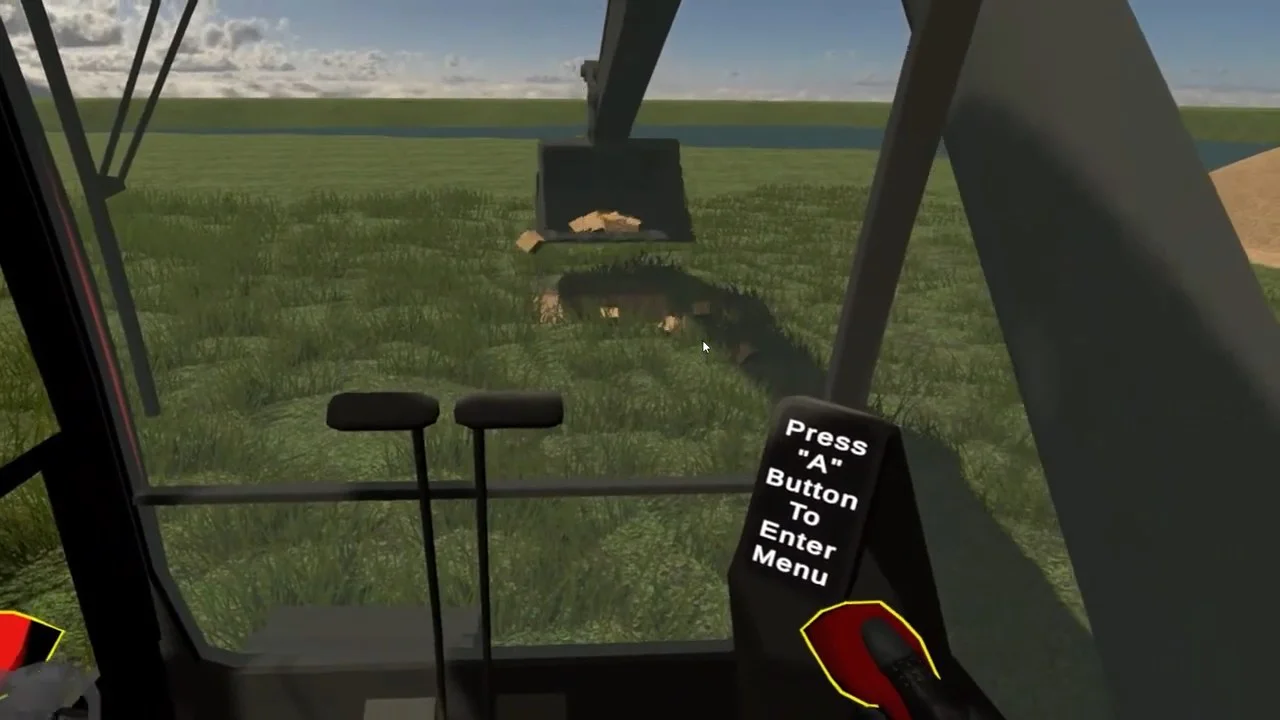
The simulation includes scenarios: chemical leak, fire, shut-off valve failure, abnormal pressure behavior in the system. The Unity engine is responsible for the realistic “behavior” of the environment—liquids, smoke, and object physics behave almost as they do in reality.
We structured the training so that every employee receives feedback: the system records actions, compares them with the reference algorithm, and shows errors immediately after the session.
The instructor sees a detailed breakdown and understands which staff members act confidently and who needs additional practice. This approach paid off within the first few months.
After six months, the enterprise recorded the effect: the number of emergency situations dropped by 45%, and personnel reaction time to abnormal events decreased by a third. The number of errors during planned shutdowns and equipment starts fell by half.
The plant’s management decided to expand the program and implement the simulator at two more production sites.
Answers to frequent customer questions
Before launching a VR simulator for the chemical industry, customers always have practical questions: how often does the equipment break down, who is responsible for system performance, and what happens after a year of use.
That is normal—the simulator works in a shop, not in a laboratory, and must withstand real conditions.
We have gathered the main question we hear from production managers and occupational safety specialists. The answer to it removes most doubts when approving the budget and launching the project.
What if the simulator breaks down? Who will repair it?
All VR simulators come with a warranty—during the warranty period, we fix any faults related to equipment and software free of charge.
If the problem occurred through our fault, we resolve it at our expense and as quickly as possible, so that personnel training is not interrupted.
After the warranty ends, you can sign a maintenance contract. This means we monitor system updates, compatibility, and performance, and if a failure occurs, we connect remotely and restore operation—without long downtime or searching for third-party contractors.
In addition, we set up data backup and virtual environment status monitoring in advance. So even in an abnormal situation, you will not lose employee training results and will be able to continue training on schedule.
Launch your VR simulator this quarter
Launching a VR simulator for the chemical industry is not a long project but a manageable process that fits within one quarter. We handle all stages: from analyzing your regulations to having the system ready for operators.
You do not need to understand technical details—you get a working training tool with a clear launch plan.
After ordering, you receive:
- A quick project start — within a week we assign a team, set deadlines and control points, so you can see progress immediately.
- Scenarios based on your regulations — we transfer the enterprise’s real instructions and regulations into the VR environment, without adapting them to “standard cases.”
- Training for operators and instructors — we conduct on-site or remote training for your team so they confidently use the system from day one.
- Post-launch support — we are available 24/7: we help operators and update scenarios when regulations change.
- Reporting for management — you can see who completed training, how long each scenario took, and which mistakes are repeated. Convenient for monitoring the quality of staff preparation.
- Technical support and development — the system is not static: we add new modules and scale it to other shops or job roles.
We understand that in the chemical industry, the cost of a mistake is high. That is why the VR simulator does not replace instruction but strengthens it: it provides safe practice before working with real equipment.
Launch takes 2–3 months depending on the number of scenarios—you get a measurable result this quarter, not “someday.”
Support is included in the plan: a fixed annual cost, with no hidden fees. If additional development is needed, we will discuss it and make changes under the current contract.
How to choose the right VR simulator format for your task?
The format of a VR simulator for a chemical enterprise is not a technical detail but a way to solve your task. If you need to quickly introduce new employees to the production process, short scenarios with hints will work.
For recertification, modules with automatic recording of actions and errors are suitable. And for emergency response practice, more complex, multi-stage scenarios with limited decision time are needed.
The first selection criterion is the training goal. Determine what result you need: the employee should understand the equipment, act according to instructions, or make decisions in an abnormal situation.
This determines the depth of immersion, the number of branches in the scenario, and how completion will be evaluated.
The second criterion is the audience and scale. The same simulator can be used for dozens or hundreds of people if it is installed on several headsets and allows sessions to be run without constant instructor involvement.
If the audience is small and training is individualized, two or three scenarios with manual error review are enough.
Finally, consider how the simulator fits into the existing training program. It should not replace live training but strengthen it: helping to practice what is impossible or dangerous to demonstrate on real production.
It is good when a report is generated automatically after a virtual session—this simplifies results control and justification before management.
We do not offer a one-size-fits-all box. At the start, we analyze your task, audience, and constraints, and then select a format: from a compact introductory module to a full scenario with several emergency branches.
Describe your situation—together we will choose a solution that delivers quick results and does not require unnecessary costs.