

Why IT Companies Lose Orders for VR Simulators for Industry
Industrial enterprises choose VR simulators not for graphics but for results: personnel safety, lower accident rates, and faster training. IT companies often focus on visual appeal, but a factory customer needs employees who can confidently operate real equipment after training.
And that's where the problem arises: the simulator does not fit the actual production process, does not account for occupational safety standards and regulations. As a result, the plant sees a “pretty picture” that doesn't solve its task and picks a more competent contractor.
This leads to lost orders for VR simulators for factories, despite strong programming skills and large development budgets. Every lost tender is not just lost profit—it's also a blow to the IT company's reputation.
In the highly competitive development market, customers remember failed projects and don't even invite you to participate next time.
The situation is compounded by the fact that manufacturing specialists readily share their experiences at industry conferences and in professional communities.
The cause is systemic: most IT teams are excellent at VR technology but don't understand the specifics of a workshop, the operator's workflow, or safety regulations. Factory management senses this immediately—at the presentation or pilot launch stage.
The issue isn't polygon count or response time; it's how well the simulator models real actions and allows workers to practice emergency situations. Without that, an industrial company won't trust its employee training to you, and you lose the order.
We see this pain in many IT companies that come to us looking for a solution. Our job is to help you create VR simulators that convince even the most conservative process engineers and occupational safety departments.
We combine your technical potential with industry expertise so you can enter tenders with confidence and win. That way, you stop losing orders and start growing your portfolio of industrial projects—with the potential for long-term contracts and repeat business.
What VR Simulator Development Gives Your Company
IT companies are finding it increasingly difficult to retain clients with software products alone. Customers expect new formats that solve practical problems—training, safety, solution demonstrations.
A VR simulator becomes exactly that tool: it turns your product into a visual, engaging experience that cannot be copied.
What does this give your company in practice? New orders. VR solutions are in demand in industry, medicine, and logistics—you can offer clients an additional service that increases the average deal size.
According to our data, implementing VR modules allows IT companies to expand their project pipeline by 20–30% without increasing the marketing budget.
Expertise in VR. While competitors offer standard interfaces, you gain the recognized status of an innovative partner. This strengthens your brand: clients come through referrals, and negotiations move faster—you talk about outcomes, not features.
Repeat sales. A VR simulator is not a one-time delivery. Refinements to scenarios, new modules, support, and updates generate long-term revenue. Practice shows that customers return with new tasks within a few months of the first launch.
Each of these points strengthens your market position. The company our team develops turnkey VR simulators—from idea to launch. We handle the technical side, and you get a solution that sells your services and generates profit.
VR Simulator Formats for Industrial Tasks
Not all VR simulators are the same: some are designed for quick familiarization with a process, others for practicing actions until they become second nature in conditions as close to reality as possible.
The choice of format directly affects implementation timelines, cost, and the final training outcome—whether it saves instructor time, reduces the risk of employee errors, and how quickly personnel become able to work independently.
We develop simulators tailored to your task and your budget. Below are the three main formats we use in projects for industrial enterprises and IT companies building corporate training systems.
| Format | Who It's For | What It Gives the Client |
|---|---|---|
| Standalone headsets | For mass training of personnel in workshops, warehouses, and remote sites | Fast deployment, mobility, training not tied to a special venue. The simulator can be set up in any room in one day. |
| Headsets with a workstation | For detailed skill practice on complex equipment and technological processes | High realism, detailed scenarios, and in-depth analytics of each employee's actions. Suitable for assessing qualifications before allowing work. |
| Stationary VR rooms | For team drills and emergency response training involving multiple specialists | Full immersion, physical activity, and group interaction. Creates a realistic presence effect and stress close to real life—without risk to people or equipment. |
The choice of format is not about technology—it's about training goals. If you need to cover hundreds of employees across different departments, standalone headsets will do; if your key task is practicing rare but critical emergency scenarios, choose a stationary complex.
We'll help you determine the best option and, if necessary, combine formats in one simulator to achieve the desired result without paying extra for unnecessary functionality.
How to Order a VR Simulator: Stages of Work
You don't need to understand technology to order a VR simulator: you describe the task, and we build a transparent seven-stage process. At every step, you know what's happening, how long the work will take, and what result you'll get.
-
Brief. You tell us which skills need to be practiced, what audience the simulator is for, and which scenarios matter. Together we set goals, success criteria, and expectations—this is the foundation of the entire project.
-
Plan and cost estimate. Based on the brief, we prepare the concept, module list, and timelines for each stage. You see the scope of work and the cost before signing—no hidden fees or unexpected expenses.
-
Scenario approval. We work out the training flow in detail: actions, mistakes, hints, and completion conditions. You approve the scenario, so the final product exactly matches the expectations of employees and management.
-
Prototype. We create a basic version to test the controls and logic. You try it in the headset early on and make adjustments before the main development begins.
-
Full version development. We refine the graphics, scenarios, and user action assessment system. You see intermediate results periodically and correct details—this eliminates rework at the end.
-
Testing and launch. We check stability on target devices, install equipment, and train employees to use the simulator. After that, it moves into regular operation.
-
Support and development. We stay in touch after launch: update scenarios, add exercises, and adapt the simulator to new requirements without rebuilding the entire project.
What's Included in the VR Simulator Delivery
The VR simulator delivery isn't just a set of scenes—it's a complete package for launch and operation. We assemble it so that an IT company can hand over a turnkey solution to an industrial client without spending resources on additional development.
Scenarios, administration, documentation—everything is already included in the VR simulator package.
Here's what you get as part of the delivery:
- Ready-made VR scenarios—training and assessment modules that replicate real production operations and typical emergency situations.
- Administration system—user list management, access rights configuration, and tracking of training results.
- VR documentation—technical description, administrator guide, and operator reference.
- Reporting for each employee—error statistics, completion time, and progress on repeated attempts.
- Integration with the training system—export of results in formats already used in the company.
- Installation and configuration—we help deploy the simulator on your infrastructure or on the client's equipment.
- Updates and support—modifications to scenarios as requirements evolve.
Thanks to this package, your clients won't have to figure out the simulator's logic or dig into someone else's code. Enterprise personnel get clear instructions, administrators get management tools, and you get a finished product that's easy to sell and support. For an IT company, this means client trust and repeat orders for system development.
Case Study: VR Simulator for an Oil and Gas Enterprise
Typical training at a hazardous production facility consists of briefings, paper regulations, and rare drills. Personnel remember the theory but get lost in a real emergency, and every mistake results in downtime, injury, or an expensive accident.
A VR simulator closes this gap: workers repeatedly practice actions in a safe virtual environment until they become automatic.
This is exactly the VR simulator case we implemented for the oil and gas enterprise NefteGazOperator. The client was an IT integrator company that brought us in for turnkey development and delivered the final product under its own brand.
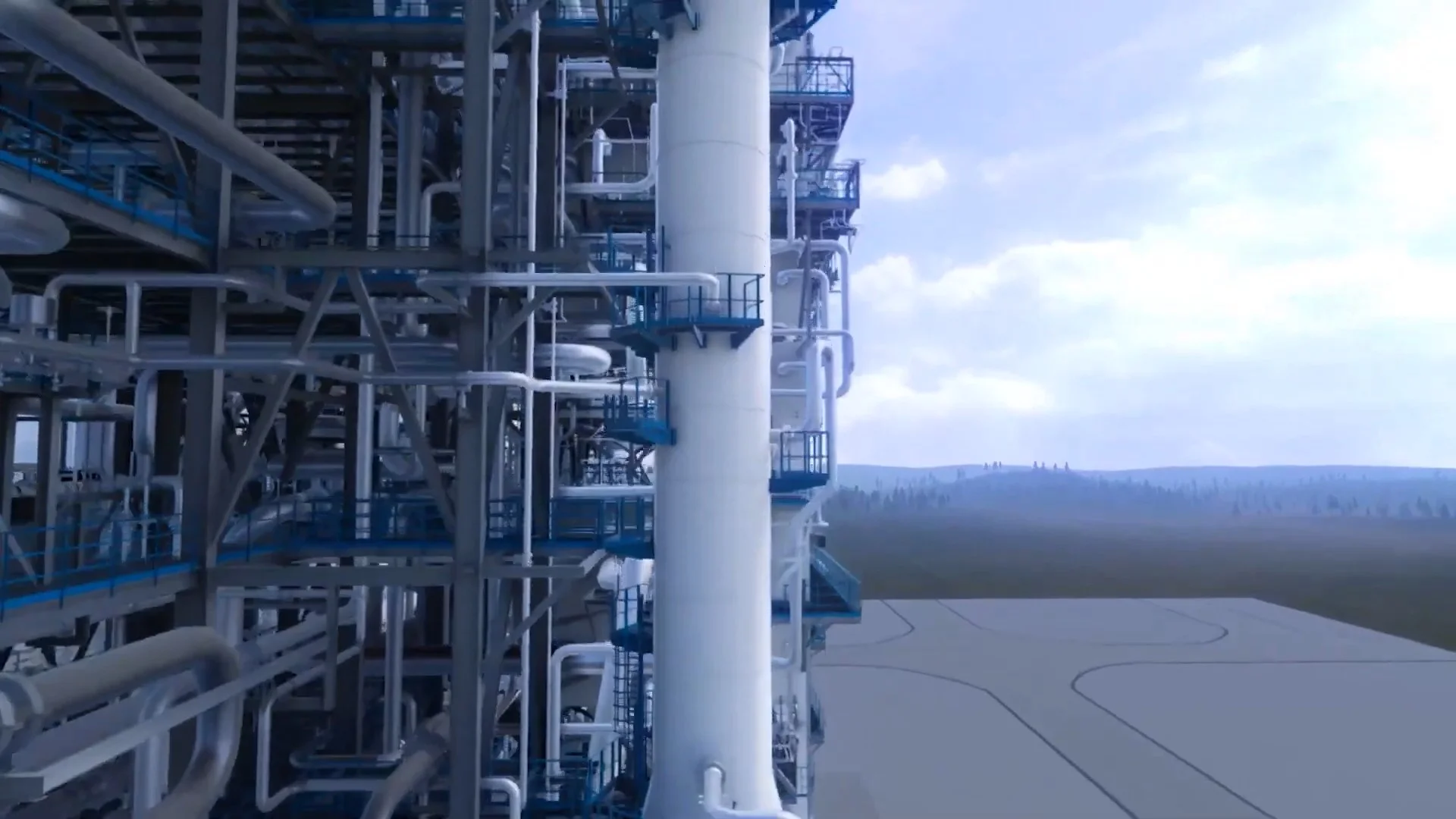
We created a simulator for practicing response to pipeline depressurization and a fire at a pumping station.
VR Project Results
- Operator training time was reduced by 2.5 times—instead of a week of theory and rare drills, employees gain solid skills in 2–3 shifts.
- The accident rate in real-world conditions fell by 40% in the first year after implementation—personnel act faster and without panic.
- The number of errors during work readiness checks dropped threefold: the automation system records every incorrect step rather than relying on an instructor's subjective assessment.
- Instructors received an analytics dashboard showing which actions employees find most difficult, allowing them to tailor the training program to each individual.
Why This Matters for IT Companies
This VR development example demonstrates a profitable model for integrators and IT companies. You take on the industrial client, and we handle the entire cycle—from scenario and 3D models to final configuration and staff training.
In the end, you get a result the client pays for and returns for more: the enterprise has already ordered a second simulator, this time for working with electrical equipment.
This approach lets you expand your portfolio and solve industrial challenges without building your own VR team. One successful case yields long-term contracts and industry referrals.
Frequently Asked Questions About VR Simulator Development
Before ordering a VR simulator, IT companies usually have questions about timelines, compatibility, and guarantees. We answer them directly—this is how we build long-term relationships with partners who integrate virtual simulators into their industrial projects.
our team is a team with 10 years of experience developing VR solutions for business. We've gone from prototype to industrial operation, so we eliminate technical risks in advance and never let you down.
| Question | Short Answer |
|---|---|
| Timelines? | 4 to 10 weeks, fixed in the contract |
| Compatibility? | Leading headsets and PCs, verified at the start |
| Guarantees? | Post-launch support and refinements |
| Price? | Individual, depends on the number of scenarios |
How long does development take?
A standard project for one production operation takes 6–8 weeks, from brief to working version. We fix the timeline in the contract and show demos at every stage—you're never waiting blindly for results.
What equipment does the simulator work with?
We work on professional equipment from leading manufacturers, so the simulator is compatible with most current headsets and PCs. During the brief, we identify your client's target devices and optimize the project specifically for them.
What about the warranty?
After launch, the simulator doesn't lose support: we ensure stable operation, train employees, and fix errors during the warranty period. If the client's equipment or production process changes, we adapt the simulator to the new conditions.
We calculate the price individually: it depends on the number of scenarios, level of detail, and required equipment. Request a preliminary estimate—we'll respond within two business days and choose the best format together.How Can IT Companies Choose the Right VR Simulator Format?
For an IT company, the VR simulator format is not a technical detail but a way to achieve a specific business result: train employees faster, reduce errors, prepare clients to work with complex equipment.
Choosing a format because it's trendy makes no sense if you don't know which metric you want to improve. So the first step is to define the goal: faster onboarding, emergency response practice, improved safety, or product demonstration without risk to equipment.
Then we look at the audience and scale. Beginners with no experience benefit from a sequential scenario with hints; experienced employees benefit from simulations of abnormal situations.
If you need to train hundreds of people in different cities, we choose a lightweight format that runs on existing computers and doesn't require complex additional infrastructure.
If it's about a few complex operations, full immersion with detailed process physics is more effective.
Timelines and budget matter. For a fast start, a modular approach works best: first we build a small pilot scenario, test it with real users, and only then scale. This way you avoid unnecessary spending and get a measurable result within a few weeks. We help you compare different formats by cost, timeline, and impact—not just sell you one option.
Our job is to choose the VR simulator format that fits your budget and task, then adapt it based on the pilot launch. Together we track metrics before and after training so you can see the return on investment.
Post-launch support is included in the service: we fine-tune details, adjust difficulty, and add new scenarios as requirements grow.
Choosing a format isn't about choosing a device—it's about finding the shortest path to the result you need. We make that path transparent: you know what you're getting, how long it takes, and which metrics will improve. Get in touch—we'll help you decide without risk or unnecessary costs.
Order a Turnkey VR Simulator Development
You already know how VR changes product perception: the client doesn't read a presentation—they experience the scenario.
For an IT company, this is a way to show the client the value of the solution before purchase, and for employees, it's a way to safely practice complex processes without risks or downtime.
To get such a tool, you don't need to dive into technical details. Just leave a request—we'll design the scenario, choose the format for your task, and take the project to a working result. Here's what a turnkey VR simulator order looks like:
- Describe the task—in a few words: who the simulator is for and why (personnel training, product demonstration, skill practice).
- Get a consultation—we'll advise which scenario and format will deliver the maximum effect in your case.
- Approve the plan—you see the stages, timelines, and scope of work before we start, with no hidden surprises.
- Take part in acceptance—you personally check intermediate versions, so the result matches your expectations.
- Launch and use—we deliver the finished simulator with instructions and support, and your employees start working right away.
While you're researching the topic, competitors are already using VR for compelling sales and fast training. Leave a request—we'll send you a preliminary estimate and offer options that solve exactly your business challenge. This is completely non-binding, but you'll get concrete numbers and an action plan.