

VR Training Simulators for Microelectronics: The Cost of Errors in Production
An error in microelectronics is expensive: one inaccurate operation when assembling a board or mounting components can turn an entire batch into scrap. The production cycle stops, deadlines are missed, and rework eats into profits.
That is why staff training here is not a formality but a matter of financial stability for the entire enterprise.
Classic training requires stopping equipment, consuming expensive materials, and involving experienced mentors. A beginner still makes mistakes: they lack muscle memory and an understanding of the sequence of operations. Every such mistake on a real line means direct losses and delays that come back to haunt customers.
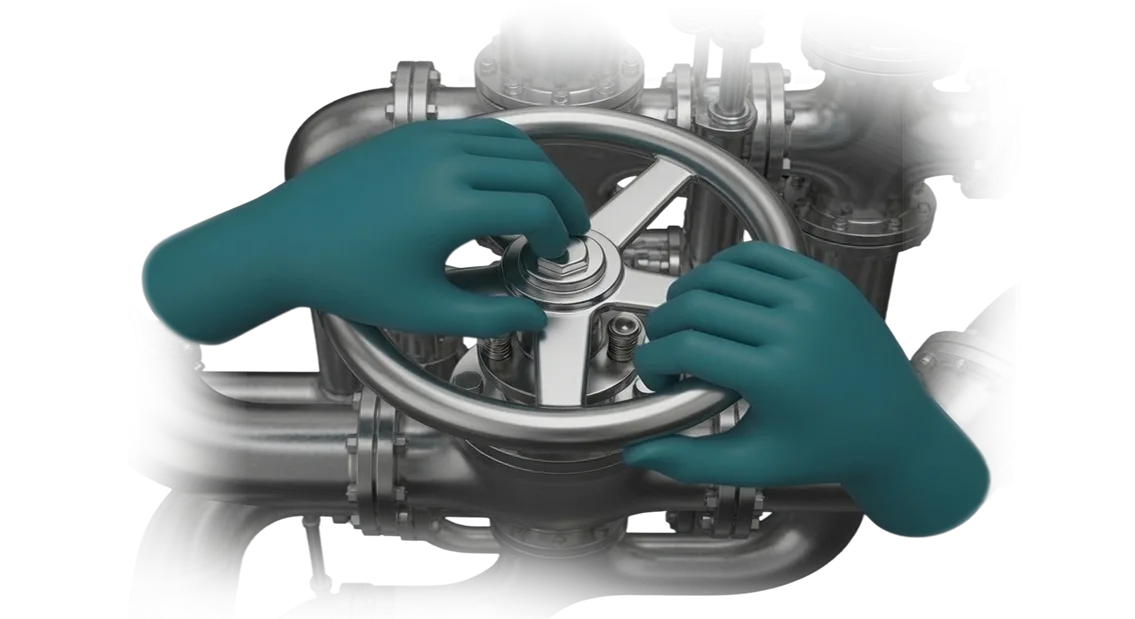
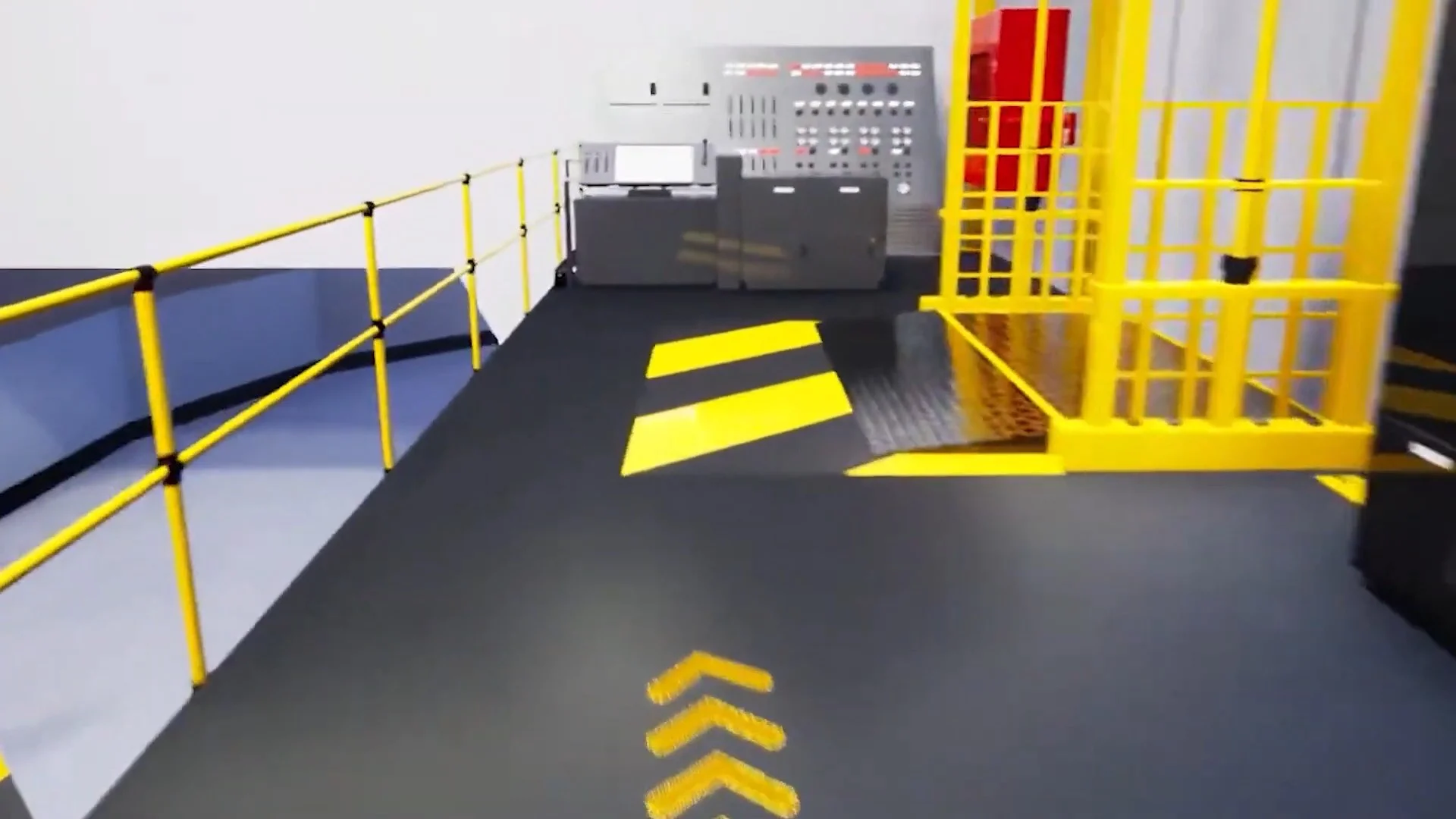
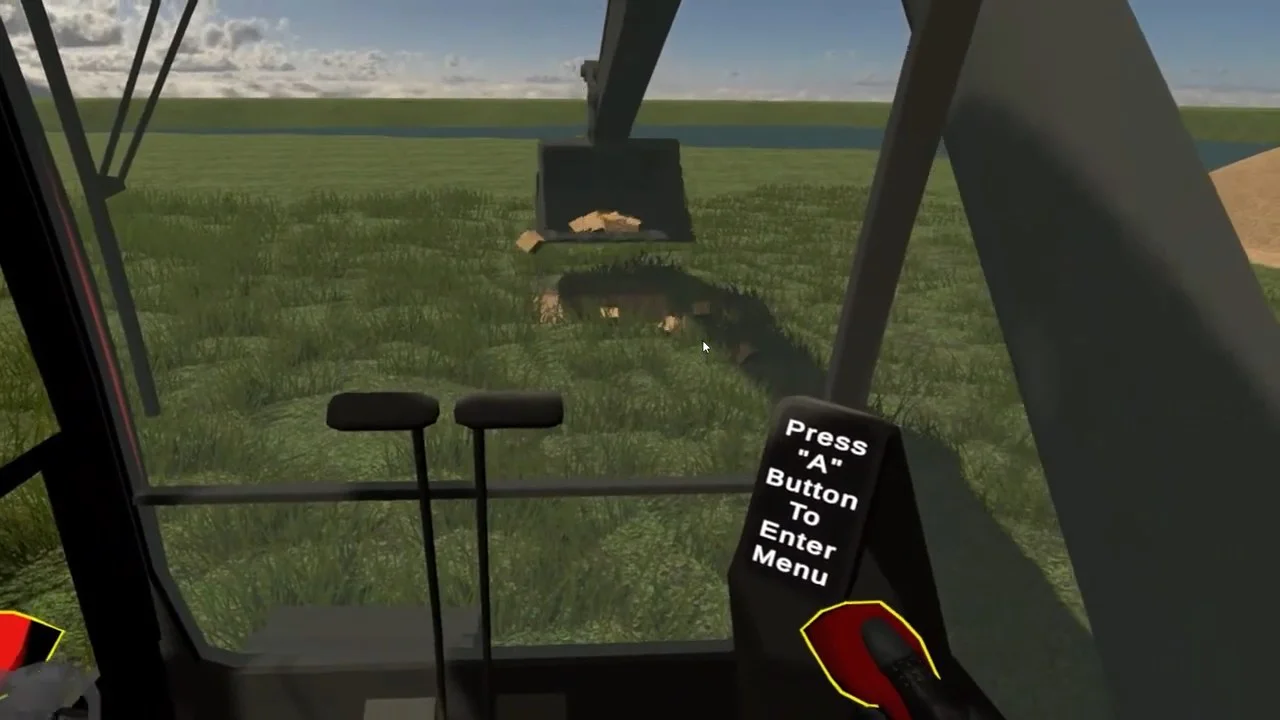
A VR training simulator for microelectronics solves this problem before production launch. The employee practices actions in a virtual copy of the workstation: seeing how components behave, how to position the tool correctly, and when to apply force.
All mistakes are made in a safe environment — without consuming materials and without risk to equipment. This builds the right skills before a person picks up a real product.
The result is a noticeable reduction in defects on the very first batches after training. Personnel go to the line prepared, understand the typical danger points, and avoid them.
The company gets predictable quality, fewer losses, and faster onboarding of newcomers into the working rhythm. VR training for microelectronics pays for itself by reducing rework and repeated inspections — and it also saves the nerves of technologists and shift supervisors.
What a VR Simulator Gives an Enterprise: 5 Measurable Benefits
Implementing a VR simulator is not a replacement for a theoretical course, but a tool that changes the economics of training and the quality of work in microelectronics manufacturing. Below are five measurable results that enterprises obtain after launching virtual training.
Faster Employee Training
New operators master key operations two to three times faster than on real equipment. They do not have to wait for a free line or risk expensive materials — everything happens in a virtual environment.
For the enterprise, this means a shorter time to full competency and the ability to meet staffing needs sooner.
Fewer Defects in Production
In VR, an employee refines movements to the point of automation: learning to position the tool, maintain force, and follow the sequence of steps. When the skill is polished down to the smallest detail, the number of errors in real work drops by 30–40%. For microelectronics, where defects are expensive, this is direct savings.
A Uniform Operating Standard
All employees — from beginners to experienced workers — train using the same methodology. The simulator scenario sets a reference sequence, so every operator performs the operation identically. The result is stable product quality regardless of shift, experience, or the “human factor”.
Safe Training Without Stopping Production
Training does not require stopping the line or allocating a separate machine. Mistakes in the virtual environment do not lead to breakdowns, injuries, or material damage. An employee can calmly try risky actions, and the enterprise does not lose output while preparing personnel.
Transparent Progress Monitoring
The supervisor sees an objective picture: the system records every action of the employee and shows which stages are more difficult than others. This data makes it easy to adjust the training program and make decisions about certification. No “paper” reporting — only real numbers on skill acquisition.
VR Simulator Formats for Microelectronics: Matching the Format to the Task
Microelectronics manufacturing is an environment where the cost of an error is especially high: defects on the line are expensive, and equipment failure can stop the process.
That is why a VR simulator for production must be not just a simulation, but a tool for solving a specific task — from introductory training to qualification confirmation.
There is no universal format. We develop VR simulators for three typical scenarios: safe familiarization with processes for beginners, practice of complex operations without risk to equipment, and skills assessment during certification. Below is a comparison of the formats to help you choose the right one for your task.
| Format | Who it is for | What it gives the client |
|---|---|---|
| Training course for beginners | New employees, students, staff transferred from other areas | Quick immersion in the process without stopping production and without the risk of defects. The employee arrives at the line already understanding the basic operations — mentoring time is reduced. |
| Complex operations simulator | Operators working with high-precision equipment | Practice of rare and complex situations — from adjustment to troubleshooting common failures — in a safe environment. The number of errors in real work decreases, and equipment downtime is reduced. |
| Assessment module | Specialists before being authorized to work or renewing their qualifications | Objective skills verification without interrupting production. A transparent results protocol helps make personnel decisions and confirm staff readiness. |
Each format can be adapted to a specific production area, equipment, and enterprise regulations.
If necessary, formats can be combined: for example, after training beginners, the same simulator can be used for periodic certification — a single digital environment for personnel evaluation.
Development of a VR Simulator for Microelectronics: Stages and Timelines
Developing a VR simulator for microelectronics is a process where it is important to understand what happens at each step and when the first results will appear.
We have structured the work so that you see intermediate results, can influence the scenario, and plan employee training in advance. Here is the typical path from brief to launch.
- Brief and task audit — we discuss the operations that need to be practiced and the realism requirements. You receive a project plan with estimated timelines and team composition.
- Scenario and methodology design — we create the training program: how the employee goes through the exercises, which errors are tracked, and how the result is evaluated. You approve the training scenario.
- Prototype development — we build a basic version of the simulator with key actions and feedback. You see the product already at this stage and can adjust details.
- Full version assembly — we add detailed models, simulation of your equipment, and configure scenarios to match real production processes.
- Testing with your specialists — we run a pilot session with experienced operators, collect feedback, and make revisions before launch.
- Implementation and instructor training — we install the simulator at workstations, provide instructions and methodological materials, and help launch regular training.
- Support and development — after launch, we stay in touch: updating scenarios, adding exercises, and training new members of your team.
Each stage ends with a concrete result that you personally accept. This ensures that development timelines are fixed in the plan, and the final simulator meets your objectives and safety requirements from day one.
What Is Included in the Delivery of a VR Simulator for Production
The delivery includes not just a VR scene, but a complete ready-to-use package that can be immediately deployed in production. We transfer all materials, documentation, and rights so that your instructors, technologists, and operators work in a single system from day one.
- Training scenarios — developed scenarios for your technological operations, with action sequences and checkpoints.
- 3D models — accurate models of your equipment, tooling, and instruments, fully adapted for the VR environment.
- Operator instructions — step-by-step electronic guides that can also be used outside the simulator, at the workstation.
- Methodological materials for instructors — recommendations for conducting sessions, reviewing errors, and evaluating results.
- VR simulator documentation — descriptions of all functions, room and hardware requirements, launch and maintenance procedures.
- Administrator panel — scenario management, assigning tasks to operators, and monitoring completions.
- Results reports — automatic statistics for each employee: completion time, number of errors, and progress dynamics.
The entire package is adapted to your regulations and technological maps. You do not need to understand the intricacies of VR — you get a turnkey solution with support during implementation and ongoing maintenance afterward.
VR Simulator Implementation Case in Microelectronics: Defect Rate Reduced by 38%
When microelectronics manufacturing faces a high defect rate in assembly operations, every mistake literally costs money: expensive components, line stoppages, and changeovers.
Training beginners directly on real equipment means slowing down output and risking the quality of the finished batch. In this situation, our client — a microchip manufacturer — was looking for a way to train operators without losses.
Our team developed a VR simulator that accurately replicates the work process: from component positioning to solder inspection. Each trainee practices every action in the virtual environment until it becomes automatic, and only then is allowed onto the real line.
Implementation took several weeks, and the first training sessions with students began within the first month.
Implementation Results
After three months of regular training, the defect rate in the trained area dropped by 38%. New employees reached independent work two weeks faster than under the previous mentoring program.
The production manager noted that operators began noticing their own mistakes in the virtual environment — before those mistakes turned into real defects.
The most convincing confirmation was a repeat order. After the success in the assembly area, the same client asked us to develop VR simulators for two more operations in a neighboring workshop.
We are now scaling the program across the entire product line, and the enterprise has already included it in its new employee training plan.
How to Choose a VR Simulator for Your Production Tasks?
Choosing a VR simulator starts not with purchasing equipment, but with a question: what production task do you want to solve?
For microelectronics, this is most often practicing operations on expensive equipment, training work with microscopic components, and reducing defects caused by the human factor.
So first, together with you, we identify the pain points: where employees make mistakes most often, which operations are difficult to explain without practice, and how much time it takes to bring new personnel up to speed.
The degree of immersion and detail is matched to the simulator format. If you need to practice an assembly sequence or equipment setup, a scenario with step-by-step prompts and action control is sufficient.
If it is important to develop movement precision and motor skills, the simulator must include realistic physics and scale visualization.
For microelectronics, this is especially important: the operator must see what happens to the board at the micro level and understand the consequences of imprecise movements before they occur on the real production floor.
The second criterion is training coverage. Clarify how many employees need to be trained and how often technological processes change. For a small team, a single workstation is enough; for a production line, several kits with centralized management are needed.
A VR simulator should be easy to scale: you continue using the same program, adding new users and updating scenarios for new operations.
Budget and timelines also influence the format, but they do not determine quality. We offer phased implementation: first a pilot scenario for one operation, then expansion to the entire production chain.
This allows you to evaluate ROI already at the first stage and adjust the simulator based on testing with your employees.
In the end, a proper VR simulator is not an entertainment simulator, but a working tool that reduces training time, decreases the number of errors, and protects your equipment from damage.
We take on the analysis of your production, format selection, and implementation — you get a solution that pays for itself through reduced defects and increased staff qualifications.
Frequently Asked Questions about VR Simulator Development
Developing a VR simulator for microelectronics is a task that raises questions among managers. Most often they ask about timelines, safety, and integration into existing processes.
We have collected answers to the most common concerns — without technical details, only what affects your decision.
Each project is tailored to your production and employee training, so below are realistic conditions that we formalize in the contract.
How long does it take to develop a VR simulator for microelectronics?
The timeline depends on the complexity of the scenario and the number of workstations. A turnkey project takes from several weeks to several months — exact deadlines are fixed in the contract, and results are delivered in stages. You see intermediate versions and can make changes before the final version.
How is the simulator integrated into an existing production line?
We study your regulations, equipment, and typical work operations, then create a virtual copy of the workstations. Employees train on regular computers with professional headsets — without stopping the production cycle. Implementation takes a couple of days, and part of the staff can train in parallel.
Is training in virtual reality safe?
Yes. We design scenarios so that employees can move and interact with objects comfortably, and sessions are time-limited. This allows for safe practice of hazardous operations without risk to people or expensive equipment.
What guarantees do you provide for development?
The contract fixes the cost estimate, timelines, and the list of stages. After launch, we continue to support the simulator: fixing scenario errors and helping with updates for process changes. If shortcomings are identified during acceptance, we eliminate them at our own expense.
Do we need to purchase expensive equipment ourselves?
No. We agree on the configuration to fit your budget: from renting headsets for the duration of the course to purchasing your own set. The minimum option is a single workstation so you can evaluate the effect before scaling.
Let's Discuss Your Task: Get a VR Simulator Estimate in 2 Days
Every day of line downtime or an operator error means losses. A VR simulator removes risks on real equipment, but first you need to understand whether it suits your task and what it will deliver in numbers.
For microelectronics, precision of actions is especially important — a virtual scenario allows you to practice it without defects or damage to expensive components.
We will prepare a cost and timeline estimate within 2 business days — without vague promises. We will show you a demo of the VR simulator on your scenario so you can see how operators will acquire skills before making any purchase.
The estimate is free and non-binding: you get a document with clear figures — cost, timelines, stages, and the expected effect for your production area.
What you receive after submitting a request:
- A cost calculation for your production area and number of employees — with a transparent estimate.
- A demo of the VR simulator on a real scenario from your production line.
- An implementation plan: from pilot to full system deployment.
- Post-launch support: scenario updates and technical assistance.
- Training for instructors and operators — your team works independently.
- Effect evaluation: skills monitoring, reaction speed, and error reduction.
To order a VR simulator or get a cost estimate, leave a request on the page. We will contact you within one business day, clarify the details, and return a plan with a demo for your task within 2 days. This is non-binding — only specifics and clear next steps.