

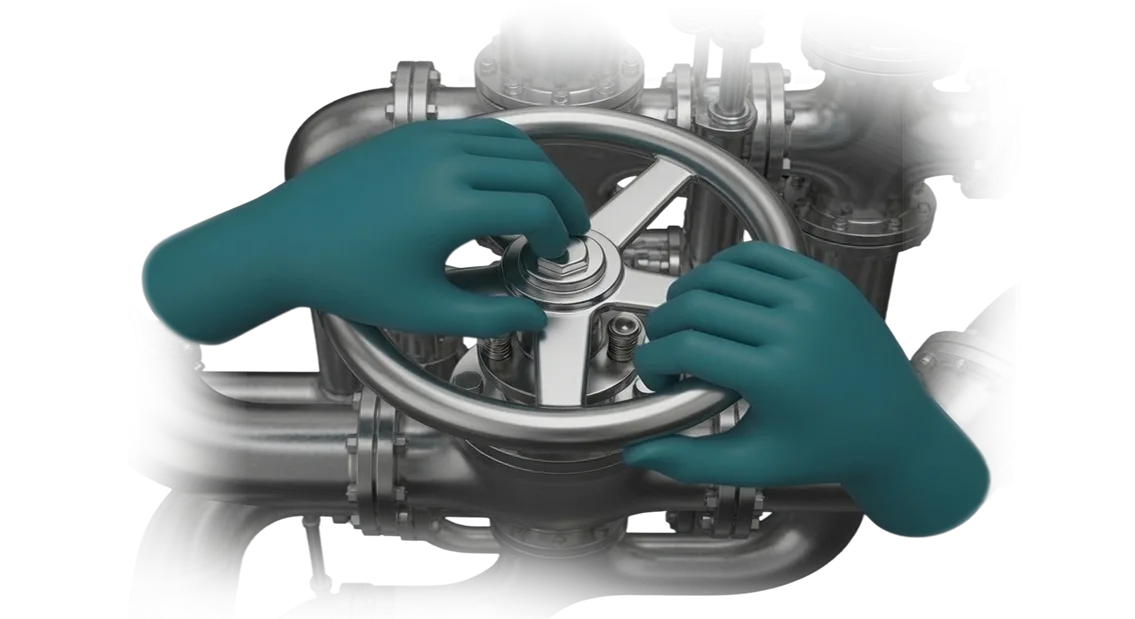
Why Oil & Gas Loses Money on Outdated Training
The oil and gas industry pays more than any other for personnel errors: the cost of an incident is not just fines and downtime, but also reputation, partner trust, and people's lives.
At the same time, most enterprises still train employees using programs that have not changed for years. Lectures, briefings, paper regulations—all of this provides basic knowledge but does not build lasting skills for acting in an emergency.
Outdated staff training is a direct loss of money. When industrial safety requirements are updated faster than training materials, employees act according to old algorithms.
Hence—errors in equipment maintenance, disruptions to technological processes, and accidents requiring expensive repairs. According to industry statistics, a significant share of incidents occur precisely due to human error, not equipment malfunction.
The paradox is that enterprises invest in modernizing assets but save on people training. As a result, modern equipment is operated using the same training tools as twenty years ago.
The pace of change in the industry requires that an employee can safely practice a rare scenario—for example, depressurization or automation failure—before it happens in reality. Simulators with realistic imitation make this possible without risk to production.
We help oil and gas enterprises close this gap: we develop VR trainers in which an employee experiences an emergency situation in a safe environment and brings correct actions to automaticity.
This is not a replacement for briefing but a new level of training—with skills assessment, error logging, and a clear result for the supervisor. Training ceases to be a formality and becomes a tool for reducing accident rates and losses.
What a VR Trainer Gives an Industrial Enterprise
In oil and gas, the price of a mistake is high: working on drilling rigs, maintaining installations, and responding to abnormal situations—all require practiced skills.
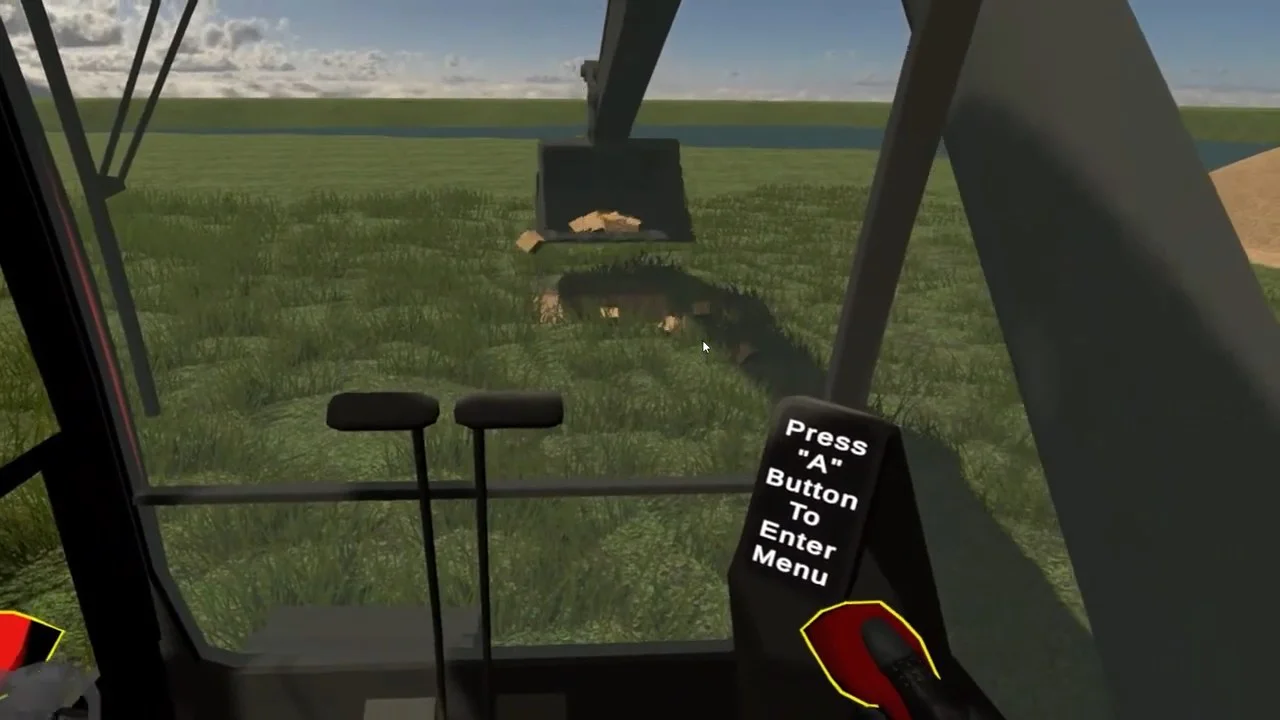
A virtual trainer delivers learning by doing: the employee performs operations with their hands in a safe environment, can make mistakes and try again without risk to themselves or equipment.
This directly leads to a lower accident rate. Scenarios include equipment failures and emergency situations—an employee arrives at the site prepared and in a critical moment acts calmly, preventing downtime, fines, and preserving people's health.
A VR trainer reduces training costs: no need for raw materials, consumables, or stopping the real line. Everything happens in a digital copy of the production facility with the same regulations and quality control—for oil and gas, the savings become a tangible budget item.
A separate effect is objective skills assessment. The system records accuracy, speed, and compliance with regulations and generates clear reports.
The supervisor sees who is ready for independent work and who needs further training, and makes personnel decisions based on facts rather than feelings.
We have been developing VR trainers for oil and gas enterprises for many years. The project begins with an analysis of real regulations and emergency scenarios—the trainer becomes a working tool, not a demo. We update scenarios when standards and equipment change.
VR Trainer Formats for Oil & Gas Tasks
Every oil and gas facility is dozens of regulations, abnormal situations, and decisions that cannot be practiced “live.” One wrong step by an operator or a mismatch in the team leads to downtime, an accident, or fines.
A VR trainer removes this risk: the employee gains experience in a safe environment, and the enterprise gets a predictable result without losing production.
We help you choose the right format for a specific task—from individual skill practice to full-scale drills on a digital copy of a facility. Below are typical scenarios we work with most often.
| VR Format | For Whom | What It Gives the Client |
|---|---|---|
| Single scenario | Operators, machine operators, shift personnel | Quick practice of a key skill: equipment startup, alarm actions, site walkthrough. Employee ready to work in 2-3 sessions. |
| Simulation trainer | Technologists, engineers, maintenance services | Precise mode adjustment and practice of abnormal situations without stopping production. Personnel see consequences of decisions instantly. |
| Virtual proving ground | Line personnel, contractors, occupational safety services | Knowledge check of facility territory, valve locations, evacuation exits. Newcomers get up to speed in days, not weeks. |
| Team drills | Crews, emergency rescue units, shifts | Practicing interaction during an accident or fire: role allocation, synchronized actions, communication among participants. Coordination grows by 30-40% after the first drills. |
The formats are easy to combine: start with a single scenario, then move the team to team drills, and later deploy a virtual proving ground for regular knowledge checks. We design the trainer around your regulations and equipment, not abstract templates.
To choose the right format, just send a description of the task and a list of positions. We will analyze the scenarios, propose a trainer structure, and show how it fits into the existing training program. All that remains is to launch a pilot project at your site.
How We Develop a VR Trainer: 6 Steps
Developing a VR trainer for oil and gas is not “buy headsets and assemble a scene.” For employees to internalize regulations and act without errors, a structured process is needed: from brief to training launch. We have broken it into six steps—you understand what happens at each of them.
-
Brief and task audit. We collect background information: which operations to train, which errors are critical, who will be working. We study your regulations and typical production situations—the scenario must reflect reality.
-
Trainer design. We define exercise goals, the number of scenarios, and assessment rules. We codify criteria to make it clear whether an employee is trained or needs additional practice.
-
Scenario approval. We show the logic of each step before resources are invested in graphics. Your technologists and instructors make edits—this is how the trainer becomes integrated into existing regulations.
-
VR environment development. We create an environment close to your site: equipment, sounds, signals. We use professional equipment and proven tools—the result is stable on your VR systems.
-
Testing with your specialists. We invite instructors and operators to test the trainer. We collect feedback, refine scenarios—a product that staff accept and use.
-
Training launch and support. We configure the system, train instructors, and hand over materials. After launch, we update scenarios when regulations change and help develop the training program.
In the end, you get a working training tool: clear assessment criteria and readiness for use from day one. Time and budget savings—the trainer is not reworked after the pilot but immediately improves employee qualifications.
What a VR Trainer Delivery Includes
The full package of a VR trainer delivery is not just virtual scenes, but a ready-made tool for staff training. You get everything needed to launch a training program without modifications or additional investment.
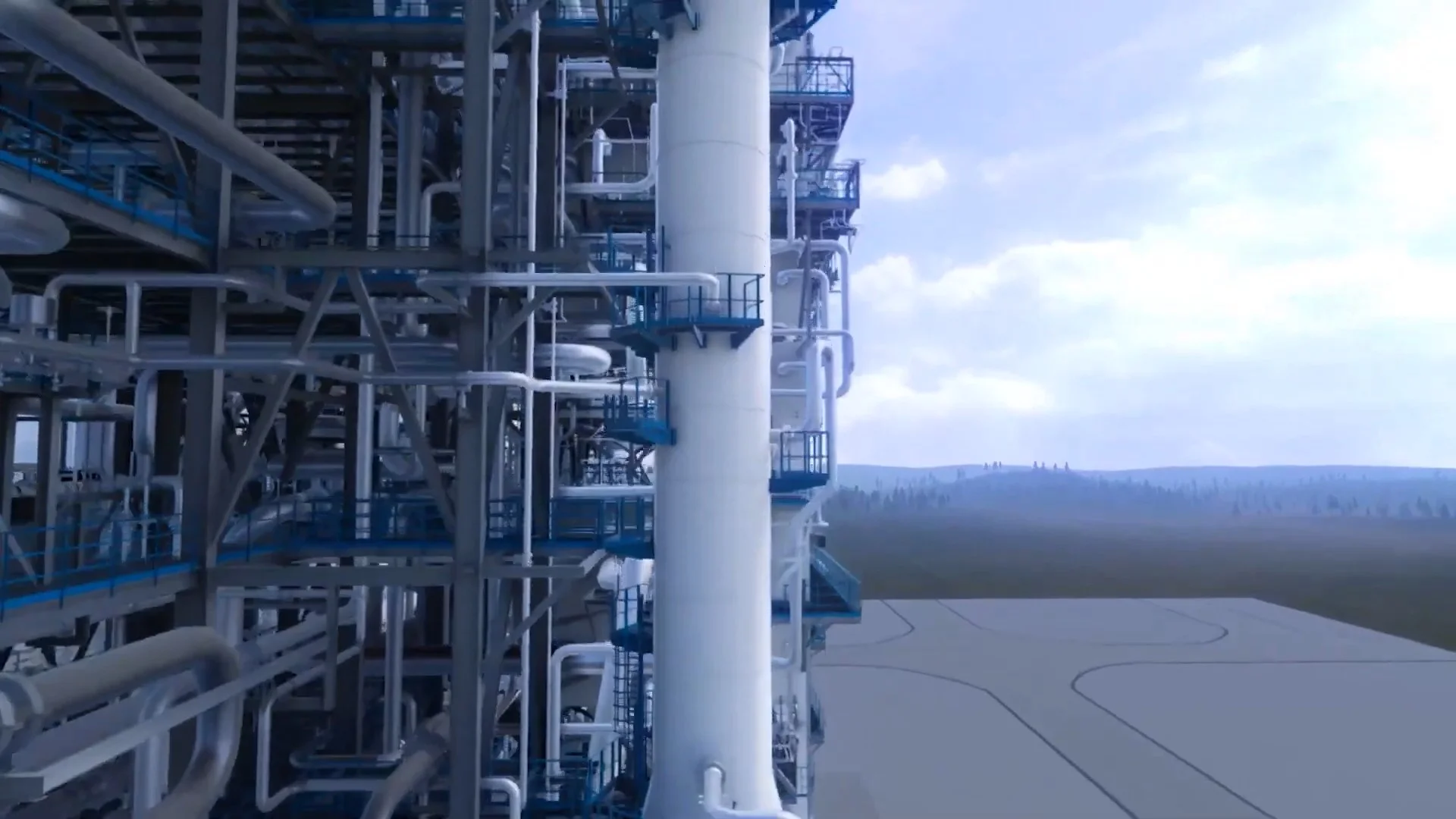
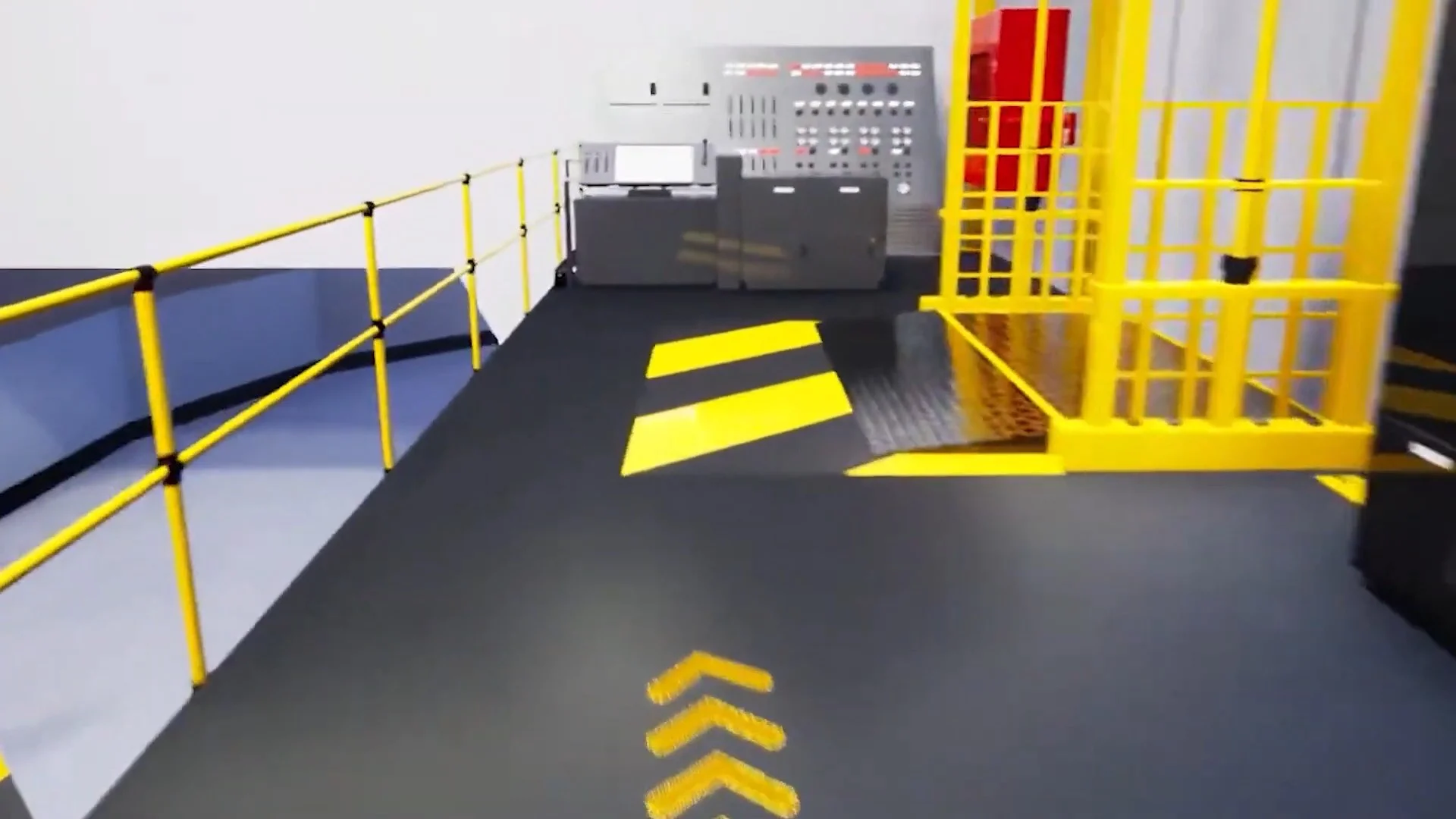
- Virtual scenes replicating the enterprise’s real facilities: process units, pipelines, shut-off valves, high-risk zones.
- Interactive training scenarios—from normal operations to emergency response, with multiple branching outcomes.
- Methodological materials for the instructor: course syllabus, lesson scenarios, assessment criteria, and skill-check checklists.
- Training analytics system: each employee’s progress, typical mistakes, operation times, readiness for independent work.
- Installation and setup guide for the trainer, plus technical documentation for the maintenance department.
- Support and scenario updates: when regulations or safety requirements change, the trainer adapts to new conditions.
Methodological materials are the foundation for embedding the trainer into the existing training system. The instructor does not need to create a program from scratch, and management gets a unified personnel assessment standard. Time spent preparing lessons is saved, and results are measured in concrete skills.
The analytics system shows which operations employees find difficult and allows timely adjustment of the training program. This reduces the number of errors at the real facility and helps prevent incidents rather than dealing with their consequences.
Regulations in the oil and gas industry change, so the trainer must remain relevant. We include scenario updates in the delivery: your trainer always meets current requirements and does not require purchasing a new version.
Such a package covers the full cycle—from the first launch to regular use in the training process. Projects by our team are delivered as a working tool, not a demonstration mockup.
Case: Deploying a VR Trainer at an Oil & Gas Company Facility
We’ll walk through a real deployment case: for an oil and gas facility, we created a VR trainer for practicing emergency scenarios. The goal was to prepare personnel for abnormal situations faster than with traditional briefings and drills.
Previously, the full practice cycle took several hours, and knowledge was quickly forgotten because workers rarely see a real emergency.
We moved the drills into a virtual environment. The worker sees a realistic setting, a fire source or depressurization, and acts under time constraints.
The trainer records steps, shows errors and the correct order of actions—the skill is reinforced without risk to people or equipment.
Implementation Results
Training time was cut in half: a scenario that previously took several hours now takes an employee half an hour to practice. The learning outcome was higher—workers remember the sequence of actions faster and behave more confidently in abnormal situations.
For the company, this means time savings and reduced risk of human error. Managers see who is ready to work and who needs additional training. The case confirms: VR trainers for oil and gas are a working tool for improving safety.
The implementation case showed: just over two months passed from task definition to a working trainer. The trainer is used regularly—for scheduled drills and for skills checks after long breaks.
How to Choose the Right VR Trainer Format?
Choosing a VR trainer format starts not with equipment, but with the number of people to be trained and which skills are critical for your production.
If you are dealing with shift personnel training or annual qualification confirmation for hundreds of specialists, a stationary class with several workstations makes sense.
For a small group of engineers or practicing rare emergency scenarios, a compact kit that can be set up in an hour is sufficient.
The second criterion is the types of scenarios. A virtual trainer must replicate the employee’s real actions: site walkthrough, equipment startup, actions in an emergency.
For oil and gas, this often means simulating work with control and measuring instruments and interacting with colleagues in a shared scene. Therefore, we first determine the list of production tasks to be practiced, and only then choose the format and level of immersion.
The third factor is existing equipment. If you already have available space and modern computers at the site, they can be used as a base to reduce deployment costs.
If the computer fleet is mixed or sparse, standalone headsets are suitable—they do not require a powerful PC or cabling, which is important for remote sites. We always propose an option that fits into your current infrastructure rather than forcing you to replace it entirely.
The final decision is made after a short audit: number of employees, training frequency, room availability, and budget. We help you choose a format that will pay off by reducing training time and lowering the risk of errors at the real facility.
It is important that the system grows with your tasks, so we plan expansion capability—from one scenario to an entire library of drills. Describe your situation, and we will offer a specific option tailored to your request.
Frequently Asked Questions About Deploying VR Trainers
Before deploying VR trainers at oil and gas production facilities, managers ask the same questions. We have collected the most common ones and provide short answers—about timelines, costs, compatibility, and guarantees.
This way, even before the project starts, you will understand how the work will proceed and what support you will receive.
How long does deploying a VR trainer take?
The timeline depends on the complexity of the scenarios and the number of workstations. On average, the project takes 4–8 weeks: from task definition to launch. We work according to an agreed plan, so you always know what stage the trainer is at and when it will be ready.
How expensive is it to maintain a VR trainer?
A VR trainer does not require special maintenance or a dedicated technical staff. We periodically update scenarios and perform scheduled diagnostics—this takes hours, not days. Ongoing costs are minimal, especially compared to maintaining a training ground or test bench.
Will a VR trainer work with our equipment and training programs?
The trainer runs on standard computers and VR headsets already available on the market. If you have modern PCs installed, we adapt the solution to them.
We also easily integrate the trainer into the training system: it fits into the personnel training schedule and is included in reports.
What about warranty and support after launch?
We provide a warranty on the work and equipment. After launch, you are not left alone with the product: we help update scenarios, visit for scheduled maintenance, and train your instructors. Support is included in the contract, so all issues are resolved through regular channels.
Order a VR Trainer for Your Enterprise
To order a VR trainer, you do not need to understand technologies or dive into technical details. Just describe the task: which operations to practice, how many employees to train, and what errors most often occur in production. From there, we take over the project—from idea to launch of the finished trainer.
Leave a request—and within one business day you will receive a concrete answer, not general words. Here is what the first step includes:
- Engineer consultation: we analyze your task and advise where VR will deliver quick results and where regular training is sufficient.
- Preliminary cost estimate: an honest budget range for your scope—no inflated prices or hidden extras.
- Project plan: stages, timelines, and the team that will work on the trainer.
- Examples of similar solutions: we show how VR trainers solve tasks in the oil and gas industry.
- Format recommendations: number of scenarios, level of detail, and integration options with your training program.
- A clear next step: what we need from you to start development.
This approach saves your time: you understand in advance what you will get, for what cost, and within what timeframe. No obligations—the decision remains with you.
To get an estimate, send a short description of the task through the form on the website. If you prefer, call or write to us in a messenger. We will tell you what data will help make the estimate more accurate and answer all your questions about VR training.