

Risk-free training: why an industrial enterprise needs VR simulators
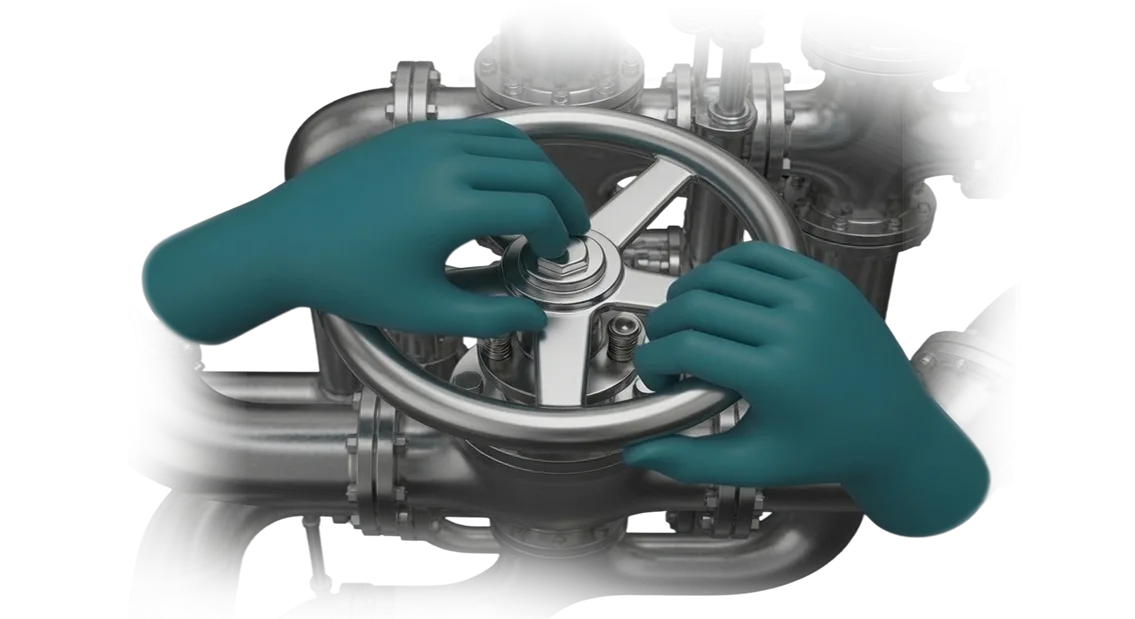
Training personnel on real equipment always involves risk. A beginner's mistake is not just spoiled materials — it is also injuries, downtime, and missed deadlines.
That is why the traditional format requires lengthy theory and restrictions: a newcomer is kept away from the operating line for a long time, and practicing skills on real equipment remains expensive and dangerous.
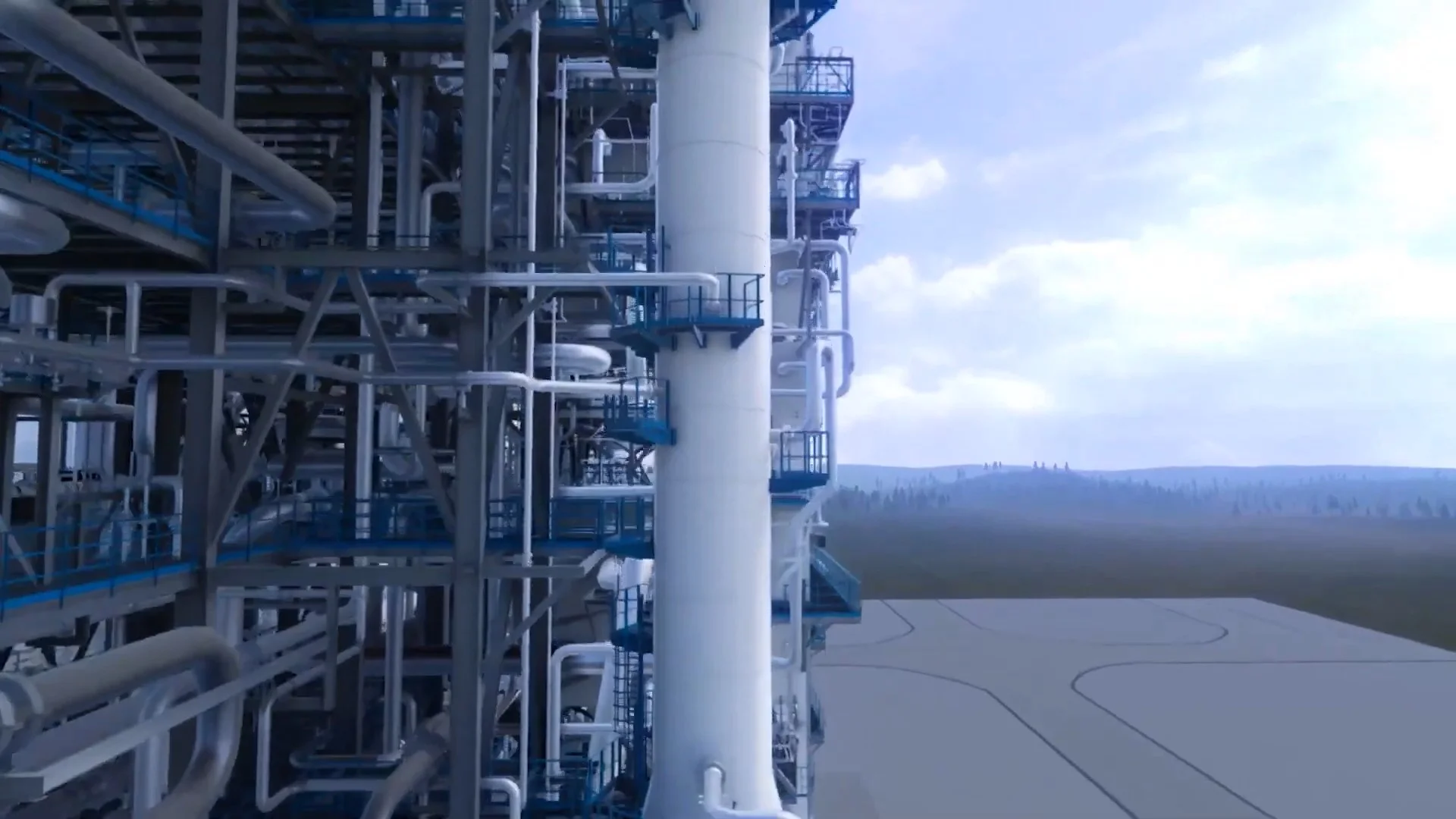
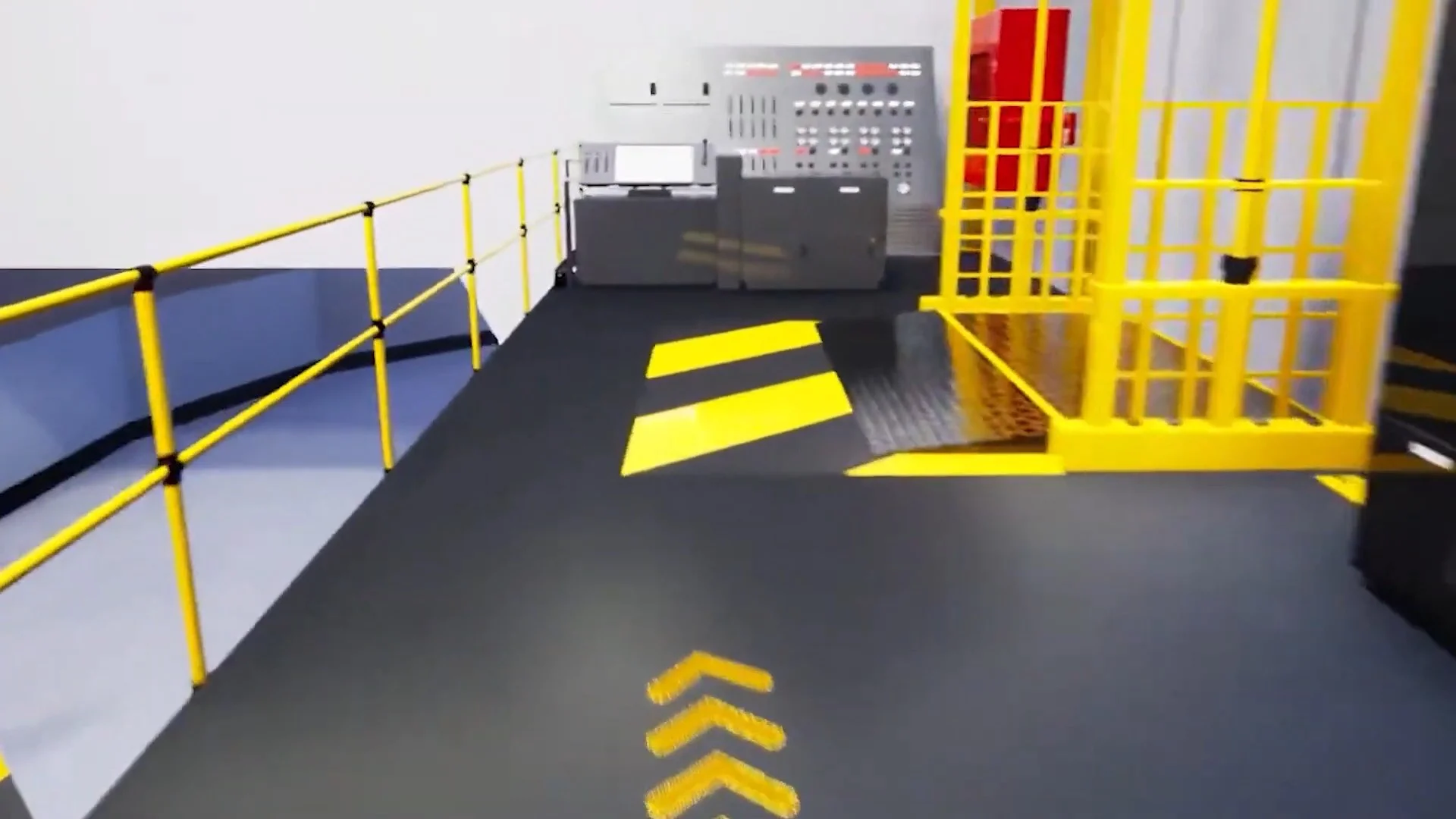
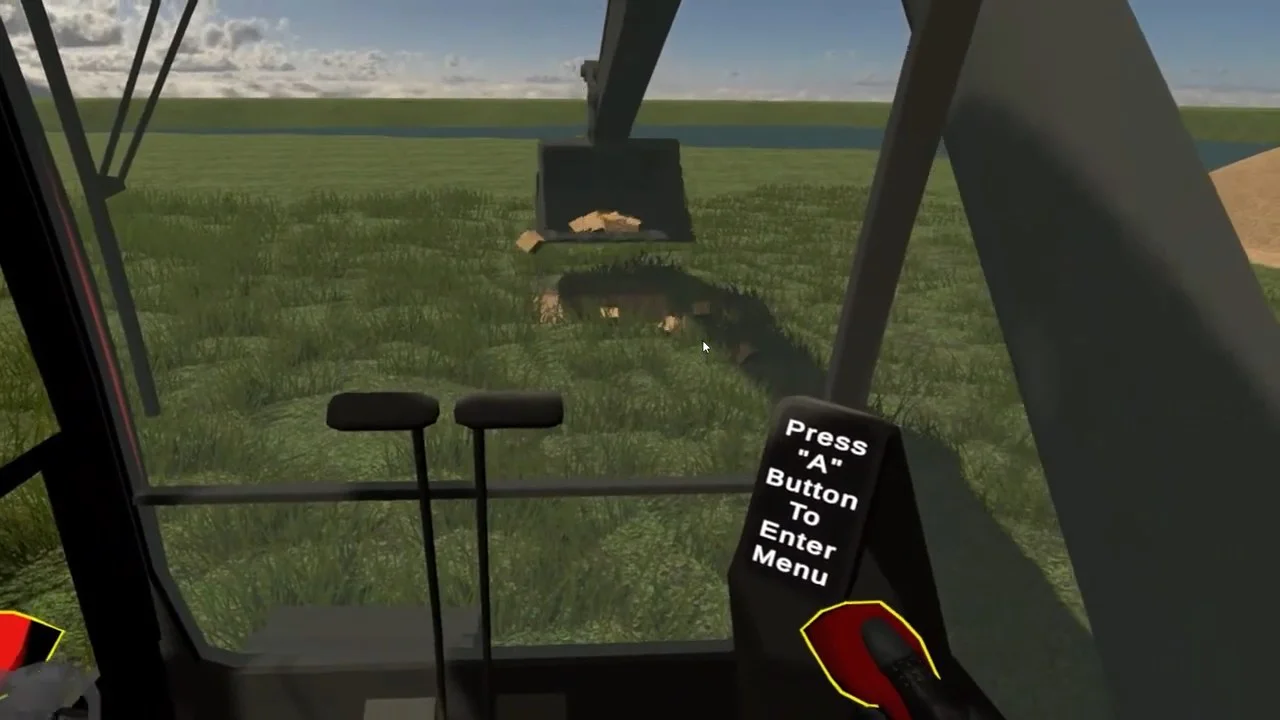
Virtual training removes these limitations. VR simulators for industry let employees act in an exact copy of the workshop without any threat to health or equipment.
They can press the wrong buttons, mix up operations, or fail to handle an emergency — it will not lead to injury or breakdown. The result is recorded automatically, and the trainer sees where the employee hesitates.
For business, this means three advantages. Occupational safety reaches a new level: emergency situations are practiced in a safe environment, and personnel are prepared for a real incident.
There is no need to stop production — training proceeds in parallel with work, with zero downtime. Professional development ceases to be a rare event: virtual training is available at any time, and re-entering the simulation costs nothing.
Such simulators pay for themselves through reduced injuries, defects, and onboarding time for new employees. Experienced staff also benefit: rare emergency scenarios can be honed whenever needed.
As a result, the enterprise gets a predictable level of preparedness and confidence that every worker knows safe practices.
We build VR simulators for the specific tasks of a production facility, transferring real shop-floor areas and regulations into the simulation. The client receives a ready-made training system and measurable occupational safety results without stopping the workshop.
What a VR simulator gives your enterprise
Modern production faces the same challenge: how to quickly prepare personnel for real work without putting either people or expensive equipment at risk. Conventional training requires time, consumables, and mentors, while a beginner's mistakes are costly.
A VR simulator solves this problem comprehensively: the employee is immersed in a virtual copy of your workshop and practices actions just as if working on a real machine or line.
Training speed is the first thing managers notice. A scenario that takes weeks in reality is mastered in a few days in a virtual environment: the instructor does not waste time repeating explanations, and the employee immediately sees the consequences of their decisions.
Moreover, it is possible to model not only standard processes but also emergency situations — from a fire to equipment failure. In reality, such training is dangerous; in VR, it is completely safe and visual.
Safety is the second key effect. While a newcomer learns, they risk neither themselves, nor colleagues, nor production capacity. The virtual environment makes it possible to bring correct actions to automaticity before the person steps onto the real site.
This is especially important for enterprises with high occupational safety requirements: the number of incidents decreases, and personnel feel more confident.
Finally, cost reduction. A VR simulator needs no consumables, workpieces, fuel, or rental of a training ground. The same scenario can be repeated endlessly without stopping production or creating downtime.
In addition, the company gets objective statistics: how much time an employee spends on each exercise, where they make mistakes, and which skills need improvement. This data helps plan training more precisely and make decisions faster.
In the end, a VR simulator is not just technology — it is a tool for increasing the efficiency of the entire enterprise. Accelerated training, employee safety, and resource savings produce measurable results within the first months of use.
The manager gains confidence that personnel are ready for real work, and the business gains a competitive advantage through a better-prepared team.
VR simulator formats for enterprise tasks
Before launching VR training, the question arises: which virtual reality training format will cover the task — preparing hundreds of workers, practicing a rare scenario, or showing management the return on investment.
One scenario can be deployed in different ways: on standalone headsets, in a mobile classroom, or in a stationary space with projection. Each option has its own economics and its own reach.
We select the format according to the scale of the enterprise and the type of skills — you get not "technology for technology's sake," but a tool that pays for itself through reduced accident rates and faster onboarding.
From a headset to a stationary hall
| Format | For whom | What the client gets |
|---|---|---|
| Standalone VR headset | Shop supervisor, training right at the machine | Launch without reconfiguring the workshop; the employee trains in real surroundings and without risk |
| Mobile VR classroom | Training center or several branches | One kit for all sites; savings on business travel and rental |
| Projection room | Mass training, demonstrating skills to a group | Collective scenarios, instructor control, sense of presence for clients |
The choice depends on the frequency of sessions and the number of trainees. For regular preparation of dozens of specialists, a stationary room is more effective; for "targeted" hands-on skills, standalone headsets are better. We will show both options and calculate the economics.
How VR education is implemented at an enterprise
Implementing VR education at an enterprise is not about buying a "boxed" solution — it is a sequential process built around your tasks. We take on the entire journey: from studying work operations to training employees and supporting the result.
At every stage you know exactly the timelines, areas of responsibility, and what you get as an output.
-
Analysis of tasks and processes. We study your regulations, instructions, and typical beginner mistakes, and talk to shop-floor managers. We determine where VR training will deliver the greatest effect: practicing emergency situations, working with equipment, or team operations. Timeline: 3–5 business days.
-
Scenario and training methodology. Together with your technologists, we describe the scenario: which actions are trained, how the result is recorded, how long the training takes. The output is an approved document that is clear to both the manager and the instructor. Timeline: 5–7 business days.
-
Prototype and approval. We create a working version of the simulator with the key scenario at your real workstations. You check the logic, appearance, and usability — we make revisions before full development starts. Timeline: 2–3 weeks.
-
Full development. We assemble all modules, refine the details, and test on representatives of the target audience. We make the interface intuitive: even an employee with no VR experience quickly gets used to the controls. Timeline: 4–8 weeks.
-
Launch and instructor training. We install the solution on your equipment or provide VR headsets, train your specialists, and hand over understandable instructions and an administration panel. You manage sessions without our team. Timeline: up to 1 week.
-
Support and evolution. We maintain the simulator, update scenarios when regulations change, and analyze training statistics. If needed, we refine the program — so VR education stays relevant for years.
This process fits into clear boundaries and gives the manager full control: you see progress at every iteration, and we are responsible for the result. After launch, you get a tool that remains part of the enterprise's training system, not a one-off experiment.
What is included in the delivery of a VR solution for education
When you order the development of a VR simulator, you get not a "raw program" but a ready-made training tool with all the infrastructure needed to use it.
We assemble the delivery package so that the educational institution only has to fit the sessions into the schedule — everything else is already thought through.
The standard delivery includes:
- VR simulators for your training scenarios: several difficulty modes, an intuitive interface for students and instructors, and the ability to repeat passes to reinforce skills.
- Software licenses within the selected tariff — with no limits on the number of workstations within the training classroom and no hidden fees for updates.
- Methodological materials: lesson scenarios, instructor instructions, and criteria for assessing student actions. This is a ready-made plan for conducting lessons from day one.
- Instructor training: a hands-on workshop on operating the simulator, analysis of typical situations, and work with the instructor panel. Your staff learns to use the solution independently, without involving developers.
- Technical support for the entire service life: consultations, scheduled updates, and troubleshooting within agreed timelines. You always know who to contact if something goes wrong.
- Documentation for your IT specialists — on deployment and administration, simplifying integration with the educational institution's internal infrastructure.
Implementation proceeds in stages: we install the equipment, set up workstations, and support the first sessions. During this time, instructors master the methodology, and students get used to the new format.
As a result, you get a functioning educational process that can be scaled to new groups and specialties — without additional investment in development.
Case study: VR education halved operator training time
For the machine-building enterprise Industrial Systems, we developed a VR simulator for training assembly line operators. Previously, training took three weeks and required stopping production: the trainee worked with a mentor on real equipment, and every mistake led to downtime. We set the task of reducing the training period without losing quality.
How the simulator works
The virtual reality environment recreates an exact copy of a workshop section. The employee goes through the full cycle — from starting the line to emergency situations — with statistics for every action collected automatically. After each attempt, the system shows where the mistake was made and generates an improvement plan.
Results after launch
A pilot group of 15 operators was trained in VR in 10 business days — twice as fast as the previous three weeks. The number of errors when moving to the real line dropped by 40%.
The client received a complete package: scenarios, methodological materials for the instructor, and access to statistics for each employee. The simulator continues to be used for personnel retraining and skills assessment.
The equipment — professional VR headsets — was selected by us specifically for the enterprise's tasks. The client did not have to figure out the technology: we set everything up turnkey and trained the instructors, so implementation took less than a week.
Six months later, the enterprise ordered a second simulator — for working with hydraulic systems. The repeat order confirms that VR education pays off and becomes embedded in regular business processes.
How to choose the right VR training format for your task?
Choosing a VR training format starts not with technology but with the question: what task is the training solving — onboarding, practicing rare scenarios, personnel assessment, or mass upskilling?
The answer determines whether you need a short 10-minute scenario for each employee or a full-fledged simulator with a multi-level storyline for a narrow group of specialists.
Three criteria will help you navigate. The first is the audience: how many people will complete the training in the coming year, what is their skill level, and how do they perceive technology.
The second is measurability: which indicators do you want to track — task completion time, number of errors, reaction speed. The third is scaling: do you plan to roll the course out to other sites or change the scenario to match new regulations?
It is worth asking the contractor how the simulator creation process works: who is responsible for the methodology, how intermediate versions are approved, and what happens if the scenario needs to be changed after launch.
It is important to understand whether the company provides per-user statistics — without it, it is hard to evaluate the return on investment. And be sure to ask about a pilot launch: on a small group, you always see nuances that are invisible on paper.
We help clients decide on the format at the brief stage: we analyze the task, audience, and expected result, and propose a solution that fits the budget and timeline.
After launch, we hand over the complete package — from the scenario to training materials for instructors — so you can use the simulator without our constant involvement.
Frequently asked questions about VR simulators for industry
Managers often postpone the implementation of VR simulators because of three concerns: will the equipment break, will employees be able to handle it, and will the solution become obsolete in a year.
In practice, these risks have long been addressed — if the simulator is developed for the enterprise's tasks, it works like a reliable production tool.
We support the project after launch: we answer questions, update scenarios, and help with maintenance. We select equipment with production conditions in mind — it is designed for intensive daily use, not for one-off exhibitions. So breakdowns are no more frequent than with ordinary technology, and they are resolved faster.
What happens if the VR equipment breaks down?
We provide replacement and repair under warranty, as well as a backup kit for critical scenarios. You are never left without a simulator at the most important moment — service support is available throughout the entire period of use.
Will employees without experience be able to master the simulator?
The interface is designed so that training takes no longer than a standard induction session. We arrive at launch, provide brief training for instructors, and then personnel work independently. No special skills are required.
Will the simulator work with our equipment and programs?
We design the scenario around your actual instructions, regulations, and process charts. If the enterprise has its own digital materials, we use them. The simulator becomes part of the existing training system, not a separate island.
How often does the simulator need to be updated?
Updates are needed when regulations, technologies, or new types of work appear. We do this on request — from adjusting a single step to adding a new scenario. With a turnkey training order, all updates in the first year are included.
These answers are not just promises — they are the standard of our work. Below are the questions that technology departments and HR directors most often ask before launch, with brief explanations of how this looks in practice.Ready to launch modern training at your enterprise?
Modern training is no longer an experiment: enterprises that implement VR simulators onboard new employees faster and lose fewer workers to mistakes.
Moreover, launch requires no technical expertise on your part — we take on the entire journey, from idea to working training program.
Leave a request for a consultation — we will explain how a VR simulator fits into your processes and which tasks it will cover. We will also prepare a cost estimate for your scenario: number of employees, operational complexity, and delivery format.
What you get after placing an order:
- A personalized scenario built around your regulations and equipment, not an abstract program.
- The full implementation cycle: design, development, testing, and rollout — with clear stages and timelines.
- A training program that integrates into your existing preparation and certification system.
- Post-launch support: updates, refinements, technical assistance.
- Methodological materials for instructors and a user guide.
- Scalability: from one workshop to all company sites.
There is no need to wait for the perfect moment — start with a short call. Leave a request, get a consultation and a cost estimate, and then we will propose a solution that pays for itself through reduced accident rates and faster employee preparation.