

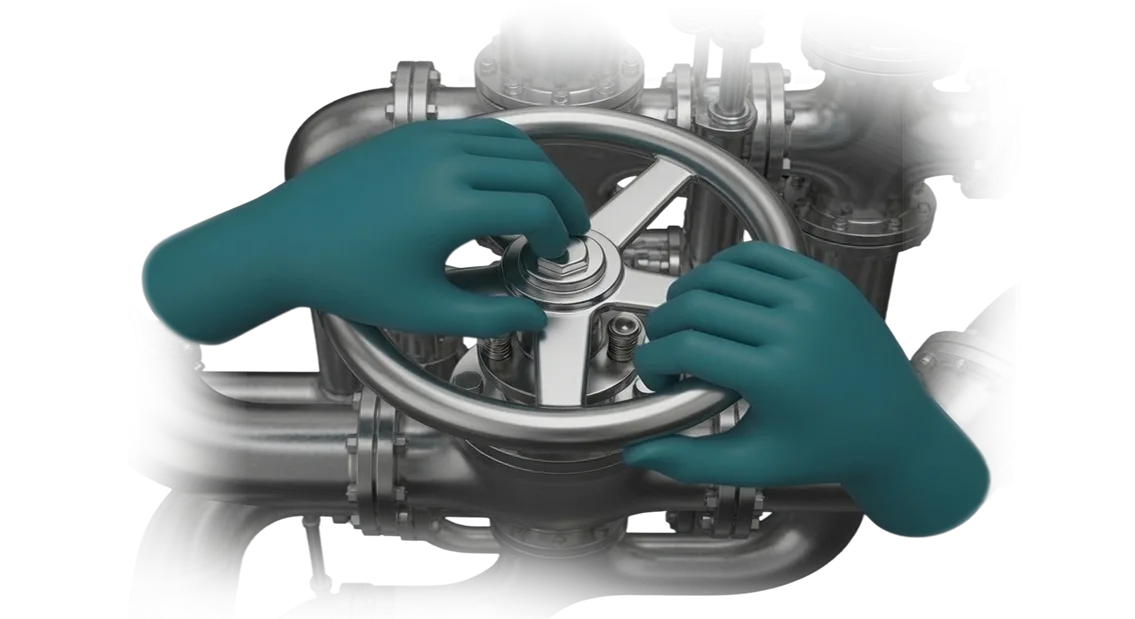
Production loses up to 20% of working time to staff errors
Every day on the production floor, the same story repeats: an operator mixed up the sequence of operations, a setter entered incorrect parameters, a newcomer froze in an unusual situation. The result is defective parts, line downtime, and delayed shipments.
Staff errors quietly eat up as much as a fifth of working time—and with every new shift, that share only grows.
Production losses are not just the cost of a spoiled part. They include hours spent on investigations, retraining, equipment repairs—and sometimes threats to worker safety.
When experienced specialists leave and younger staff learn by trial and error, the price of every mistake multiplies. A manager sees the final numbers in reports, but the hidden source of losses—the human factor—remains off the radar.
Traditional employee training—safety briefings and on-the-job shadowing at the machine—does not close the gap. It either pulls experienced workers away from their own tasks or gives newcomers no chance to practice emergency scenarios without risking the equipment. Yet it is precisely these scenarios that most often lead to serious downtime and costly errors.
We close this problem by designing VR simulators that quickly prepare personnel for real production tasks.
An employee safely experiences typical and emergency situations until they become second nature, while the plant reduces production losses and time-to-competency for new hires.
This is not a replacement for hands-on experience—it is a way to gain that experience without stopping lines or putting people at risk.
What a VR simulator gives your enterprise
Training personnel on live production floors is a risk of downtime, breakdowns, and injuries. Briefings provide theory but do not build a durable skill: in an emergency, a person acts hesitantly.
A VR simulator moves skills practice into a safe virtual environment where mistakes have no consequences.
The enterprise gets three key benefits. Fewer emergencies: employees work through abnormal scenarios in advance and do not panic in real situations. Higher productivity: time-to-competency is reduced several times over, and actions become more confident.
Standardized knowledge: all workers go through the same scenarios and understand procedures uniformly.
| Format | For whom | What it gives the client |
|---|---|---|
| Emergency scenario practice | Operators, duty personnel | Respond to accidents without risk, stay calm |
| Onboarding new hires | New specialists | Quickly master real tasks without a permanent mentor |
| Periodic certification | Workers from all shifts | Confirm skills, identify gaps |
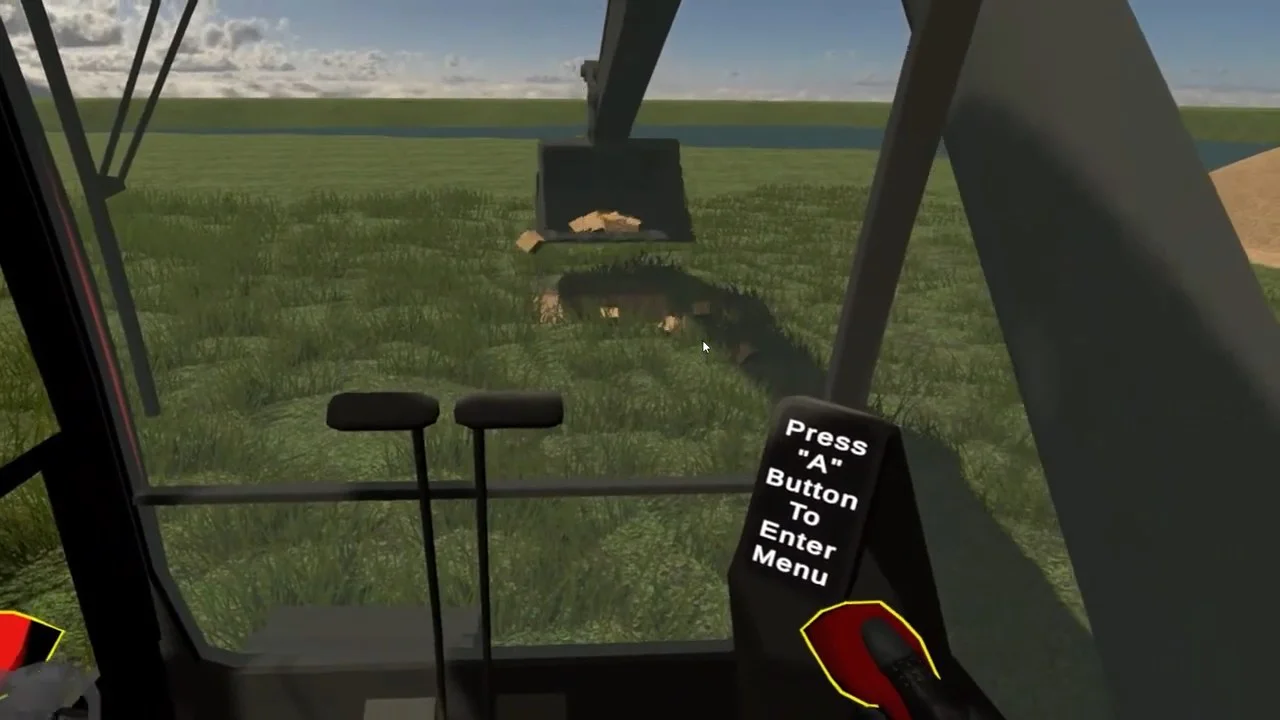
We create simulators on professional equipment, such as HTC Vive, to keep the environment as close to reality as possible.
After the first month of working with the simulator, the number of errors on the line falls by an average of one-third, and reaction speed in abnormal situations noticeably increases.
This approach pays off quickly: fewer defects and downtime, lower training costs. Most importantly, the enterprise gains a predictable level of readiness that does not depend on the human factor.
VR simulator formats for different production tasks
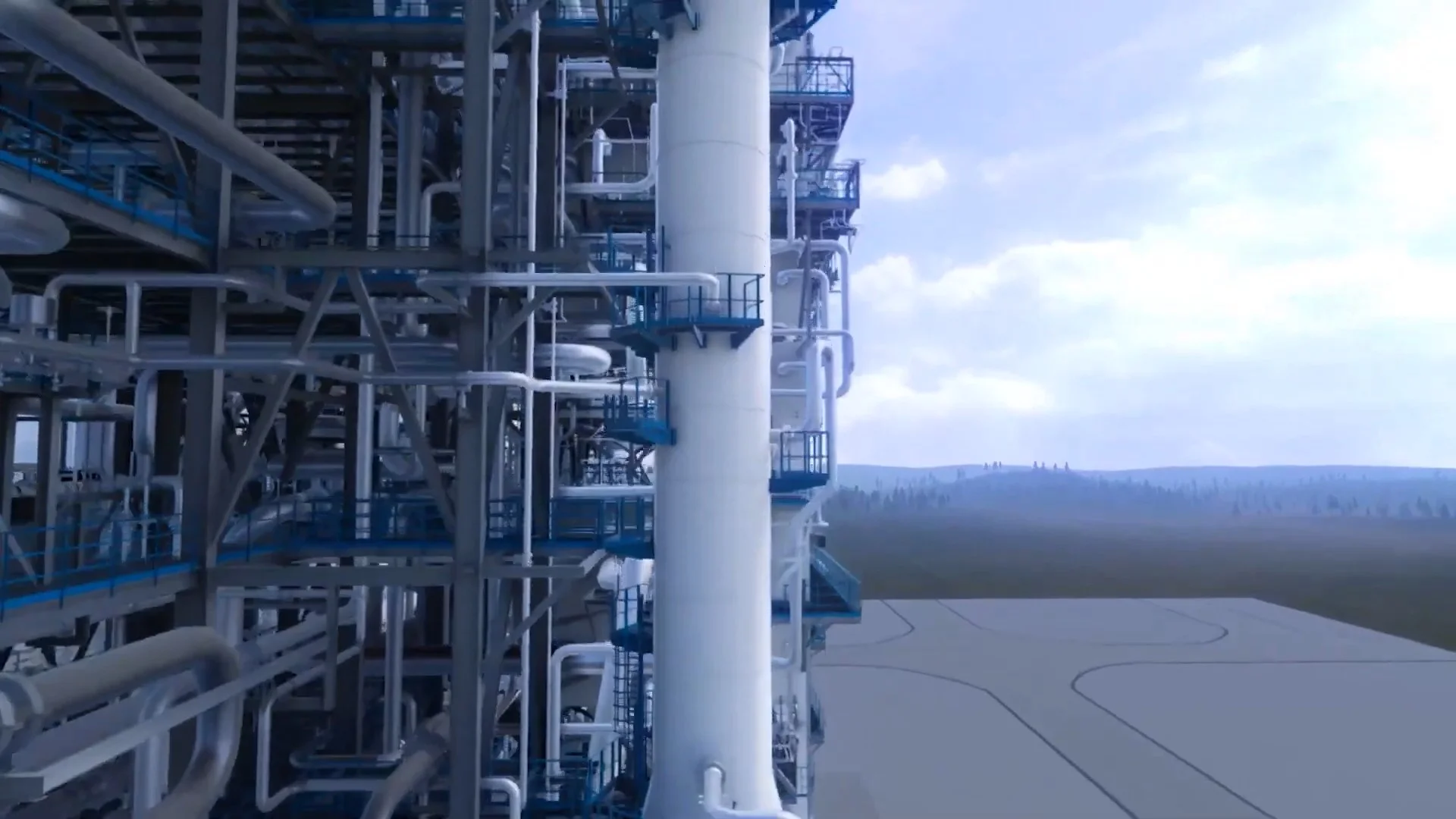
Production tasks are rarely the same: some plants need to train personnel in safe movement through a huge workshop, others need to drill a single specific machine operation to the point of automaticity.
The VR simulator format directly affects the speed of learning, the depth of skill practice, and implementation cost—and therefore, the return on investment.
That is why we match the format to your task rather than sell a “universal” solution. Our lineup ranges from a full digital replica of the production floor to lightweight stations for practicing a single sequence of actions. Each of them covers its own class of tasks—below we show how they differ in terms of results.
Comparison of VR simulator formats
| Format | For whom | What it gives the client |
|---|---|---|
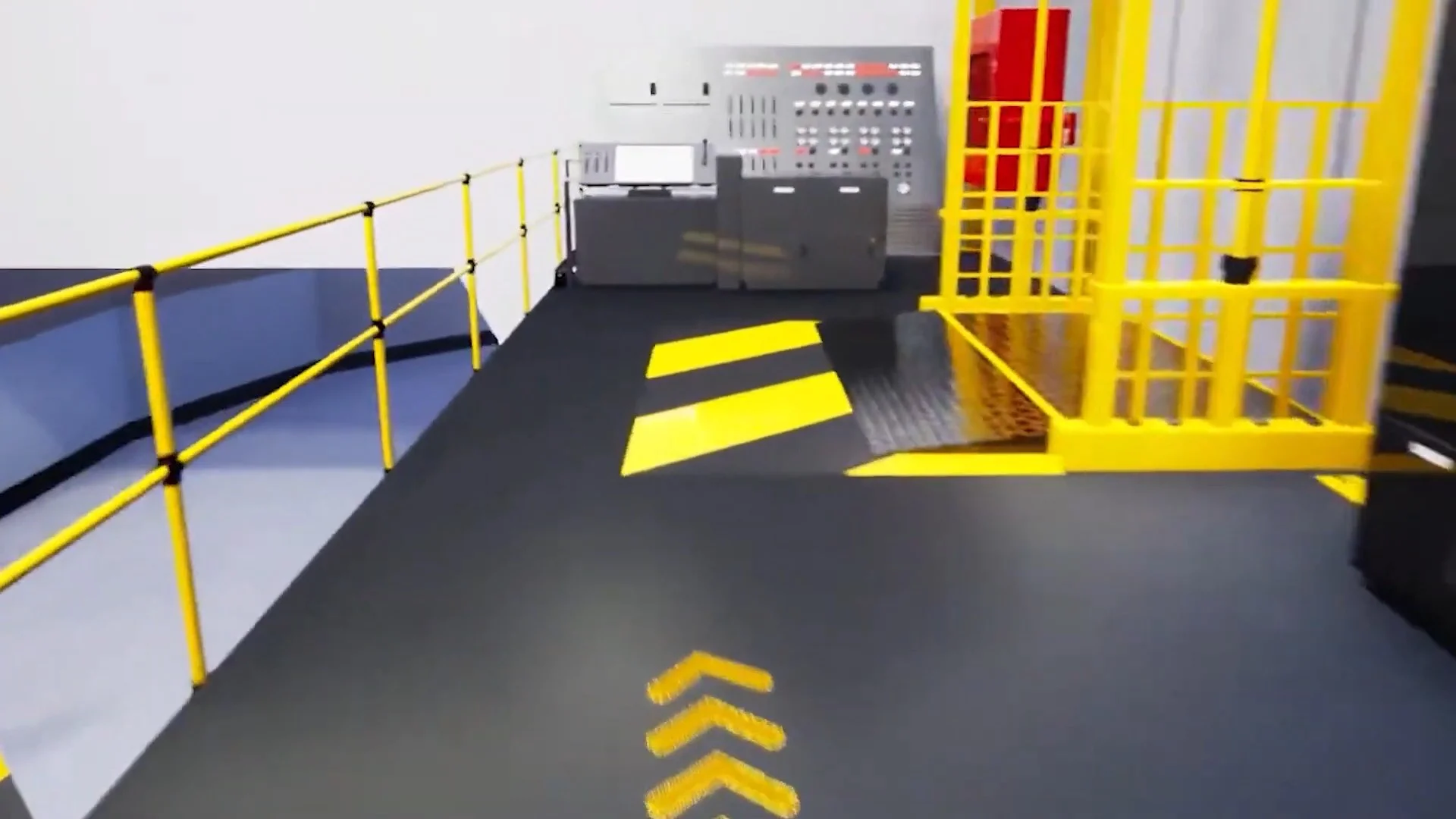
| Full workshop replica | Enterprises with complex routes and intricate logistics | Practice routes, abnormal scenarios, and coordination with colleagues without stopping production |
| Compact station for a single operation | Areas where speed and precision of a repetitive action matter | Quickly build the skill to automaticity, fewer defects, easier onboarding of new workers |
| VR classroom with multiple stations | Training centers, factories with a regular flow of trainees | Parallel group training, a unified assessment standard, savings on instructors and equipment |
| Mobile VR station | Branch offices and remote sites | Training anywhere without employees having to travel; a universal kit for different workshops |
This division helps you avoid overpaying for excessive detail when a compact solution is enough, and avoid economizing on immersion when a full scenario is essential.
Format selection is part of our pre-development audit: we look at your tasks, headcount, and result requirements, then propose a specific option with timeline and budget estimates.
If your tasks change, the simulator can be scaled: start with a compact station and expand it into a full workshop replica when needed.
How we develop an industrial VR simulator: 6 steps
An industrial VR simulator is a project where a design-stage mistake is costly. That is why we have refined our process: it is clear, transparent, and follows defined steps—from the first brief to deployment at your site.
We have more than ten years of implementations behind us, and each stage is structured so you always know what is happening and when results will appear.
We work on a full-cycle model—you get a turnkey solution without having to search for subcontractors or dig into technical details. Here is our path from task to a working simulator:
-
Brief and production audit. We study your technological processes, procedures, and typical staff errors. We identify which skills need to be practiced and which emergency scenarios are most important to cover.
-
Scenario and training methodology design. Together with your technologists and occupational safety specialists, we create the scenario: what the workplace looks like, which actions are correct, and where an employee most often makes mistakes. At this stage, we lay the foundation for the future simulator's effectiveness.
-
Prototype and approval. At an early stage, we show you a working prototype—with basic graphics and logic—so you can assess the approach, make changes, and approve the scenario before the main work begins. It is cheaper to change things now than after full development.
-
Simulator development and real data integration. We use professional visualization tools and your actual equipment parameters, so employees train in conditions as close as possible to real production. You get not a game, but a training tool.
-
Deployment and site-specific setup. We deliver the equipment, install software on your computers or connect a rented kit, and check everything on-site. We train your instructors—they do not need a programmer to launch the simulator and run sessions.
-
Support and development. After launch, we stay in touch: we maintain the simulator, update scenarios for new procedures, add exercises, and help analyze training statistics. Your project keeps evolving instead of becoming a “box” that is outdated in a year.
This process has already proven its reliability: implementations take anywhere from a few weeks to a couple of months depending on complexity, and results show up in faster employee readiness and fewer errors. We handle the entire cycle—you only need to set the task and accept the result.
our team is your guarantee that the simulator will work specifically on your production floor. Start a project with us—everything else will proceed step by step.
What you get in the package with your simulator
When you order development, you get not just a program but a complete kit for training personnel. There is no need to figure out or buy anything else—everything is already configured and delivered with the simulator.
- Ready-made training scenarios for typical operations at your plant—employees practice actions in a safe virtual environment.
- Documentation kit: user manual, setup instructions, and methodological recommendations for your instructors.
- Instructor mode with error tracking and hints—you see where an employee hesitates or acts incorrectly and can correct them immediately.
- Automatic reports for each trainee: the system records completed operations, mistakes, and time by itself—no manual data entry needed.
- Regular updates: we add new scenarios and update materials when your equipment or procedures change.
- Warranty and technical support—the simulator runs stably, and your specialists receive consultations on any operational questions.
The full scope of delivery is fixed in the contract, so you know in advance what the project includes. This approach eliminates hidden surcharges and surprises during implementation.
Case study: a machine-building plant reduced defects by 30%
Even large factories with well-tuned processes lose up to 5–7% of revenue due to defects that start with human error.
The cause is almost always the same: an employee first encounters a non-standard situation or complex operation not on real equipment, but already in the workshop, where the price of a mistake is a spoiled part and line downtime.
We solve this problem with VR simulators that let employees refine actions to automaticity before they ever step onto the floor. Here is how it worked on a real production line.
Case study: machine-building plant “Precise Machine Tools”
A factory producing components for agricultural machinery contacted us with a complaint about a stable defect rate in hydraulic assembly. The culprits were mostly new operators and employees transferred from other areas—they lacked practical experience with complex assemblies.
We developed a VR simulator that completely replicates the technical operation: from feeding parts to checking the tightening torque. In the virtual environment, the employee sees all critical points where mistakes usually occur and learns to avoid them.
Training runs in a safe mode—a defective part can be “rejected” on screen without stopping the conveyor.
Results visible in the production report
After three months of using the simulator, the factory recorded a 30% reduction in defects in the assembly area. Newcomer mistakes were no longer the main source of losses: they now come to their shift with a practiced skill, not by trial and error.
An additional effect is the speed of adaptation. Previously, a trainee needed several weeks of mentoring to reach the planned productivity level.
With VR, this period was cut in half: the simulator allows repeating an operation dozens of times without consuming materials or risking equipment.
For the plant's management, this means stable product quality in every cycle, predictable workshop operations without firefighting and rework, and preserving the reputation of a reliable supplier.
The same approach works on your production line too. First, we study your technological map, identify the most expensive risk points, and build a simulator that targets them precisely. Leave a request—we will tell you how many losses you can eliminate in your workshop.
Frequently asked questions about industrial VR simulators
Before ordering a VR simulator, managers have the same doubts: is it safe, does implementation take long, how much does it cost, and will staff find it difficult? We answer briefly and directly—no fine print.
Is it safe to train employees in a VR headset?
The scenarios mirror real production operations, not entertainment. Sessions last 10–15 minutes; the person stays in a safe zone, and an instructor is always nearby. If needed, we add breaks to help newcomers adapt.
How long does simulator development take?
We build a basic module with one scenario in 4–8 weeks. The schedule is fixed in the contract: you see the stages and control points, so you are not left waiting blindly for results.
How much does it cost and when will it pay off?
The cost depends on the number of scenarios and workstations. To lower the entry barrier, you can start with one module and gradually expand the library. Savings come from reduced briefing time, fewer novice mistakes, and less equipment downtime.
Will employees handle unfamiliar technology?
Yes. Controls are built around simple actions with hints and voice instructions—within 15 minutes, a person performs exercises confidently. We hand your instructors a manual and launch methodology so you do not depend on us for day-to-day operations.
Still have questions about your production? Ask them—within one business day, we will advise which simulator format suits you best.How to choose a VR simulator for your production?
When choosing a VR simulator for production, it is important to start not from the trendiness of the technology but from concrete tasks: which operations need to be practiced, which personnel will be trained, and how results will be measured.
These questions determine the requirements for realism, scenarios, and depth of interaction with the virtual environment.
The first criterion is the simulator's alignment with your real processes. It is best when the scenario replicates your workstations, equipment, and abnormal situations rather than abstract tasks.
The second is safety: training must eliminate risk to people and machinery while allowing actions to be practiced to automaticity. The third is ease of use: operators and instructors should not need to be IT specialists to start sessions and adjust parameters.
Pay attention to the assessment and analytics system: the simulator should show each employee's progress, error count, and task completion times. This enables staffing decisions and reveals weak points in training.
Also ask how the simulator integrates into your existing training program, how long it takes to prepare an instructor, and what technical support is provided after launch.
When choosing a contractor, look at experience in your industry, willingness to visit your production site, and ability to adapt scenarios to your equipment. Ask to see case studies with measurable results—reduced incident rates, shorter onboarding times.
A reliable partner always offers a pilot project and ongoing support to guarantee the simulator actually works for your business.
In the end, the right VR simulator is not just a tech novelty but a tool that reduces costs, improves safety, and accelerates workforce training. Choose a solution that is clear to your team, measurable in its effect, and evolves along with your production.
Start modernizing your production with a VR simulator
Production modernization often hits a wall in staff training: new technologies require new skills, while old methods do not provide the necessary speed and safety. A VR simulator solves this problem, but many managers postpone the project, thinking it is long and complicated. In reality, the first steps take a couple of weeks, and you see results quickly.
After your request, you immediately receive:
- Consultation: we discuss your production tasks and determine where a VR simulator will deliver the greatest effect.
- Project brief: we set goals, scenario, and evaluation criteria—you understand what you will get in the end.
- Timeline and stage estimates: we show the work plan and the cost at each step.
- Trial version: from the start, you see what the training will look like and can make changes.
- Approval: you approve the scenario and plan, then the team begins development.
- Development and launch: we manage the project turnkey, and you receive the finished simulator plus implementation support.
This way, you quickly understand how a VR simulator fits into your training process and can make a decision without risk. We work with professional equipment and proven tools, so we guarantee a stable result.
Start modernizing your production with a VR simulator: leave a request—it is completely non-binding. We will call you back within a day, answer your questions, and suggest the first step that fits your enterprise.