

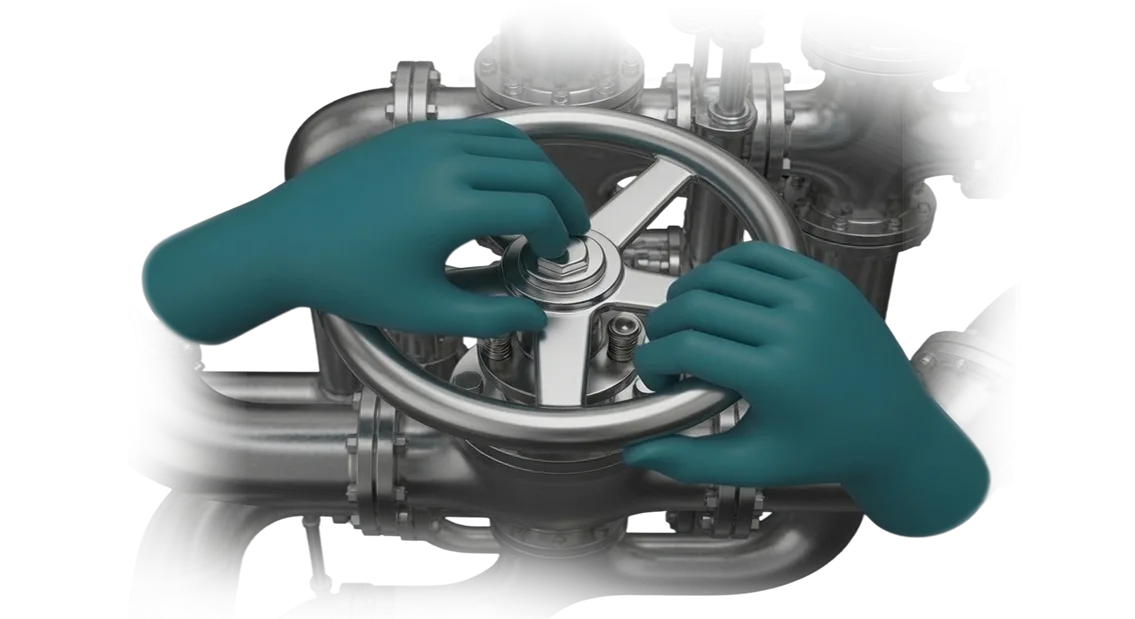
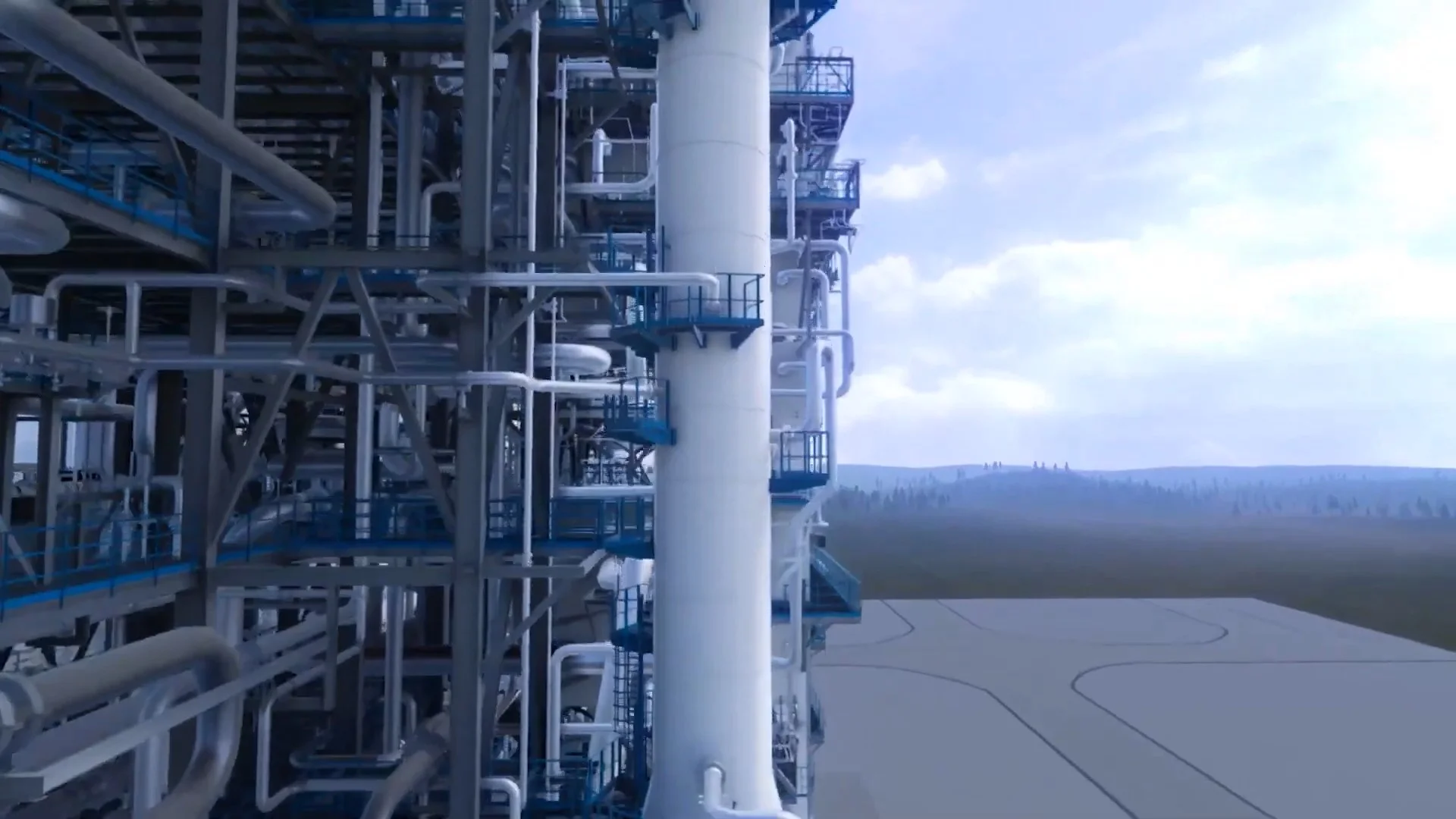
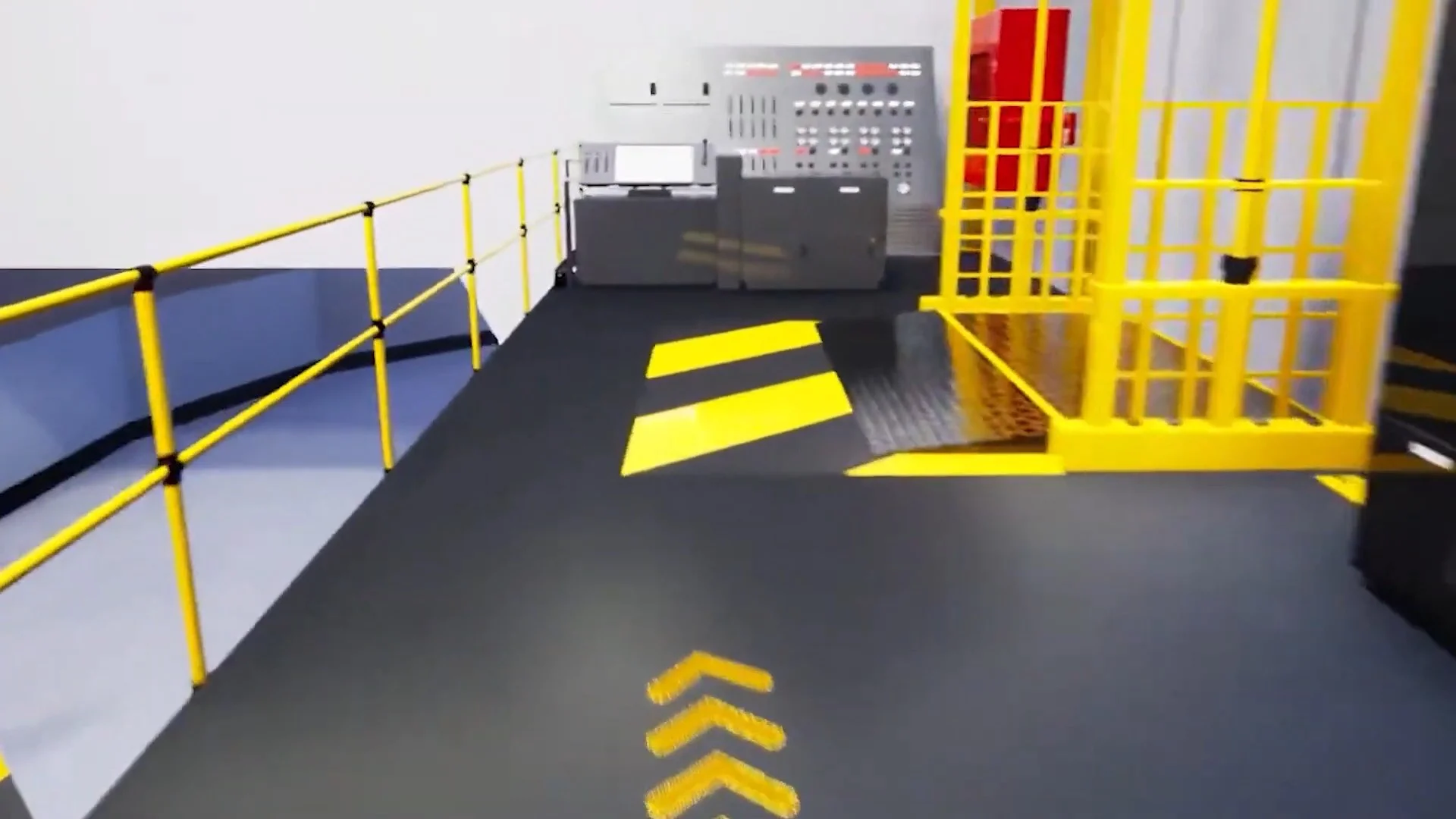
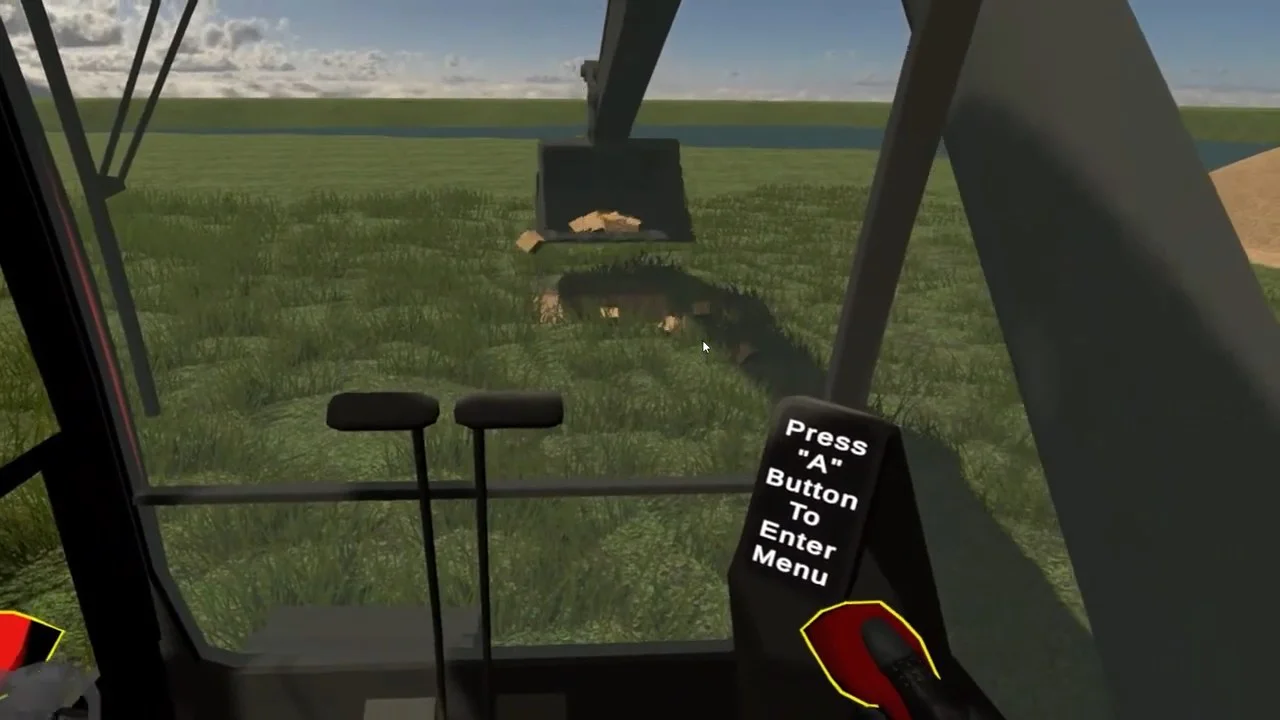
Staff Errors Are Costly in the Rubber Goods Industry
Every minute of unplanned downtime in the production of rubber goods turns into lost revenue, missed shipments, and nervous customers.
But even more expensive is the human factor: an employee who once violates a mixing procedure or fails to react to an emergency can stop an entire line.
Defects, damage to expensive raw materials, re-adjustment of equipment — these are direct losses that are written off against the company's profit.
In the rubber goods industry, the cost of a mistake is especially high: high temperatures, heavy presses, and hazardous chemical components are all present here.
Industrial safety is not just an instruction point but a business survival factor. A serious incident means not only injuries and sick leave but also inspections by supervisory authorities, fines, and shutdown of a site. And the reputation of a company that failed to provide safe conditions suffers for years.
Companies spend enormous resources on occupational safety training, but classic formats — classroom sessions, video lectures, posters — do not test a person's real actions in a stressful situation.
An employee may know the rules but fail to apply them at a critical moment — and that means losses again.
The solution is VR training for personnel, which practices emergency scenarios without risk to people or equipment. The employee enters a virtual workshop that is as close to reality as possible: pressure release, fire, component failure.
They make decisions, make mistakes — and learn from them safely. This format provides not abstract knowledge but a lasting skill honed to automaticity. There is no need to retrain: after several VR sessions, the worker acts more confidently even in an abnormal situation.
We create simulators that take into account the specifics of your production and have already helped companies reduce the number of safety violations and losses from defects.
We adapt the scenario to a specific site — from the mixer to vulcanization — so that the training reflects exactly your risks. Occupational safety training ceases to be a formality and begins to truly protect people and profit.
Benefits of Implementing VR Training at a Plant
At a rubber goods plant, the cost of an employee mistake is measured not only in a spoiled batch but also in line stoppage, and sometimes in people's safety.
Traditional training takes time, consumables, and a mentor's involvement — and still the skill is practiced on real equipment.
Virtual simulation removes these limitations: the worker gains experience in conditions as close to the workshop as possible, but without risk or material costs.
The main advantage of VR simulators is the speed of skill practice. An operator can repeat a complex operation dozens of times in one shift, whereas in a real workshop such an opportunity appears only during actual production.
Faster mastery means a new employee reaches full productivity sooner, and an experienced one masters a new technological operation faster. Training effectiveness increases many times over because attention is fully focused on actions rather than waiting.
Safety is the second key advantage. In rubber goods production there are hot molds, rotating mechanisms, and chemical components. Training in a virtual environment allows practicing emergency scenarios and abnormal situations without threatening health.
The employee remembers the correct sequence of actions at the level of muscle memory, and in a real situation acts calmly and confidently.
Resource savings consist of several components: no raw materials or electricity are spent on training cycles, equipment does not idle due to beginner errors, and the amount of defects decreases.
Our experience shows that companies recoup investments in VR training through reduced downtime and restarts. Our team build simulators on professional equipment and proven tools — so the customer gets stable system operation even during intensive training.
Virtual simulation also provides an objective assessment of employee actions. Unlike mentor observation, the system records every step: time, accuracy, errors. A supervisor sees which operators are ready for independent work and who needs additional training.
This turns a VR simulator not just into a training tool but into part of the personnel management system in production.
Virtual Reality Simulator Formats for the Rubber Goods Industry
Every rubber goods company solves different training tasks: some employees need to be introduced to safety rules, others taught how to act during an accident, and still others to hone equipment operation skills.
There is no universal solution, so we have prepared three basic VR simulator formats that cover all these needs. The choice depends on the specific task and the result you want to achieve.
| Format | For whom | What it gives the client |
|---|---|---|
| Virtual occupational safety briefing | New employees, workshop workers, contractors | Quick absorption of rules without interrupting production, reduced risk of injuries and fines from supervisory authorities |
| Emergency situation simulator | Personnel responsible for emergency response, shift teams | Practicing actions under panic and time pressure, readiness for abnormal situations without real risk |
| Equipment operator training | Technologists, line operators, setters | Practice without risk to equipment and raw materials, shorter onboarding time and higher productivity |
Each format is easily adapted to your regulations and real workshop conditions: you can use ready-made scenarios or develop a simulator from scratch. The formats can be combined — for example, a briefing for all employees and a separate emergency simulator for duty teams.
We will help you choose the best option during a consultation: you will get training that solves your specific task, not just "fashionable VR."
Stages of VR Simulator Implementation — From Brief to Launch
Implementing a VR simulator often scares people with uncertainty: how long development will take, who is responsible for the result, how to integrate training into current processes.
That is why we have structured the work so that at each stage you see a concrete result and understand what is happening with your project.
Below is a typical path from brief to launch. It works equally well for a pilot project on one site and for large-scale implementation across the whole enterprise.
-
Brief and task audit. We record which operation or regulation needs to be practiced, who will use the simulator, and what criteria you consider success. The output is an understanding of the scope of work and an accurate cost estimate.
-
Scenario plan. Together with your technologists, we describe every step of the employee in the virtual environment: actions, errors, hints. You approve the scenario before development starts — this prevents rework at later stages.
-
Prototype approval. We show the first working version of the simulator on key scenes. You see the graphics and interaction logic and make changes while it is still cheap and fast.
-
Full version development. We assemble all approved scenarios, add an employee action assessment system and statistics for the instructor. At this stage, you receive a finished product for testing.
-
Pilot launch. We launch the simulator on a real group of employees, collect feedback, and adjust details. You see the first training results within a week after the pilot starts.
-
Support and development. We hand over instructions for your team, accompany the launch, and update the simulator when regulations or technologies change. One simulator serves an enterprise for 5–7 years — you get a turnkey solution without hidden work.
What Is Included in the VR Simulator Delivery Package
The composition of a VR simulator project is designed so that you receive a working tool, not a set of demo files. The simulator delivery package includes everything needed for a quick start: ready-made scenarios, an assessment system, and administrative modules.
You get a solution that can be immediately integrated into your employee training program — without involving developers or additional purchases.
- Training VR scenarios for your technological operations: from typical actions to abnormal production situations.
- Simulators for different positions — operator, repairman, technologist, quality control employee. Each worker practices exactly their own task.
- User manuals and instructor guides: how to run sessions, change parameters, and record results.
- Knowledge and skill assessment system: automatic reports for each employee, group, or site allow you to see progress and identify gaps.
- Administration module: you can add scenarios yourself, assign tasks, and set the order of completion.
- Training support from our team: we install, train your instructors, help with initial launches, and give recommendations for including VR lessons in the training plan.
- Technical support and planned updates: simulators are updated to reflect changes in regulations and new safety requirements.
This composition covers the entire cycle: employee training, result monitoring, and further program development. All you have to do is choose priorities and start training.
Case Study: Reduced the Number of Violations in Production by 40%
For the rubber goods industry, the cost of a mistake is especially high: hot equipment, chemical environments, heavy workpieces. A newcomer needs months of mentoring, but even an experienced employee can violate regulations due to habit or fatigue.
Manufacturers are looking for a way to reduce risks without stopping lines or increasing the number of instructors.
We implemented a VR simulator at the plant "RTI-Nord", a manufacturer of rubber goods. Employees practiced scenarios in a virtual environment: press start-up, emergency response, and work with raw materials.
Over six months, 120 people were trained — workers, setters, and supervisors, without interrupting production: training took 15–20 minutes per shift.
Implementation Results
The number of occupational safety violations decreased by 40%. Control measurements were taken before and after the program to exclude seasonal factors.
VR training proved more effective than classic briefings: employees do not listen to theory but practice actions to automaticity — but in conditions where a mistake does not cost an injury or an expensive repair.
Why did it work this way? The simulator imitates emergency situations and their consequences. The employee presses the wrong button, sees the result, and corrects themselves before going to the real line.
This format is more memorable, and safe behavior ceases to depend on supervision — it becomes a habit.
This case confirms that VR training pays off through reduced injuries, downtime, and defects. If you want similar results — we will tell you how to adapt the scenarios to your processes and calculate the expected effect before launch.
How to Choose the Right VR Training Format for a Task?
When a rubber goods company contacts us for VR training, the first question is which simulator format solves the specific task. There is no universal answer: training a rubber mixer operator is one thing, practicing actions during an accident on a vulcanization press is another.
Therefore, choosing a VR simulator starts with an analysis of production processes and the points where errors most often occur.
If the main task is quick onboarding of new employees, we offer an interactive virtual workplace simulator. It allows learning the sequence of operations, line start-up and shutdown, and parameter monitoring in a safe mode.
Training runs without stopping production or risking damage to expensive tooling — the beginner gains practical experience before working on real equipment.
When it is necessary to increase personnel readiness for abnormal situations, the format changes: a scenario simulator models smoke, depressurization, temperature or pressure increase in the vulcanization zone.
The employee trains actions to automaticity, and in a real situation acts clearly rather than from memory. This type of simulator is indispensable for verifying qualifications and permits.
For knowledge checks after theory, we use VR testing. It demonstrates not knowledge of wording but the actual ability to perform an operation in conditions close to production. This reduces the risk of defects, injuries, and repeated briefings.
In practice, combining formats gives the best effect. We help select a solution tailored to rubber goods production specifics — from a single scenario to a comprehensive training program.
The result is measurable: shorter onboarding time, fewer errors, and confident operation by personnel on real equipment.
Answering Frequently Asked Questions About Implementing Simulators
Implementing a VR simulator in rubber goods production usually runs into three doubts: cost, integration complexity, and the need to rewrite regulations. This is normal — a new technology requires details to be worked out.
We have dozens of projects for industrial companies behind us, so we know what worries you and are ready to dispel these doubts.
We fully take on the technical part: we select and provide equipment, configure scenarios, and support the launch. Your production continues to operate as usual — there is no need to stop the workshops.
How difficult is it to integrate a simulator into current processes?
We launch the simulator in parallel with your core activities. We agree on a plan in two or three working meetings, prepare 3D models of your equipment, and adapt scenarios to technological maps. Employees train without interrupting production, and first results appear within a few weeks.
Will we have to change existing regulations?
No. A VR simulator complements the existing training system rather than replacing it. We align all scenarios with your instructions and company standards, so there is no need to rewrite documentation.
The simulator automatically records employee actions and generates a report — it can be used for internal skills assessment.
How much does it cost and when will it pay off?
We work in three formats: purchase, subscription, and pilot project. You choose the one that fits your budget and current tasks. The simulator pays off through reduced errors, defects, and hazardous situations — the economic effect is visible after the first months of use.
Do you have questions about your production? Describe the task — we will prepare the calculation and offer a solution that fits your budget and timeline.Get a Project Estimate for Your Enterprise Today
A clear cost is the main thing that keeps companies from ordering a VR simulator. The type of production, the number of regulated operations, the nuances of emergency scenarios — all of this affects the estimate, so without analyzing your site an accurate figure is impossible. But to get it, you do not need weeks or a technical specification — just a request.
Within one business day after your inquiry, you receive a decision-making package:
- specialist consultation: 15–20 minutes by phone or in writing, we clarify the task and answer questions;
- preliminary cost estimate for a VR simulator tailored to your scale — a budget range tied to the scope of work;
- implementation plan: stages, areas of responsibility, and the list of data needed from your production;
- timeline assessment accurate to the week — from start to launch, taking into account your internal processes;
- pilot project options: a reduced version of the simulator for one site or one operation, so you can test effectiveness with a small budget.
A pilot project is the most reliable way to start, especially for the rubber goods industry, where the cost of a mistake is high. Instead of full-scale development, you receive a working scenario sample, test it on your employees, and see real training metrics.
Based on the pilot results, we set the final cost of scaling — without unexpected surcharges halfway through.
The request does not obligate you to order: we do not "sell from the doorstep," but first find out whether a VR simulator will solve your task. If not, we honestly say so and offer a more suitable alternative.
You will still have a structured understanding of budget, timeline, and work stages — even if you decide to postpone the start.
Leave a request for an estimate — we will call you back within one business day, clarify the parameters, and send preliminary figures. Implementing a VR simulator starts with an accurate estimate, and you will have it today.