

Glass Manufacturing: How to Reduce Risks and Accelerate Staff Training
Training personnel in glass manufacturing is a distinct type of risk. Production cycles run continuously, equipment is heated to high temperatures, and the cost of a mistake is measured not only in defective products but also in injuries, downtime, and emergency shutdowns.
The traditional "watch how a mentor does it, then repeat" scheme takes weeks and months, but even after that, an employee often encounters an emergency for the first time at a real facility—without the right to trial and error.
At the same time, staff turnover remains a constant issue: workshops need new operators, and mentors are forced to step away from their own work to demonstrate the same things over and over.
Onboarding time stretches out, and knowledge still remains incomplete—especially regarding abnormal situations that cannot be safely simulated on live production.
The result is high load on experienced employees, slow shift preparation, and a constant background risk of human error.
We address this pain point with a VR simulator developed specifically for glass manufacturing tasks.
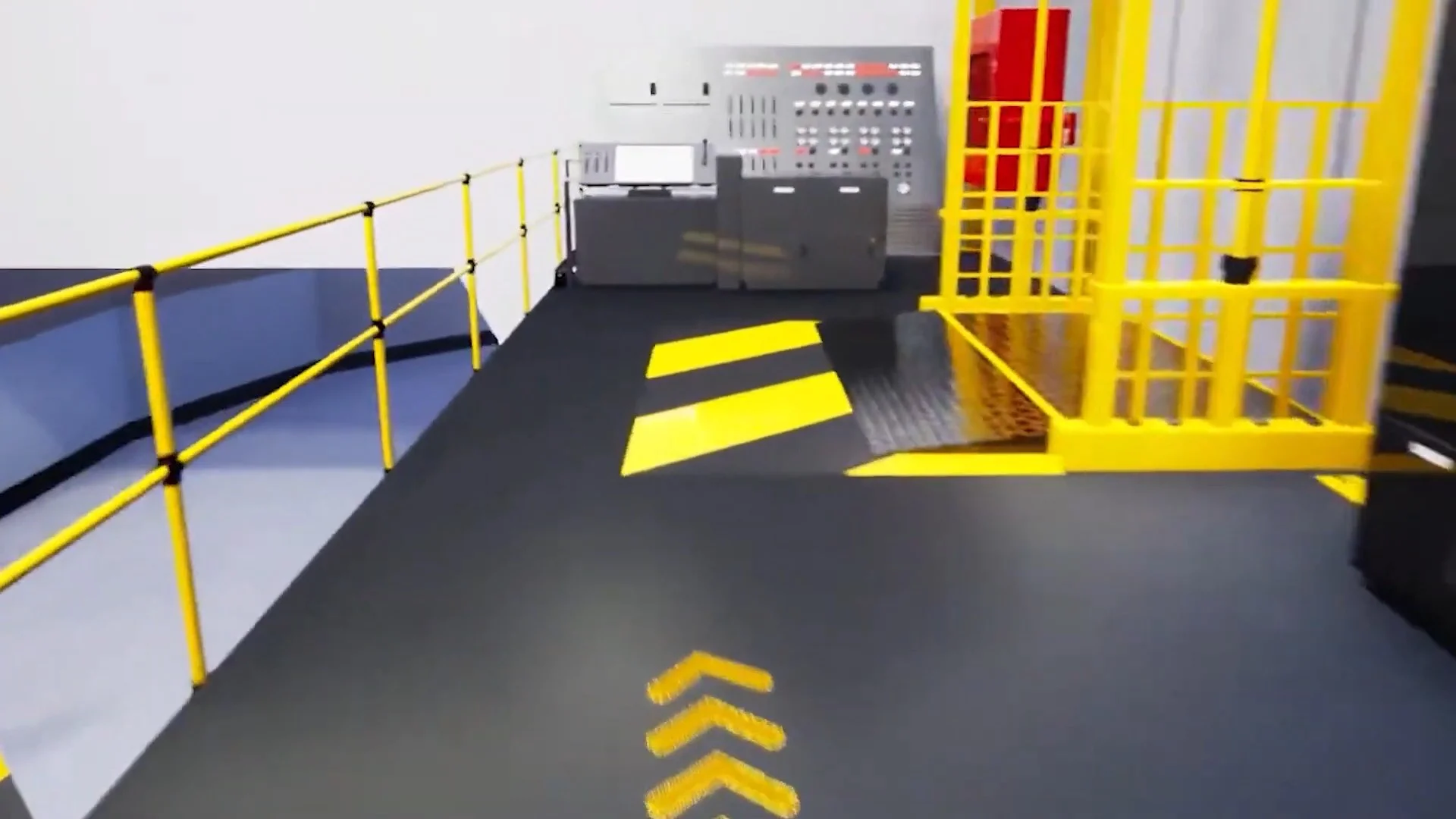
The employee enters a realistic workshop environment and practices standard operations and emergency scenarios as many times as needed for confident action—without stopping equipment or threatening themselves or others.
Training runs in parallel with core work: the simulator is integrated into shift schedules, reduces onboarding time, and relieves mentors.
As a result, the enterprise gets personnel who reach independent work faster, make fewer defects, and know how to act in abnormal situations. Industrial safety becomes manageable rather than a matter of luck. Below are examples of how we implemented such simulators for different production facilities.
What a VR Simulator Gives a Factory: Fast Results and Clear Savings
For glass manufacturing, every minute of line downtime is a direct loss: the furnace runs, but products do not come off the conveyor.
A VR simulator moves operator training into a virtual environment where actions can be practiced without stopping equipment or risking expensive raw materials.
Reducing Downtime and Production Savings
Operators train on a digital twin of the line: they learn to start shifts, change settings, and respond to abnormal situations exactly as they occur on real production.
By the time they reach the floor, the employee already knows the algorithms to the point of automation, so the number of errors leading to equipment stoppages drops sharply. The factory gets a stable work rhythm and predictable output.
Additionally, planned downtime is reduced: some settings and checks can be practiced in advance. There is no need to wait for the line to be free to show a newcomer what to do in an emergency—everything is available in the simulator.
Less Waste, Higher Product Quality
Glass quality depends on the precision of operator actions: temperature, drawing speed, mold positioning. Errors on real equipment result in breakage, chips, and thickness inconsistencies.
In the VR simulator, each algorithm is practiced until consistent results are achieved, and the system highlights deviations in real time.
As a result, waste decreases from the very first shifts, because employees arrive at production with established skills. There is no need to rework batches or write off expensive raw materials—stable product quality becomes the norm, not a matter of luck.
Fast Adaptation of Newcomers
Previously, training a new operator took weeks and required constant involvement of a mentor who was distracted from their own duties.
With the VR simulator, adaptation is accelerated several times over: the trainee goes through scenarios independently, and mentor time is spent only on supervision and answering questions.
Newcomers integrate into the work rhythm faster and start contributing sooner, while experienced employees do not waste time repeating the same instructions.
This reduces staff turnover and improves the overall skill level of the team—both experienced and newly arrived operators work reliably.
VR Simulator Formats for Glass Manufacturing Tasks
Each task in glass manufacturing requires its own training approach. A new employee needs safe practice of typical operations, an experienced master needs to handle abnormal situations, and a manager needs an objective picture of the team's skill level.
Therefore, we have developed three VR simulator formats that cover the full cycle: from entering the profession to knowledge assessment.
| Simulator Format | Training Scenario | Target Audience | What It Gives the Client |
|---|---|---|---|
| Virtual polygon for standard operations | Equipment setup, parameter control, working with molten glass | New operators, interns | Fast transition to independent work without risk to the line |
| Abnormal situations simulator | Emergency shutdowns, depressurization, material supply failures | Experienced technologists, shift supervisors | Practicing responses without stopping production or threatening personnel |
| Personnel assessment module | Exam after theory, practical skills audit | Workshop managers, HR department | Transparent competency and work-readiness indicators |
The formats can be used separately or combined into a single training program. For example, an intern first goes through the virtual polygon, then takes an exam in the assessment module, while an experienced shift regularly practices abnormal situation scenarios.
As a result, you get a clear training system where each stage is tied to the real risks of glass manufacturing.
How a VR Simulator Is Implemented at an Enterprise
Implementing a VR simulator is not a "black box" but a clear route with checkpoints. We support the project from the initial request to daily use: you always know what stage the work is at, what is already done, and when the simulator will begin to deliver value.
-
Request and preliminary analysis — we define the task: which process needs to be practiced, who will be trained, and what constraints exist. We select a scenario and estimate timelines—even before signing the contract, you receive a work plan and an understanding of the result.
-
Development of the technical specification — together with your technologists, we describe the future simulator: scenarios, difficulty levels, and criteria for evaluating employee actions. This is the baseline that both of us follow in subsequent stages.
-
Model and scenario approval — we create a prototype of the working area or unit, show you the scenario on screen, and make edits. At this stage, changing details is still inexpensive, so we focus on detailed discussion rather than guesswork.
-
Simulator implementation — we build the virtual environment on professional equipment, and integrate the control and assessment mechanics. You get access to intermediate builds and see progress with your own eyes.
-
Pilot project at your site — we install the system and conduct trial training with real employees. At this stage, we collect feedback from instructors and trainees and adjust the logic and interface.
-
Launch of the simulator into operation — we hand over instructions, train your employees to work with the system, and connect the required reporting formats. After launch, we establish a procedure for updating scenarios.
-
Support and development — we stay in touch: updating content, adding new scenarios and tasks as production processes change. If necessary, we provide on-site support or remote sessions.
The result is a ready-to-use tool integrated into your training system, not a "raw" prototype. Employees begin working on the simulator within a couple of weeks after the pilot launch, and we adapt to your pace and procedures.
What Is Included in the Delivery and How It Is Transferred to the Customer
We deliver not just files but a ready-made tool that your specialists will start using immediately after implementation. The delivery package includes all materials needed for independent operation, staff training, and further development of the simulator.
-
Training scenarios and methodologies — ready-made programs for instructors, descriptions of exercises, and evaluation criteria. They cover typical glass manufacturing situations, including abnormal ones.
-
Instructor training — we conduct practical sessions for your specialists so they can independently conduct training sessions and adapt scenarios to their tasks.
-
Administrator guide — instructions for launching, configuring, and maintaining the simulator. Your employee will be able to manage the system without involving developers.
-
Training materials for employees — videos, memos, and tests for knowledge verification. They are also used after implementation when hiring new employees.
-
Equipment documentation — recommendations on operation and maintenance to ensure the hardware lasts long and does not require frequent repairs.
-
Updates and technical support — we regularly update simulator content and help resolve issues at all stages of operation.
-
Source materials and access — all simulator elements are transferred to your disposal. You can change scenarios, add your own objects, and develop the system without restrictions.
Case Study: VR Simulator for a Glass Factory
For a glass factory with a continuous production cycle, the problem of training new operators is especially acute.
The line cannot be stopped for training—each hour of downtime is expensive, and errors in furnace control or blank transport lead to defective products and safety risks.
The customer contacted our team with a request: make training fast, safe, and not pulling employees away from real production.
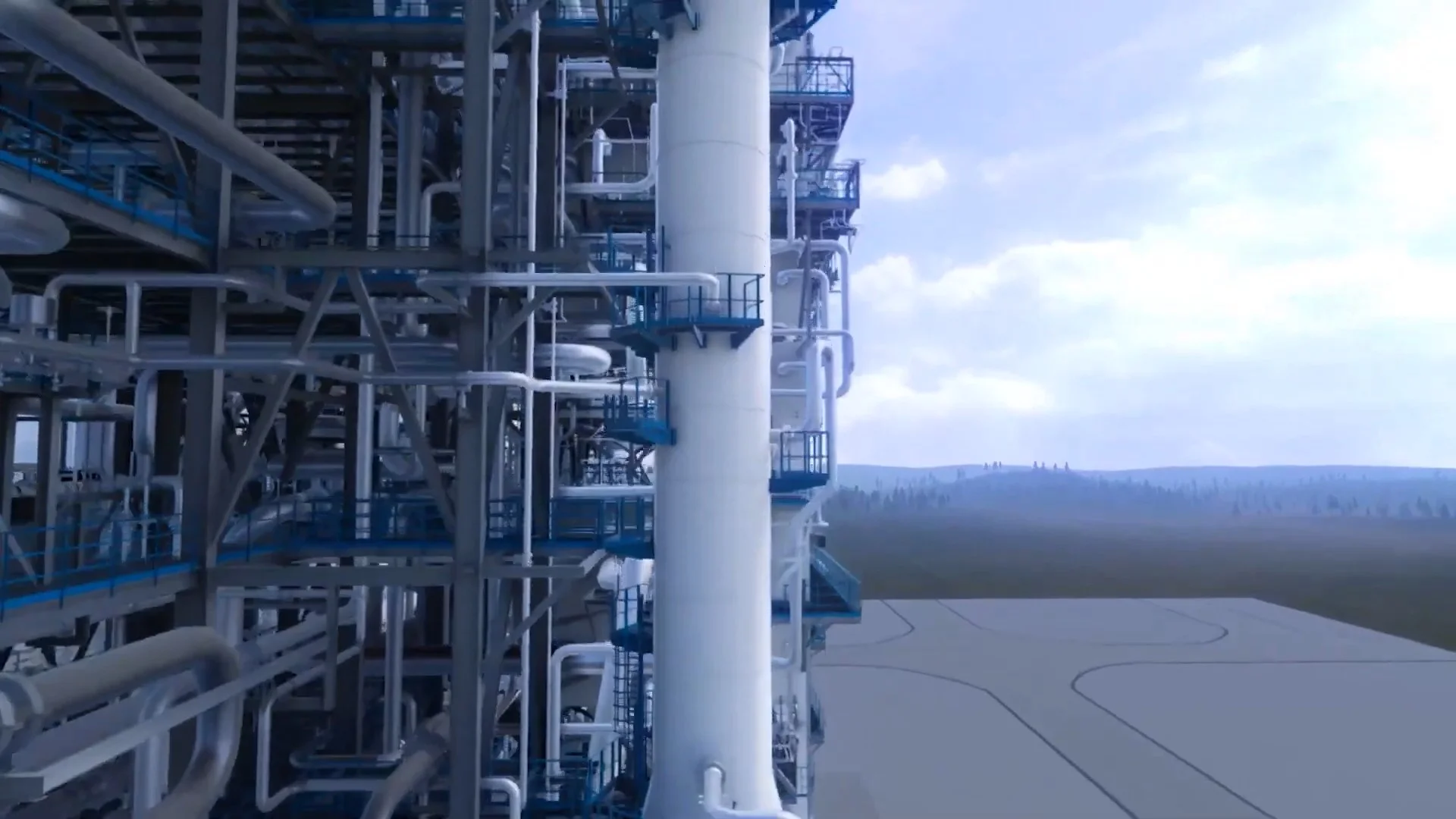
We built a virtual simulator that reproduces work shifts at a specific factory site: equipment startup, temperature regime control, and actions in abnormal situations.
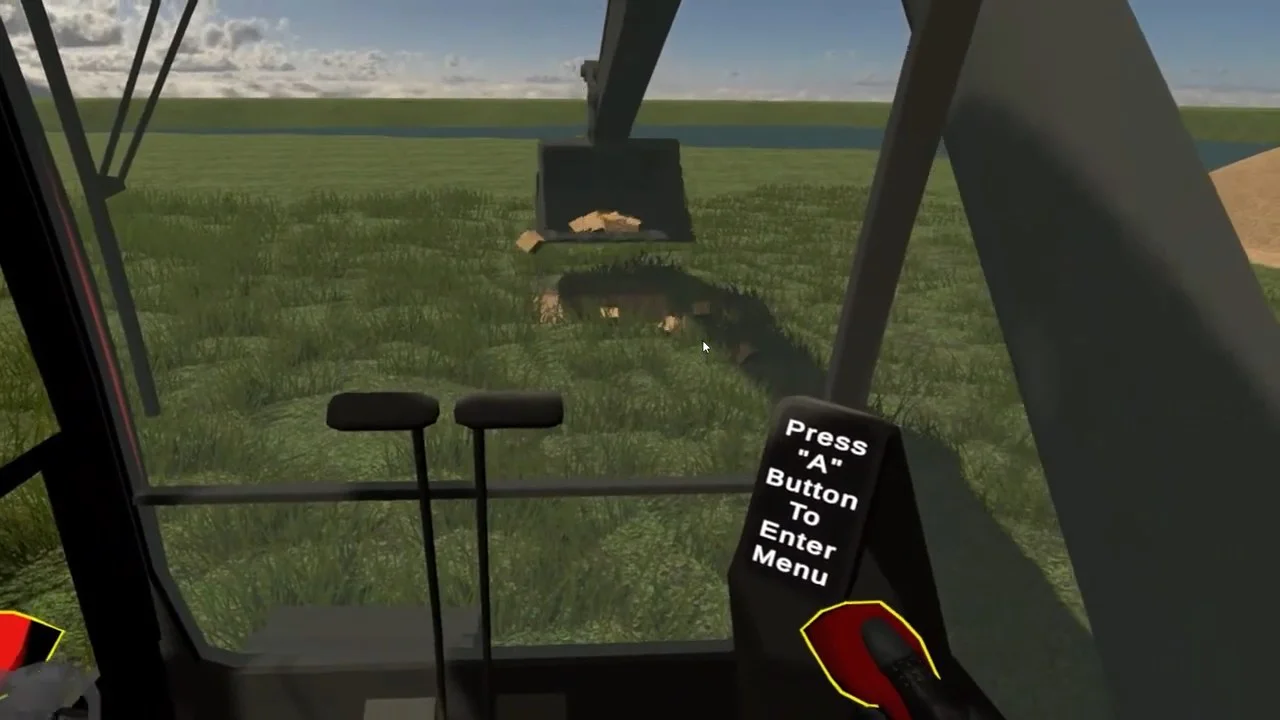
The operator goes through scenarios in a VR headset, makes mistakes in a safe environment, and immediately sees their consequences, while the system records every action. This way, a newcomer gains experience without risk to the line and without a mentor's involvement.
Implementation Results
Two months later, the customer measured the metrics: operator onboarding time decreased by 30%, and the number of errors on the line among those trained dropped by half.
In addition, the simulator made it possible to standardize training—previously each mentor taught in their own way; now all employees practice the same scenarios with the same evaluation criteria.
For the business, this is not just "a nice technology" but a measurable reduction in costs: fewer defects, fewer emergency stops, and faster transition of newcomers to full-fledged work.
And most importantly, training does not require stopping production and can be conducted at a convenient time. After a successful pilot, the factory ordered simulators for two more sites, confirming that the system pays off and scales.
How to Choose the Right VR Simulator Format for a Specific Site?
There is no universal VR simulator for glass manufacturing: what is ideal for furnace maintenance is useless on a cutting or packaging line.
The key is to start from the specific workplace, the operations performed there, and the errors that most often lead to defects or injuries.
If this is not taken into account, training will not produce the desired effect: employees will simply remember a virtual picture rather than the real process.
Therefore, the first step is a site audit. We visit the production facility, study the equipment composition, physical layout of the workshop, procedures, and typical abnormal situations.
For example, for a glass forming line, practicing actions during temperature fluctuations or conveyor stops is important, while for a tempering site, control of time and pressure is key.
This approach allows us to choose a simulator format that addresses your specific tasks: skill practice, emergency scenarios, or safety training.
The second factor is the staff skill level. Newcomers need a detailed equipment guide and step-by-step scenarios; experienced employees need rare emergency situations and speed standards.
We adjust complexity to a specific group so that training is effective for both interns and seasoned masters.
That is why we always start with a free consultation: we discuss your site, training goals, and constraints. After that, we propose a solution that integrates into your existing training program, does not require stopping production, and delivers measurable results.
You get a simulator that teaches employees what actually happens at your enterprise, not abstract actions in a virtual environment.
Common Concerns When Ordering a VR Simulator for Production
Having concerns before ordering a VR simulator is normal: you are integrating a new tool into an existing production process, and it is important to understand who is responsible for the result.
Below are answers to the questions most often asked by technologists and enterprise managers before starting a project.
How will the simulator fit into our technological process?
We begin by analyzing your procedures and real operations, not by "bringing a ready-made solution." Scenarios are built on your instructions, equipment parameters, and typical operator errors.
The simulator runs on a standard work computer or in a protected area—without changing current lines or production schedules.
Who will maintain the simulator after launch?
Tell us which employees need access—we will train your specialists to launch and maintain the system independently.
During the trial operation period and for the first year of use, support is included: we are available by phone and email, helping with setup and scenario updates as production changes.
How do we update scenarios if the technology changes?
Standard edits do not require a developer: you can change parameters, hint texts, and step sequences in the interface. If a new scenario is needed, send us a technical specification, and we will implement it within the agreed time frame. This way, you are not tied to us forever, but you are not left without support either.
What are the implementation timelines?
The exact timeline depends on the number of scenarios and the complexity of the simulated process. A basic simulator for one technological site takes from two weeks to one and a half months.
The deadline is fixed in the contract, with intermediate stages: scenario approval, preliminary version, and trial operation.
What about warranty and responsibility?
We guarantee that the simulator works on the agreed equipment and matches the stated scenario. If discrepancies are found during testing, we fix them before the acceptance certificate is signed.
After that, a warranty period and a support agreement apply—these are specified separately, without hidden conditions.
Request a Development Cost Estimate for Your Production Site
Your single production site contains dozens of operations, where every missed procedural step results in defects, injuries, or simply slow work by a newcomer.
A VR simulator for your site allows you to practice scenarios to the point of automation before going to the line, but before launching a project, you need to understand its scope and payback.
An engineer from our studio will prepare an estimate specifically for your workshop—tied to its operations and your requirements.
Leave a request, and we will conduct a short consultation with your technologist or site manager. After that, you will receive a commercial proposal with an approximate budget, timeline, and implementation plan.
This does not obligate you to start the project but gives you a transparent picture: exactly what will be developed, how it will fit into training, and what effect you will measure in numbers.
What is included in the development estimate for your site:
- Analysis of typical operations and errors: we determine which actions are worth practicing in VR first.
- Selection of training scenarios tailored to your procedures, safety standards, and staff skill levels.
- Evaluation of the effect: how many people you can train in parallel and how much faster they will reach independent work.
- Recommendations on equipment format—taking into account your workshop, budget, and the need for mobility.
- Estimated project cost and development stages with realistic timelines.
- Pilot launch plan: which site to start with, what metrics to measure, and how to scale to other lines.
Fill out the form on this page—the engineer consultation is free and non-binding. We will contact you within one business day, clarify the details, and prepare an estimate that you can use to make a decision. Start with one simulator—and you will see the result in your production's real metrics.