

How a perpetual VR assistant driver simulator reduces risks
Mistakes by assistant drivers are one of the main causes of accidents in railway operations. The cost of such a mistake is not only downtime and expensive repairs, but also people's health.
Even an experienced employee can become confused in an unusual situation if they have never practiced it in real conditions. After all, the safety of the entire train and its cargo depends on the speed and correctness of decisions.
Traditional training in most cases comes down to theory and briefings. Practical sessions on real equipment take time, require resources, and create additional risks — a beginner's mistake can lead to an accident.
As a result, personnel go out on the line unprepared for emergencies, and management suffers losses from downtime and reputational damage.
A perpetual VR simulator for assistant drivers solves this problem. It allows practicing actions in any scenario — from standard to emergency — without stopping operations and without endangering people.
Training takes place in an environment as close to real life as possible, and regular practice brings skills to the point of automation. This directly reduces the risk of errors, improves occupational safety, and reduces the likelihood of workplace accidents.
Our team develops such simulators for the specific needs of each enterprise. We help establish systematic staff training, monitor each employee's progress, and maintain a high level of team qualification.
As a result, you get a tool that works for safety every day and pays for itself through the incidents it prevents.
What implementing the simulator delivers: safety, speed, and savings
Implementing a VR assistant driver simulator is not a replacement for hands-on mentoring, but a way to make training predictable and safe. Traditional training takes months and depends on the availability of free rolling stock, an instructor, and weather conditions.
A simulator allows you to practice actions at any time and with any number of repetitions, without risk to people or equipment.
We use an approach that has already proven effective at industrial facilities: a methodology for practicing actions in critical situations. It brings skills to the point of automation, so that in a real environment an employee acts clearly and calmly.
Reducing accidents and risks
The simulator's core value is practicing emergency situations that are dangerous or too expensive to recreate in real life. An assistant driver learns to respond to brake failure, a sudden obstacle on the tracks, or errors in instrument readings.
In the simulator, a mistake costs seconds of time, not train downtime and company reputation. Statistics show that enterprises that implement such training reduce the number of incidents caused by personnel by several times.
Speeding up training by 2–3 times
Instead of a long chain of "theory — practice on an active facility — waiting in line again," the employee gets concentrated experience. Scenarios are designed so that in one session they experience situations that occur once every few years in real work.
A basic control skill is formed in 2–3 weeks instead of several months, which means an employee can quickly move to independent work without losing quality.
Saving the training budget
The cost of locomotive rental, instructor fees, and fuel are the main expense items in traditional training. With a simulator, these expenses disappear: the equipment pays for itself after the first few groups of students.
An additional benefit is that training does not block the working fleet of rolling stock, so the enterprise does not lose revenue due to equipment downtime.
Savings at large depots reach a substantial amount, with the exact figure calculated after an audit, while staff qualification only grows.
Development formats and cooperation terms
For an industrial enterprise, it is important that the simulator corresponds exactly to your instructions and working conditions. We offer two basic formats — a standard solution and a custom scenario — as well as a service package for adaptation to internal regulations.
In any case, you receive a perpetual license: you pay once and use the simulator for years with no monthly payments.
| Format | For whom | What the client gets |
|---|---|---|
| Standard solution | Enterprises with standard operations and a need to launch training quickly | Launch in 3–4 weeks, predictable budget, perpetual use, verification of basic driver skills |
| Custom scenario | Companies with their own routes, non-standard situations, and strict regulations | Full compliance with your instructions, practice of rare emergencies and actions in abnormal situations |
| Service package: adaptation to regulations | Organizations that already use a simulator or plan to update their training program | Making changes when instructions are updated, adding new scenarios, technical support and maintenance |
If you need to quickly check knowledge of standard actions and save budget, a ready-made solution is suitable.
If your enterprise has its own routes, specific emergency situations, or strictly defined instructions, a custom scenario will pay off by matching real processes precisely and reduce the risk of errors on the road.
When choosing a custom format, we study the documentation, analyze workstations, and coordinate each stage with your specialists. After launch, the simulator remains your property, and when regulations change, we update the scenarios as part of the service package. This way you get a tool that does not become obsolete as safety requirements evolve.
How the project proceeds: from brief to launch and support
You receive a perpetual VR assistant driver simulator that should not turn into a "black box" for six months. That is why we have divided the project into six short stages — each has its own result, timeline, and control point.
At any step, you see the interim result and can adjust the task without losing time or budget. This is how our team has been working for more than ten years.
- Brief and task audit — we gather requirements, study the work regulations of assistant drivers, and clarify training goals. We set deadlines and the scope of work.
- Scenario and methodology — together with your technologists, we work through standard and abnormal situations, define the sequence of exercises, and evaluation criteria.
- Prototype — we create a demo version of one scenario. You see the graphics, logic, and controls before full development, which allows you to quickly correct non-obvious issues.
- Development and quality control — we build the complete simulator and test it for bugs and compliance with the technical specifications. You receive intermediate builds every 1–2 weeks, so the timeline is clear and transparent.
- Pilot launch — we install the simulator at your site, train instructors, collect feedback, and make final adjustments.
- Launch and support — we hand over all documentation and provide support and updates when regulations change. For us, the project does not end with delivery.
What is included in delivery and support
To launch training, you will not need to buy or refine anything — we deliver a complete package that already accounts for your enterprise's needs. Everything is configured, tested, and ready to use from day one.
- Ready-to-use VR simulator with pre-installed train control scenarios and emergency response actions.
- Scenarios tailored to your conditions — we adapt standard routes, rolling stock characteristics, and enterprise regulations.
- Equipment and setup — we select and connect a package for your premises so you do not have to deal with technical issues.
- Instructions and training materials — for instructors and trainees: guides, regulations, evaluation criteria.
- Training for your team — we transfer knowledge to your instructors so they can conduct sessions and assess results independently.
- Technical support for the entire period of use — we answer questions, help with setup, and promptly solve any problems that arise.
Support does not end at launch. We regularly update scenarios — this is important when instructions change, new rules are introduced, or abnormal situations appear that are worth practicing.
You receive timely updates at no additional cost and can be confident that the simulator always meets current requirements.
In the end, you get a tool that quickly becomes operational and delivers measurable results: reduced staff training time, lower risk of errors, and improved line safety. All you have to do is appoint responsible people — we take care of the rest.
Case study: how accidents and costs decreased at an enterprise
For the railway carrier «СеверТранс», we developed a perpetual VR simulator for training assistant drivers. Training used to take about six months: first theory, then work with an instructor and rare trips to real locomotives.
Due to a lack of practice, beginners were lost in abnormal situations — the company suffered losses from downtime and accidents.
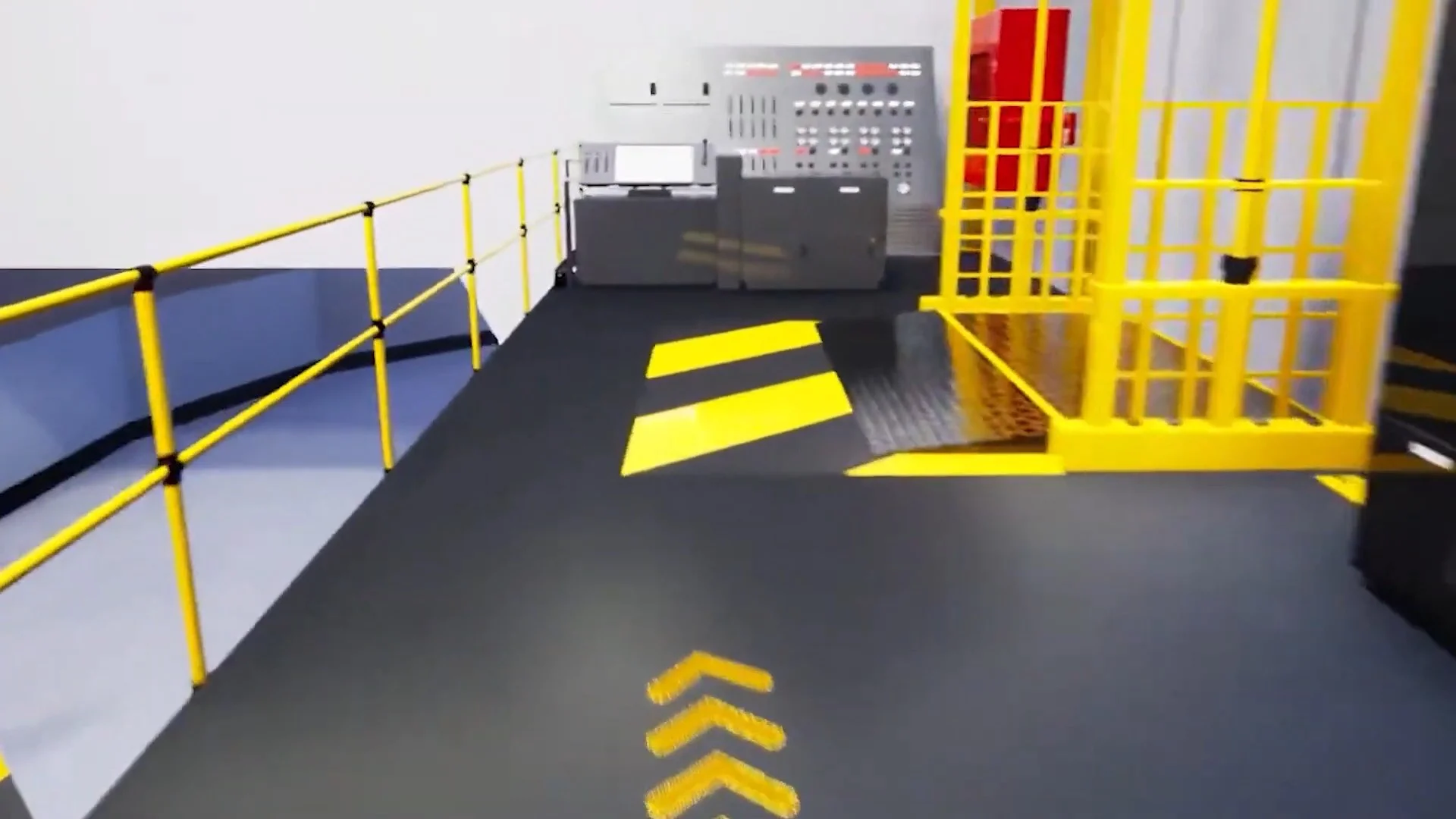
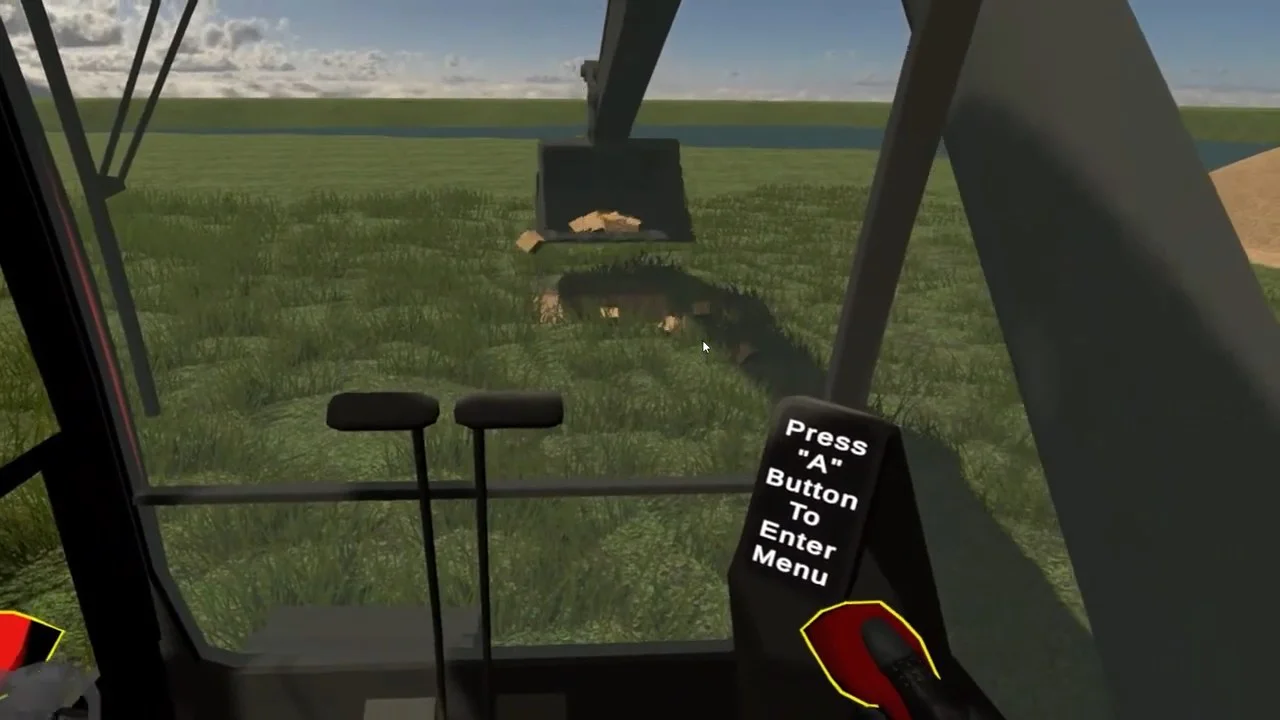
We built the simulator on professional VR equipment that fully replicates the cab and routes. The trainee practices emergency braking, actions in poor visibility, and equipment failures — without risk to the train. The system automatically records errors and highlights areas for improvement.
What changed after implementation
- The accident rate on sections where trained employees work fell by 47%.
- Assistant training time was cut from 6 months to 2.5.
- Training costs fell threefold: no fuel, equipment wear, or instructor fees for each trip are needed.
- The simulator paid for itself in 9 months — after that, the enterprise saves on every new employee.
Based on the pilot results, the client ordered additional scenarios for winter conditions and its own routes. The perpetual license requires no subscription fee, so the benefit remains for the entire service life of the system.
This case study is not an exception but a typical result. We adapt the simulator to a specific depot: locomotive types, instructions, and regulations. The client gets measurable accident reduction and a fast return on investment, not just a "modern simulator."
How does the perpetual format differ from a subscription?
A perpetual license and a subscription differ primarily in the payment principle and how they affect your budget. In a subscription model, you regularly pay for access — this is convenient for short projects, but with constant use, the amounts add up.
The perpetual format is a one-time payment for the right to use the simulator for an unlimited time, with no mandatory payments in the future.
For an enterprise, this is a direct benefit in total cost of ownership. You record expenses once and then plan training without "rental" payments.
Even if training is temporarily suspended, a subscription continues to withdraw funds, while with a perpetual license you lose nothing.
After two or three years, the amount of savings becomes obvious: cumulative subscription payments can exceed the cost of a perpetual simulator, especially when regularly training new employees and conducting recertification.
What is also important is that a perpetual license makes the budget predictable. A manager knows the full implementation cost in advance and is not dependent on tariff changes, currency fluctuations, or the supplier's marketing conditions.
This makes it possible to confidently include training in long-term plans and not return to the financing question every year.
That is why, for assistant drivers over the long term, we use the perpetual format: it gives the enterprise maximum benefit from the simulator and eliminates hidden costs in the future.
You get the full simulator as your property and can use it for as long as your training program requires.
Frequently asked questions about implementation
Before ordering a VR simulator, the same questions usually arise: how long does implementation take, what does the warranty include, and how will support work after implementation.
Let's look at typical concerns — this will make it easier for you to make a decision and plan your budget.
How long does it take to develop and launch the simulator?
A basic scenario for an assistant driver takes 6–8 weeks from the moment of brief. This includes designing exercises, creating 3D models of the cab and working scenarios, testing with your instructors, and installing the equipment.
If you need to integrate the simulator with your training system or add modes, the timeline shifts — we will give the exact range after the brief.
What guarantees do you provide for the result?
We guarantee a fixed cost at the contract stage and the transfer of all source files — you are not dependent on us after the project is completed.
For the first 2 months after launch, we refine the simulator free of charge based on feedback from your instructors, so that the scenarios fully comply with your regulations.
How does support work after launch?
We stay in touch: we update training scenarios for new regulations, add exercises, and help with equipment setup. Average response time is 1–2 business days; installation issues are resolved remotely or with an on-site visit.
Support is covered by a separate agreement, but the first 2 months after launch are included in the price.
What do you need from us to get started?
To start, it is enough to appoint a responsible person and provide the work regulations for assistant drivers — we will build the scenarios based on them. Our engineers visit the site to film the cab and staff actions so that the simulator replicates real conditions. After that, we handle everything: from modeling to training your instructors.
Get a cost estimate and implementation plan
We understand that the decision to develop a perpetual VR assistant driver simulator is an investment in safety, staff training speed, and the reputation of the enterprise. To help you make an informed decision without hidden costs, we offer a free consultation.
During it, we will calculate the cost of your scenario, prepare a detailed implementation plan, and show when the simulator will start paying off.
From our experience with industrial clients, we know what questions arise before launch: how to integrate the simulator into existing training programs, how to pass certification, and what equipment you will not need to buy.
That is why after you contact us, you receive not just a commercial proposal but a working plan. Here is what the estimate includes:
- Personal cost and development timeline for your training programs.
- Implementation plan: from brief to the first session on the simulator.
- Recommendations on scenarios, difficulty levels, and criteria for evaluating driver actions.
- A list of skills to be practiced: from regulations to emergency situations.
- Demonstration of capabilities using examples of solutions for the railway industry.
- Perpetual license for the entire simulator and time-unlimited updates.
- Roles for your employees: who will be the administrator, who the instructor, and how results are tracked.
To order development and get an estimate, leave a request on the website. We will contact you within one business day, clarify the details, and prepare a document with specific figures.
The consultation is not binding: you will receive an action plan even if you decide to build it with an internal team.