



Catheterization Errors Undermine Trust in the Clinic
Catheterization errors are one of the most common causes of complications in a hospital. Every failed attempt is stressful for the patient, increases the risk of infection, and places additional burden on the staff.
For the clinic, this means not only medical consequences but also direct financial losses: repeated procedures, longer treatment periods, and handling patient complaints.
The reputational damage is even more serious — a single negative review or complaint can erase years of work and reduce patient flow.
Traditional training for nurses and doctors does not always solve the problem.
Lectures and posters provide theory, while practicing on mannequins does not reproduce the complexity of real conditions: different anatomical features, non-standard patient positioning, and unexpected reactions.
As a result, first independent attempts at catheterization happen on real people — with errors and risks.
This especially applies to new staff and interns who have to learn in practice. A shortage of mentors and the fear of making a mistake slow down their adaptation, and the clinic bears hidden costs: staff time, patient anxiety, and the reputation of the department.
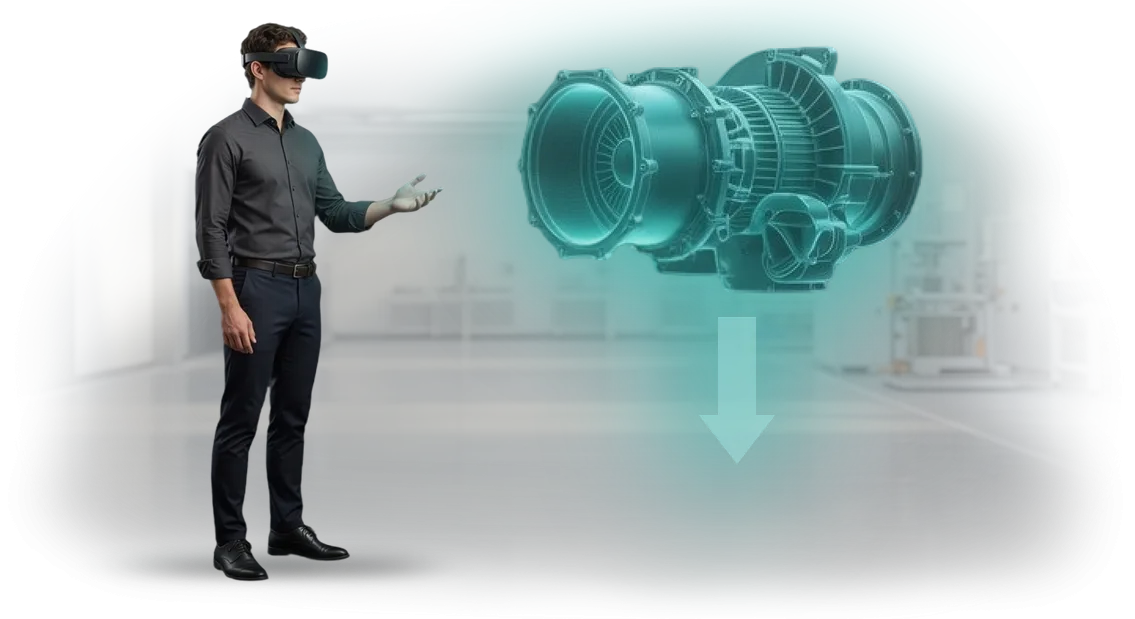
A VR trainer solves this problem without risk to patients. Training takes place in a realistic virtual environment where the healthcare professional repeatedly practices the procedure algorithm, receives prompts, and sees the consequences of mistakes.
This develops the skill to the point of automaticity before the first encounter with a patient. It reduces the rate of failed catheterizations, boosts staff confidence, and, as a result, increases patient trust in the clinic.
We develop medical VR trainers tailored to the needs of a specific hospital: from standard scenarios to rare clinical cases.
Integrating a trainer into the training program allows staff to improve their skills without spending on consumables and without causing stress to patients.
The clinic gains a tool that strengthens its reputation and protects against the risks associated with catheterization errors.
5 Key Benefits of VR Training for Staff and Business
Training catheterization on real patients always involves risk and stress: a mistake is costly both for the patient's health and for the clinic's reputation.
The traditional "watch and repeat" approach requires large amounts of consumables and mentors, and the employee has little opportunity to calmly practice complex moments.
This is exactly where immersive training changes the game. Physicians and nursing staff repeatedly practice the procedure in a virtual environment where every movement is tracked just as accurately as in a real procedure.
If there is an error, it is visible immediately; you can stop, review it, and repeat without consequences for the patient.
The first key benefit is fewer mistakes. The skill is developed to automaticity before meeting a real patient: the hand remembers the correct angle, insertion depth, and proper sequence of actions. The second is greater confidence.
When an employee has performed the procedure dozens of times on the trainer, they work more calmly in real practice, doubt less, and are less prone to panic in unusual situations.
The third benefit is resource savings. VR does not require disposable catheters, simulators, or other consumables that are currently used for every training attempt.
This significantly reduces the cost of training new employees and allows more frequent sessions without increasing the budget.
The fourth benefit is training efficiency. Instead of long lectures and passive observation, there is intense practice with instant feedback.
The training process is shorter, and the quality of knowledge retention improves because each employee works at their own pace and as many times as they need.
Finally, it enhances the reputation of the clinic or training center. A modern approach to safety and training quality sets you apart from peers, attracts strong specialists, and builds patient trust.
An investment in VR training pays off not only with team skills but also with the status of an organization that looks to the future of medicine.
VR Trainer Formats: Choose Based on Your Task
Catheterization training in VR is not a single "standard" trainer, but several formats that differ in depth and scope. Some clinics want to first get acquainted with the technology, while others want to immediately move all staff to regular training. To make it easier to choose, we have compiled the main types of VR trainers into a table.
What VR Trainer Formats for Catheterization Are Available
| Format | Who It Is For | What It Gives the Client |
|---|---|---|
| Demo session | Managers considering VR training | Quick check of realism and usability, hands-on evaluation of the technology, informed implementation decision |
| Training module | A small group of employees or a single department | Practice of a specific catheterization skill without a patient, objective feedback on every action |
| Full course | A training center or an entire clinic | Systematic staff training: theory, practice, progress monitoring, and clearance for real procedures |
A demo session is one to two hours of immersion for your team, enough to feel the sense of presence and see how the VR trainer fits into workflow.
A module is usually chosen when a specific scenario needs to be covered quickly: placing a catheter, subclavian vessel catheterization, or an emergency situation. A full course suits clinics that build regular staff training and want to document skill growth.
Scenarios can be adapted to your clinic's protocols: from basic actions to complex clinical cases. The table provides reference points, and we will select the final format at a consultation: we will take into account the number of employees, training frequency, and skill level.
In any case, you get a functional VR simulator that integrates into your training system, not a one-off demonstration.
Trainer Development Stages: From Brief to Launch
Developing a VR trainer for catheterization is a process in which the client always understands what is happening and at what stage. We work transparently: we record requirements, show interim results, and approve each stage.
This eliminates surprises and unnecessary costs, and you get a trainer that precisely meets your training objectives.
- Brief and task analysis. We collect requirements for the procedure, scenarios, and errors that need to be practiced. We determine the target skills of the staff and the conditions under which training will take place.
- Scenario prototype. We create a text scenario and interaction scheme: catheterization steps, possible actions, prompts, and error tracking. You see the trainer's logic before expensive production begins.
- Visual style approval. We choose realism, anatomy, interface, and level of detail. We make sure the appearance meets your standards and is comfortable for users.
- Development and assembly. We create models, action physics, and a scoring system. We integrate prompt and error-control scenarios so the employee immediately gets the correct reaction to their actions.
- Testing with your employees. We launch a pilot version, collect feedback, and refine usability and errors. We use proven tools to guarantee stable operation on any hardware.
- Launch and support. We install the trainer on the necessary equipment, train administrators, and hand over documentation. We stay in touch for improvements and updates.
The typical development timeline for a trainer is 6 to 12 weeks, depending on the complexity of the scenario and the number of procedures. At each stage, you receive checkpoints and see project status, so you can manage priorities and budget.
What's Included in the VR Trainer Delivery: Full Package
After the project is complete, you receive not just a "raw" program but a ready-made solution that can be immediately integrated into your training process. Below is the full package contents so you understand in advance what you are paying for and how it will work.
- Training scenario. A detailed scenario with sequence of actions, errors, and prompts — fully adapted to your methodology and standards.
- VR materials and 3D models. Highly detailed anatomical models and animated catheterization stages. Everything looks realistic so the employee gets an authentic experience.
- Methodological guide. An instructor's manual: how to integrate the trainer into a program, evaluate results, and review errors.
- Technical documentation. A clear installation and setup guide that even an unprepared employee can follow — without involving programmers.
- Introductory training webinar. We run a session for your specialists showing how to use and administer the system.
- Warranty support. Throughout the warranty period we are available: answering questions, helping with configuration, and resolving any issues.
- Content updates. We periodically refine the simulation based on your feedback: change scenarios, add rare clinical cases, and fix details.
The entire package is handed over along with source materials, so you are not dependent on us in the future. Support and updates are included in the first year's cost, so after launch the trainer continues to evolve with your tasks.
Case Study: How a Catheterization Trainer Reduced Errors by 40%
Catheterization is a procedure where the cost of an error is especially high: inaccurate catheter insertion leads to complications, repeated manipulations, and increased burden on medical staff.
Clinic and training center owners look for a way to train skills without risk to patients and without spending consumables on every mistake. Our team addressed this need with a VR trainer that simulates the real process with tactile feedback.
The Challenge and the Solution
A medical training center needed a tool for practicing catheterization for residents and practicing nurses. The trainer is built on professional equipment and replicates patient anatomy — from tissue resistance to visual control of the catheter position.
The learner sees the consequences of their actions in real time, and the instructor receives objective data on the accuracy of each movement.
Implementation Results
During the two-month pilot program, we trained 60 specialists. The average number of errors during catheter insertion decreased by 40%, and procedure time fell by a third.
Most importantly, participants continued working with the trainer after the course ended: repeated sessions accounted for half of all training time.
The center's management also appreciated the economic effect: practice consumables are no longer wasted on mistakes, and training groups complete their preparation 30% faster.
The client extended the contract and expanded the program to other procedures — for us, this is the main indicator that the trainer solves real clinic problems, not just an "interesting experiment".
How to Choose the Right Training Format?
Choosing the right VR training format for catheterization starts not with technology, but with the question of what problem the clinic is solving. If you need to quickly train new staff to perform the procedure safely, one option fits.
If the goal is to practice rare complications or prepare for accreditation, the format will be different. There is no universal solution, so we help select a program based on specific goals, budget, and staff proficiency.
Before offering a VR trainer, we analyze the specifics of the clinic together with the client: number of trainees, their baseline skills, availability of a simulation center, and technical capabilities.
At this stage, it is important to understand which scenario will deliver the greatest results. For a multidisciplinary hospital, a modular program is more effective; for a specialized department, deep immersion in one protocol is better.
The clinic's specifics also affect scenario adaptation. Every medical facility follows its own internal regulations and uses specific tools and materials.
We adapt the virtual scenario to the clinic's real protocols so that employees practice exactly the actions they perform in daily practice. This makes training not an abstract exercise, but an accurate model of real work.
It is also important to consider the training format: individual practice, group sessions with an instructor, integration with an e-learning system, or in-person assessment. The technical requirements and amount of content depend on these answers.
We explain the differences to the client and provide recommendations based on experience with implementations in clinics of various profiles.
As a result, the client gets a well-founded decision: which VR trainer to choose, how to structure training, and how to adapt the scenario to their specifics. We support the client at every stage — from brief to launch — so choosing a format is no longer a difficult task.
Frequently Asked Questions About Implementing VR Training
Before ordering VR training, almost everyone asks the same questions: Will the equipment break? How long until the first results? Can the scenario be adapted to our methodology and certification requirements? We answer the main concerns to make VR training implementation predictable and surprise-free.
What happens if a VR headset fails?
We use professional headsets designed for intensive use in training classrooms. Technical support is provided throughout the implementation period: if a device breaks, we quickly replace it, so training sessions do not stop.
How long does implementation and launch take?
A typical project takes 4 to 6 weeks from the brief. During this time, we configure scenarios to your training protocols, publish them to headsets, and brief instructors. If a specific launch date is important, we set checkpoints and meet them.
Can we adapt the scenario to our methodology and certification?
Yes. The scenario is built modularly: stages, prompts, evaluation criteria, and texts can be changed without rewriting the entire program.
Adapting to a new version of a protocol takes days, not months, so the trainer easily supports your internal standards and training requirements.
How quickly does a VR trainer pay for itself?
The main savings come from consumables and instructor time. One trainer simultaneously allows several employees to practice a skill, and typical errors are reduced by 30–40% within the first training cycle. The course becomes shorter and the results more consistent.
Will we have to buy our own headsets?
No, not if you don't want to. We offer rental of complete sets for the duration of the project or purchase through us on manufacturer terms. To get started, you only need a free space of 4×4 meters — we set up a VR classroom in one day.
Ready to Improve Procedure Accuracy? Submit a Request
Every procedure is someone's life and the reputation of your clinic. A catheterization error is expensive: time, resources, and patient trust. A VR trainer allows an employee to perfect a motion to automaticity in a safe environment — before they pick up a real instrument.
We have already helped medical centers implement virtual trainers: training becomes more visual and skill assessment more transparent.
To get a similar solution for your needs, leave a request for a consultation — we will explain how it works in your case and calculate the project.
What you get after ordering:
- Individual scenario — the trainer replicates your specific protocols and procedure steps, not an abstract learning case.
- Practice of rare and complex situations — employees train on complications that are uncommon in everyday practice.
- Objective skill assessment — the system records accuracy, speed, and sequence of actions for each employee.
- Ready-made training program — from onboarding new specialists to regular retraining of existing staff.
- Support at all stages — from design to launch and trainer maintenance.
Submit a request — we will choose the right format for your task and budget, show examples of solutions for medical institutions, and prepare a project estimate. This takes no more than one business day.