


VR customer service: turn poor service into a weapon for growth
A client who is met with indifference usually doesn't argue—they just don't return. And they share the bad experience with others, who then don't come by referral.
This is how poor service quietly eats away at revenue, even though nothing critical seems to be happening at first glance. In retail, food service, and the service sector, losing a client because of one unfriendly employee costs more than any advertising campaign.
Ordinary training and instructions do not solve the problem. An employee may know all the standards but, in a stressful situation, act out of habit: interrupting, making excuses, ignoring a complaint.
Theory does not build a skill, and training on real customers is too risky—every novice mistake hurts the company's reputation.
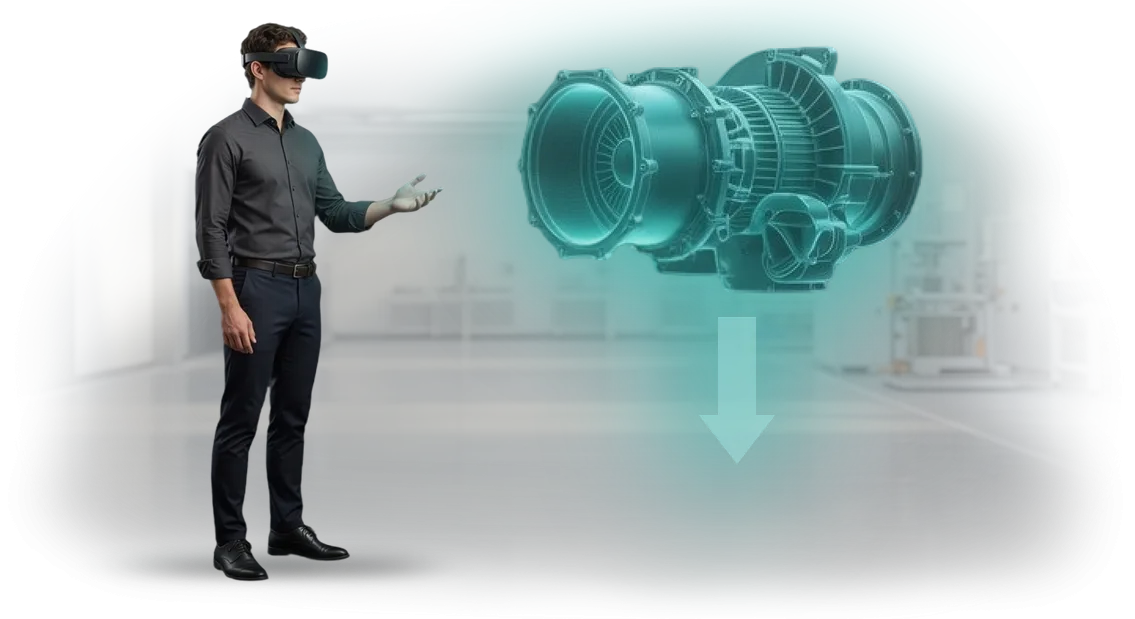
VR customer service works differently. The employee enters a realistic dialogue: an irritated guest, an unusual request, a conflict situation. They choose what to say and immediately see the interlocutor's reaction.
Complex scenarios can be played out dozens of times until the right behavior becomes a habit. And no real customer gets harmed.
Business gets a predictable level of service at every point of contact. Staff handle objections more confidently, find solutions faster, and leave a feeling of care. As a result—higher retention, more repeat visits and recommendations.
In the eyes of customers, you stand out favorably from competitors whose service still depends on an employee's mood.
We help implement VR customer service tailored to your company's tasks: we develop scenarios for your product, adapt them to your business specifics, and support the launch. You get not a trend, but a working tool that pays off through retained customers.
What results will VR training bring to your business
VR employee training is not an experiment for the sake of technology, but a tool that directly affects key business metrics.
It allows you to practice complex customer communication scenarios without risking reputation or profit, and the results are visible within the first weeks after launch: from higher conversion to fewer complaints.
Employees who go through training in a virtual environment master service standards faster and feel more confident in real dialogues. This increases their loyalty: work stops being a source of stress, and the quality of service improves.
In turn, satisfied customers return more often and recommend the company to others—this is how VR training works toward long-term revenue growth.
Employee mistakes are one of the biggest sources of losses in service lines. Virtual simulators let people make mistakes without consequences: an employee lives through a difficult situation several times until they find the right behavior model.
As a result, the number of errors in real work drops significantly, and supervisors spend less time reviewing incidents.
Onboarding newcomers in the standard format takes weeks: lectures, mentors, first mistakes "in battle." With VR training, this time is cut by several times—new employees dive into realistic scenarios from day one and, after just a few sessions, perform at the level of experienced colleagues. This reduces the load on the team and speeds up a newcomer's path to target metrics.
The main result is higher sales. When staff are trained to handle objections, present the product, and build a dialogue, the average check and conversion increase.
VR training delivers exactly the practical skills that convert into money, so the investment pays off through the increased effectiveness of every employee.
Training formats for different tasks
Companies often make the mistake of choosing one training format for everyone. Frontline staff learn faster with short scenarios, managers need dialogues with difficult clients, and leaders need decision analysis.
VR training lets you cover each task with its own format, while all statistics are collected in a single system.
We select the format based on the specific role and business task. Below are typical scenarios that already work for our clients.
| Format | For whom | What it gives the client |
|---|---|---|
| Short dialogues with a customer | Frontline staff, cashiers | Quick script practice: an employee settles into the role in 3-5 days instead of 2 weeks |
| Conflict scenario practice | Complaints department, support | Confident handling of objections: fewer escalations, customers less likely to leave without a purchase |
| Virtual sales simulations | Sales department | Higher conversion and average check by practicing upselling techniques in a safe environment |
| Group sessions with error review | Managers, mentors | Clear statistics for each employee: shows who has absorbed the material and who needs help |
Virtual simulations mimic real dialogue: the employee sees the virtual client's reaction, hears their intonation, and immediately gets an assessment of their actions.
This works better than theory because it triggers the same emotions as a live conversation—but without the risk of losing a real customer.
Every format is adapted to your scripts, product, and tone of communication. If you don't know where to start, we begin with a pilot scenario for 10-15 employees, show the result, and then decide together, based on the numbers, how to scale the solution.
How a VR training implementation project proceeds
We start with a brief where you tell us about your goals: who we are training, which skills are critical, and which mistakes cost the most. We translate this into scenarios that employees practice in virtual reality—without risk to customers or reputation.
Then we move through clear stages, each ending with a concrete result. You see what the training looks like, make changes before launch, and receive a finished program along with instructions for staff.
- Brief and audit. We capture goals, existing service scenarios, and growth areas. We identify which situations most often lead to complaints.
- Scenario approval. We show the structure of the future VR modules: dialogues, difficult guests, unusual requests. You approve the content before development.
- Prototype. We build a short version of one module so you can evaluate the logic and usability. This is the stage where details are easy to adjust.
- Full version development. Our engineers create all planned scenarios and upload them into the training system. You get a complete product, not a set of scattered demos.
- Pilot launch. We run a test session with a group of employees, collect feedback, and refine details—from wording to dialogue difficulty.
- Full launch. We install equipment, connect the required number of workstations, train administrators, and roll out the program to the whole team.
- Support and development. We answer questions, update content to match new service standards, and add scenarios when business processes change.
Each stage has clear deadlines and a responsible person on our side. You always know where the project stands and what comes next.
This approach has already helped companies reduce the time needed to bring newcomers up to speed and increase customer loyalty.
We handle all the technical work, while your managers get a transparent process and a measurable result—confident employee performance in real situations.
What is included in the VR training delivery package
When you order VR training, you get not just a program but a ready-to-use working tool for employee development.
The delivery package includes everything needed to launch training without involving other contractors or making additional investments—from scenarios to technical support.
- Training scenarios — virtual situations built on the real tasks of your business. They cover service standards, handling objections, and difficult dialogues with customers.
- VR content — ready-made virtual locations and simulators adapted to your industry and corporate standards. The employee enters an environment as close as possible to the real work process.
- Employee instructions — simple guides on using VR equipment and completing exercises. The user needs no technical preparation: the first session takes no more than a couple of minutes.
- Administrator instructions — a manual for launching training, setting up groups, and monitoring results. An administrator can manage the process without involving developers.
- HR system integration — automatic transfer of completion and achievement data to your HR system. Managers can see who has completed the course, how long it took, and which skills need additional work.
- Support and updates — assistance throughout the entire training lifecycle. We update scenarios when regulations change, answer user questions, and refine content for new company goals.
Separately, we train your team to work with the system and tailor the materials to your internal guidelines. You get a working solution within the agreed timeframe—no files you don't know what to do with, and no hidden commitments for ongoing support.
Case study: how to improve customer service and retain customers
Ordinary training does not prepare people for stress: an employee learns the script but freezes when a guest is irritated or asks an unusual question. As a result, service suffers and the customer goes to a competitor.
We close this gap with VR training—it lets employees experience the situation in full and brings their reactions to the point of automaticity.
For the hotel chain Aurora Hotels, we developed virtual scenarios: check-in, complaints, conflicts during room cleaning. New employees went through the training in their first week—without stress for real guests and without risk to the business.
Each employee practiced 20-30 difficult dialogues in a single session instead of over months on the job.
Results
Three months after the program launch, the service rating grew from 78% to 94% positive reviews. The share of repeat bookings increased by 17%—a direct revenue increase without marketing spend.
The HR department cut onboarding time in half: newcomers reach the required service level in a couple of weeks instead of three months.
Customer trust
The client believed in the approach so much that they scaled the training to all their locations. Today, more than 3,000 employees are trained under this program every year. The main result is that guests feel cared for and return, while employees get a clear system for growth.
We didn't just implement technology—we built a process that is measured in numbers. If you want the same effect for your service, start with a short description of your task—we'll show you which scenarios will deliver the maximum result.
Frequently asked questions about implementing VR training
We have gathered the typical questions managers ask before starting VR training. We answer briefly and to the point—without technical details, just about timelines, budgets, and business value.
How much does VR training implementation cost and what does the price depend on?
The cost consists of three parts: scenario development, creation of virtual situations, and equipment. At each stage, an option can be chosen to fit the budget—for example, starting with one key scenario instead of launching the full course at once.
We give the exact figure after the brief: it depends on the number of scenarios, the number of employees, and the format (a simulator for skill practice or fully immersive training).
For reference: the cost of a turnkey project for a department of 20-50 people is calculated after an audit, and it pays off through reduced training time and higher sales conversion.
How difficult is it to adapt VR to our specific needs?
We don't bring a ready-made template—every scenario is written around your regulations, your product, and real situations from practice. Our methodologists study how your employees currently work and transfer that into the virtual environment.
Adaptation does not require involvement from your team: you provide the materials, we build the scenario, and approve it with you before launch. Changes are made quickly—usually within a few days, without stopping current processes.
What are the technical risks and what if the equipment doesn't work?
We use professional equipment and a well-tuned server architecture—the client gets a stable result, not a "raw" demo. Before launch, we run test sessions at your site and adjust everything to the specific space and number of users.
After launch, we stay in touch: we support initial runs, train your administrators, and provide a warranty on the equipment. Technical issues are resolved remotely or with an on-site visit, so downtime for training is minimal.
How quickly will employees adapt to the VR format?
VR training is intuitive: the employee puts on the headset, sees familiar surroundings, and starts acting. Initial navigation takes 5-10 minutes, after which the person is fully focused on the scenario rather than the technology.
The format works even for those who have never used VR. For beginners, we include a short introductory session, and the manager receives clear progress statistics without needing to be present for every session.
How long does launch take and when will we see the first result?
We show the first scenario prototype 2-3 weeks after the brief—you see what the future training looks like and make changes before the final version. The full launch, including equipment and administrator training, takes 1.5-2 months.
The first results are visible immediately after the first sessions: employees move through the customer journey faster, make fewer mistakes in dialogues, and handle objections more confidently.
To assess the effect, we compare metrics before and after implementation—for example, handling time and the share of successful completions.
If you still have doubts, send us a description of your task, and we will prepare a cost and timeline estimate for your scenario within one business day. This is not binding, but you will get concrete numbers for your decision.Order VR training for your employees today
Lost customers cannot be brought back, and your competitor is already training their people. Every day of waiting means lost deals and a weakening service.
Start the project right now: we will take on scenario development, design, and launch, and you will get training that works toward results.
To order training, you don't need to understand technology. Just submit a request for implementation—we will conduct a short brief, show a prototype based on your material, and propose a solution that fits your budget.
What you get after ordering:
- A ready-made VR simulator with your service scenarios—employees practice difficult situations without risk.
- Flexible launch: a pilot on one department, refinement, and full implementation in stages.
- Training without taking employees away from work—up to 30 minutes a day, with a schedule that adapts to shifts.
- Measurable business progress: skill reports before and after the training, showing the dynamics of each employee.
- Fast return on investment: fewer mistakes, higher repeat sales, and a higher average check.
- Technical support and content updates after launch.
Start the project today to see business progress within a month. Submit your implementation request—we will call you back within one business day, show examples for your industry, and confirm timelines. You get not just training, but a tool that strengthens sales and service.
How to choose a training format for your business tasks?
Choosing a training format starts not with technology, but with a business task.
One client needs to onboard dozens of new employees quickly, another needs to improve service quality in an existing team, and a third needs to practice rare emergency situations without risking customers or equipment.
Each of these tasks requires its own format: sometimes short VR simulators are enough, sometimes full scenarios with dialogues and action assessment are needed.
We select the format around your situation: number of employees, frequency of scenario updates, audience experience level, and desired metrics.
For example, if 500 people need to be trained in two weeks, we design a program with automatic results checking and a simple interface so that no time is wasted on organization.
If the task is to polish communication skills with a dissatisfied customer, we focus on realistic dialogues and feedback.
An individual approach means you don't pay for unnecessary options. We analyze which training format—virtual reality, augmented reality, or a mixed scenario—actually solves your problem rather than just looking impressive.
Our engineers adapt the program to your specifics: from retail and banking to manufacturing and logistics.
The main principle is that training must change business metrics: newcomer adaptation speed, the share of successful interactions, and growth in repeat sales. That is why, at the start, we define goals and criteria together and only then choose the format. This way, you get not "training for the sake of training," but a measurable result.
Call us—and we'll advise which format suits your tasks. It's free and doesn't obligate you to anything.