



Why operating room nurse training in a clinic requires a VR approach
Training operating room nurses in a clinic traditionally relies on lectures, observing experienced colleagues, and first independent steps under supervision.
But each stage runs into limitations: the mentor is not always available, a suitable practical case may not come up at the right moment, and a mistake can cost too much. As a result, training takes months, and confidence only comes after dozens of real procedures.
Expensive and slow are not the only problems with staff training. Simulation centers require equipment, consumables, and dedicated space, which few clinics can afford.
Traditional training is hard to standardize: each mentor teaches in their own way, and objectively assessing a nurse's readiness for work is almost impossible. Hence the fear of first independent actions and inevitable mistakes at the initial stage.
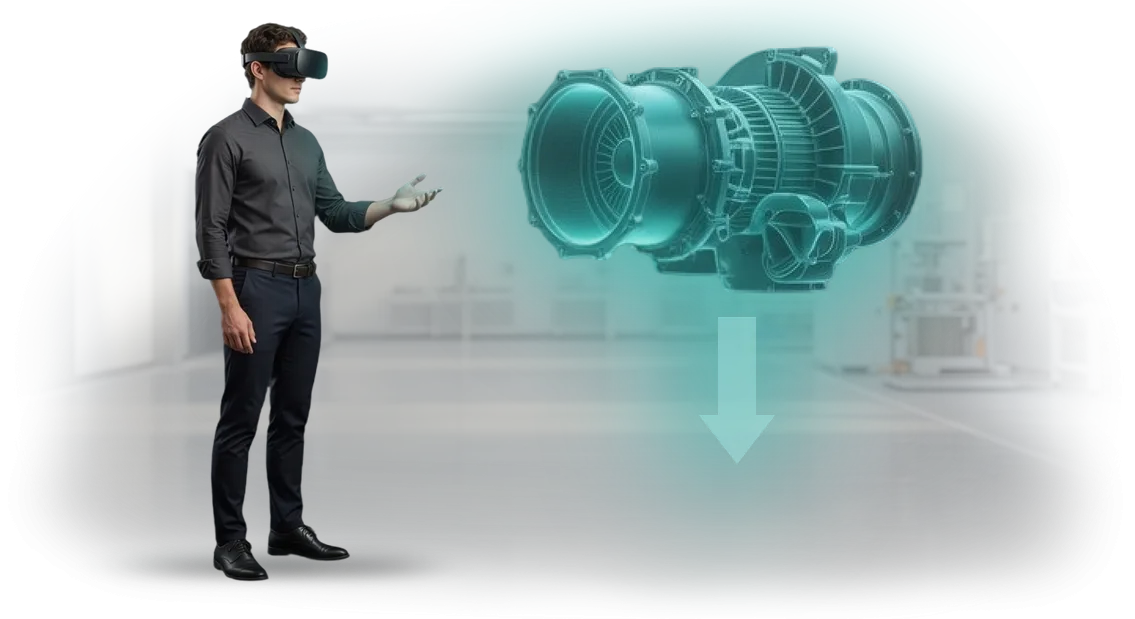
A VR medical simulator removes these limitations. The operating room nurse enters a virtual operating room where she can practice actions as many times as needed, without risk to the patient.
Scenarios range from a standard procedure to an emergency situation — and each time the system provides an objective assessment of actions. Operating room nurse training becomes a predictable and manageable process.
The effectiveness of VR training is confirmed by results: muscle memory forms faster when hands remember movements in a realistic environment. Those who train in virtual reality make fewer mistakes when transitioning to real work and feel more confident. For the clinic, this means shorter preparation timelines and reduced burden on mentors.
Therefore, when the question of training operating room nurses in a clinic arises, the VR approach is not a fashion statement but a tool that solves specific problems: making training faster, cheaper, and safer.
We help implement such simulators for your clinic's needs — from initial training to regular skill checks.
What a VR simulator changes for your clinic and staff
Nurse training in most clinics comes down to lectures and occasional practice under a mentor's supervision. This approach provides theoretical knowledge but does not build durable skills — in a stressful situation, the employee gets lost, acts hesitantly, and makes mistakes.
A VR simulator closes this gap: the nurse practices real scenarios as many times as needed — from catheter insertion to resuscitation actions — in an environment as close to the ward as possible.
From a manager's perspective, this is not just technology but a direct path to predictable quality of staff performance.
By implementing VR training, you get team upskilling without interrupting shifts, reduced risks for patients, and clear training results visible in employee confidence.
Upskilling without stress and fear of mistakes
The nurse can repeat a complex procedure until it becomes automatic, without fear of harming a real patient. Each session is analyzed automatically: the employee sees where she made an error and corrects it immediately.
As a result, only nurses who already act calmly and precisely are cleared for independent work — this is noticeable to both doctors and patients.
Reducing risks and errors in real practice
Virtual scenarios include rare but critical situations — anaphylactic shock, sudden deterioration of condition, conflict with relatives. Practiced algorithms allow the nurse not to think "what to do" but to act correctly right away. The clinic gets fewer incidents, lower insurance risks, and a more stable reputation.
Saving time and resources
VR training does not require consumables, specialized rooms, or schedule coordination — the simulator is available at any time. Training one nurse takes hours, not weeks, and does not stop the department's work.
Clinic managers who already use simulators note a noticeable shift in staff behavior:
Avicenna Medical Center — "After implementing the VR program, nurses became noticeably calmer during shifts. Over six months, the number of errors in procedures dropped threefold, and new employees reach independent work faster — previously it took twice as long."
VR simulator formats for your clinic's tasks and budget
VR training formats differ not by "hardware" but by depth of immersion and scenario complexity.
For an operating room nurse, this is the difference between practicing individual movements and a full rehearsal of a work shift — with instruments, timing, and emergency situations.
We select the format to match your task: number of employees, shift frequency, current skill level, and budget. The table below shows typical scenarios clinics work with.
| Format | For whom | What it gives the client |
|---|---|---|
| Short VR scenarios | New nurses, students, interns | Quick immersion in clinic standards, practicing basic skills without risk to patients |
| Interactive simulators of surgical stages | Current operating room nurses | Automating instrument handling and actions during standard surgical steps, reducing error rates |
| Full operating room simulator | The entire team: surgeons, nurses, anesthesiologists | Practicing coordination, response to bleeding or loss of consciousness — before it happens in reality |
| Assessment and certification module | Managers, HR, senior nurses | Objective data on each employee's skills, a training plan based on real gaps, saving mentor time |
The cost of the project depends on scope: one scenario for a pilot group or an entire library of modules for all surgical departments. During the initial consultation, we will help you choose a format that solves your problem without overpaying for unnecessary options.
How VR training implementation for operating room nurses works
Implementing VR training for operating room nurses is not buying equipment but a structured process in which you participate at every step. We go from brief to launch and support, and you always know where the project stands and what happens next.
- Brief and task audit. We capture exactly what the nurses need to learn: basic procedures, rare situations, practicing response to complications. We clarify project timelines and the criteria you will use to evaluate the result.
- Plan and scenario. Our methodologists work with your experts to write the VR lesson scenario: step sequences, typical mistakes, hints. You approve the scenario, and only then does development begin.
- Prototype and approval. We create a working mockup of the future simulator — a simplified version that makes it easy to test logic and usability. You try it, submit changes, and we move to full detail.
- VR simulator development. We build a realistic operating room: anatomically correct models, instruments, sounds, lighting conditions. Training takes place in a safe environment —a mistake will not harm the patient.
- Testing with your staff. A group of operating room nurses goes through the training, and we see where difficulties arise. Based on the results, we make final refinements to the scenario and controls.
- Launch and integration into training. We set up the VR classroom, train administrators, and integrate the simulator into the upskilling program. You get a ready-made tool, not just a set of hardware.
- Support and evolution. We track results, update content to new standards, and add scenarios on request. The training keeps working and evolving with you.
"The launch went more smoothly than we expected: we did not have to change our usual class schedule, and the nurses mastered the VR simulator without any special preparation." Head of the training center, multidisciplinary clinic
What is included in the VR simulator delivery package
The full VR simulator delivery package covers everything needed to launch operating room nurse training: from the methodological foundation to technical support at every stage.
You get a complete solution, not a "raw" program that still needs to be adapted and implemented.
Here is exactly what is included in the delivery and how it works in practice.
- Methodological materials — lesson scenarios, instructor instructions, and assessment criteria adapted to your internal regulations. A methodologist explains how to integrate VR sessions into your existing training program so employees quickly move from simulation to real actions.
- Training modules — a library of scenarios covering key skills: from instrument preparation to response in emergency situations. Each module addresses typical mistakes and allows repeating actions until a confident result is achieved without risk to the patient.
- Customization to your process — scenarios tailored to your protocols, equipment, and step sequences. Training mirrors real work, so employees do not have to relearn when moving from the simulator to practice.
- Training administrator console — employee accounts, course assignments, progress tracking, and ready-made reports for management. At any moment you can see which nurses have completed the training, how many attempts were needed, and which skills require additional practice.
- Technical support and maintenance — methodologist consultations and technical assistance throughout the entire period of use. A specialist is available in your usual messenger, responds within the working day, and helps update scenarios when your regulations change.
- Equipment setup and launch — we select VR headsets, configure them for your space, and verify everything works before the first session. Responsibility for the technical side rests with us, not your staff.
Thus, the delivery package covers all stages of implementation: methodology, content, management, support. All your team has to do is set a start date and invite the nurses to training.
Case study: how VR training improved staff accuracy
In a large multidisciplinary clinic, operating room nurses underwent standard training: lectures, observing surgeries, and rare practice in the real operating room.
Mentors physically could not devote time to everyone — skills were practiced on mannequins, but behavior in emergency situations remained the weak link. This system created a gap between theory and practice, and first independent shifts became an exam for newcomers. It led to delays during surgeries and extra stress for staff.
We proposed replacing part of the traditional sessions with VR training. In the virtual operating room, nurses practice action sequences across different scenarios — from a planned surgery to emergency bleeding control.
Every action is recorded, errors are visible immediately rather than after reviewing notes. This lets the mentor focus on complex cases instead of routine. Training happens without risk to the patient and at a comfortable pace.
After three months, accuracy improved: the number of technical errors during skill practice dropped by 38%, and preparation time for independent work was cut almost in half. Certification passed on the first attempt by 96% of nurses, up from 71% previously. The clinic continued the partnership and added VR modules for intensive care specialists.
"We used to rely on the experience of senior colleagues, but now everyone has their own safe practice. Nurses became more confident, and algorithm accuracy is now almost one hundred percent," notes the head of the training center at MedSphere Clinic.
This case study is one of many: we develop VR training for the specific needs of a medical institution and support implementation until a stable result is achieved.
Tell us about your situation — we will find a solution that pays off through fewer errors and faster staff preparation.
How to choose a VR simulator for a specific clinic?
Choosing a VR simulator for operating room nurse training is not buying a "box" but a decision that must fit into your staff development system.
Many clinics focus on flashy demos and the number of scenarios, so the main selection criterion is whether the program matches your internal protocols and real staff actions.
What should you look for when choosing a vendor? First, the ability to adapt scenarios to a specific clinic: operating room setup, accepted algorithms, department specifics.
Second, realism and pedagogical quality — the simulator should teach the correct sequence of actions and hands-on work, not just "show a picture." Third, ease of use for the nurses themselves: the system should launch without a technical specialist.
Separately, evaluate how the vendor supports implementation: whether they train staff, help integrate VR into the work schedule, collect feedback, and update content. These factors determine whether the simulator becomes a working tool or remains an expensive display. If a vendor is unwilling to discuss changes for your needs, that is a reason for caution.
The most reliable way to avoid overpaying and get the right format is a pilot project. In 1–2 months you test the simulator on a small group of operating room nurses, see the error trend and skill acquisition speed, and then make an informed decision about scaling. A good vendor will offer this format and help define evaluation metrics.
That is exactly how we work: first we get to know your clinic, select a scenario for your protocols, launch a pilot, and show results in numbers. Your operating room nurses get safe practice without risk to patients, and you get an objective picture of training effectiveness. This way you choose not a polished presentation but a tool that actually works.
Frequently asked questions about VR training for chief physicians and managers
The main questions we hear from chief physicians and managers concern not VR itself but its price, timelines, and impact on operations. Here are answers to these concerns — from a practical, not technical, standpoint.
Cost: what makes up the budget for a VR simulator?
The price depends on the number and complexity of scenarios — you can start with one and expand gradually. We fix the scope in advance so you can see what you are paying for and what you get at each stage.
Timelines: will we disrupt the training process?
The project runs in parallel with the clinic's operations: nurses do not need to take time off for training. A standard simulator is created in a few weeks; a fully custom one in 2–3 months.
Complexity: will nurses handle the technology?
No deep preparation is needed — put on the headset and the system will guide you through the next steps. The briefing takes minimal time, and skill practice happens in a safe virtual environment.
Safety: will this affect patients?
A VR simulator eliminates risk to real people: mistakes stay only inside the simulation. Hygiene is ensured with individual replaceable face pads and simple equipment cleaning.
Leave a request — we will send a preliminary plan and estimate for your scenario within the working day.Start with a pilot project in your clinic
Every minute of an operating room nurse training on a real patient is a risk that can be eliminated. A pilot project lets you test the VR simulator on your own premises without major investment: you see the results with your staff, and we adapt scenarios to your protocols.
After contacting us, you receive:
- Consultation: we analyze your task and select a format for your budget and timeline.
- VR scenario demo: we show what the training looks like, on real equipment or remotely.
- Pilot plan: we outline stages, metrics, and launch schedule.
- Adaptation to your standards: we add your algorithms, checklists, and action protocols.
- Pilot group launch: we train the first operating room nurses and collect feedback.
- Results report: you see how skill speed and accuracy have changed.
Start with a short request — it is not binding. Together we will calculate which pilot project will benefit your clinic specifically, and launch it within a few weeks.