



Poor hairdresser training is the main reason for losing clients
Clients leave not because of price or interior — they leave because of a poor result. One unsuccessful visit erases months of advertising: the guest doesn’t return and tells 5–10 acquaintances about the bad experience.
For a beauty salon, this means a direct loss of revenue and reputation that discounts cannot restore.
Especially acute is the problem with new employees. Instead of honing skills to automaticity, hairdressers learn on live clients, and each such experiment hits your budget.
Theory, watching videos, and practicing on mannequins don’t deliver the main thing — muscle memory and confidence in real scenarios.
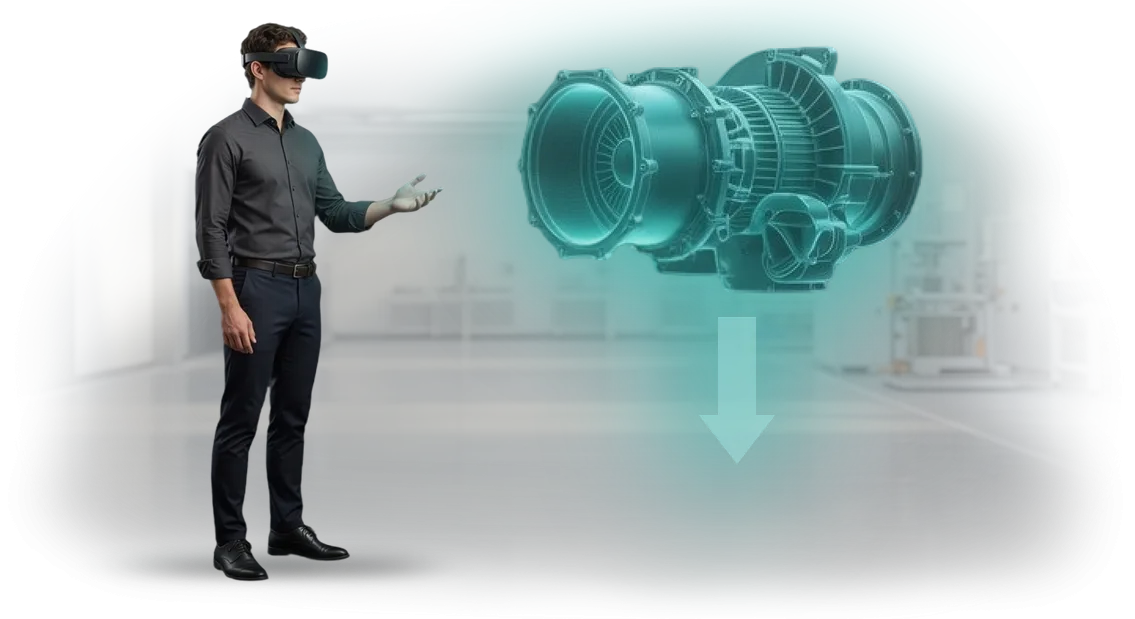
We solve this problem with VR simulators. An employee practices complex techniques, speeds, and unusual situations on a virtual model until full automaticity.
This is not a replacement for practice but a way to perfect skills before a hairdresser takes the chair in front of a live client. As a result, the salon gets predictable service quality, and clients get consistent results and a reason to return.
What a VR simulator will give your beauty salon
Every beauty salon owner faces the same problem: training new hairdressers on real clients is always a risk. A bad haircut or coloring costs reputation and money, and the newcomer loses confidence.
As a result, onboarding drags on for months, and service quality depends on who is behind the chair that day.
A VR simulator changes this process. An employee practices haircuts, styling, and coloring on virtual models in a safe environment where a mistake costs nothing. Complex techniques can be repeated dozens of times until the movement becomes automatic.
This accelerates onboarding many times over: instead of months — a few weeks, and the newcomer enters the salon floor prepared.
For business, the main thing is stable service quality. Simulator training establishes uniform standards: every hairdresser works through the same scenarios, and skill levels are easy to check before allowing access to clients.
Guests get a predictable result regardless of the shift or stylist, so they return and bring friends.
We design VR training for the specific needs of your salon: we embed your brand into the scenarios, use professional equipment and refined tools that deliver a stable picture.
We handle the technical side — you get a ready-made simulator that pays for itself through fewer mistakes and fast employee training.
VR training formats for different business tasks
Every salon owner faces the same challenge: training hairdressers quickly and well. The usual process takes weeks, and the result depends on the individual stylist — clients don’t forgive mistakes: a bad haircut or coloring means losing the guest and reputation.
A VR simulator removes this risk: an employee hones skills without consuming materials and without risking real clients.
The training format is selected according to the salon’s task. A short onboarding is enough for a beginner; an experienced stylist needs to practice complex techniques. Below — how different VR formats address specific business tasks.
| Format | Who it’s for | What it gives your business |
|---|---|---|
| Basic onboarding | New employees | Fast entry into the work rhythm without constant supervision from a mentor |
| Haircut trainer | All-round hairdressers | Practicing techniques without material costs or risk to clients |
| Complex hairstyles | Stylists taking advanced training | Mastering rare techniques, increasing the average check through new services |
| Skills assessment | Director, manager | Clear progress criteria and a basis for bonuses and promotions |
We work with professional VR equipment, so the visuals and controls are as close as possible to real work with tools. For a salon, this means a predictable training outcome, not an expensive experiment.
For each task, we select the format and duration — from a two-hour module to a full advanced training course. The owner gets stable service quality and employees who build the salon’s reputation from day one.
How we create a VR program for your employees: 6 steps
When choosing a contractor, you are not buying “development” but a predictable result. That’s why the process is structured so that at every step you control the progress and understand what’s happening with timelines and budget. Below are six stages we go through together with you.
-
Brief and diagnostics. We start by diving into your task: what skills employees need to practice, in which situations they most often make mistakes, and how training is currently organized. Together with your experts, we define goals, success criteria, and constraints.
The result is a document with a clear technical specification, timeline, and budget that you approve.
-
Scenario development. We turn goals into specific work situations that an employee encounters. We use the experience of your best specialists to make the training as close to reality as possible.
You see the scenario before development begins and can make changes — this prevents misunderstandings at later stages.
-
Concept and design approval. We show how the virtual space will look, what actions the user takes, and how feedback works. You approve the visual style and logic — after that, key decisions are not changed without your knowledge. This approach saves time and nerves for both sides.
-
Program development. Our specialists build the VR simulator according to the approved scenario and design. You receive regular progress reports and intermediate demo versions.
This lets you see the result in action and adjust details without delay, without waiting for the final delivery.
-
Pilot testing. Before launch, the program is tested by real users — your employees. We collect feedback, measure how convenient and clear the simulator is to use, and make final adjustments. After that, the product is ready for full-scale use.
-
Launch and support. We hand over the finished program, train your administrators, and help integrate it into the training system. We provide support and update scenarios and content when business processes change. You’re never left alone with the product — we are with you at every stage of its life.
What is included in the VR training delivery for a salon
By ordering VR training for hairdressers, you get not just a program but a ready-to-use working tool that can be launched in the salon from day one.
We put together a complete package: from interactive scenarios to a management system and technical support — so you don’t have to refine anything yourself.
What is included in the delivery package
- Interactive VR scenarios — practice real situations: from classic haircuts to complex coloring and working with demanding clients. Each scenario is close to real salon practice.
- Tasks and result assessment — the system records the employee’s actions, checks the correctness of techniques, and provides clear feedback. You see who is ready for work and who needs more practice.
- Learning management system (LMS) — tracks each employee’s progress, reminds about repeat training, and generates reports for management. Everything in one window, without extra spreadsheets.
- Staff instructions — short guides on equipment setup, starting sessions, and typical situations. Employees will quickly figure it out even without technical experience.
- Updates and support — we regularly expand the scenario library and help adapt the program to your salon’s new services. We are available during working hours for any questions.
Such a package covers the entire cycle: from a beginner’s first training session to qualification control for working stylists. You get a predictable result — employees reach the required level faster and bring more revenue to the salon.
Case study: how VR training shortened the onboarding of newcomers in a salon
The salon chain BeautyLab faced a typical market problem: every new hairdresser needed about a month of mentor supervision before working independently. This slowed the opening of new branches and consumed the time of experienced stylists.
We suggested replacing part of the live training with a VR scenario: practicing haircuts on virtual models, complex client requests, and unusual situations. The result was noticeable with the very first intake — the newcomers’ onboarding period dropped from four weeks to two.
Newcomers got into the salon’s rhythm faster, and mentors were able to return to working with existing clients.
What changed
- Newcomer onboarding: 4 weeks → 2 weeks.
- The load on mentors almost halved — no more need to repeat the same instructions.
- The number of mistakes in the first months of work decreased: virtual practice provides a safe foundation before contact with a real client.
Why it worked
The simulator is built on scenarios from the salon chain itself: real hair types, real guest requests, service standards. A newcomer doesn’t just watch videos — he makes decisions in conditions close to an actual work shift. In one VR session, he experiences more situations than during a whole day of observing a stylist.
The case showed that after implementation, the chain included the simulator in its standard onboarding program and came back for expansion — adding scenarios for administrators and colorists. VR training pays off not as a one-time promotion but as a systematic team management tool.
Answering your doubts: is VR training safe for business?
Salon and training center managers often put off VR training because of doubts: it’s expensive, complicated, unclear how to implement. That’s natural — any new solution requires change.
But VR simulators have already become a working tool in dozens of companies, and below we address the main fears point by point.
Is VR training expensive?
The initial investment is comparable to the cost of a couple of courses for an employee, but it works for years. You save on materials and mentors’ time. Mistakes that cost more — damaged hair, dissatisfied clients — become rarer. We’ll calculate the economics for your team before you start.
Is it hard to implement? Won’t employees struggle?
The simulator is put on in a minute and the interface is intuitive. We implement it without stopping work — training happens between clients. Most stylists master the program within one day. We support the launch at every stage.
It’s unclear how to measure results?
You see analytics: how many practice sessions an employee completed, which techniques are harder, where mistakes repeat. This lets you adjust the program for each stylist and makes the result transparent — no guesswork.
Is it safe for health?
We use certified equipment and recommend a safe session duration. VR does not replace practice; it helps you master technique until it becomes automatic. The scenarios take the profession’s specifics into account, and the strain on vision is minimal.
We have been creating VR training for hairdressers for more than 10 years. During this time, dozens of salons have increased the speed of stylist training and service quality. Come for a consultation — we’ll show you what it looks like in practice.Order a VR simulator for your hairdressers and get results
We take on the entire path from idea to working scenario — so you get a tool, not a demo version. Immediately after ordering, you’ll have a complete package for launching training.
Here’s what this package includes:
- A ready-made VR simulator adapted to your salon’s standards: haircutting, coloring, styling techniques, and work with clients.
- Clear instructions for administrators and staff — how to integrate VR sessions into the schedule without disrupting salon floor operations.
- Administrator training: session management, tracking student progress, and setting up repeat training.
- Team motivation materials: short guides and videos so hairdressers adopt the new format faster.
- Content updates — when techniques or internal standards change, we expand the program without an additional fee.
- Result guarantee: the contract states that the simulator will work in your conditions and match the declared scenarios.
Within 2–3 weeks after the start, you will have a fully ready training system. Hairdressers practice skills without risking real clients, administrators see statistics, and you get predictable service quality. We stay in touch after launch: we answer questions and help with fine-tuning and program updates.
How to choose the right VR format for your salon’s needs?
Let’s start with the main point: the right VR format is defined not by novelty but by the task it needs to solve in your salon. If the goal is to quickly adapt a new stylist to the salon’s standards, a short scenario simulating the workplace and first client visits will work.
For working hairdressers who need to refine a complex technique or master a new service, targeted 10–15 minute VR exercises are effective.
And if you need to level up the service quality of the whole team, it’s worth choosing a full course of several modules, including practicing client communication and unusual situations.
Our job is to help you avoid drowning in choices. We start with a business audit: which skills currently have the biggest impact on client loyalty and the average check, where mistakes happen most often, and how long it takes to bring a stylist to a confident level.
Based on that, we propose a specific format and the required scope of work — from a single module to a systematic program.
This approach saves budget and time: you don’t pay for unnecessary modules and instead get a VR simulator that directly meets your need. If it becomes clear after launch that you need to expand the scope, the scenarios can easily be supplemented with new exercises. Choosing a format is not a one-time decision but a flexible route we walk together with you.