

VR Training for Rescuers: How to Prepare a Team Without Risk to Life
Every day, a rescuer makes decisions that affect other people's lives. Traditional briefings and lectures provide theory but do not build lasting skills: in a real emergency, what matters is not memory but a reaction honed to automaticity.
Full-scale exercises are often too expensive and dangerous, and a beginner's mistake can cost too much.
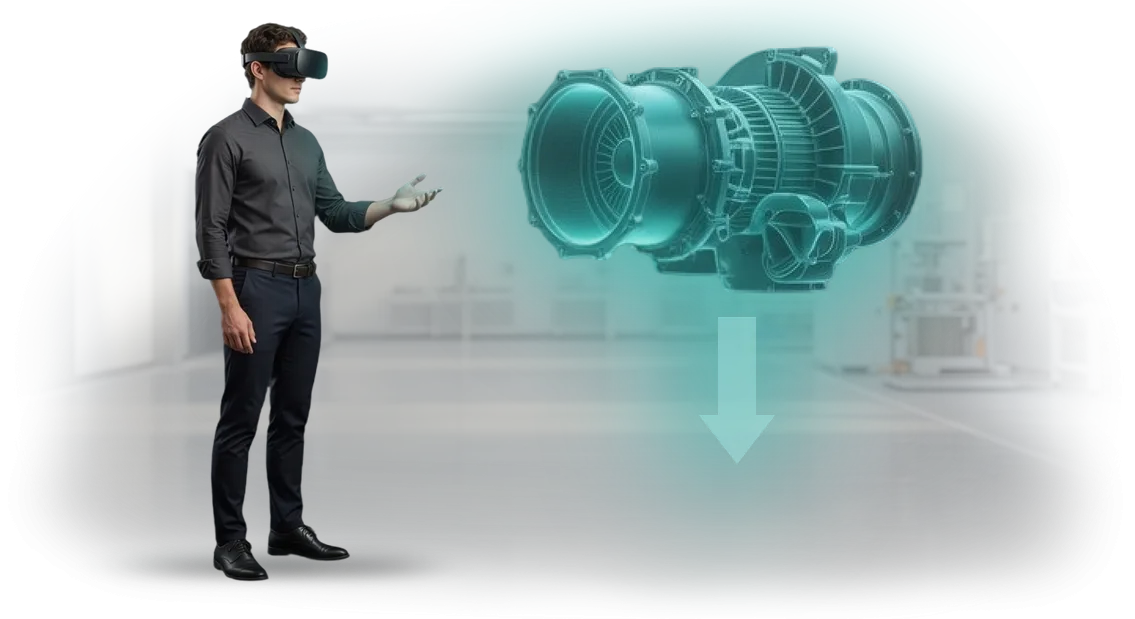
VR training for rescuers closes that gap. The virtual simulator immerses employees in realistic environments — from a burning building to a highway accident — and lets them act as they would in real life.
At the same time, any mistake stays in the simulation and becomes a lesson, not a tragedy. An employee can repeat the scenario dozens of times until actions become an algorithm.
For a manager, this means predictable staff training without risk to people or property. You can create rare and dangerous situations as many times as needed and assess each team member's readiness. You get an objective picture: who already acts with confidence and who needs additional practice.
VR training for rescuers also saves money. No need to rent sites, bring in equipment, or distract experienced mentors from their work. The virtual simulator is available at any time, and the program is tailored to your regulations and typical scenarios.
Training becomes systematic: from individual skill practice to coordinated actions of an entire unit.
We have been helping companies and agencies build such programs for several years. We help design scenarios, select equipment, and launch VR training that genuinely improves employee readiness. Tell us about your task — we will show how it will work specifically for you.
What VR Training Changes: Reaction Speed, Coordination, and Confidence
Traditional rescuer training runs into hard limits: real exercises are expensive, rare, and not always safe. A beginner often first encounters a truly dangerous environment during an actual response.
A VR simulator removes that barrier — it allows repeated practice of the most complex scenarios in a completely safe environment, with every step recorded and analyzed.
The technology delivers measurable results, not just "feels realistic." Skills improve faster through concentrated practice: in one month, you can run more scenarios than in a year at a training ground.
Newcomer onboarding shrinks from several months to a couple of weeks — they step into the role before their first real call.
For a manager, this is also an objective staff assessment: the system itself shows who makes the right decisions under stress and who needs additional training.
Workplace safety deserves a special mention. Rescuers train in conditions as close to reality as possible, but without threat to life or health.
Team training in a shared virtual space drills coordinated action — afterward, the group operates as a single mechanism rather than a collection of individuals.
Here is how a training center director assesses it:
"Previously, we ran a few scenarios a year. With the VR simulator — dozens per month, with a full debrief of every action. You can see who thinks fast, who hesitates, who coordinates the group. It is a different level of training — and a different level of responsibility."
We implement these simulators turnkey: from scenario to analysis of training results. Employees quickly learn the controls, and you get a system that pays off through reduced injuries and increased real readiness of the team for any situation.
VR/AR Program Formats for Company Objectives
Classic rescuer training runs into two constraints: real exercises are too expensive and risky, and video lectures do not provide the needed engagement. That is why the VR training formats we implement focus on the main thing — drilling action algorithms to automaticity.
We also add on-the-job support through AR instructions when an instant prompt is needed without interrupting the process.
Depending on scale and specifics, we offer three formats.
| Format | Who it's for | What it gives the client |
|---|---|---|
| VR simulator for rescuers | Teams that need to practice response to emergency situations | Full immersion in an emergency simulation, objective assessment of each person's actions, readiness for non-standard scenarios |
| AR instructions | On-site employees and field teams | Quick access to procedures, fewer errors, ability to work without a constant mentor |
| Blended format with remote learning | Branch offices and regional teams | Unified knowledge standard, savings on travel, easy updating of training materials |
This structure covers the main scenarios: mass training, training directly on site, and fully remote deployment. We choose the format for your task rather than offering a template solution.
As a result, the company gets a measurable outcome — employees trained faster, fewer mistakes in real situations, and reduced time to full competency.
How Implementation Works: From Brief to Launch and Results Monitoring
Implementing VR training for rescuers is a transparent seven-stage process. You know in advance who is responsible for what, where your approvals are needed, and how long each step takes.
We work remotely and stay in sync with your team through online meetings and documents, so there is no need to travel.
-
Training brief. We collect information about your employees, real scenarios, and objectives: what a rescuer must practice, which errors are unacceptable in real work. We prepare the technical specification — you approve it.
-
Scenario approval. We create a text scenario for the simulator: situations, dialogue lines, checkpoints. You review it before development begins and make edits — this prevents rework.
-
Prototype. We build a first working version with key mechanics. You test it with one or two employees and see what the training looks like from the inside.
-
Full version. We add all scenes, difficulty levels, and the assessment system. We prepare instructions for instructors and administrators.
-
Pilot launch. We launch the simulator with a group of 5–10 rescuers. We collect feedback: is it easy to use, how realistic are the scenarios, is there any discomfort.
-
Training analytics. You receive a report: which tasks participants completed, where they made mistakes, and how long it took to complete. Based on the data, we adjust scenarios.
-
Full implementation. We deploy the system across all departments and connect analytics. You see each employee's progress and review the program as needed.
What Is Included in the VR Simulator Package for Team Training
You get not just equipment, but a complete kit for launching training: scenarios, methodological materials, a monitoring system, and access rights for employees. Everything is already configured and tested — the team can start training on the day of delivery.
Here is what is included in the VR simulator package for rescuer training:
- Training scenarios. Developed around your real tasks: rescue operations, evacuation, response to fire or traffic accidents. Employees enter a lifelike environment and learn to make decisions without risk.
- Methodological materials. Ready-made instructor guides and handouts for learners: how to conduct a session, what to pay attention to, how to evaluate actions. Nothing needs to be built from scratch.
- Learning management system. An admin dashboard where you can see the progress of each employee and the group as a whole: who completed the training, which skills were practiced, and where difficulties remain.
- Access rights and personal profiles. Each employee gets a separate login, training history, and personalized recommendations for topic review. Convenient for creating training schedules.
- Launch and maintenance guide. Step-by-step instructions on how to organize the first session, prepare the room, configure equipment, and update content. Any administrator can handle it.
- Startup support. We help with installation and launch, provide a short training session for responsible staff, and answer questions during the first weeks of operation.
This approach saves your time and effort. No need to find subcontractors for each element, figure out the hardware, or write manuals — everything is in one package. You get a tool that works from day one and shows the team's real level of readiness.
Case Study: How a Rescue Unit Accelerated Its Reaction After VR Training
Rescuers work in conditions where every second counts. Ordinary briefings and paper regulations do not provide the level of automaticity needed in a real emergency: under stress, people act the way they are used to, not the way they studied.
We encountered this in a project for a rescue unit when they came to us with a request to reduce reaction time and the number of errors during rubble clearance.
How the work was structured
We developed a VR simulator that immerses rescuers in scenarios as close to reality as possible: smoke, limited visibility, noise, and the need to make decisions quickly. The training took place in a safe environment but with full physical engagement.
Through repeated scenarios of increasing complexity, participants developed a durable skill of acting automatically.
What the measurements showed
After a series of training sessions, we compared before-and-after metrics. Average reaction time to an emergency situation dropped by nearly a third, and the number of errors during casualty triage dropped by half.
The unit commander noted that the responders became more confident working in limited visibility and coordinated their actions faster in pairs.
"Previously, we spent hours on scenarios that actually happen once a month. With the VR simulator, we covered in two weeks the situations we never had enough training time for.
The result is visible not only in the measurements but also in how people behave on calls," said the unit commander.
The unit now uses the simulator for regular training of newcomers, while experienced rescuers run speed scenarios. This confirms that VR training is not a one-off campaign but a working tool that pays off every time it helps avoid a mistake in the field.
How to Choose a VR Training Format for the Specifics of Your Work?
There is no universal VR simulator — and that is normal. Matching a VR format to the specifics of your work starts with questions: how many employees need training, which scenarios occur on real responses, where training takes place, and what skill level the group has.
We help find a solution that addresses your actual tasks rather than simply demonstrating modern technology.
At the first stage, we analyze work processes: typical accidents, emergency situations, team interaction, and reaction-speed requirements.
Based on that, we propose simulator options — from short modules for drilling a specific skill to long scenarios with roles and team communication.
It is important that VR fits into your existing training program, strengthens it, and does not become a separate "spectacle."
We never recommend starting a large-scale deployment right away. First, we run a pilot test with a small group of rescuers: we check how realistic the scenarios are, whether the controls are comfortable, and whether the material causes fatigue or loss of concentration.
Based on the test results, we adjust difficulty, session duration, and environmental details — this reduces risks and saves resources before full launch.
An expert consultation on format selection is conducted together with your managers and instructors. We clarify the success criteria — for example, reduced response time, fewer evacuation errors, or newcomer confidence in non-standard situations.
Then we give a concrete recommendation: which VR training format suits trainees, which suits advanced training for experienced employees, and which is better postponed until working conditions change.
As a result, you get not "training for training's sake" but a working tool embedded in your training system.
Properly matching the VR format and running a mandatory pilot test help avoid typical mistakes — scenarios disconnected from reality and overloading with visual effects.
We support you at every stage so that the very first sessions deliver measurable results and pay off the investment.
Frequently Asked Questions About VR Training Implementation and Technical Support
We have been implementing VR training for companies where people's lives depend on reaction speed for more than 10 years.
That is why we know customers' typical concerns: equipment complexity, VR training implementation timelines, scenario updates, and post-launch support. We answer briefly and to the point.
Is VR equipment hard to manage?
No. The headset is mastered in one short session. Our instructors train your team, and support and technical assistance are included in the contract, so no dedicated specialist is needed.
How long until launch?
From the first meeting to a ready simulator — 2–4 weeks. We handle the preparation; all we need from you is time for interviews with experts.
Can scenarios be updated?
Yes. Scenario updates are available for the entire service life. Regulations changed — send us the materials, we make the edits, and personnel training always reflects current requirements.
Is the data secure?
Training results are stored on protected servers, and only your managers have access. Data security is ensured at all stages, and every attempt is saved in the personal dashboard for progress review.
These are just some of the typical questions. We will cover the rest below, and if you need a non-standard option — write to us, and we will suggest a solution within a day.Let's Discuss VR Training for Your Team — Leave a Request
Discussing training details is not "small talk" but the first step toward a simulator that genuinely reduces rescuer training time and improves on-site safety.
We do not sell a "box" — we tailor the format to your task: from short introductory modules to a full course with emergency scenario practice.
After your request, you will receive:
- Training consultation — we will review which skills your team needs to practice, where mistakes most often happen, and what will have the greatest impact.
- Project estimate — we will send a preliminary assessment of timelines and scope. No fine print or hidden clauses: you immediately see the stages, the result, and the cost calculated after audit.
- Demo access — we will show examples of VR training so you can evaluate image quality and scenario realism. Not virtual promises but a working solution.
- Personalized proposal — we will prepare a plan for your specifics: group size, scenario complexity, reporting requirements. Universal templates do not work here.
- Launch plan — we will lay it out step by step: what we do at each stage, what data we need from you, and when the first results will appear.
- Equipment advice — we will suggest which headsets and accessories fit your tasks if you do not yet have your own device fleet.
To get started, leave a request — we will contact you within one business day, clarify a couple of questions about your team, and prepare a proposal. You have nothing to lose except the time spent searching for the right vendor.
But after the first conversation, you will have a clear understanding of how to integrate VR training into your current program — and what it will give your employees.