



VR Training for Dentists: Reducing Errors and Improving Quality
Traditional dental training is built on lectures and practicing skills on phantoms. This approach doesn't prepare doctors for rare situations — complications, atypical anatomy, or emergencies.
Most skills come only with real practice, and every mistake at the chair costs the clinic time, nerves, and reputation.
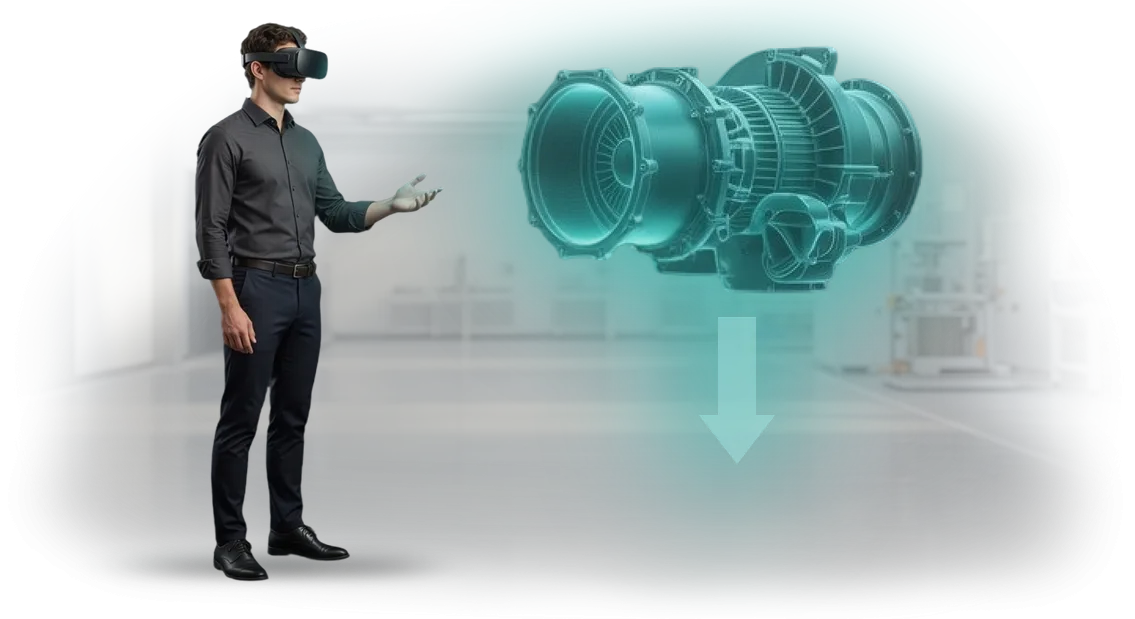
VR training for dentists moves practice into virtual clinics with no risk to the patient. The doctor repeatedly drills complex procedures until they become automatic, receiving instant feedback on every action.
This isn't simulation for the sake of technology — it's a way to accumulate hands-on experience before it's needed in real work.
Virtual reality in dentistry makes it possible to systematically reduce the number of errors: the process is recorded, analyzed, and the program shows preparation accuracy and depth of impact.
The team gets a single standard instead of "everyone has their own approach." The manager sees objective progress metrics and quickly closes gaps in specialists' skills.
VR training for dentists fits easily into the current schedule: a session takes 15–20 minutes, requires no consumables, and doesn't interrupt patient intake. Dental training becomes predictable — it's clear which skill has been mastered and which still needs attention. This has a tangible effect on treatment quality and patient loyalty.
We create VR simulators for doctors built around your treatment protocols and clinical cases. We rely on professional equipment and a supporting methodology, not technical specifications.
You get a tool that integrates into the learning process and delivers measurable results — fewer errors, more confident doctors, and more satisfied patients.
What You Get from Implementing VR Training
Implementing VR training for dentists isn't just a nod to technology — it's a systematic solution that changes the quality of preparation and daily practice. You get a tool that works toward several goals at once, from reducing risks to saving budget.
The core value is safety. Practicing complex procedures in a virtual environment eliminates the risk of errors on real patients. The doctor can train preparation, anesthesia, or emergency scenarios unlimited times until the skill becomes automatic. This directly improves practice safety and reduces the likelihood of medical errors.
The effectiveness of VR simulators is confirmed by the fact that training becomes engaging and memorable. Instead of passively listening to lectures, the doctor is immersed in an interactive environment where every action gets instant feedback.
This kind of practice builds muscle memory and clinical thinking faster than classic seminars — meaning the improvement of doctors' skills happens many times faster.
An additional benefit is reduced training costs. A virtual simulator requires no consumables, phantoms, or clinic rental for every session.
One investment in the system allows you to train employees for years without extra expenses, and the process scales easily — from beginners to experienced specialists.
Finally, VR training unifies standards: all doctors go through the same scenarios and are evaluated on a single scale, which levels the qualifications within the team and makes outcomes more predictable.
We work with professional equipment and proven tools, so implementation is fast and smooth. Contact us to select scenarios for your needs and see how VR training integrates into your clinic's operations.
VR Simulator Formats for Dentists
For a dental clinic, staff training is a direct investment in the quality of care and reputation. Mistakes by a new doctor or hesitation during a rare procedure are costly: a lost patient, correcting the consequences, tension in the team.
VR simulators solve these problems without risk to real people. The doctor can practice a complex skill repeatedly, and the clinic gets a predictable outcome — a confident specialist who follows the protocol. Below are the formats we develop for dental practices, along with the specific benefits of each.
Formats and Outcomes for the Clinic
| Format | For Whom | What It Gives the Clinic |
|---|---|---|
| Virtual procedure simulator | Dentists, orthopedists, surgeons | Practice of preparation, implantation, and endodontics techniques without material costs or patient risk |
| Interactive patient scenarios | Doctors and assistants | Diagnostic, communication, and non-standard situation skills — the doctor learns to make decisions, not just repeat movements |
| AR on-the-job prompts | All medical staff | Quick visual guidance right before a procedure: anatomy, steps, control points — fewer errors, less stress |
| Group VR sessions | Department heads, trainers | A consistent quality standard: all clinic specialists go through the same scenarios, and results are easy to evaluate |
Why It Works
A VR simulator for dentistry isn't a toy — it's a quality management tool. Training takes 30–40% less time compared to classic courses, and the doctor gets instant feedback: sees where they made a mistake and immediately repeats the action.
This is especially important for rare or complex procedures that occur only a couple of times a year in regular practice — in a virtual environment, they can be practiced every day.
We develop such solutions on professional VR equipment and proven tools, so the graphics don't lag and the scenarios accurately replicate real clinical cases.
The clinic gets not just a program but a complete learning process: we connect our simulators to your training system, add per-doctor statistics, and regularly update scenarios to reflect new methodologies.
Each format addresses its own pain point: the procedure simulator builds motor skills, patient scenarios build clinical thinking, and AR prompts build safety in daily work.
Choose what your clinic needs right now, or combine formats — we'll build a comprehensive solution for your tasks and cost calculated after audit.
How VR Training Development Works for a Clinic
Developing VR training isn't an occasional 3D production — it's a structured process with clear stages and control points.
We've accumulated experience from dozens of such projects and refined a path that typically takes 6 to 12 weeks, depending on scenario complexity and the number of modules.
At every stage, the clinic participates directly, from setting the task to accepting the finished simulator.
Below is how work on a VR simulator for a dental clinic proceeds.
-
Brief and immersion in the clinic's tasks. We analyze which skills need to be practiced, who will take the training, and which mistakes employees make most often.
We document learning objectives and success criteria — for example, reducing appointment time or reducing the number of protocol violations.
-
Scenario approval. Together with your experts — the head physician, head nurse, methodologist — we write the simulator's storyline: sequence of actions, dialogue lines, error options, and prompts.
The scenario is approved before 3D work begins, so you know exactly what you'll receive and don't pay for rework.
-
Plan and prototype. We create an interaction diagram and a basic 3D model of the operator. You can see how the training will look and make changes at an early stage — this saves time and budget. We agree on the timeline for each subsequent step.
-
Development and content creation. Based on the approved scenario, we build a full simulator: we detail the interior, instruments, and add a feedback system for the learner — prompts, action scoring, and a final report. In parallel, we prepare teaching materials for the instructor.
-
Interim demo and adjustments. At 70–80% completion, we show a working version to your team. We collect feedback from the doctors who will use the simulator and make changes before the final launch — this eliminates surprises at the last mile.
-
Launch and staff training. We install the VR system at the clinic, configure the equipment, and conduct onboarding for administrators and instructors. We help integrate the simulator into the existing training schedule: who takes the sessions, when, and how.
-
Support and development. After launch, we stay in touch: we fix potential issues, add new scenarios, and update content to reflect changes in clinical protocols. You get a living tool that works for your clinic's growth, not a static "showpiece."
What's Included in a VR Simulator Delivery
When you order a VR simulator, it's important to know in advance exactly what's included in the delivery.
We put together a complete package — from the ready-made training program to instructions for staff — so you can start sessions in the first week and not depend on external specialists.
- Ready-to-use training program. Scenarios and exercises built around your tasks, from practicing basic procedures to rare clinical cases. The course can be used immediately, without rework or hiring methodologists.
- Adaptation to your clinic. We customize simulations to your protocols, equipment, and typical situations. Employees train in the conditions of your practice, not an abstract "average dental office" — this improves the transfer of skills into real work.
- Teaching materials. Detailed instructor guides, lesson plans, and evaluation criteria. Your trainer team can run the training without special VR expertise.
- Staff training. We conduct onboarding for your employees: how to launch sessions, work with errors, and analyze results. You're never left alone with the technology.
- Technical documentation. Clear instructions for installation, setup, and maintenance, along with recommendations for organizing a VR zone in the clinic.
- Results reporting. Automatic statistics for each employee: training time, errors, progress. You can see training effectiveness and adjust the program in time.
All of this is included in the project cost and documented in the contract. You don't need to buy anything extra or hire additional contractors — just allocate staff time for training and watch their confidence grow.
How to Choose the Right Format for Your Task?
Choosing between VR and AR isn't a matter of "what's more trendy" but "what should change in the employee's work." VR fully immerses you in a virtual clinic: the dentist sees a three-dimensional jaw model, holds instruments in their hands, and practices the sequence of actions without any risk to patients.
AR adds digital prompts on top of a real object — for example, it highlights anatomical landmarks on a phantom or shows the correct instrument position during live practice.
How to choose a training format? First, define which skill we're training. If the task is practicing a rare or complex clinical case, reacting to a non-standard situation, or bringing an algorithm to automaticity — that's a VR scenario.
If you need to help an employee in a real process, give a "right now" prompt at the workplace or on a training model — AR delivers the same result at a lower production cost.
Alignment with the task also determines the investment. You don't always need full virtual immersion — you can create an AR instruction that shows steps right at the workplace.
Conversely, for a complex procedure where mistakes are costly, VR pays off through safe, repeated practice. We always honestly tell you which format will deliver the result you need — not the one that costs more.
Individual requirements also matter: how many employees need training, whether they have access to modern devices, and where the training will take place — at the clinic, at a training center, or remotely.
We match both the scenario and the technical side to these parameters — from a simple tablet-based option to full VR halls.
Choosing a format with us is easy: you describe the task, and we conduct a short expert consultation. Based on experience from dozens of projects for medical specialties, we propose a concrete option and explain why it will solve your problem. You don't need to understand the technology — just know what your dentists need to learn.
Case Study: A Clinic Cuts Training Costs Significantly
The dental clinic network «Smile-Group» faced a typical problem: training new doctors took months and required significant investment. Mentors were pulled away from patient care, and mistakes on real patients were costly — both financially and reputationally.
The head of the training department suggested trying a VR simulator for skill practice but doubted its effectiveness. We ran a pilot project and demonstrated measurable results.
The Task and the Solution
Our task was to reduce training costs without losing quality. We developed VR scenarios as close as possible to real dental practice — from diagnostics to complex procedures.
Doctors trained in a safe virtual environment where mistakes had no consequences for patients, but statistics were accumulated for review.
Results After Six Months
Cost savings on training were confirmed by audit — driven by reduced mentor time and consumable usage. The onboarding period for new employees dropped by 40%, and the number of errors during the first independent appointments fell threefold.
The doctors themselves noted that VR training relieves stress and lets them work with patients more confidently.
The effectiveness assessment showed that the investment in the VR simulator paid for itself within one quarter. The clinic continued the partnership and expanded the program to all branches. This approach proved that modern training technology isn't a toy but a working business tool.
FAQ About VR Training
Having doubts before implementing VR training is normal. A new format always raises questions: isn't it expensive, isn't it unsafe, does it integrate with what already exists?
Below are short answers to the questions clinic and training center managers most often ask before starting a project.
Is VR training safe for dentists?
Yes. The simulator creates no real risks: a mistake can be repeated and analyzed without consequences for patients. The scenarios are designed to prevent motion sickness and discomfort, and sessions last 10–15 minutes with mandatory breaks.
Over 10 years of practice, we've accumulated experience that makes training comfortable even for newcomers to virtual reality.
How much does development cost and what determines the price?
The cost is determined individually and depends on the number of scenarios, the level of detail, and the timeline. We offer stage-based payment: brief, prototype, content, and launch.
This lets you start the project with a clear budget and see results at every step — no cash flow gaps or hidden fees.
What are the implementation timelines?
First results appear within 2–3 weeks after the start: you receive a demo version of one scenario and can evaluate the approach. The complete turnkey simulator takes from 6 to 10 weeks, depending on scope.
Clear stages and control points are documented in the contract — you always know where the project stands and when it will launch.
What about post-launch support?
We don't abandon the project after delivery. Support includes content updates, technical assistance for staff, and adaptation to new clinic needs. If protocols change or new methodologies emerge, the scenarios can be quickly adjusted.
Is the solution compatible with the clinic's equipment?
We work with professional equipment and select the package to match the client's needs — from standalone headsets to solutions for multiple operatories.
You won't have to buy "something you don't understand": our specialists design the configuration, train the staff, and ensure uninterrupted operation.
If you have any other questions — leave a request, and we'll answer them personally, taking into account the specifics of your field.Order a VR Simulator for Your Clinic
Every clinic manager knows how hard it is to train doctors on new protocols without interrupting patient care. Standard courses and lectures don't provide hands-on skills, and mistakes on patients cost too much.
A VR simulator solves this problem: the doctor practices procedures in a safe environment until the action becomes automatic and they're used to working under pressure.
Ordering a turnkey development, you get not a "raw prototype" but a ready-made tool integrated into the clinic's workflows.
We take into account your protocols, equipment, and staff skill level — every project is individual and built around specific tasks, not "copied" from someone else's example.
What's included in the project:
- an individual project — scenarios and tasks aligned with your clinical protocols, from simple techniques to complex procedures;
- turnkey development — from the training scenario to installation, setup, and handover to staff;
- adaptation to your equipment — we use what the clinic already has, without unnecessary expenses;
- staff training — doctors and assistants start using the simulator immediately, without external instructors;
- support and updates — training materials never go stale, protocols evolve along with your practice;
- cost calculated after audit — a transparent estimate before work begins, with no hidden surcharges.
To order turnkey VR training, simply leave a request on the website. We'll consult you for free, clarify your tasks, show examples, and propose a solution that fits your budget and timeline.
We'll respond within one business day, prepare a cost estimate, and explain how to integrate the simulator into your clinic's training plan.