

Your Sales Representatives Are Losing Deals Due to Weak Training
Your sales representatives are losing deals not because they aren't trying hard enough. The cause is most often weak training: the employee doesn't know how to handle objections, doubts the product, and doesn't drive negotiations to closing.
Every such loss is revenue that goes to competitors and a quota that gets harder and harder to meet.
Customers leave quietly: they don't file complaints about the manager — they simply stop renewing the contract. The true reason for customer churn is almost always the same: the sales representative's lack of confidence and poor training quality.
The company spends time on courses and tests, but in a real conversation the salesperson gets lost: doesn't know what to say to "too expensive," can't show the product's value, and is afraid to ask for the decision.
We close that gap. Instead of lectures and slides — virtual simulators with real sales scenarios: a difficult customer, tough objections, price negotiations, working through doubts.
The sales representative practices skills to the point of automation in a safe environment, and you get higher conversion and repeat deals. Sales training becomes practice that directly increases profit and retains your customers.
What High-Quality VR Training Delivers to a Company
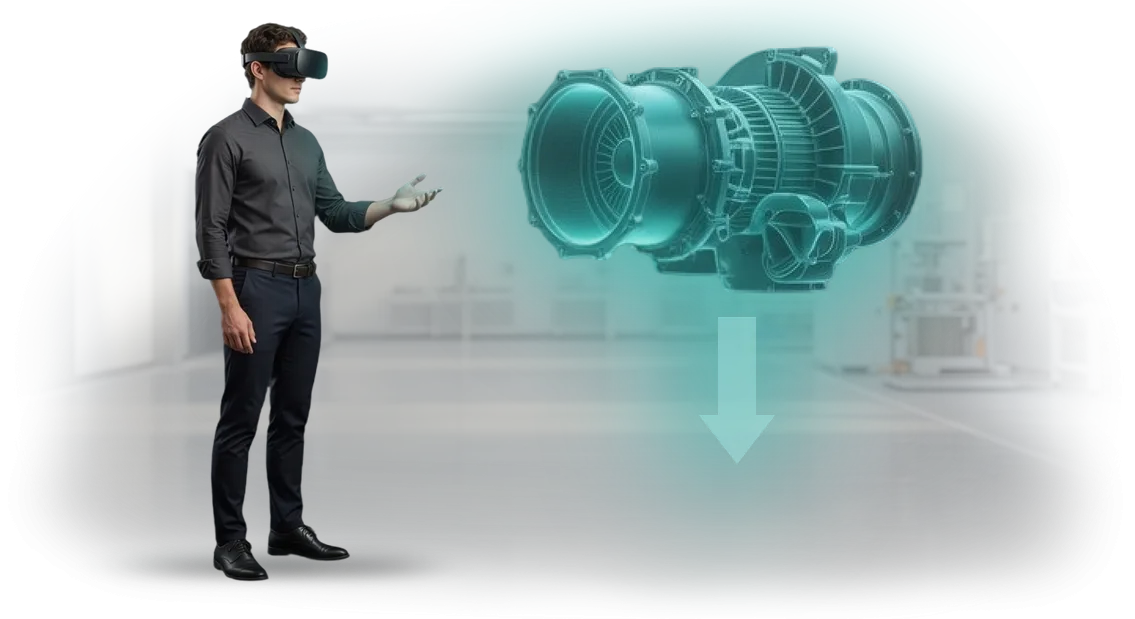
High-quality VR training for sales representatives is not a nod to technology — it's a tool that directly impacts revenue.
The employee trains on scenarios as close to real negotiations as possible: practices handling objections, learns to listen to the customer, and drives the meeting to a deal.
As a result, the conversion rate of every visit increases, and the average ticket grows thanks to confident product presentations.
The speed of onboarding for new hires is another tangible business benefit. Instead of months of mentoring and trial-and-error on real customers, a new employee practices key skills in a safe environment within the first few weeks. This shortens the time to reach target KPIs and reduces losses caused by early mistakes.
VR simulators make it possible to rehearse complex and rare situations: a conflict customer, an unconventional objection, negotiations over a major contract. The sales representative stops fearing rejections and acts calmly because they've already been through such scenarios. This gives the team confidence and consistent results in any negotiation.
An additional bonus is customer trust and brand image. A well-prepared employee speaks the buyer's language, asks the right questions, and comes across as an expert rather than a salesperson who simply memorized a script. Such behavior increases loyalty and converts customers into long-term partners.
In the end, the company gets a manageable sales training system: faster onboarding, higher conversion, a stronger employer brand. We help you build it around your products and business processes so the results are measurable within the first quarter.
VR Training Formats for Sales Representatives: Which One to Choose?
Sales representatives learn by doing, but in real negotiations a mistake costs a customer. Traditional role-playing depends on the trainer and doesn't provide a uniform standard: one person learns how to handle the objection "too expensive," another doesn't.
The VR format solves this: every employee goes through the same realistic scenarios and safely practices their skills.
The format is matched to the task and the team's skill level. Retail sales training, active sales, and B2B each need different scenarios. Below are the typical options.
Typical VR Training Formats
| VR Training Format | Who It's For | What It Delivers to the Customer |
|---|---|---|
| Negotiation simulation | Sales representatives and sales managers | Practice handling objections without the risk of losing a customer; a uniform standard of responses |
| Virtual product simulator | New employees and trainees | Fast introduction to the product and scripts; faster onboarding |
| "Difficult customer" case | Experienced team | Practice for unconventional situations: lost deals, complaints — without consequences |
| VR assessment | All employees after the course | Objective skill evaluation based on in-simulator actions |
How to choose? If you need to speed up onboarding — start with the product simulator. If sales are suffering at the objection-handling stage — you need negotiation simulation.
The formats can be combined: we'll select scenarios for your team and show examples based on real situations.
How a VR Simulator Project Unfolds
For most companies, a VR simulator is a new tool, and the clearer the creation process, the fewer risks at the start. We've structured our work so you always know what's happening at each stage, where you can step in, and what you'll get in the end.
Work Stages
- Brief and goal setting. On a call, we discuss what skills your sales representatives are missing and which mistakes most often impact sales. We lock in the goals and criteria we'll later use to evaluate the results.
- Concept and plan. We prepare a description of the future simulator: scenario, visual style, timeline, approval checkpoints. You approve the concept, and only then does development begin.
- Script and methodology. Together with your experts, we write the dialogues, objections, and customer behavior options. This isn't "just text" — it's the step-by-step logic the entire training will be built on.
- Virtual environment development. We create the 3D locations, characters, and simulator logic. We regularly show intermediate versions so you see the result rather than a "black box."
- Employee testing. We gather a focus group of future users, run through the scenario, and collect feedback. We make adjustments before the simulator is rolled out to everyone.
- Launch. We install the simulator on your devices or arrange equipment rental. We train administrators and hand over simple instructions for the team.
- Ongoing support. We analyze completion statistics, help update scenarios for new products, and answer employee questions.
What's Included in the VR Training Delivery
You get not just a standalone simulator but a complete VR training delivery package. It includes everything needed for launch and effective use: the training script, VR content, platform access, and training for your trainers.
This is not a set of scattered files — it's a working turnkey system. We handle the technical side and integration so you can focus on what matters most: growing your sales representatives' skills and increasing sales.
- Training script tailored to your objectives — real dialogues: presentation, objections, closing the deal. Practice in a realistic store environment.
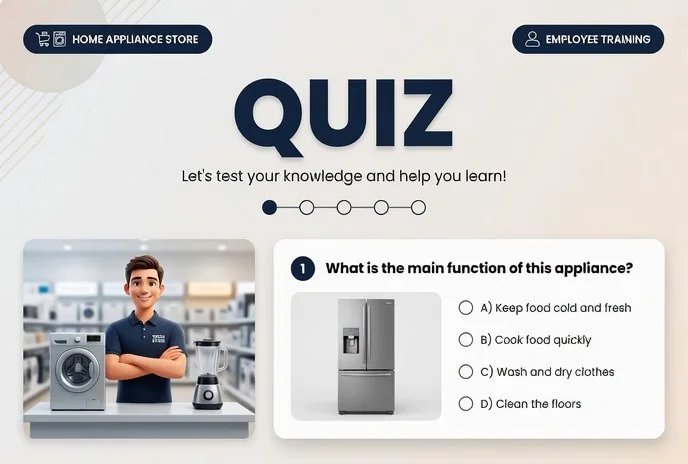
- VR simulator content — situations that react to your actions. Training doesn't turn into rote memorization.
- Access to the management platform — see who has completed the training, what mistakes they made, and how many attempts they took. This helps you identify underperformers.
- Adaptation to your products — we use your commercial offers and scripts. The simulator reflects real work.
- Training for your trainers — instruction for methodologists: how to run virtual sessions, review mistakes, and improve performance.
- Guides and regulations — simple instructions for employees and administrators without complex documentation.
- Support and updates — we help you at launch and send new versions of content and the platform.
Case Study: How We Cut Employee Onboarding Time in Half
Situation and Solution
A major food distributor, UniTrade, faced a typical pain point: new sales representatives took up to three months to reach their quota, and turnover during the probation period reached one-third.
Standard training provided theory, but in an unexpected situation a newcomer would get lost, break the script, and lose the customer.
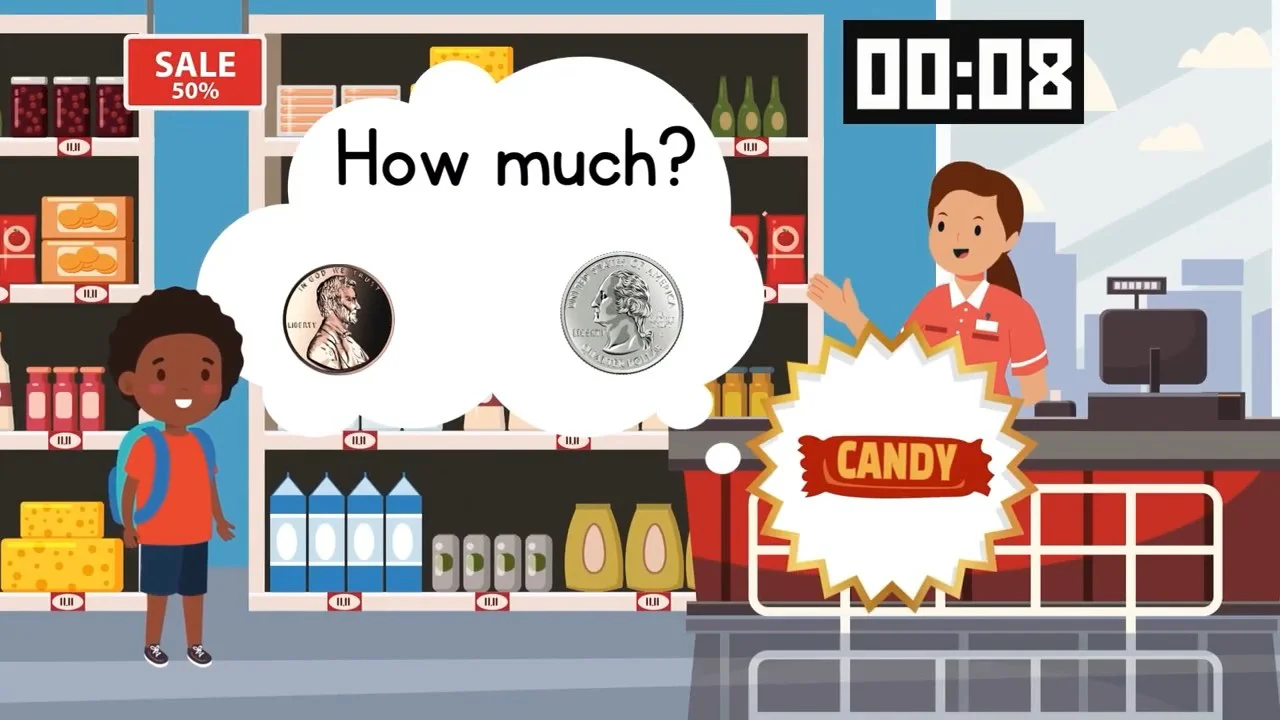
We built a VR simulator that mirrors a real day in the life of a sales representative: entering a store, talking to the director, handling objections, arranging product displays. Each scenario is not a test but an interactive simulation with feedback.
The trainee practiced in a safe environment for as long as needed and came to "live" meetings already equipped with the necessary skills.
Implementation Results
After two quarters, measurements showed: the average time to reach quota dropped from six weeks to three — a twofold reduction.
The number of errors in retail negotiations fell by 40%, and the share of trainees who successfully completed their probation period rose from 67% to 92%. Mentors no longer had to supervise five newcomers at once and focused on developing experienced employees instead.
UniTrade believed in the format so strongly that a year later it ordered VR modules for its regional branches. This became the second project: the team reused the platform, adapted scenarios to local specifics, and trained 200 people without involving trainers.
How to Choose the Right VR Training Format for Your Task?
Choosing a VR format starts not with the question "which simulator is better" but with what results you want to achieve from your sales representatives.
If salespeople are just starting in the field, they need scenarios that practice the basic stages of a sale: establishing contact, product presentation, handling typical objections.
For experienced employees, complex situations are more effective — negotiations with an unhappy customer, selling under intense competition, navigating unconventional negotiations.
This is what a solution tailored to a task looks like — not a one-size-fits-all simulator "for everyone."
The second criterion is the depth of immersion and course duration. A short introductory module of 15–20 minutes suits regular skill practice and new-hire onboarding, while multi-hour simulations with branching scenarios suit comprehensive training for key employees.
We help determine the optimal type of virtual training and don't offer anything extra: you pay only for the functionality that solves your specific business task.
Finally, it's important how the training fits into the workflow. The VR simulator can be completed right at the workplace or remotely — without taking time away from sales. The system records each participant's actions and shows which stages cause difficulties.
This lets you adjust the training program and track the progress of each individual sales representative rather than just the group average.
We have more than a dozen sales team training projects across various industries under our belt.
We don't sell a "boxed" solution — we develop a VR format tailored to your specifics: from scenario selection to configuring simulations around your products and sales scripts. Leave a request — we'll review your task and propose a suitable format within a day.
Frequently Asked Questions About VR Employee Training
Concerns before launching VR training usually center on three things: budget, timeline, and how the simulator will fit into the existing training system. We answer the key questions — honestly and based on our experience with projects for sales teams.
How long does it take to implement a VR simulator?
A basic turnkey scenario is ready in a few weeks — from goal setting to launch. Implementation doesn't require stopping operations: training runs in parallel with day-to-day tasks, and employees complete short 15–20 minute sessions. For a sales team, this means a fast start without losing sales quota.
How quickly do VR training investments pay off?
The effect is visible with the very first groups of employees: onboarding time shrinks, and the number of mistakes when handling objections and working with the product drops.
The simulator allows complex scenarios to be played out repeatedly, without the costs of renting a venue or involving a mentor. The result is that new employees reach target KPIs faster.
Is VR training difficult for salespeople to learn?
VR requires no technical skills or special preparation. The employee puts on the headset, and the system guides them through the scenario with prompts and feedback.
For most people, a single short instruction is enough, and the format feels like a game rather than an exam — which is why sales representatives get engaged faster.
How does VR training fit with current training processes?
The simulator can be used as a standalone module or as a complement to existing programs — in-person sessions, webinars, tests. Results are saved to your existing reporting system, so you won't have to change your current control and analytics processes. Implementation is gradual: you can start with one department and scale up as needed.
Order VR Training for Your Team
You already know what effective sales representative training looks like: without taking time away from sales, with practice on real objections, and with clear result evaluation.
All that's left is to take the first step — tell us about your task and get a ready-made solution tailored to your specifics.
We handle everything: we'll analyze your sales process, select scenarios, create the VR training, and help you integrate it into your program.
You don't need to understand the technology — you'll get a working tool that shortens the time it takes for a new employee to become productive and increases your team's conversion rate.
After you reach out, you'll receive:
- an individual cost and timeline estimate for your task;
- a commercial proposal with transparent terms and stages;
- expert consultation — we'll advise which format suits your sales representatives best;
- examples of our VR scenarios for sales training;
- a ready-made implementation plan: from brief to first launch;
- support at every stage and a guaranteed result.
Leave a request on our website or contact us any way you prefer — we'll respond within one business day. We'll tell you how to order VR training for your team, answer your questions, and prepare a proposal that will pay for itself through increased sales.