



Why Traditional Military Training Falls Short of Real-World Tasks?
Traditional combat training is built on lectures, standards, and field exercises. But drill-based sessions don't always keep pace with real conditions: a classroom cannot recreate the noise of battle, time pressure, or sudden changes in the situation.
As a result, a service member encounters a situation for the first time in real life — and is forced to make a decision without experience.
Field exercises cover part of the tasks, but they are expensive and carry risks: equipment, ammunition, weather conditions, and personnel safety limit the scenarios.
Many scenarios simply cannot be practiced live with the required intensity — for example, operations in confined spaces, fire evacuation, or unit coordination in smoke.
And repeating the same exercise on a training range takes a lot of time and resources, so the number of attempts per soldier is minimal.
Outdated methods do not provide objective assessment. The instructor records the result "by eye," while the details — reaction time, sequence of actions, coordination errors — are lost. Feedback arrives after the fact and doesn't always show what exactly went wrong. As a result, the skill isn't reinforced, and confidence in one's actions remains low.
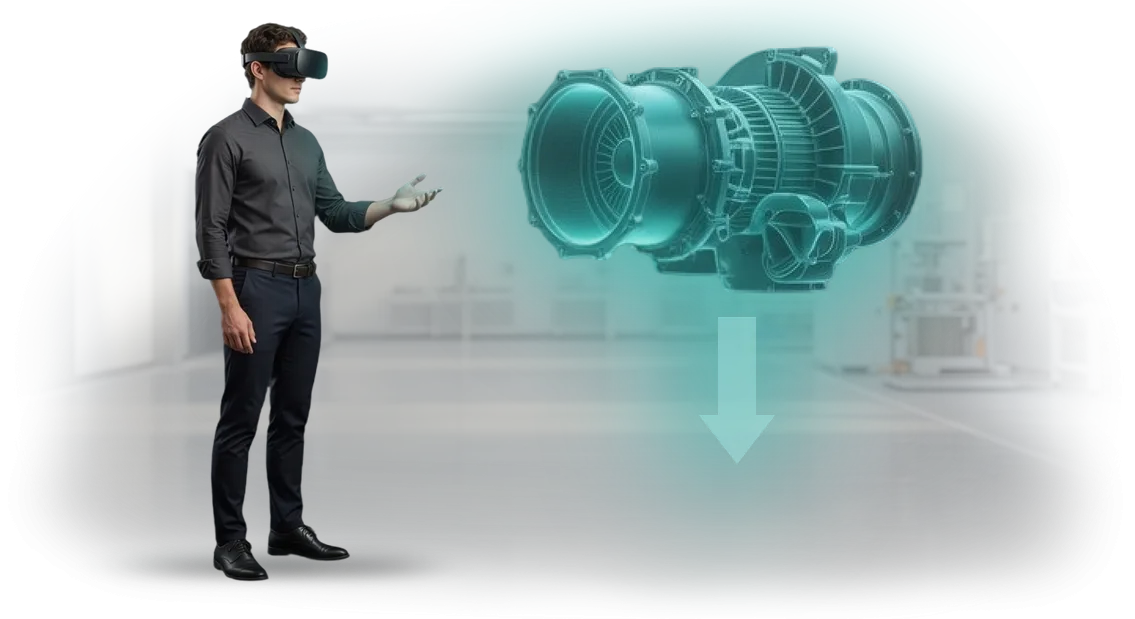
We close this gap with VR simulators and AR simulations for combat training.
A service member enters a controlled digital environment where the most complex scenarios can be safely practiced dozens of times, receive instant feedback, and increase readiness for real-world tasks.
What Benefits Does VR/AR Training Bring to Combat Readiness?
When it comes to combat readiness, the cost of a mistake is measured not in money but in lives and time. Classical training runs into limitations: training ranges, equipment, weather, safety.
VR and AR remove these limitations — a soldier gains experience in conditions as close to real as possible, but without real risks. This is not a replacement for field exercises but a way to make training denser and more effective.
The main benefit is the speed and depth of skill acquisition. In a virtual environment, a person acts with their hands, makes decisions, and reacts to a changing situation.
Through immersion and repetition, the necessary actions are reinforced faster than by reading instructions or theory. An algorithm practiced in VR carries over to real work — this is confirmed by the practice of implementing such simulators.
The second benefit is safety. Dangerous scenarios — combat operations, work with explosive objects, emergency response — can be practiced repeatedly without risk to life and health.
A mistake in the simulator becomes a learning experience, not a cause of injury or equipment damage. At the same time, realism is preserved: sound, environment, sequence of actions — everything works as in reality.
The third benefit is saving time and resources. There is no need to wait for weather, coordinate a training range, or spend fuel and ammunition for basic training. One instructor can lead several people simultaneously, and each trainee gets exactly the training they need. As a result, training takes fewer hours while combat readiness grows — that is the main outcome.
In summary, VR/AR training gives military units better material retention, lower risks, and time savings. These three factors directly affect combat readiness. If your task is to train personnel faster and better, virtual reality technology is a working tool that delivers it.
VR/AR Simulator Formats for Unit Training
Choosing a simulator format is a decision that directly affects training speed and skill quality. Some units need mobility and the ability to train in the field; others need a stable classroom for daily sessions; still others need full immersion with real movement. Let's review three basic options and show what results each one delivers.
| Format | Tasks it addresses | What it gives the unit |
|---|---|---|
| Mobile VR simulators | Practicing skills in field conditions, training without being tied to a fixed classroom | Rapid deployment anywhere, training on the range, time savings on travel |
| Stationary VR classrooms | Regular personnel training, instructor-led scenarios | Performance tracking, more repetitions per session, a single training standard |
| Full-body simulators | Group coordination, operations as part of a unit, emergency situations | Maximum immersion, real interaction between soldiers, physical load close to combat |
The key is not the equipment itself but how it is paired with the training program.
That is why we select the format for your tasks, develop scenarios, and support the launch so that the simulators deliver measurable results: faster reaction time, fewer errors in executing actions, and personnel confidence in difficult situations.
How a VR/AR Training Project Works: 6 Steps to the Result
A clear process is half the success. When it comes to military training, not only the realism of the simulator matters, but also the predictability of timelines and results.
We have broken the work into six stages: at every step, you see what is happening and make decisions instead of waiting for "surprises" at the end.
-
Brief and immersion in the task — we study your scenarios, regulations, and combat tasks that need to be practiced. We define the training goals: practicing actions, evaluating decisions, unit cohesion.
-
Scenario design — together with your instructors, we turn the training task into an interactive scenario. We lock in exercises, evaluation criteria, and difficulty levels before a single line of code is written.
-
Key-episode prototype — we build one representative fragment of the simulator: graphics, controls, response to actions. At this stage, you see the future product and adjust details without unnecessary costs.
-
Full-version development — we create all modules, integrate the evaluation system, and configure reports for the instructor. We work in iterations: every few weeks, you receive an updated version for review.
-
Testing with real users — military personnel with different experience levels test the simulator. We collect feedback and refine realism and usability so that training runs without "friction" with the technology.
-
Launch and support — we install the equipment, train the instructors, and hand over documentation. We stay in touch: we update scenarios, add exercises for new tasks, and provide technical support.
This sequence reduces risks and keeps the project within the agreed budget. You get not a "raw program" but a ready-made training tool that can be used immediately in the training process.
What Is Included in a Military VR Simulator Package
When a military unit orders a VR simulator, it is important to understand: you are getting not "hardware with a demo program" but a system ready for daily combat training.
We assemble the delivery package so that the time from unboxing to the first graded exercise is minimal, and all instructors work to unified standards.
The complete VR simulator package includes:
- Training scenarios tailored to your tasks — from practicing individual skills to squad coordination. Scenarios are written with your regulatory framework and the typical situations a soldier encounters in real work in mind.
- Methodological materials for the instructor — session regulations, evaluation criteria, typical errors, and a debriefing plan. The instructor doesn't need to figure out how to fit the simulator into the schedule: you get a ready-made training program.
- Software with performance tracking — recording of each trainee's actions, automatic error counting, completion time, and final score. This makes it possible to objectively compare the training of service members and see progress.
- Equipment and workstation — VR-adjusted headsets, protective covers, mounting system, and controllers. Nothing needs to be purchased or modified separately: everything is tested and ready for intensive use.
- Instructions and regulations — short guides for the instructor, a trainee manual, and a daily equipment check list. Even when personnel rotate, setting up a session takes only a few minutes.
- Support and scenario updates — throughout the entire operating period, we support the simulator: we update content based on your new requirements, help with changes to standards, and respond quickly to technical issues.
This set covers the full cycle: installation, instructor training, running sessions, and further development of the program. You get a result — a trained soldier — not a set of equipment that needs to be mastered from scratch.
Case Study: How a VR Simulator Doubled Military Performance
VR simulators first seem like an expensive toy — until you see the numbers. Let's take a real case: a training center needed to improve training effectiveness without increasing spending on field exercises.
We developed a VR scenario of tactical operations with combat environment simulation and conducted a series of sessions with two groups of service members.
Control measurements after the course showed: task accuracy increased by 45%, reaction speed by 30%. Overall, training effectiveness doubled. A comparison with traditional exercises is presented in the table below.
Comparison of Results
| Metric | Traditional Exercises | VR Simulator |
|---|---|---|
| Action accuracy | Baseline level | +45% |
| Reaction speed | Baseline level | +30% |
| Training effectiveness | Baseline level | Doubled |
| Scenario repeatability | Limited | Unlimited |
These results were made possible because in VR every mistake is drilled to the point of automatism, and the scenario can be run dozens of times without expending ammunition or involving additional personnel. Soldiers memorize action algorithms faster and behave more confidently in non-standard situations.
After the first phase, the center ordered an expanded course for three units — the best testament to its value.
The VR simulator pays for itself within the first series of sessions: training time is reduced, the risk of errors in real conditions drops, and commanders receive objective data on each soldier's progress.
How to Choose the Right VR/AR Training Format for Your Tasks?
Each training format solves its own task: a VR simulator fully immerses you in the environment and practices actions in conditions close to real ones, while an AR scenario overlays prompts onto a real object and helps master work with equipment without risk.
The main mistake is choosing the technology before the training goals are defined. If you need to practice a clear action algorithm under pressure, VR provides the required degree of realism.
If the task is to teach faster fault detection or correct sequence execution on real equipment, AR turns out to be more practical and cheaper to implement.
The second criterion is the specifics of the unit and the conditions in which soldiers will apply their skills. We take into account where the training takes place: in a fixed classroom, in field conditions, or on a range with limited space.
The choice of equipment, session length, and scenario depends on this. For example, for working with terrain maps and orientation, VR with a 360° field of view is more effective, while for studying equipment components, AR with step-by-step highlighting is better.
Budget and timelines are the third most important factor. A VR simulator requires more time to develop realistic graphics and equipment, while AR solutions are implemented faster and often do not require the purchase of expensive headsets.
But not every budget option covers the training task. We help select a format that matches the goal and group size: from individual practice to simultaneous training of an entire squad.
For the military, this is critical — the skill must be stable in every soldier, not just the top performers.
The final decision is always yours, but we offer not abstract options but concrete scenarios for your task: training goals, number of people in the flow, training location, and acceptable timelines.
Describe in a few words what the military personnel need to be taught — we will propose a format that delivers results without overpaying or delaying implementation.
Frequently Asked Questions About Implementing VR Training for the Military
Implementing VR training for the military usually comes down to the same questions: safety, cost, integration with the current program. Our specialists answer them every day — here are the answers to the most common ones.
How safe is VR training for military personnel?
The simulator does not replace real exercises but complements them. Actions and decisions are practiced without risk to life or equipment, and the equipment is adjusted for each trainee.
How much does VR training cost, and does it pay off?
The cost depends on the scenario and the length of the course. Compared with field exercises, VR training pays off within a few months: no ammunition or fuel is spent, and equipment does not wear out. The exact cost is calculated after the brief.
How do we integrate VR into an existing program?
Integration proceeds gradually together with your methodologists. We select modules to match your regulations and, if needed, export results into your tracking system.
What about reliability and support?
We use proven platforms — that ensures stable operation. We support the project at all times: remote support, and equipment replacement if necessary. Data remains within your security perimeter.
Still have questions? Write or call us — we will explain how VR training fits your specific military and training needs. We will send you an estimate and an implementation plan.Get a Demo of a Military VR Simulator Within a Week
For the military, it is important that training is fast, safe, and delivers measurable results. VR simulators allow actions to be practiced in conditions close to real ones without risk to personnel.
But before implementing such a solution, you need to see it working on your own task. That is why we have prepared a demo format: within a week, you get a working scenario adapted to your input, and you can evaluate its effect in practice.
What you get after submitting a request:
- A demo VR simulator scenario modeled on a typical combat task of your unit.
- A free consultation with a specialist: we will review which skills and actions can be practiced in a virtual environment.
- Recommendations on integrating VR training into your existing training program.
- An approximate deployment plan for a pilot project with timelines and required resources.
- An estimate of potential savings on field exercises, consumables, and instructor time.
The demo requires no special preparation: we set up the equipment ourselves, show the scenario, and answer the team's questions. You will see how trainees interact with the simulator, how quickly they master action algorithms, and how the instructor tracks each person's progress.
Leave a request on this page — we will contact you within one business day, agree on a convenient time for the consultation, and prepare a demo for your request. After that, you can launch a pilot project at your own base and make an informed decision about scaling.