



Training Trauma Surgeons: Fewer Errors in Complex Operations
An error in traumatology costs dearly: an incorrectly chosen screw insertion angle, implant displacement, lost time in multiple fractures — all of this is a direct risk for the patient and the clinic.
A surgeon may know the theory and have watched operations on video thousands of times, but confidence only comes after muscle memory, which is impossible to gain in a real operating room — the responsibility is too great.
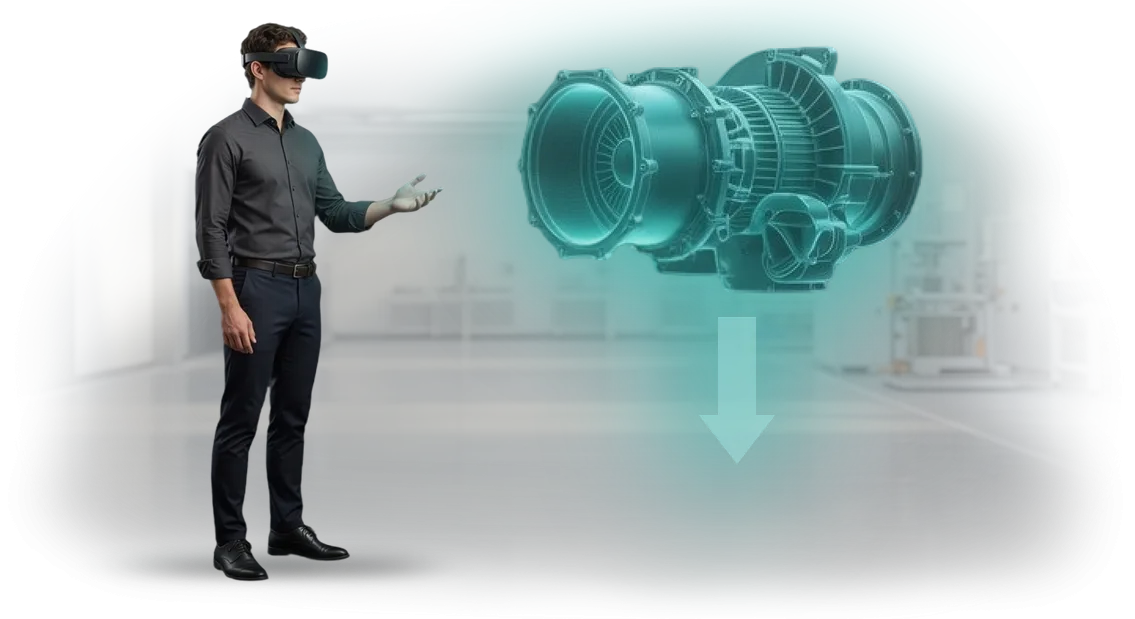
This is why VR training for trauma surgeons is becoming the standard in training centers and clinics. A virtual simulator allows the surgeon to practice a complex scenario dozens of times — before they ever pick up an instrument in a real operating room. This is not a replacement for practice, but a safe way to acquire it.
We are the team at our team. For more than 10 years, we have been developing VR training programs for medical institutions.
Our approach addresses the main pain point of traumatology: it moves the practice of complex operations from the "fear of making a mistake" zone into the zone of controlled skill.
Here is what a clinic gains from VR training for traumatologists:
- Reduced risk of medical errors. The surgeon enters a real operation already having dozens of practice runs of that type of intervention, rather than just one observed assistantship.
- A unified skill standard. All department staff go through the same scenario and act identically in critical situations — not based on personal experience, but according to a well-tuned protocol.
- Faster onboarding for beginners. A young traumatologist becomes involved in operations 2–3 times faster because in VR they do not spend time on theory but immediately train their actions.
We work on professional equipment that has long been used in medical training: the image is as close as possible to the real picture of the surgical field, and the instruments replicate the weight and response of real ones.
The surgeon does not get a "toy" experience — they get their first real movements before ever opening a patient.
our team — if in your clinic traumatologists are trained "by trial and error," that is, on rare real operations, and you see that the fear of mistakes prevents young specialists from taking on complex cases — let's discuss your scenario.
Write to us, we will send examples of programs for traumatology by email and tell you exactly what can be practiced in VR in your department.
Why VR/AR Simulators Improve the Quality of Staff Training
The quality of training for trauma surgeons directly affects treatment outcomes and the clinic's reputation. Classic lectures and seminars provide theory but do not allow practicing complex scenarios in a safe environment.
VR simulators close this gap: every staff member gets the opportunity to repeatedly rehearse rare and dangerous procedures before encountering them in real practice.
Such training captures attention and engages emotional memory, so skills are absorbed more deeply than when reading instructions. The surgeon controls the scenario themselves, sees the consequences of their decisions, and corrects mistakes immediately.
Thanks to realistic graphics and scenarios close to real work, the staff member develops confidence and muscle memory — without stress or the fear of harming a patient.
For the clinic, this means a predictable level of preparedness across the entire team. A manager can build a unified program, assess each staff member against the same standards, and understand who needs additional training.
Feedback in the simulator shows the surgeon's exact actions and helps improve weak points before the real operation.
An additional benefit is patient safety. A mistake on a virtual patient has no consequences, while memorizing the correct algorithm prevents risks in real practice.
This is especially important in traumatology, where every minute often counts and the price of an error is very high.
A modern approach to training also increases staff loyalty: surgeons see that the clinic is investing in their development and are less likely to leave for competitors. Patients also feel the difference: a clinic using the latest technologies inspires more trust.
Ultimately, VR/AR simulators become not just a learning tool, but part of a strategy for growth in quality and reputation.
VR/AR Training Formats for Trauma Surgeons: Matching the Format to the Task
The choice of training format determines what results the clinic will get: how quickly a surgeon will start acting according to protocol, how confidently they will carry a rare case to a successful outcome, how many errors will be prevented before meeting a patient. There is no universal solution — each task requires its own format.
Below are three basic scenarios we work with. They cover the main needs of traumatology: from practicing complex operations to supporting surgeons in real work.
| Format | When to use | What the surgeon and clinic get |
|---|---|---|
| Virtual reality (full immersion) | Practicing rare and critical trauma scenarios where the cost of an error is high | The surgeon builds muscle memory and a sequence of actions in a safe environment, the clinic reduces risks in real interventions |
| Mixed format (VR + theory) | Standardizing knowledge within a department or branch network | A uniform level of training for all surgeons, fast onboarding to a new protocol, clear evaluation criteria |
| Augmented reality | Mentoring, supervision of first independent steps, on-the-job prompts | The staff member gets support without a senior surgeon present, beginners get up to speed faster, errors are reduced |
The selection rule is simple. If the main goal is for the surgeon to act flawlessly in a rare, severe case, choose full immersion in virtual reality. If you need to level out the training of an entire group or branch network, choose the mixed format with theory and practice.
Augmented reality is the choice for clinics where training must happen without interrupting work: prompts and supervision help right in the process, not in a separate room.
In each of these schemes, we fine-tune the process on professional equipment and tailor the scenarios to your real trauma cases. At the start, we show a pilot module based on your scenario and together determine which format will deliver results faster.
How VR/AR Training Is Implemented in a Clinic: Stages and Timelines
Implementing VR/AR training in a clinic is a structured process, not an experiment.
We accompany you from the first brief to the moment when surgeons and traumatologists start training in a virtual environment and your team sees results in the form of well-practiced skills and fewer errors in real operations.
- Brief and immersion in the task. We study your clinical scenarios, analyze which skills need to be practiced and where difficulties most often arise. Within 1–2 days, you receive a clear proposal on format and timelines.
- Scenario design. Together with your leading specialists, we describe clinical cases, the sequence of the surgeon's actions, and evaluation criteria. The scenario is approved before development begins — you know exactly what you will get.
- Prototype of the key scene. Before full development, we show what the simulator looks and "feels" like. At this stage, you can make changes without reworking the entire program — this saves time and resources.
- Full version development. We assemble all scenarios into a single course and set up the system for evaluating the surgeon's actions and the interface. You receive intermediate versions to monitor progress.
- Pilot testing with your team. We conduct a training session with the participation of traumatologists, collect feedback, and refine details: realism of manipulations, prompts, reaction speed.
- Launch and support. We deploy the solution in the clinic, train administrators, and hand over instructions. We stay in touch: we update scenarios, add new cases, and help expand the program.
Timelines depend on the scope and complexity of the scenarios: from brief to full launch usually takes 3–8 weeks. You get a working tool with clear stages and fixed checkpoints, not endless development.
What Is Included in the Delivery of VR/AR Training for Medical Staff
When you order VR/AR training for surgeons, it's important to understand that you are getting not just a "box of equipment" but a ready-to-use working tool.
The delivery includes everything needed for the staff to start training within the first few days, while methodologists and administrators can see training results.
Here is what a standard project includes:
- Training scenarios tailored to your specifics — we develop clinical cases and action protocols based on the real situations in your department, not abstract exercises.
- Instructions for staff — clear guides for surgeons and nurses: how to start a session, how long a training session takes, how to fit it into the work schedule without disrupting shifts.
- Access to the learning management system — you assign courses to specific staff members, track progress, and see which skills have already been practiced and which need repetition.
- Materials for instructors — ready-made guides for mentors so they can conduct error reviews and integrate VR training into the existing training program.
- VR project support — technical support, content updates, and scenario refinement when treatment standards change or new methods appear.
- Administrator training — workstation setup, equipment connection, and common troubleshooting scenarios so you are not dependent on external specialists.
As a result, you get a fully ready training system: surgeons train in a safe environment, management sees progress for each staff member, and methodologists can adjust the program without involving developers.
All documents, accesses, and support come in a single package — nothing needs to be improvised or purchased additionally.
Case Study: How a Clinic Cut Staff Training Time by a Third
When the Osteon Center for Restorative Medicine contacted us, the traumatology department faced a standard challenge: new staff took a long time to get up to speed, and practicing complex procedures on mannequins took hours and required a mentor to be present.
Management was looking for a way to speed up training without losing quality — and chose the VR format.
We developed a simulator that models real clinical scenarios: from patient examination to applying a cast and working with instruments. The surgeon enters a virtual operating room where they can safely make mistakes and repeat actions until the skill becomes automatic.
Implementation took less than a month, and training began to take place right in the department — without disrupting the schedule.
The implementation results were measurable. The training time for new traumatologists was reduced by a third: what previously took three weeks now takes two.
At the same time, the number of errors in the first real consultations almost halved — the simulator drills rare cases that a trainee would not encounter in ordinary practice for a long time.
The surgeons themselves also appreciated the effectiveness of the VR simulator: after the first sessions, they asked to expand the scenarios to other areas.
This VR training case is a clear example for a clinic that wants to achieve quick results without restructuring its educational process. We did not just hand over the program — together with the team, we adapted the scenarios to their protocols and supported the launch. A repeat order for new modules confirmed that the approach works in daily practice.
How to Choose the Right VR/AR Training Format for Your Clinic?
The choice of format starts not with equipment but with the training goal.
For trauma surgeons, a VR simulator is justified when you need to practice a complex skill — such as placing a fixation device or acting in a non-standard situation — in an environment where a mistake does not cost the patient their health.
The AR format solves a different problem: it brings anatomical landmarks and control points directly into the specialist's field of view during a real procedure.
Focus on three criteria: criticality of the skill, repeatability, and measurability. If the skill is rare, dangerous, and requires multiple repetitions — choose VR. If the staff member needs "here and now" support rather than full immersion — choose augmented reality.
| Format | Suitable for | What it gives the clinic |
|---|---|---|
| VR simulator | Practicing surgical and resuscitation actions, rare scenarios | Safe practice without risk to the patient, objective assessment of actions |
| AR prompts | Supporting real procedures, monitoring standard steps | Fewer errors due to fatigue and inattention, unified work standards |
| VR+AR combination | Full cycle: first simulation, then prompts in real practice | A training system — from theory to independent work without losing quality |
Another criterion is the number of staff. If many traumatologists need regular training, it makes sense to set up a stationary VR class in the clinic. If it's about targeted training for a small group, a mobile format or short AR sessions at the workplace are sufficient.
We help you choose a format for your tasks: we analyze the current training process, show a demo, implement, and support. You get a clear solution, not "technology for the sake of technology."
Frequently Asked Questions: Is VR/AR Training Safe for Staff?
The main objection when implementing VR training for trauma surgeons is safety: how will it affect staff well-being and what happens if the equipment breaks down. These questions are legitimate, so we build the answers into every project.
The client gets a simulator that is safe for staff and a stable technical foundation — without downtime.
We address this through a well-designed session schedule: sessions last no more than 15–20 minutes, with mandatory breaks and smooth scene transitions. Professional equipment reliably withstands daily use.
our team supports the project even after launch — so you resolve the "what if?" question before it even arises.
Will eyesight be damaged or will staff get motion sickness?
Modern VR headsets are safe if the schedule is followed: short sessions, breaks, gentle scene transitions. We specifically design the scenario for traumatologists to minimize discomfort.
Before starting, we provide simple instructions, and any participant can stop a session with one click.
What if the equipment breaks down in the middle of the course?
With our support, this will not stop the training. The project includes a backup set, and a faulty device is replaced under warranty. The training schedule does not get disrupted.
What support remains after launch?
You are assigned a personal manager: they help with setup, update scenarios, and answer questions. We conduct mini-training for your own team so that an administrator can run sessions without our involvement. Support remains for the entire period of use.
Submit a Request: We Will Develop a VR/AR Simulator for Your Clinic's Tasks
We have structured our work so that you see results at every stage, rather than waiting blindly for the finish. The path from request to a working VR/AR training solution looks like this:
- Request for cost calculation — you leave your contacts, and within one business day we give you an estimate of budget and timelines.
- Development brief — you fill out a short questionnaire together with a methodologist, and we lock in the training goals and scenarios for your clinic.
- Demo prototype — we show on screen how the scenario will look based on your examples, and approve the concept.
- Simulator development for surgeons — we create the program taking into account medical specifics, equipment, and the number of staff.
- Testing with surgeons — traumatologists try the simulator, we collect feedback, and refine the details.
- Launch and support — you receive the final solution, administrator instructions, and support for the implementation period.
Typically, from brief to pilot launch takes 4–6 weeks — depending on the complexity of the scenarios and the readiness of your materials. Every stage is coordinated, so you always know where the project stands and when you will get the result.
Submit a request to order VR/AR training for your team and get a cost calculation. We will send you the development brief, and after you fill it out, we will schedule a demo — where you will see how the simulator will work in your clinic.