

Retail Store Staff Training Outcomes: Why They Fall Short of Expectations
Retail chain managers invest effort and time in staff training, but the results often fall far short of expectations. Employees complete courses and pass tests, yet within a couple of weeks they forget the material.
Sales don't grow, service standards slip, and customers notice the difference and switch to competitors.
Why does this happen? Classic lectures, briefings, and presentations don't engage staff — they only transfer information without building skills. New employees view training as a formality, see no connection to real work, and don't remember the key rules.
The information quickly fades, so it affects neither service quality nor revenue. The outcome is always the same: resources are spent, but training results remain on paper.
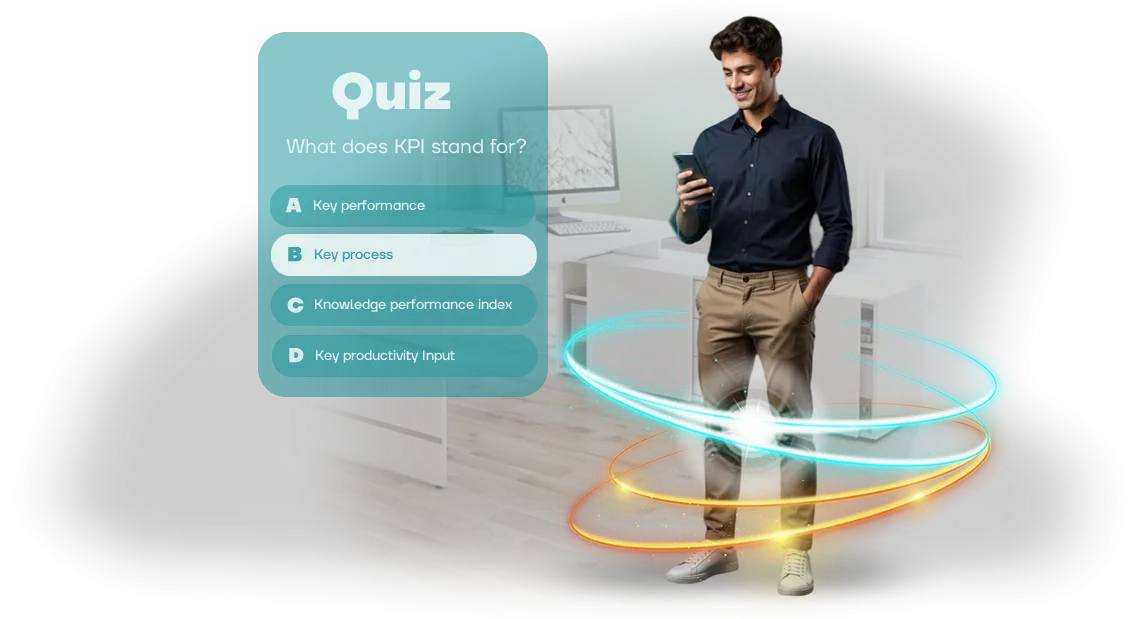
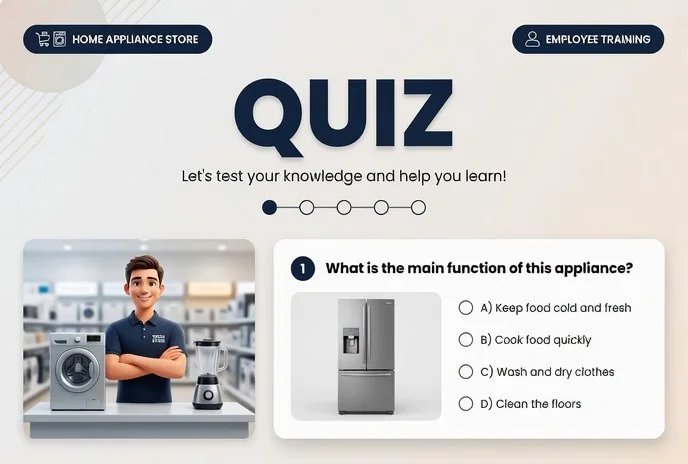
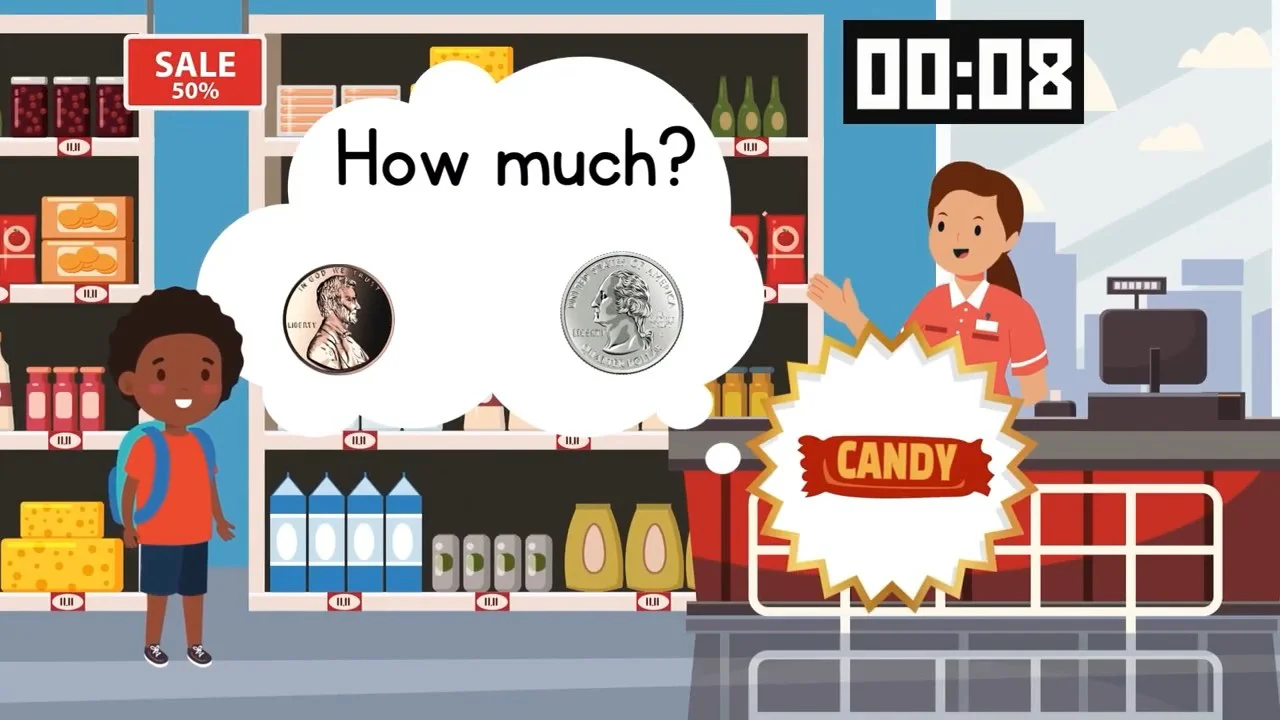
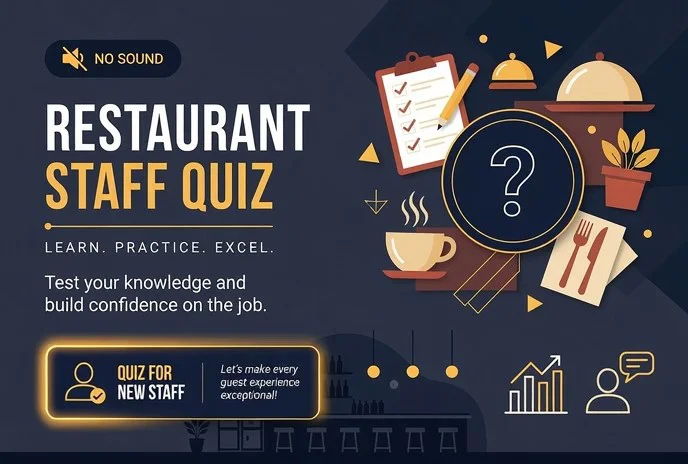
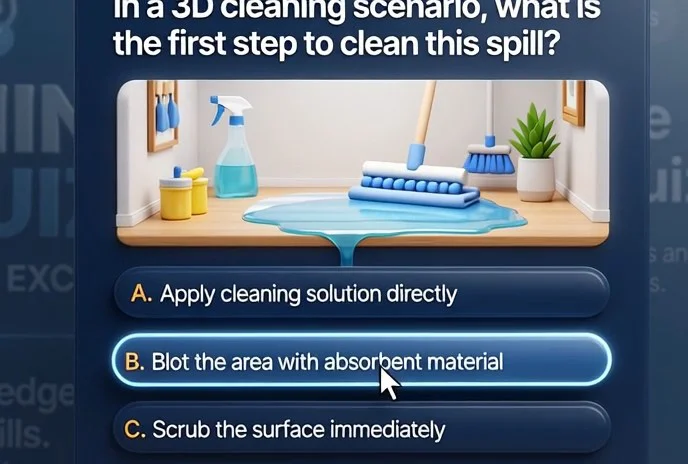
The solution is gamified learning. Educational quizzes turn boring material into an engaging game with competitive elements. Retail store staff absorb service standards and sales techniques through play, not just to tick a box.
Employee engagement grows, knowledge is reinforced through practice, and training results show up in real metrics — from higher average check size to more repeat purchases.
We design such quizzes for your chain's specific goals: onboarding new hires, ongoing qualification, and standards reinforcement.
Unity-based game mechanics ensure stable performance on any device, and the analytics system shows which topics were poorly absorbed and where improvement is needed.
As a result, retail store staff training stops being a formality and starts delivering measurable business results.
What You Get from Training Quizzes for Retail
Quiz-based training turns a dull instruction manual into a lively, exciting process.
Employees absorb key information about the assortment, service standards, and procedures without rote memorization — the material stays in memory long-term and is immediately applied in real work.
Unified standards are another important outcome. Every sales associate in every store follows the same rules: greeting guests, suggesting add-on products, and calmly resolving disputes.
This levels out service quality and makes the customer experience predictable, which in turn strengthens trust in the chain.
New-hire onboarding accelerates dramatically. Quizzes help new employees get up to speed quickly: in an interactive format, they learn the product, communication scenarios, and internal standards. Managers save time on mentoring, and the new hire reaches target performance metrics faster.
Staff motivation and engagement grow thanks to the competitive element. Short rounds, points, and leaderboards create healthy excitement, and completing a quiz brings a sense of progress and achievement. This reduces turnover, increases interest in work, and fosters a positive team atmosphere.
Ultimately, all of this leads to higher sales. Trained and engaged sales associates consult more confidently, present products more effectively, and increase the average check.
And quizzes styled in your brand's visual identity further boost brand recognition, communicating its values to both customers and employees alike.
Quiz and Meta-Game Formats on Unity for Chain Needs
For retail chains, staff training is an ongoing challenge: assortments change, standards evolve, and sales associates are busy on the floor.
Gamified quizzes solve this faster than simulators and lectures: employees answer short questions, earn points, and immediately see which topics need review. There are several formats, from simple tests to a full-fledged meta-game that combines training and competition.
Here's how to choose a format for a specific task and network size:
| Format | For Whom | Client Value |
|---|---|---|
| Quick tests with 5–10 questions | Stores with high turnover, frontline staff | Knowledge check in 2–3 minutes, standards review without taking time away from work |
| Situational dialogues ("what would you say to a customer?") | Sales associates, cashiers, pickup area staff | Practice handling tough objections and service standards, fewer mistakes on the job |
| Short one-month marathons | Networks with multiple locations or regions | Ongoing engagement, healthy competition between stores, visible performance dynamics |
| Meta-game with a storyline and levels | Mid-size and large networks that need to cover several topics | Employees learn as players: accumulate points, unlock levels, and stay motivated |
The core value lies in flexibility. A three-store chain can make do with simple tests, while a nationwide retailer with thousands of employees is better served by a meta-game that guides staff from beginner to expert on its own.
All formats run on the professional Unity platform — this ensures stable performance on employees' phones and tablets without glitches or complex setup.
For the client, this means training is no longer a chore. Staff take quizzes at a convenient time, and managers see a summary: which topics were mastered, where the gaps are, and who needs additional review.
Formats combine easily: tests serve as an "entry assessment," while the meta-game cements knowledge over the long haul.
How We Build a Training Program for a Retail Chain
For large retail chains, staff training often stalls due to scattered materials and the lack of a unified control system.
We've structured quiz development as a clear path with fixed stages and defined responsibilities — you always know what's happening and when results will arrive.
-
Quiz brief. We start with a short interview with managers and frontline staff: we collect real scenarios from store practice, typical mistakes, and the rules that need reinforcing.
This is the foundation for future content, so the brief takes no more than a couple of working days.
-
Scenario design. We turn business requirements into an engaging quiz storyline: topics, question sequence, and presentation formats for employees. At this stage, you receive the scenario description for approval — no surprise "twists" at launch.
-
Project approval. We present a prototype with sample questions and the scoring logic. We make revisions together with your training team. One or two iterations are usually enough to approve the final version.
-
Training launch. We host the finished quiz on our platform and set up access for all locations in the chain. Employees can complete training at a convenient time — from a computer or phone, without leaving the sales floor.
-
Support and analytics. After launch, we monitor completion rates, collect performance statistics, and highlight topics that caused difficulties. When needed, we quickly update questions and add new rounds.
In the end, you get not a one-off campaign but a tool that lives alongside your business: it adapts quickly to new products and maintains a unified knowledge standard across all stores in the chain.
What's Included: Quizzes, LMS Integration, and Analytics
We define the project scope upfront so you know exactly what you're getting for your budget. The package includes not "just a quiz" but a complete staff training tool for retail stores — from the games themselves to integration with your existing learning system.
- Quizzes tailored to your needs. Questions on products, service standards, and sales scripts are developed together with you. You get content calibrated to the real challenges of your stores.
- LMS integration. Employee results flow automatically into the learning system you already use. No manual tracking or data transfer between programs.
- Training analytics. A dedicated dashboard shows the progress of each employee, store, or the entire chain. Managers see who completed the course, who is falling behind, and which topics should be revisited.
- Content ownership. All questions, design, and source materials stay with you. You can use them further without restrictions and without depending on the contractor.
- Self-service administration. After launch, a trained administrator can update questions, add new topics, and roll out changes without contacting developers.
- Launch support. We oversee the rollout, verify that quizzes work correctly for employees in all stores, and help administrators get comfortable.
This scope is fixed in the contract. Working with us, you get a transparent package and an exact cost estimate — no hidden work or "project-related" surcharges.
Case Study: How Quizzes Raised Sales in a Retail Chain
For a nationwide retail chain, "Market+", we developed a corporate quiz on display standards, objection handling, and product knowledge. Employees took it on tablets at the start of their shifts — 5–7 minutes per session, gamified with ratings and rewards.
Numbers That Speak for Themselves
Within two months, sales at participating stores grew by 12% compared to the control group. Display errors dropped by 34%, and service speed improved — cashiers got distracted by questions less often.
Engagement hit record levels: 87% of employees completed the quiz voluntarily, without manager reminders.
Why It Worked
The secret wasn't a game for its own sake, but short, repeated practice. Knowledge is reinforced through regular rounds, not one-off lectures. Managers see statistics for each employee and correct weak spots in real time — without unnecessary meetings.
After the pilot, the chain scaled the quiz to all 120 locations. We received a repeat order for the new season six months later. Today, the chain uses quizzes as a permanent training and onboarding tool.
Want the same results? We'll assess the potential for your chain — and show where quizzes will deliver the greatest impact.
How to Choose the Right Quiz Format for Your Team's Goals?
Choosing a quiz format isn't about "what's trendiest" but about "what will change in employee behavior." For retail, training must not interfere with work and should show up immediately in service quality.
So we start by defining the business objective: quickly introducing new hires to the product, regularly reinforcing standards, or verifying knowledge before a store opening.
| Format | When to Choose It | Business Value |
|---|---|---|
| Short 5–7 question "warm-ups" | Daily training at the start of a shift, high staff turnover | Minimal time, regular repetition, habit of learning |
| Scenario-based simulation cases | Training sales staff to handle objections and follow service standards | Practice real dialogues without customer risk |
| Competitive quizzes with leaderboards | Team motivation, increasing training engagement | Higher activity, healthy competition between stores |
| Pre-launch knowledge checks | Verifying staff readiness for a store opening or shift start | Objective assessment of knowledge and areas for improvement |
| Meta-game with point accumulation | Long-term quarterly or annual training system | Sustained attention, linking training to results |
If your goal is to reduce service-standard errors, scenario-based cases are the answer. If you need to get new hires productive fast, short warm-ups with feedback work best.
If you're training a chain of 20+ stores, leaderboards and a shared meta-game create competitive momentum and boost course completion.
We help you choose the right format for your situation: we calculate shift load, headcount, and how often knowledge needs refreshing. Then we build the quiz on a professional platform that tracks each participant's progress and the team's as a whole. You get a clear results table — not just "employees passed the test."
Frequently Asked Questions About Quiz Development
Before launching a training quiz for retail store staff, managers ask the same questions: how long will it take, how hard is it to fit the game into current processes, and will it run reliably? The decision to start depends on these answers, so let's address them right away.
How long does quiz development take?
The turnkey basic version takes 2–4 weeks. If results need to be linked to your learning system — 4–6 weeks. At the start, we set the plan and checkpoints; you see a prototype at the second stage and make edits before the final launch. Delays on our side are ruled out: deadlines are written into the contract.
How difficult is it to integrate the game into existing training?
Integration doesn't require replacing your systems or a separate IT project. Employees take the quiz from their smartphones or computers — all they need is internet access. Results are automatically delivered to the admin dashboard, so training management stays with you. During rollout, we provide instructions and short support for your HR managers.
What if something goes wrong? Will the game crash on launch day?
We use battle-tested tools and professional server architecture, so the platform handles simultaneous quiz activity even when every store in the chain connects at once.
After launch, we stay with the project: we monitor stability, fix any issues promptly, and update content without interrupting training. The guarantee covers the entire period of use.
Where does the quiz fit into the current training program?
It naturally complements your training sessions: it validates knowledge after training, supports new-hire onboarding, and refreshes knowledge before promotions. You set the frequency — monthly, after every training session, or on a schedule.
The manager immediately sees the full picture: how many employees completed the quiz, which topics cause trouble, and who needs extra support.
A short conversation at the start — and you get a working mechanism, not another one-off test. The quiz becomes part of your retail training system: clear for employees, transparent for managers, and free of surprises in daily operation.Launch a Program That Actually Boosts Sales
Don't put off launching training quizzes — the longer your staff works without a unified system, the more costly the mistakes on the sales floor become.
We support the project from the first meeting to a stable result: we help launch the quizzes, embed them into daily processes, and keep employee interest high.
Here's what the next steps look like:
- Brief — we discuss your goals, audience, and product priorities.
- Plan — we select formats, scenarios, and timelines for your specifics.
- Preparation — we build quizzes based on your standards and common customer requests.
- Pilot launch — we test the mechanics with one team or store and collect feedback.
- Full launch — we roll out the program to all retail store staff.
- Post-launch support — we analyze engagement, update questions, and help grow the program.
Immediately after submitting a project request, you'll receive:
- An action plan with clear deadlines and owners.
- A quick audit of your current training and typical sales mistakes.
- Recommendations on quiz formats for your retail chain.
- Sample questions and scenarios already proving themselves in similar companies.
- An estimate of engagement and potential conversion growth for your team.
Submit a request — and within a day we'll show you what your program will look like. No vague propositions: only clear steps, measurable results, and post-launch support.