

LMS Integration and Meta-Games for Quizzes: How to Retain Employees
Employee training often becomes a formality: long presentations, mandatory tests, and dry instructions. Attention starts to drift within minutes, and knowledge fades by the end of the week.
As a result, the company spends time and budget but sees neither real growth in competencies nor team engagement.
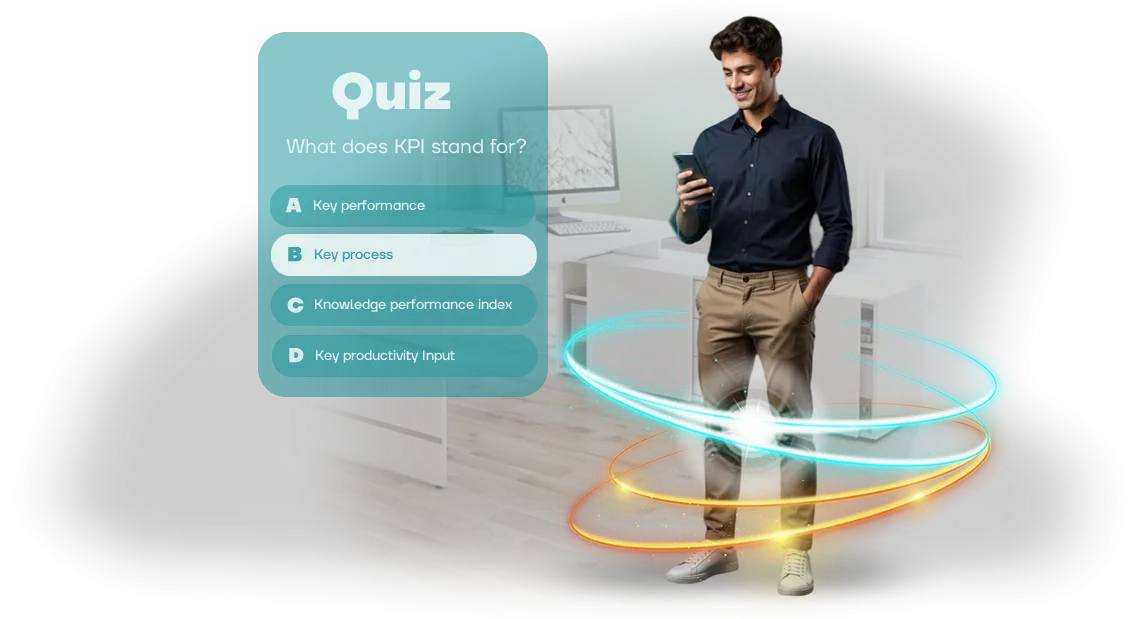
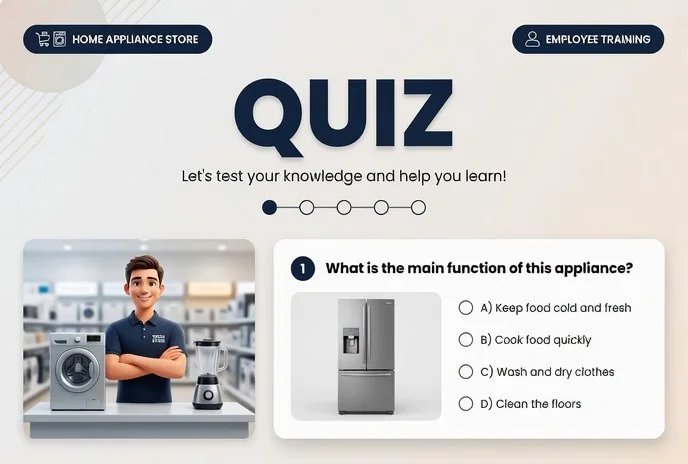
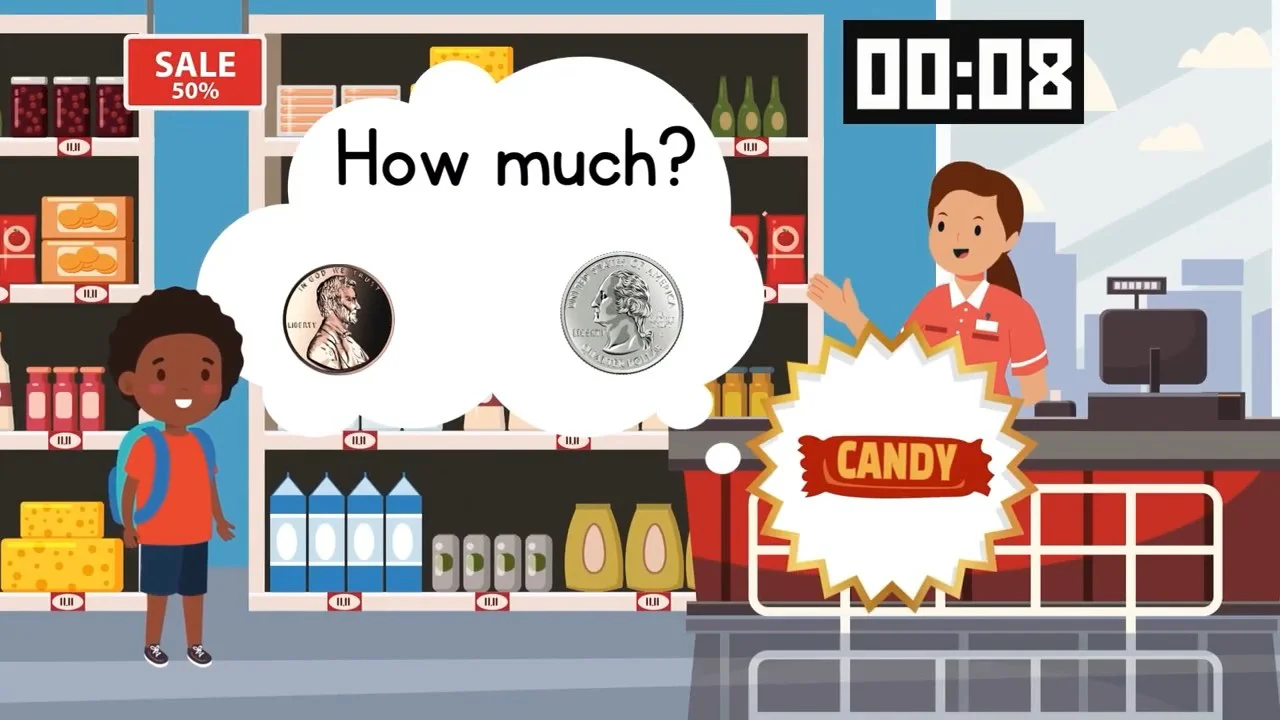
Training quizzes for employees are a format that brings interest back to learning. Short rounds, visual questions, and instant feedback spark healthy excitement. People don't "take a course"—they play, and in the game, they remember what matters.
It works for newcomers who need to quickly get up to speed and for experienced specialists who need to keep their skills sharp.
LMS integration makes the process even easier: the quiz becomes part of your existing learning system. Employees don't need to log into a separate platform—everything happens in the familiar interface.
Managers see results in real time: who completed it, who made mistakes, and which topics need review. Training stops being a "black box" and becomes a manageable process.
Meta-games add a competitive element: leaderboards, levels, and team standings. Employees start discussing questions in chats, sharing results, and helping lagging colleagues catch up. This strengthens staff engagement and builds a culture of continuous development. For the business, it means higher efficiency without coercion or extra oversight costs.
Modern quizzes with LMS integration and meta-games solve the key problem—retaining attention. When training becomes an event rather than an obligation, employees return to the materials on their own, learn faster, and hold onto knowledge longer.
That's why companies are moving from dull lectures to game formats—and we help make this transition quickly and without unnecessary hassle.
What a Training Quiz Gives a Business: 5 Measurable Results
Corporate training often turns into a formality: employees complete the course just to check a box, and a week later the material is gone. A training quiz changes the very mechanics—it turns learning rules, products, or procedures into a game. The result is higher employee engagement and, with it, real learning outcomes.
Here are five measurable indicators the business gets in the very first cycle. First—engagement: thanks to the competitive format, employees come back to the quiz on their own, not because of reminders.
Second—speed of onboarding: knowledge is absorbed faster because every mistake is immediately highlighted and worked through. Third—depth of retention: a game format holds attention longer than slides or video lectures.
Fourth—transparent analytics for each employee: managers see who has already mastered the material and who needs extra support. Fifth—reduced training costs: the quiz can be launched without pulling people away from work and scaled across the whole company.
Unlike a classic test, a quiz delivers measurable indicators in real time. You see how many attempts an employee made, which questions cause difficulty, and how the score changes from attempt to attempt. This lets you fine-tune corporate training based on facts, not assumptions.
In the end, a manager gets not just a "course completed" flag, but an objective picture of competencies for every team member. This is why LMS integration and meta-games become a practical training tool: they combine business value with employee interest.
And that means training investments stop being an expense and turn into a measurable contribution to results.
LMS Integration and Meta-Game Formats: Quizzes for Company Goals
Corporate training often becomes a formality: employees take courses just to check a box and forget the material a week later. Quizzes paired with an LMS solve this problem—they turn knowledge checks into a dynamic mechanic with a clear outcome for the business.
We build formats around the specific goals of a company: from a quick post-course check to long-running game marathons. Below is a table of typical scenarios, where each format delivers a measurable effect.
| Format | When to Use | What the Client Gets |
|---|---|---|
| Quiz after a training block | After a webinar, lecture, or e-learning course | See who absorbed the material and who needs a refresher. Savings on manual test grading |
| Marathon with score accumulation | A month or a quarter, with regular question releases | Ongoing engagement with the topic, a habit of returning to learning |
| Department and team rankings | Competition between departments | Healthy competition, team spirit, and clear success statistics by department |
All formats work inside your LMS via the SCORM standard—the system picks up results automatically, so there's no manual collection. Managers see progress in real time: who is in the lead, which topics are underperforming, and which departments need support.
Meta-games add a second layer to quizzes: questions about company history, awards, and internal events. Training stops being a dull duty, and employees remember the goals and values of the business through emotion rather than rote memorization.
Launching a Corporate Quiz: From Brief to Analytics
For a quiz to truly engage employees and for learning results to be visible to management, the launch should follow a proven workflow. We support the project from the first brief through to analytics—without "surprises" or downtime. You get a transparent process, agreed deadlines, and clear reporting.
Work Stages
-
Brief and goals. We discuss which topic needs to be reinforced, what difficulty level suits the audience, and what behavioral goals the training should target. The output is a clear technical specification with no vague wording.
-
Scenario and mechanics plan. We define the question structure, presentation style, game elements, and the balance between learning and entertainment. We also decide here who will see intermediate results.
-
Scenario approval. You receive the ready scenario for sign-off. We make changes before development starts, not during it, so neither time nor budget is wasted.
-
Quiz development. We build the interface, write answer options, explanations, and feedback for participants. We work with professional tools—this guarantees correct performance on any of your employees' devices.
-
LMS integration. We connect the quiz to your learning system so results automatically flow into employee profiles and course logs. No manual transfers, no lost data—everything updates in real time.
-
Test launch and fine-tuning. We test everything on a small group, gather initial feedback, and adjust difficulty or wording if needed. This way you avoid a poor rollout across all employees at once.
-
Launch and analytics. We run the full launch and hand over a results dashboard: completion, average score, and share of correct answers by topic.
This data will show which materials have been mastered and which topics deserve a closer look—say, at the next webinar or in an email newsletter.
Delivery Package: What's Included in the Training Quiz
A finished training quiz is not just a link to a game. The delivery package includes everything needed for launch and use: from a configured scenario to instructions for your team. You get a turnkey solution, not a set of files you'll have to figure out on your own.
Here's what is included in the delivery:
- A ready-made quiz for your goal — the game scenario, questions, and assignments are adapted to your employees, corporate specifics, and learning goals. No self-assembly needed.
- Administrator guide — a clear manual on how to launch the game, add participants, view results, and change settings if necessary. Suitable even for those who have never worked with such tools.
- Methodological materials — recommendations for embedding the quiz into the learning process, facilitator tips, answer breakdowns, and usage options in different formats: from self-study to team competitions.
- Technical support at launch — we are on call when you go live: we help with setup, check that everything works, and quickly resolve any questions. The launch goes smoothly for your team.
- Integration with your LMS — if needed, the quiz connects to your distance learning system, and results automatically reach the overall statistics. Nothing to transfer manually.
- Warranty and updates — for an agreed period, we keep the game working and make adjustments if conditions change or new questions come up.
In short, the package includes everything you need to use the quiz right after delivery. Your only task is to set a date and invite employees. Everything else is thought through and packed.
Case Study: Quiz Increased Training Engagement by 40%
The client—a retail chain with 1,200 employees—faced a typical problem: only 15% of staff completed LMS training, and tests were filled in mechanically, just to check a box. Managers couldn't see real knowledge levels, and employees were bored by mandatory courses.
We suggested replacing routine tests with a training quiz featuring meta-game elements: questions, points, leaderboards, and short rounds. The quiz was embedded directly into the existing LMS—employees didn't need to switch between systems.
The development was handled by our team, and on the client side, only the training manager was involved.
Result
After eight weeks, we saw a measurable shift: the share of employees who completed mandatory courses grew from 15% to 55%, and engagement—the speed and regularity of completion—rose by 40%.
The average test score went up by 12%, while training time shrank: the quiz took 10 minutes instead of a 30-minute lecture.
Managers got clear analytics: it's visible who answers confidently and who is shaky on a particular topic. This allowed them to fine-tune the onboarding program and build a question bank from the best employees.
Today, this client orders quizzes for regular knowledge checks and for engaging newcomers—the repeat order is the best sign that gamification works not as a one-time campaign but as a sustainable training tool.
What If You Need a Non-Standard Quiz Mechanic?
A non-standard quiz mechanic is not a reason to drop the idea. Often a business process, industry rules, or audience specifics demand a special scenario: not just "question—answer option" but multi-step branching, role-playing storylines, and work with company cases. We understand this, so we don't limit the client to a template.
When you describe specific requirements, we first look for an alternative among ready-made developments. Maybe the mechanic you need can be achieved by combining standard elements—that's faster and more cost-efficient.
You get a working quiz without a long development cycle, and we take on the selection of the best option and explain why it solves your problem.
If a ready-made alternative doesn't fit, we adapt the standard format to your individual mechanic. This applies to the rules of moving between stages, question types, feedback, and scenarios.
The quiz still stays compatible with your LMS: results, progress, and meta-game elements are tracked just like in a regular course.
In the end, you get not a "raw" add-on but a complete tool that is easy to integrate into your current training. Employees see a logical and engaging format, and you see clear analytics and growing engagement. Any non-standard requirement becomes manageable.
Tell us about your task—we'll propose a solution even before work starts. If the specifics can be covered by an alternative, we'll show it; if not, we'll design an adaptation for your process. This way, you get exactly the quiz you need, not just the one from a catalog.
Frequently Asked Questions About Quiz Development and Implementation
Any new training system raises questions—especially when it comes to a quiz integrated into an LMS. To make your decision easier, we've collected answers to the most common concerns: from timelines to employee attitudes and data security.
How long does quiz development and implementation take?
On average, 5–10 business days from brief to final launch. If the scenario is already ready or the team is small, we fit into a week. Integrating with your LMS adds a couple of days, but the timeline stays predictable and is fixed in the contract.
Will the quiz suit a small team?
Yes, we adapt everything to your scale. For a group of 10 people, it's a light 10-minute warm-up; for 300 employees, it's a full training session with individual results and statistics. The difficulty and duration scenario is built around the number of participants.
How will employees react to yet another mandatory test?
It all depends on how it's presented. We turn a knowledge check into a game with competitive elements, so employees often perceive it as a break from routine rather than an exam.
In typical projects, 70% or more of participants give positive feedback—especially when the quiz runs at a comfortable pace.
How does the quiz integrate with the LMS I already use?
We set up the integration so that results automatically land in your learning system. You don't need to collect data manually—all completion statistics appear where you're used to seeing them. On the technical side, we use well-honed tools, so the process runs without failures.
Can questions be updated after launch?
Of course—this is not a one-time campaign. You can change questions, add new topics, or adjust the difficulty at any moment. The quiz becomes a working tool that lives together with your training materials and updates as needed.
How is employee data security ensured?
Only you and those you grant access can see the results. We work on a protected server infrastructure, and data transmission is secure. If needed, after the cycle ends, we completely delete the information or hand over the logs to you for archiving.
Discuss Your Task and Get a Cost Estimate for the Quiz
We'll discuss the task at a time that suits you—you'll tell us how employee training is set up today, which topics need to be reinforced, and in what format you see the result.
This is a free consultation, after which you'll receive a preliminary quiz plan, estimated timelines, and a project cost estimate.
You don't need to understand development or technical details—we'll propose the best option for your task and budget. If training already runs in your LMS, we'll prepare a quiz to match its capabilities and embed the game into the existing process.
If there's no LMS, we'll make a self-contained format that launches via a link and requires no installation.
What You Get After Reaching Out
- A preliminary quiz plan — the question structure, game mechanics, how it fits into your training, and what results to aim for.
- Timeline calculation — a clear idea of when the project will be ready: from a work week for a standard quiz to longer timelines for complex solutions with integration.
- A transparent estimate — fixed pricing per stage with no hidden surcharges. You know exactly what you're paying for.
- Integration recommendations — we'll explain how the quiz will fit into your LMS or training department workflow, and what data on employee progress you'll see.
- Readiness to start — after the plan is approved, we take over the task: from writing questions to launch, and all you have to do is manage the result.
- Post-launch support — we'll help embed the quiz into the process, answer employee questions, and refine the game based on the first runs if needed.
Case studies show that employees are more willing to complete training in a game format, and managers get clear statistics on who has mastered the material and who needs extra attention. A quiz solves this task—motivating staff and revealing real knowledge levels.
Submit a request or write to us via messenger—we'll respond within one business day, ask you a couple of clarifying questions, and prepare a proposal for you. No obligations: we just discuss the task, and you decide whether our solution is right for you.