

Analytics Mistakes Cost You Clients and Money
Drawing the wrong conclusions from data is not just a "human factor." When an analyst misinterprets metrics, the business makes the wrong decision: it goes in the wrong direction with its assortment, loses a valuable customer segment, invests in a dead-end area.
Each such analyst mistake hits the company's revenue and reputation, and it usually only becomes noticeable after the fact.
Most often, problems start not with calculations but with competencies: an employee fails to see patterns in data, formulates a hypothesis incorrectly, or misses a critical factor.
Regular analytics training closes these gaps, but classic presentations and lectures do not build a lasting skill. Knowledge stays in memory for a few days, and in a real work situation the person acts the same way as before.
Proper analytics training is ongoing practice on scenarios as close as possible to your team's real tasks.
The employee must not just know the formula but be able to apply it under time pressure, incomplete data, and contradictory information—that is exactly where expensive mistakes are born.
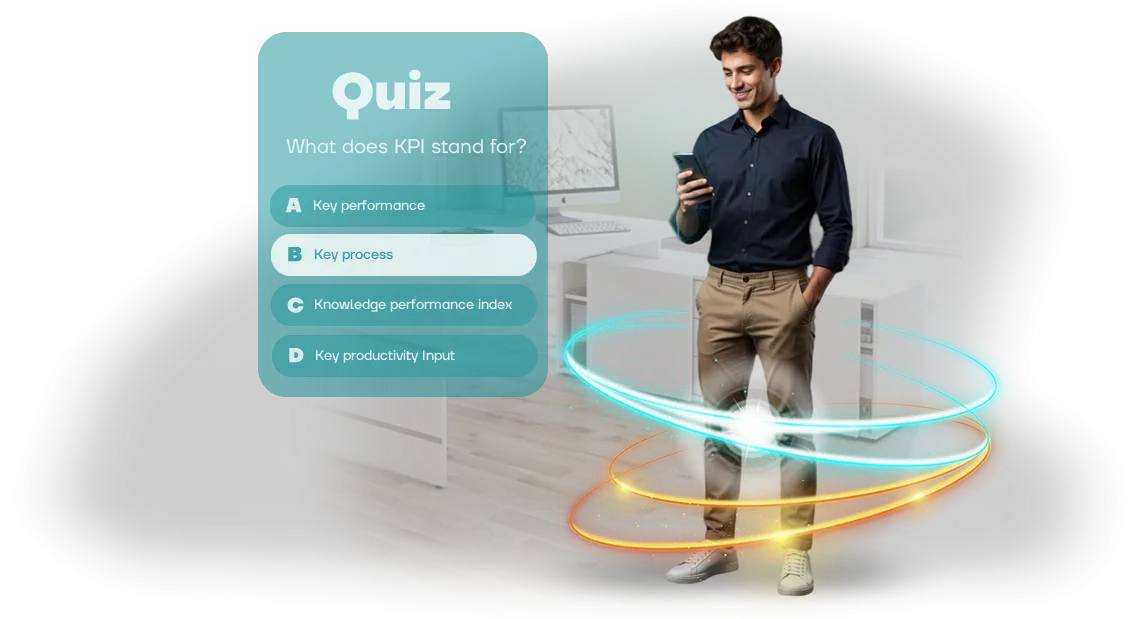
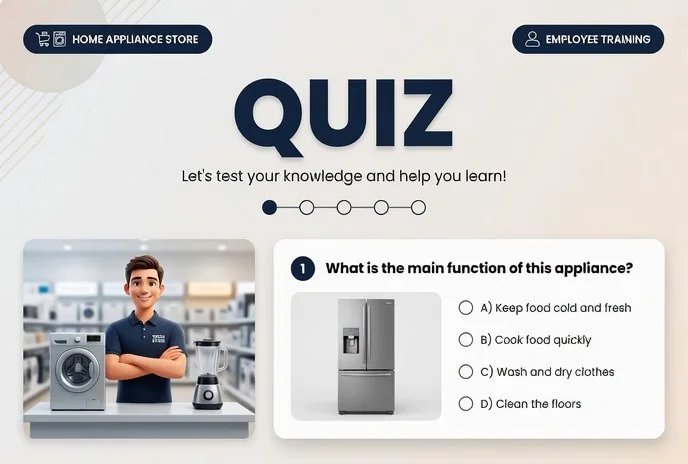
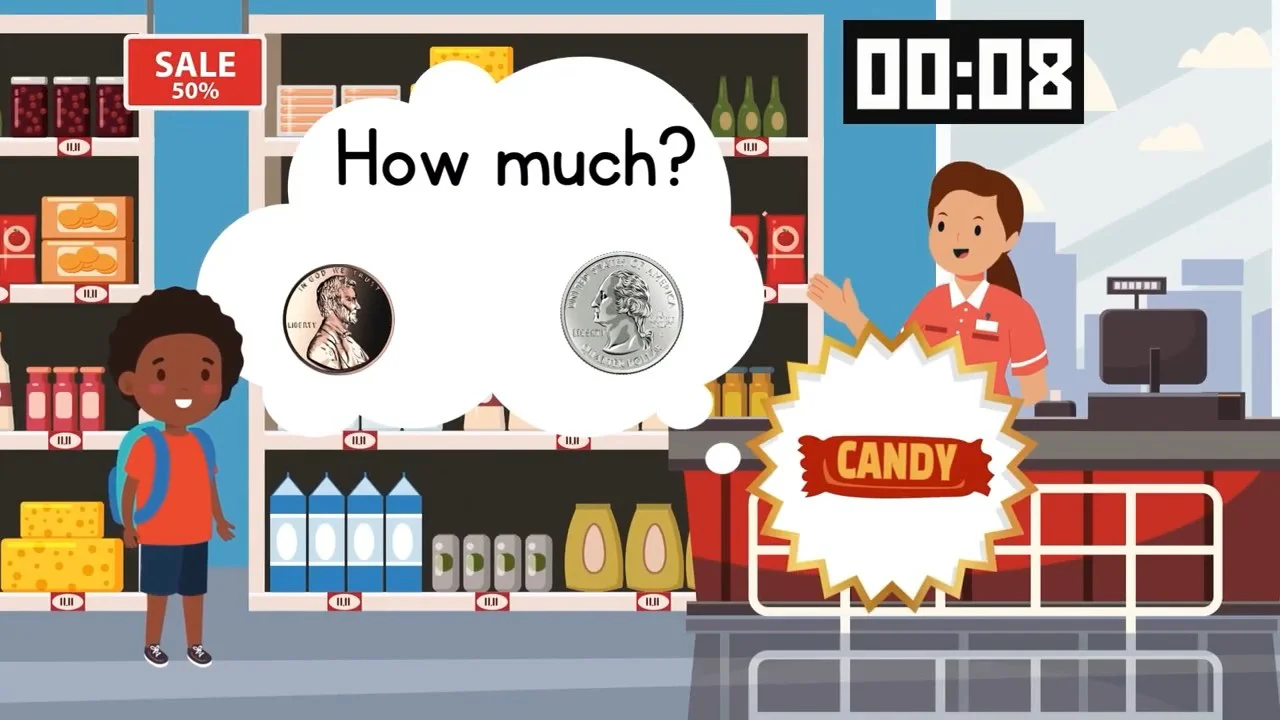
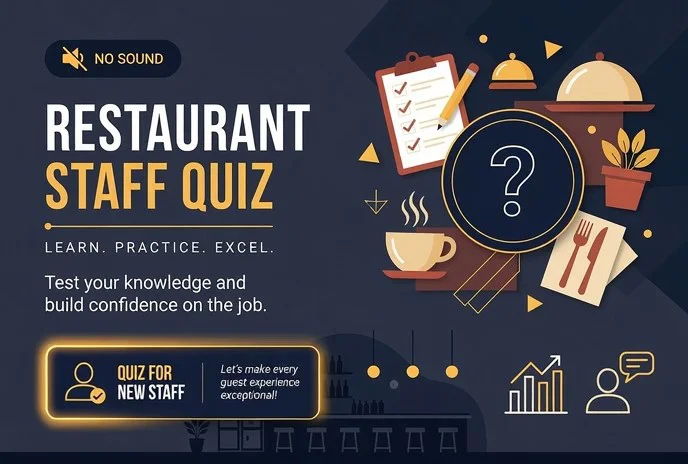
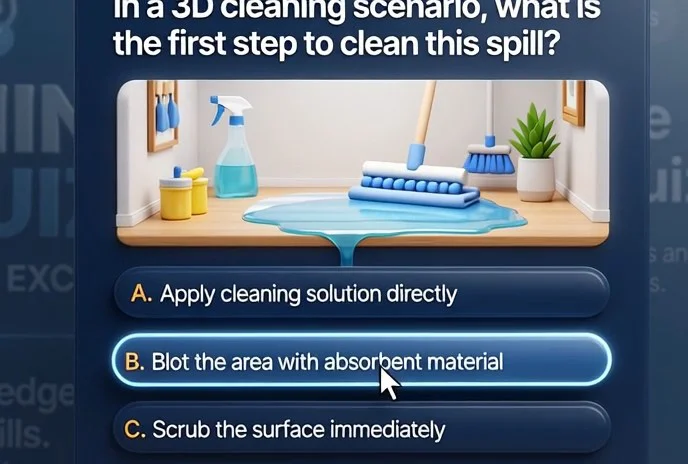
We develop educational quizzes for training analytics and big data specialists: employees go through interactive scenarios, break down typical mistakes, and learn to make the right decisions before the cost of an error becomes critical.
This way you reduce business losses and protect your clients as early as the team preparation stage.
Systematic Employee Training Increases Decision Accuracy
Systematic employee training is not a one-off event but a structured process that directly affects the quality of decisions.
When analysts and data specialists take regular quizzes and review real cases, they spot mistakes faster and make decisions based on incomplete data less often. It is analytics accuracy that becomes the competitive advantage that pays for training investments.
Developing employees through game-based formats delivers measurable results: the team learns new working methods not abstractly but in situations close to real work. Each quiz is a skill drill: formulate a hypothesis, choose the right tool, interpret the result.
As a result, specialists act with more confidence, and the manager sees which topics have already been practiced and which need extra attention.
Analysis speed grows alongside accuracy. Automatic answer checking and feedback right after each task help the employee reinforce the correct course of action. They stop spending hours searching documentation for answers because the key principles are already fixed in memory. As a result, the business gets fast and informed decisions without losing quality.
Team engagement is another important effect. Quiz-based training feels like a game, not a boring lecture. Healthy competition, scores, and levels keep interest high, so employees complete courses to the end and even return to difficult topics.
This approach reduces turnover and strengthens loyalty, because the company is investing in its people.
The benefits of training become obvious within the first few months: fewer mistakes in reports, faster data preparation, and more initiatives from the team.
A systematic approach gives the manager a transparent picture—which employees are ready for complex tasks and which need support. That is why training analytics and big data specialists should be ongoing rather than occasional.
Big Data Training Formats for Any Task
Training analytics and big data specialists cannot tolerate monotony. Lectures and standard tests quickly fail to hold attention, and knowledge without practice is forgotten within a week.
To make training deliver measurable results, you need formats that engage employees and reinforce skills through real actions.
We develop educational quizzes, a meta-game, and simulators on the professional game platform Unity. Each format solves its own problem: from quick onboarding to practicing complex analytical scenarios.
You can choose one option for your team's current level or combine them into a single training program.
| Format | Who it is for | What it gives the client |
|---|---|---|
| Quizzes | New employees and interns | Fast introduction to core concepts, instant knowledge checks, clear statistics for each participant |
| Meta-game | Mid-level teams | Engagement through competition and narrative, revision of material without boredom, stronger team spirit |
| Simulators | Experienced analysts | Practicing real cases on large data in a safe environment, mistakes without business losses |
This approach covers business needs: employees learn faster, acquired skills do not fade within a week, and training results are easy to measure and compare.
At the same time, all formats work on a single platform, so you get a tool that can be extended and scaled as your company grows.
How We Conduct Training: 5 Steps to Results
We have structured the process so you always understand where the project stands and what result you will get at the end. Each step ends with a concrete outcome—it can be assessed and, if necessary, quickly adjusted.
Stages of Work
- Brief and immersion in the task. We discuss the training goals, staff composition, and current skill levels. We determine which analytics and data skills need to be developed first.
- Scenario and plan approval. We build the quiz structure: topics, difficulty, question formats, and number of stages. You receive a clear plan and see how the training will run before development even starts.
- Content and game mechanics creation. We write questions, add scenarios, points, levels, and feedback. The material is presented so participants stay engaged and knowledge is reinforced through practice.
- Testing on a pilot group. We launch the quiz for a small group of employees, collect feedback, and adjust difficulty, completion speed, and wording. This lets us eliminate mistakes before the full launch.
- Launch and implementation. We give access to the whole team, integrate the quiz into your learning management system, or run it in a convenient format—offline or online. Employees start training without delays.
- Results analysis and support. We provide a completion report, statistics on questions, and typical mistakes. We help update and refine the material so the training stays relevant and useful.
In the end, you get not just a one-off quiz but a working professional development tool that is easy to scale to new topics and employee groups.
What Is Included in the Training Program Delivery
"What is included in the training program delivery" is the set of services the client receives. We provide not just a collection of files but a ready-made training system—it can be launched as early as next week, without bringing in outside developers.
The package includes:
- Scenarios and program structure — a detailed course plan adapted to the tasks of your analysts: from basic data work to advanced cases.
- Quiz library — hundreds of questions and tasks with answer breakdowns; materials can be updated and expanded without involving the contractor.
- Interactive simulators — practical situations based on your business data, where the employee learns to make decisions in a safe environment and sees the consequences immediately.
- Reporting and analytics system — clear statistics for each employee and group: progress dynamics, typical mistakes, readiness for final certification.
- Methodology guide for HR and managers — practical recommendations on how to integrate quizzes into corporate training, motivate staff, and interpret results.
- Support and maintenance — help at every stage: migration to the corporate portal, access setup, and material updates during the first year.
Thus, the project results are fully yours: training does not stop after completion, you see the progress of each employee, and you can manage the quality of preparation.
This is not a one-time initiative but a tool that works to raise the team's qualifications and delivers a measurable effect for the business.
Case Study: How Analytics Training Raised NPS by 20%
A large retailer came to us with a pain point typical of the market: the analytics department was growing faster than the training system.
New employees reached independent work after 3–4 months, made mistakes in reports, and mentors spent up to 30% of their time on "manual" coaching.
The department head wanted not just to speed up onboarding but to make analysts think systematically and make decisions faster.
Instead of standard lectures, we developed an educational quiz based on game mechanics and embedded it in the workflow.
The project for a federal retail chain was built as a meta-game: employees solved practical cases on real company data, competed in forecast accuracy and analysis speed. Training ran in short 15–20 minute sessions per day, without pulling the team away from work.
The results were measured after three months. The NPS of internal training rose by 20%—employees asked for new rounds themselves, and probationary-period turnover fell by half.
Average report preparation time dropped by 35%, and the share of errors in initial data extraction almost halved.
Managers noticed that analysts started asking not "how to do it" but "what does the data say about the business"—the level of thinking had changed qualitatively.
For the business, this means a fast return on training investment and a direct link to revenue: the faster an employee reaches full capacity, the cheaper their work is.
The case confirmed that game-based formats work not only for engagement but also for measurable company metrics. We have adapted the same approach for sales, marketing, and customer service teams—anywhere employees need to learn to make data-driven decisions.
How to Choose the Right Training Format?
Choosing a training format is not a matter of taste but a matter of results. Some teams only need short knowledge checks; others need deep skill practice through game mechanics.
Selecting training starts with the goal: do you want to raise the general level of employees, identify gaps, or prepare analytics and big data specialists for specific tasks?
It is important to consider how much time employees can actually devote to training. If you have tight deadlines and a large audience, compact quizzes with a clear progress system work better.
If the goal is to build complex analytical skills, multi-stage game scenarios with mistake breakdowns are more effective.
Budget also influences the choice of format, but it should not be the only factor. We help find the balance: we use professional development tools to make training engaging while also selecting a format that pays off through engagement and employee preparation speed.
Based on your tasks and audience, we propose a specific format and show how it fits into current processes. The training selection is done together with you: we analyze what already exists, what is getting in the way, and what result you need. In the end, you get a clear program with stages and measurable business impact.
If you are in doubt—that is normal. We will advise which option suits your tasks and budget and explain why it will work. Contact us for a consultation—together we will choose the format that solves your problem.
Frequently Asked Questions About Implementation and Guarantees
Any employee training project raises concerns: will the new system be hard to learn, will we meet the planned deadlines, and what happens if something goes wrong. We understand these risks and address them right away—without fine print or hidden conditions.
Is it difficult for employees to take the quiz?
No. The quiz works in a regular browser; all participants need is a computer and access to the corporate portal. The employee sees questions with answer options, and the system automatically saves progress and shows the result.
Each session takes 10–15 minutes, so training can easily fit into the workday without interrupting tasks.
How long does implementation take?
On average, the project takes 3–4 weeks. In the first week, we collect materials and approve the quiz scenario, then we develop the system itself and conduct testing.
After the launch, you get a ready-made tool that works without constant developer involvement—you just need to assign a responsible administrator.
What happens if something breaks?
We provide a guarantee on the system and take on technical support. In case of any failure, our team diagnoses and resolves the issue within one business day. We also train your administrator so they can resolve simple issues independently without waiting.
We work under a transparent contract: we fix deadlines, scope of work, and support obligations. As a result, you get not a one-off development but a stable tool that helps employees master analytics and big data work faster—with predictable results and no surprises.Start Training Now—Request a Consultation
If you want to order training for employees that truly engages, start with a short consultation request. We do not sell a "box"—we select a format for your task and the specific nature of your analytics team.
In 10 minutes, we will discuss where the team has growth points and how a game-based quiz closes that gap.
After your request, you will receive:
- A call within one business day—we will discuss which skills need to be developed: analytics fundamentals, data work, result interpretation.
- An individual quiz plan—question structure, scenario, and difficulty levels for your team.
- Timeline and cost calculation—transparent, without hidden fees or unnecessary options.
- Examples of our educational quizzes—see how gamification helps absorb material.
- Implementation recommendations—how to integrate training into the work schedule without disrupting tasks.
- A clear plan of next steps—what we need from you to start and when to expect the finished system.
No obligations: the consultation is free and does not commit you to anything. Even if you do not continue, you will leave with a plan and examples that will help you evaluate other proposals. Leave a request—let us start with a conversation about your task, not formalities.