

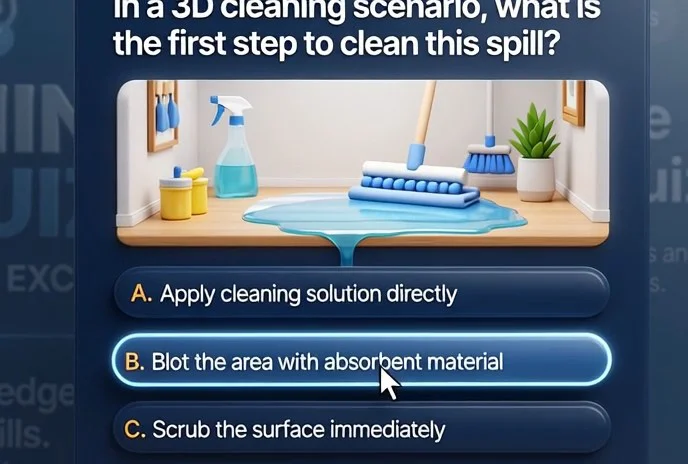
Certification of professional knowledge without boredom for employees
Employee certification often turns into a formality: a standard test with questions whose answers can be memorized or found in a couple of minutes. As a result, the procedure shows not the real level of knowledge, but the ability to pass tests.
A manager receives a report with "green" results, but still cannot be sure that the team truly understands the product, regulations, or safety procedures.
A boring check also reduces engagement in learning: employees perceive it as an obligation that takes time. They don't see the benefit for themselves, and the company doesn't get data for staff development.
The materials themselves become outdated over time, and retaking them doesn't provide new knowledge — only stress and demotivation.
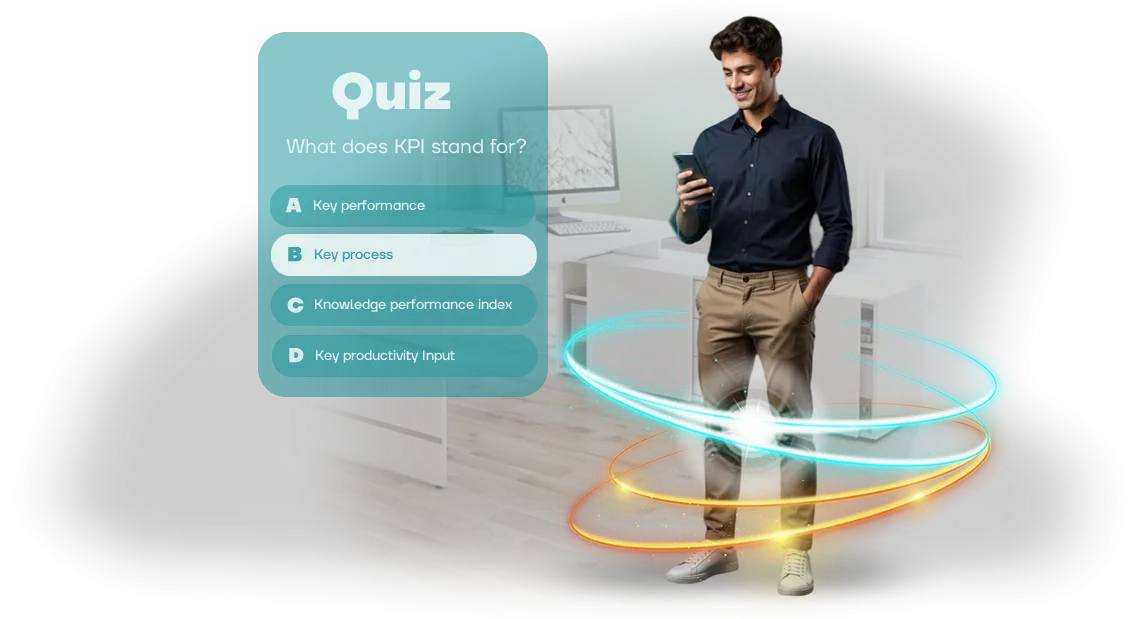
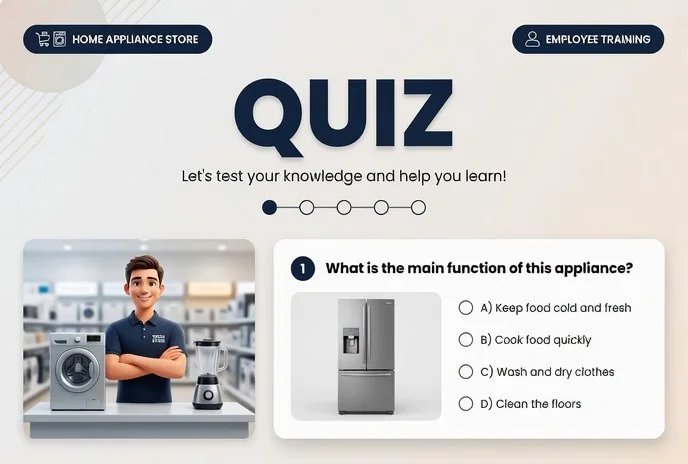
The problem is solved by certification of professional knowledge in a game format. A quiz built on real work situations makes people think rather than recall the correct answer.
An employee experiences scenarios they face every day: a difficult client, a disputed order, a non-standard task. This turns certification into a meaningful training session — the participant not only confirms their qualifications but also reinforces their skills.
It is emotional engagement that improves the quality of the check. When a person is interested, they don't look for easy ways — they want to test themselves and see their progress.
Such certification gives an honest picture of competencies and shows who is truly ready to work and who needs additional training. The manager gets objective data for decisions, and employees get drive and clear feedback.
We have already helped companies close this task: we designed a gamification system that makes certification of professional knowledge a natural part of the work routine.
The engaging format increases training coverage, reduces resistance to certification, and allows regular knowledge checks without disrupting work processes. You get a tool that works for competency growth, not just a report on formal completion.
What the quiz will give business and employees
A quiz on professional standards is not an exam, but a game people want to return to. Employees complete the material more willingly, and knowledge is reinforced not by rote memorization but by genuine interest.
For business, this is a direct benefit: every completed topic makes the team stronger without extra costs.
One of the main results is accelerated onboarding of newcomers. Instead of months of passively studying instructions, a new employee works through real situations in a quiz format and quickly starts working with minimal help from a mentor. Fewer mistakes mean less downtime and higher service quality.
Knowledge assessment becomes honest and transparent. The manager sees who is already ready for complex tasks and who needs additional training.
This allows building training precisely: not running everyone through the same courses, but closing exactly the gaps that hinder results.
The quiz noticeably increases team motivation. Competitive elements, ratings, and prizes for the best results create healthy excitement, and employees themselves strive to improve their knowledge to become leaders. As a result, not only engagement grows, but also the overall expertise of the team.
The main long-term benefit is reduced turnover and sustainable competency growth. When a person feels that their knowledge is valued and they are helped to grow, they stay with the company longer.
And a stable team means predictable work quality and lower costs for constantly searching for new employees.
Quiz formats for your company's tasks
A quiz for employees solves different tasks: certification of professional knowledge, team engagement at a corporate event, or regular training for newcomers.
The format determines how quickly the company gets results and how participants perceive the process itself — as control or as a useful game.
We use three basic formats that can be adapted to your company and combined with each other. The table will help you choose a starting point.
| Format | For whom | What it gives the client |
|---|---|---|
| Mass online quiz | Companies with a large workforce and offices in different cities | Knowledge check for all employees in one day, automatic report, and ready-made certificates |
| Live team quiz | Corporate events, team building, conferences | Competitive excitement, vivid photos and videos, positive brand association |
| Training quiz with error analysis | Departments with frequent hires, onboarding programs | Fast onboarding, less load on mentors, memorization without rote learning |
How to choose the right format
If the main task is personnel certification, choose a mass online quiz: it provides an objective picture of knowledge and saves HR time. When uniting the team is more important, a team quiz works well.
For regular employee development, a training format with detailed analysis after each question works better.
Companies often combine formats: a team quiz for engagement, then mass certification. We will design a game for your task and, if necessary, change the format after the first launch.
How we develop a quiz to test professional knowledge
Work on a quiz to test professional knowledge is structured as a clear project with clear stages.
You don't dive into technical details — we guide you from the first brief through launch and support, and you see the result at every step: approved content, a ready scenario, training launch, and completion data.
- Brief and immersion in the task. We discuss which employees need to be checked, which knowledge is critical, and which format is convenient for your team. We fix the goals: certification, advanced training, or entry testing.
- Content and question approval. Together with your experts, we compile a pool of questions, divided by topics and difficulty levels. You approve the wording and correct answers — the quiz checks exactly the knowledge that matters to the business.
- Scenario and logic design. We determine the number of attempts, time per answer, hints, and feedback options. We think through how an employee sees their result and what happens on a mistake — it's immediately clear what to review.
- Quiz and interface development. We build a convenient system that works equally well on a computer and a tablet. The interface is simple — the employee focuses on the questions instead of figuring out the buttons.
- Testing and setup before launch. We check the entire chain: participant registration, answering questions, result calculation, and report export. You get a stable version ready for a real training launch.
- Launch and support. We help announce the quiz to the team, answer employee questions, and quickly resolve technical issues if they arise. You control the process rather than dealing with the system.
- Result analysis and refinement. After completion, we export data: completion percentage, typical mistakes, average score by department. If needed, we adjust questions or make the levels harder for the next knowledge check cycle.
Each stage closes a specific task: from clear content to a measurable result. You get not an abstract "test program," but a working qualification control tool that is easy to update for new business requirements.
What is included in the delivery and stays with you
You get not a one-time event, but a ready-made tool for regular knowledge certification. Everything developed within the project remains at your disposal: you control the content, timelines, and format of use, and you don't depend on the contractor after launch.
- Quiz scenario — fully adapted to your professional standards: question logic, branching scenarios, explanations for answers. Tested on a real audience and ready for launch.
- Question and answer bank — all materials are transferred to you in editable form. You can add questions, change answer options, and update content without developer involvement.
- Control panel — an intuitive administrator interface: uploading new questions, setting time and passing rules, grouping employees by department or skill level.
- Training module — short instructions for your administrators: how to launch a session, view results, and export a report. Everything is designed for users without technical training.
- Post-launch support — support for an agreed period: we answer questions, help with setup, and update mechanics if your business processes change.
- Usage rights — you receive a license for all created content and settings. The system remains yours, and you can freely use it for internal certifications without additional payments.
Thus, you invest in a tool that works for your training system. The delivery package covers the full cycle — from scenario and questions to training your team and technical support at the start.
Within a short time after implementation, the quiz becomes part of the regular personnel assessment process.
Case study: a Unity quiz confirmed employee knowledge in two weeks
When a fitness club chain faced the task of confirming the knowledge of 850 instructors, standard tests failed: only a third of employees made it to the end, and the results did not reflect the real level.
Certification dragged on for two months, and management couldn't understand who truly understood the methods and who simply copied answers.
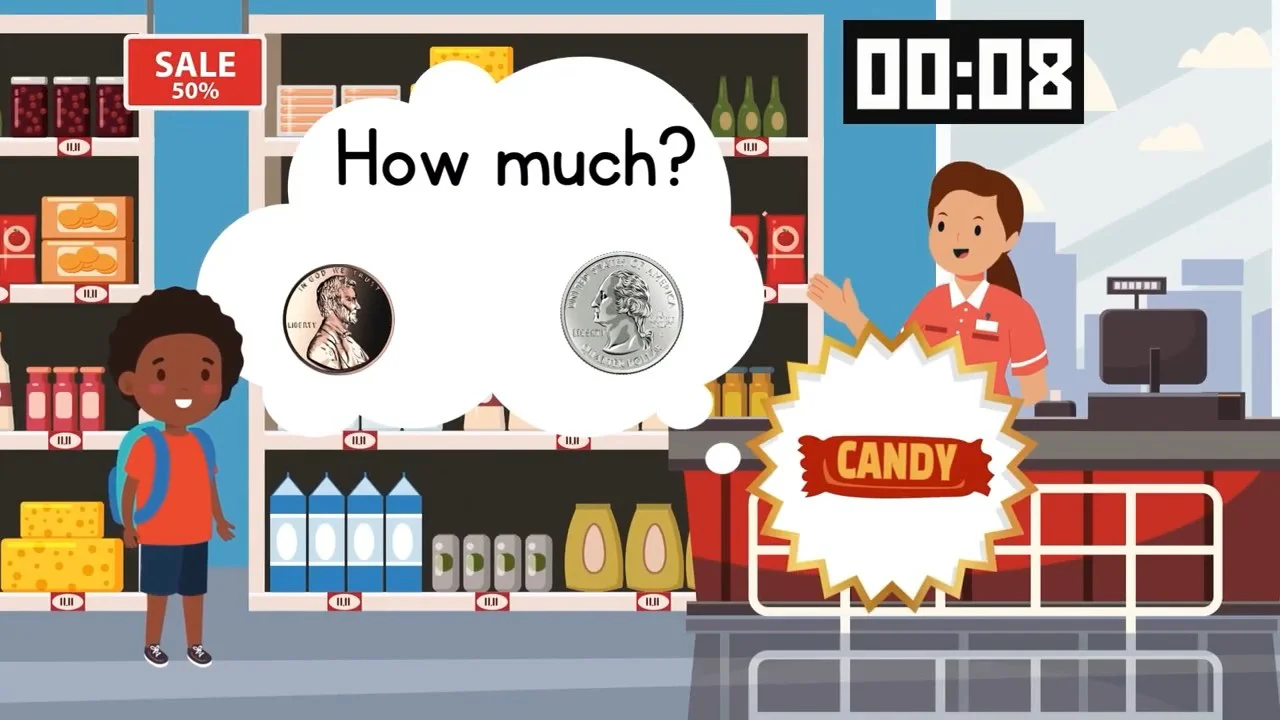
We proposed a Unity quiz format — an interactive speed challenge where each employee received unique questions and the system eliminated hints. Instead of a boring questionnaire, there was a game scenario with a timer, points, and instant feedback. This approach turns a knowledge check from an obligation into a competition.
What changed in two weeks
96% of employees passed the certification — three times more than under the previous paper-based system. The average score across departments increased by 27% because the quiz showed exactly where additional training was needed rather than forcing people to memorize answers.
Completing the test took two days instead of a week — training didn't stop club operations. Managers received a transparent snapshot of knowledge for each employee and the entire network, and trainers began closing gaps in real time. A month later, the client ordered an extended version for managers.
The key result is that certification of professional knowledge stopped being a formality. It became a fast tool for team control and development, paying for itself in one certification cycle. We regularly record such indicators in projects at our team— and this case is no exception.
How to choose a quiz format for your task?
Choosing a quiz format starts not with mechanics, but with a business task. If you need to quickly onboard a newcomer, a scenario with hints and explanations after each answer works well.
If the task is certification, the format becomes more complex: questions without hints, time limits, and a mandatory passing threshold.
For regular training, short quizzes with competitive elements work better: they maintain momentum and don't pull employees away from work.
For annual certification of professional knowledge, it makes sense to use a modular structure: separate topic blocks, retake options, and statistics collection for each department. This way you see not just "passed/failed," but exactly where the team loses knowledge.
The most common mistake is using the same format for different purposes. Employees get used to it, results become a formality, and management doesn't get an objective picture.
The right approach is to determine what matters most to you — speed of learning, depth of testing, or engagement — and then choose the mechanics accordingly.
We help you choose a format for your task even before development begins.
During an express analysis, we look at how training and certification currently work, what knowledge gaps exist, and propose a scenario that delivers measurable results — from raising the average score to reducing the time needed to onboard a new employee. You get a quiz that works for the business, not just entertains.
What if employees get confused or the quiz breaks?
We understand that the main concern is not technical complexity, but disruption of the certification process. A manager fears that the quiz will freeze mid-question, an employee won't be able to complete the test, and the result will be inaccurate.
We work through these scenarios in advance: we use a secure server architecture, automatic saving of every answer, and checkpoints. Even if the connection temporarily fails, an employee can calmly continue from where they left off, and all data will be preserved.
Employee adaptation is also not a problem. The quiz interface follows familiar principles: large buttons, clear hints, and the ability to return to the previous question. Before launch, we run a short test pass with a volunteer group and simplify the scenario if needed.
And you can change questions and answer options yourself — without developer involvement or lengthy approvals.
What happens if an employee loses internet during the test?
Answers are automatically saved on the server after each step. When the connection is restored, the employee returns to the system and continues from the same question. Their result won't be lost, and a retake won't be required — unless your regulations stipulate otherwise.
How quickly will employees get the hang of it if they aren't used to such formats?
The quiz works like a regular questionnaire: question text, answer options, a "Next" button. Additionally, there are built-in hints and the option to do a practice run without saving the result. On average, one trial pass is enough for an employee to feel confident.
Can questions be updated after the system is launched?
Yes. You add new questions, change wording, and update correct answers yourself in your personal account. Changes apply immediately, without restarting the quiz and without involving developers. This is convenient when internal regulations or legal requirements change.
Who is responsible if the quiz breaks at the most critical moment?
We support the system and monitor its operation during mass launches. If a failure occurs, the team responds promptly — within business hours. In addition, we run load tests before large groups so that all employees can take the test simultaneously without slowdowns.
Let's discuss your quiz — leave a request
You already know what result you need: employees complete certification of professional knowledge and apply new skills at work. What's left is to discuss how the quiz will fit into your training system and get a clear implementation plan. For this, you don't need a technical brief — just a short call where we'll break down your task.
We've been working with training quizzes for years, so we offer not "just another game," but a tool that integrates into your assessment and motivation system. After the consultation, you'll receive:
- a clear description of the quiz scenario for your goals — from a quick knowledge check to full certification of employees' professional knowledge;
- a timeline and implementation stages for training — what we do first, what comes next, and when the quiz will go live for your teams;
- format recommendations: individual completion, team tournament, or a Unity meta-game integrated into your corporate training process;
- a proposal for question structure and difficulty levels, so the quiz gives an objective picture and doesn't turn into a guessing game;
- a motivation plan: how to link quiz results with grades, bonuses, or career growth without complex administrative work;
- a clear budget, list of stages, and scope of work — without hidden surcharges or "surprises" in the middle of the project.
We formulate all recommendations in business language, without technical details, so you can quickly make a decision and coordinate the plan with colleagues. You can order the quiz after the first meeting — if you feel we're on the same page.
We don't push unnecessary options and will offer exactly the scope that solves your knowledge certification task.
Leave a request to discuss your task and get a consultation on training implementation. We'll respond within one business day, show examples of similar projects, and suggest the best place to start.