

Are employees slowing down the implementation of new systems and business processes?
When a business implements a new system or changes an established process, the main brake is not technology, but people. Employees resist: they fear mistakes, don’t see the point in change, and don’t want to take on extra work.
The result is familiar to every manager: deadlines slip, launch is delayed, and money goes to rework and firefighting that wasn’t in the budget.
Resistance to change is a natural reaction, especially when staff don’t understand what the new rules will give them personally. Typical employee training — dry instructions, presentations, and mandatory lectures — only increases the tension.
People formally sit through the hours, remember the minimum, and in practice continue to act the old way.
As a result, the implementation of solutions stalls: processes don’t work, metrics don’t improve, and management is forced to spend resources on constant control and error correction.
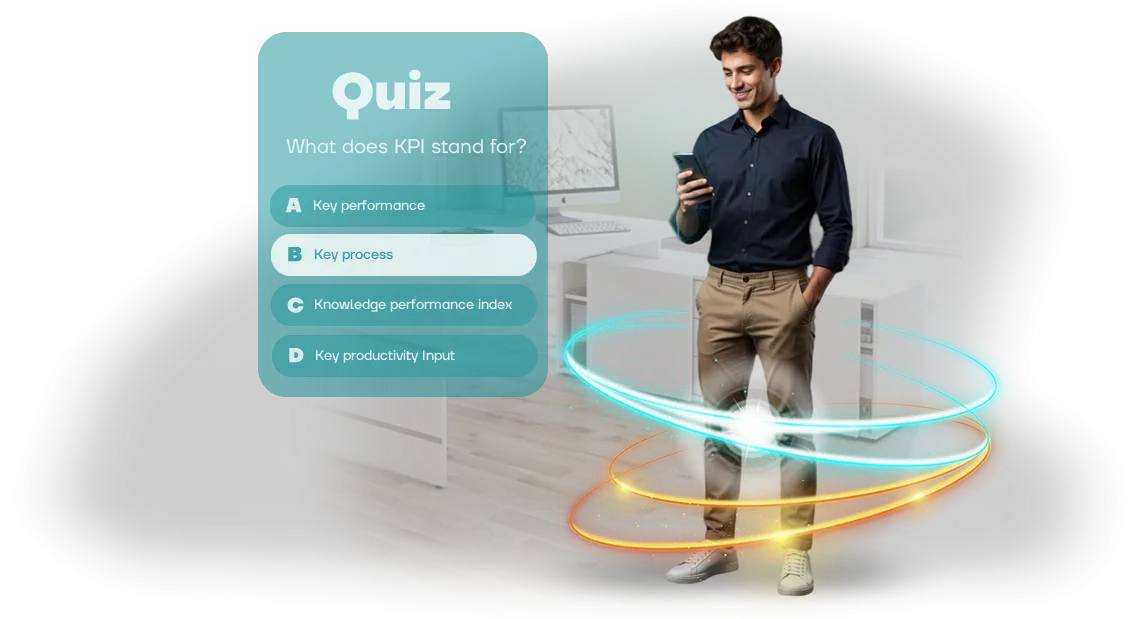
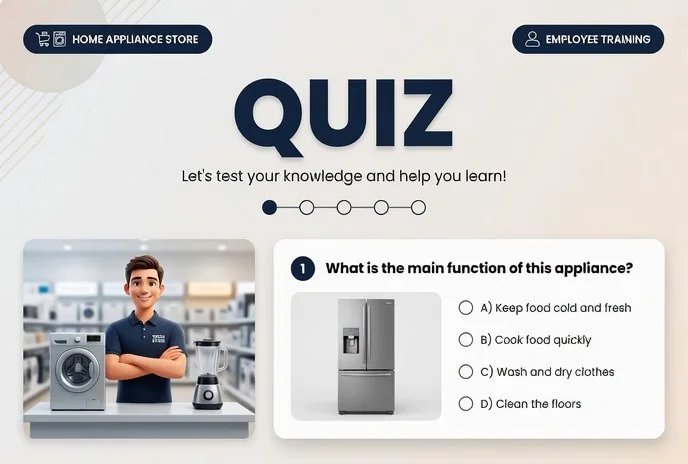
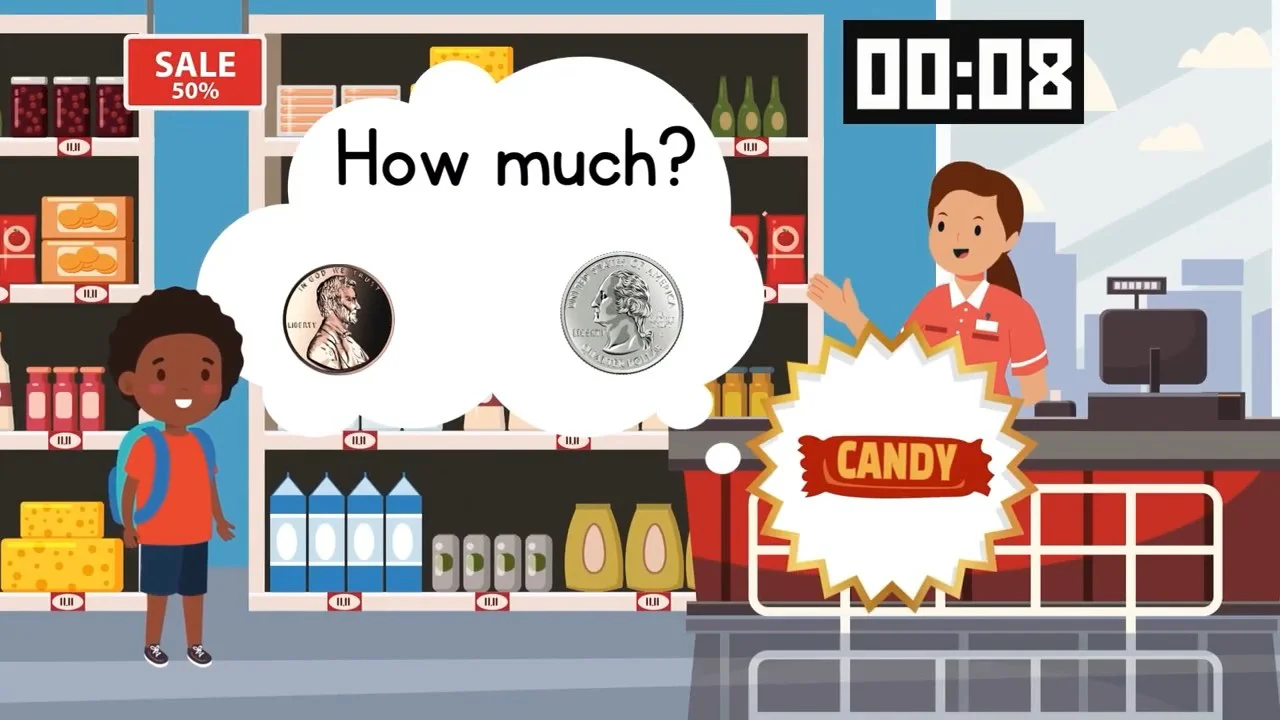
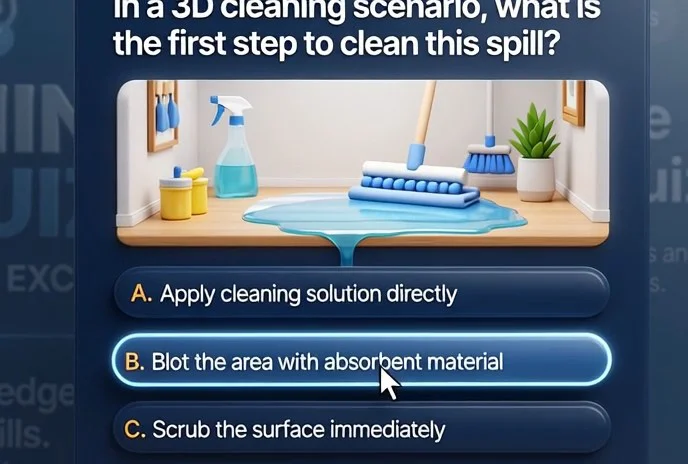
Well-designed training solves this problem. When employees learn new material through an interactive quiz, they don’t cram regulations; they experience real situations in a safe game environment.
This format removes the fear of failure, helps understand the nuances, and gradually leads to acceptance of new rules — the employee arrives at the answer themselves rather than receiving a ready-made instruction.
As a result, employee training stops being a “mandatory chore” and becomes a tool that prepares the team for a new way of working before the official launch.
Implementation of new systems and business processes is faster and less costly when the staff is already ready for change.
We develop quizzes for your specific business task: we adapt scenarios to your context, work through difficult situations, and show employees the benefits of change. You get a team that understands the new processes, doesn’t sabotage them, and reaches the desired metrics faster. The project therefore pays for itself sooner and without extra spending on endless refinements.
What does training gamification bring during change?
When changes happen in a company — implementation of a new system, regulation, or business process — the main problem is not the solution itself but the people. Employees resist, procrastinate, and “forget” to update their skills.
As a result, deadlines slip, results are devalued, and retraining eats budgets. Training gamification solves exactly this problem: it turns a mandatory process into an engaging task that people want to participate in.
The first and main effect is increased staff engagement. When instead of boring instructions and presentations an employee takes a short quiz with competitive elements, they get emotionally involved.
People start coming back to the material on their own, asking questions, discussing it — knowledge ceases to be “imposed from above” and becomes a personal achievement.
Combined with team leaderboards, this creates healthy competition that works without additional control from a manager.
The second result is fast material absorption and, consequently, the overall effectiveness of training. The quiz is designed so that key points are repeated in different forms, and mistakes are explained right away, preventing wrong habits from forming.
This shortens onboarding time, speeds up the launch of new processes, and reduces the number of errors in the first weeks after implementation. A manager sees not just “training completed” but real metrics: who has mastered the topic and who needs additional work.
The third effect is reduced turnover and resistance during the change phase. When employees see that the new process is clear, manageable, and even engaging, the fear of “I can’t do this” disappears.
Confidence increases, and so does loyalty to a company that cares about its people. As a result, change goes more smoothly, the team gets back to a normal rhythm faster, and resignations during transformation become rare.
Gamified training is not just a “quiz for fun”. It is a change management tool that pays for itself faster than classic training formats and measurably improves business performance.
Quiz formats for implementing new systems and business processes
The implementation of new systems and business processes is slowed not by the complexity of the tools, but by employee resistance. People fear mistakes, see no point in yet another instruction, and quickly lose motivation.
A training quiz turns boring familiarization into a game: an employee checks themselves, gets feedback, and memorizes action algorithms until they become automatic.
We select the format for a specific task — from a quick self-check to long-term engagement. For clarity, we’ve put typical scenarios that cover the main corporate training tasks into a table.
| Format | For whom and when | What it gives the client |
|---|---|---|
| Test | New employees during onboarding, to check knowledge of regulations after a lecture | Quick assessment of comprehension, gaps are visible, can automatically route to retraining |
| Marathon | When launching a new system — extended training over 2–4 weeks | Continuous engagement, employees gradually integrate the material into their work |
| Team quiz | For departments and divisions, when it’s important to discuss new rules and unite the team | Reduces resistance, works through objections within the team |
Each format uses game mechanics — points, levels, competition. This holds attention and brings even skeptics back to the quiz. For business, the main thing is that employees actually apply the new processes after training, not just “familiarize themselves” against a signature.
How does the development of a corporate quiz work?
The implementation of new systems and business processes is most often slowed not by the complexity of the instructions, but by the fact that employees don’t have time to adapt.
A corporate quiz solves this problem through gameplay, but to make it truly educational rather than merely entertaining, we structure the development in stages.
- Brief and immersion in the task. We discuss which processes you are implementing, what the audience is, and what mistakes employees most often make. We record the success criteria.
- Scenario and mechanics design. We define the storyline, question types, difficulty levels, and reward system. The quiz is built so that the employee actually remembers the new order of actions.
- Training content approval. We send the questions and answer options for your review: we adjust the wording to fit the corporate style and current regulations.
- Development and assembly. We create the interface, fill the quiz with content, and set up display on work devices. We use Unity, a professional game platform — stable and fast.
- Testing and launch. We test the scenario on a control group of employees, collect initial feedback, and make corrections. Then we launch full use.
- Support and results analysis. After launch, we monitor completions, help with technical issues, and show which topics were mastered well and where gaps remain.
This sequence ensures transparency: you always know at what stage the project is and when the quiz will be ready.
What’s included in the quiz delivery package?
Implementation of a new system or business process goes smoothly when employees quickly absorb the rules and start applying them in practice. That’s why we’ve prepared a quiz delivery package that covers all stages: from launch to results control.
- Ready-made questions based on your materials — we design the questions ourselves from your instructions and regulations; you don’t need to come up with scenarios. Just provide the materials, and we’ll handle the rest.
- Training materials — short tips and reference guides that the employee sees before and after the questions. This speeds up memorization and reduces resistance to the new system.
- Administrator instructions — simple step-by-step guides: how to launch the quiz, add participants, and organize competition between departments. Everything is clear without special training.
- Per-employee reporting — you see who completed it, who made mistakes, and which topics are difficult. This helps you provide additional training in time and avoid knowledge gaps.
- Updates to questions and scenarios — when processes change, we adjust the quiz. You don’t stay with outdated materials, and training always follows current rules.
- Technical support for the entire period of use — we answer administrators’ questions and help resolve any situation quickly, so training doesn’t stop even on launch day.
With this package, you get not just a quiz but a complete training system that can be launched within a couple of days. All that’s left is to pick a date and invite employees.
Case study: how quiz-based training sped up the launch of a new system
Implementing a new system is always a risk: employees are used to old processes, fear difficulties, and often make mistakes at the start. This is exactly what the logistics company SeverLogistik faced when it decided to move client work to a new CRM.
Standard training in the form of presentations and instructions didn’t work: a week after launch, the number of errors when entering orders remained high, and support was drowning in questions.
How it happened
We suggested replacing part of the traditional training with a quiz embedded directly into the learning process.
Instead of passively viewing materials, employees answered questions in a game format: they analyzed typical situations, learned to find the right actions in the new interface, and immediately saw their mistakes.
This format allowed each participant to test themselves without fear of judgment and consolidate knowledge in practice.
All sales department employees and logisticians took the quiz — about 120 people. We divided the training into short stages to keep people from being pulled away from work, and added elements of competition between teams.
This increased engagement: employees returned to the questions on their own to improve their results.
What changed
The main indicator — the number of errors in the new system during the first two weeks — decreased by 40%. Employees mastered key scenarios faster, and the number of support requests fell threefold. The CRM launch went almost glitch-free: there was no need to stop work or revert to old processes.
The company’s head noted that the quiz removed the main fear of the new tool — people stopped being afraid to press buttons and acted more confidently.
Within a month, the company ordered a series of quizzes from us to train new employees and refresh knowledge after system updates. Thus, game-based training became not a one-time event but a permanent tool for successful changes in business processes.
How to choose the right quiz format for your task?
Choosing a quiz format starts not with mechanics but with the goal: what should change in employee behavior after training?
If the task is to introduce the team to a new system and make sure the basic principles are clear, a multiple-choice quiz with automatic explanations is enough.
If you need employees to confidently apply new processes in their work, a branching scenario is better, where each person chooses a decision in situations close to real life.
The second important factor is the audience. For beginners, a simplified format with hints and the ability to retake is useful; for experienced employees, an advanced level with complex cases keeps them interested.
If you’re training several departments, you can make a team quiz with competition and an overall rating: this increases engagement.
For self-paced study at a convenient time, an asynchronous mode is better, where each person takes the test at their own pace and the manager sees results in a summary.
Selecting a quiz for your task also involves the data question. Decide in advance what metrics you need: success rate, completion speed, retry attempts, and typical mistakes. This affects the question structure and scenario.
For example, if it’s important to identify weak spots in a specific business process, the quiz includes questions for each step and a separate report by topic.
The right format is one that solves your training task while remaining convenient for employees.
We help you choose it at the start of the project: we conduct a short brief, discuss goals and audience specifics, and then suggest a scenario — from a simple quiz to a multi-level meta-game.
In the end, you get a quiz the team completes with interest, and you get clear results for monitoring the implementation of new systems and business processes.
Frequently asked questions about employee training through quizzes
Managers often hesitate before launching training in a new format: will employees understand it, will it distract from work, is it difficult to implement. Below we answer the most frequent questions — briefly and to the point.
We’ve been through dozens of implementations in different companies and know where doubts usually arise. All answers are based on real experience, not theory.
Employees won’t use this — especially the older generation?
Quizzes are designed so anyone can figure them out: the interface is intuitive and requires no special skills. We add a short instruction and support employees in the early stages. In practice, even those who don’t like learning get involved in the game.
Will it take a lot of time and distract from main work?
Completing it takes just 5–7 minutes a day — it can be built into a planning meeting or break. The manager sets the frequency and format of sessions. As a result, instead of long lectures you get quick exercises that reinforce knowledge without overload.
How do we integrate the quiz into existing training if we already have our own materials?
Nothing needs to be moved to a new system. We adapt the quiz to your scenarios and content and run it in parallel with current processes. You can use it as a standalone tool or as part of an existing program.
How will we know the training works and delivers results?
After each stage, you get simple analytics: how many employees completed it, which topics were mastered, where they most often make mistakes. The team’s progress and weak spots worth reviewing are clearly visible. This helps you make decisions about further training.
Launch employee training in game format right now
Game-based employee training doesn’t require lengthy preparation. To implement new systems and business processes, you don’t need to gather staff in a lecture hall: the quiz launches faster, and employees absorb material through practice. We’ve refined the launch process so that only a few days pass from the request to a working quiz.
Here’s what it looks like:
- Day 0 — you leave a request, we get in touch within a business day and record the task.
- Day 1 — brief: you tell us about the new processes, we propose a scenario and quiz format.
- Day 2–3 — we create questions and answer options, adapting them to your specifics.
- Day 4 — we build the interactive quiz and configure it for your corporate portal or learning system.
- Day 5 — we test it together with you and make edits.
- Day 6–7 — we launch it for all employees and hand over the instructions.
This approach saves the team’s time and immediately shows results. Employees see that change is not a formality but clear rules that can be checked in a game.
You get a working tool that can be played from any device, plus a guide: how to get the team involved, how to track progress, and what to do if someone doesn’t cope.
Order a quiz now — start training without postponing important changes. Leave a request on the website, and we’ll prepare a plan for your task with specific timelines.