

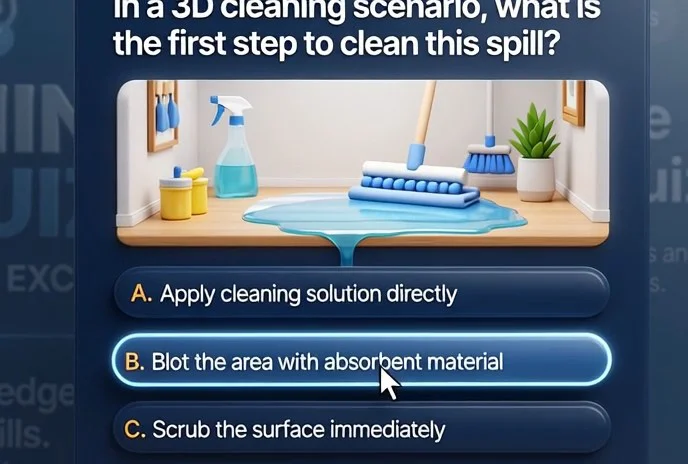
Boring Tests Don't Work: Flat Design Creates Learning Engagement
Do employees dislike learning? Most of the time, the problem isn't laziness—it's how the material is presented. Corporate tests made up of dry questions and long texts feel like an obligation to be endured. People answer automatically, and a few days later they can't remember what the material was about.
This kind of training benefits neither the business nor the employees themselves. Time is spent, but the skills don't stick. Low engagement is a signal that the format is wrong: the brain ignores what is boring and only remembers what triggered an emotion.
That is why even the most important instructions are forgotten by the moment they are actually needed on the job.
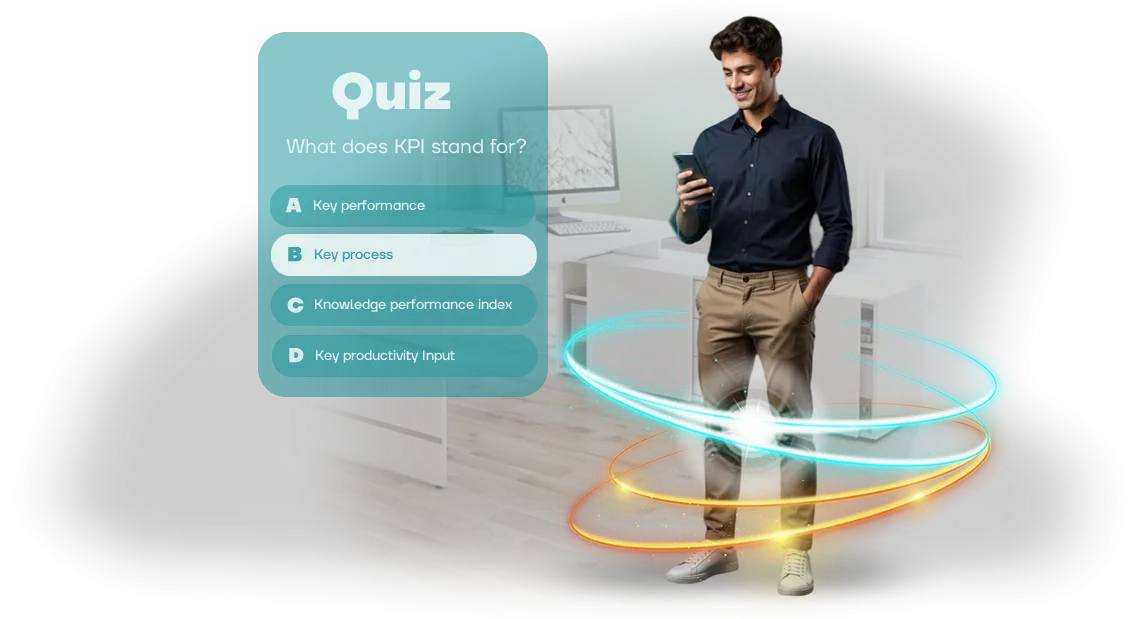
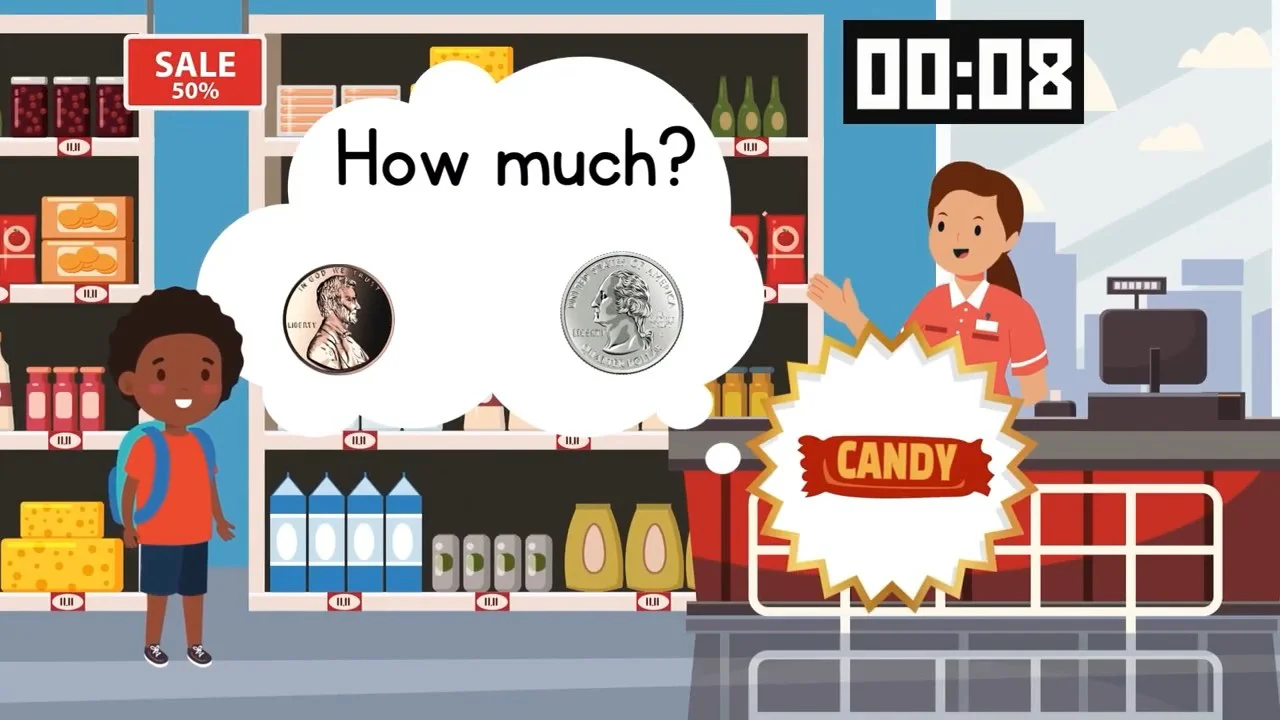
Flat Design solves this problem. Bright but simple visuals, clear navigation, and game mechanics turn learning into an engaging process. Employees don't get distracted by complex interfaces or unnecessary details—all attention stays on the material itself. Information is absorbed naturally, and the test stops feeling like a punishment.
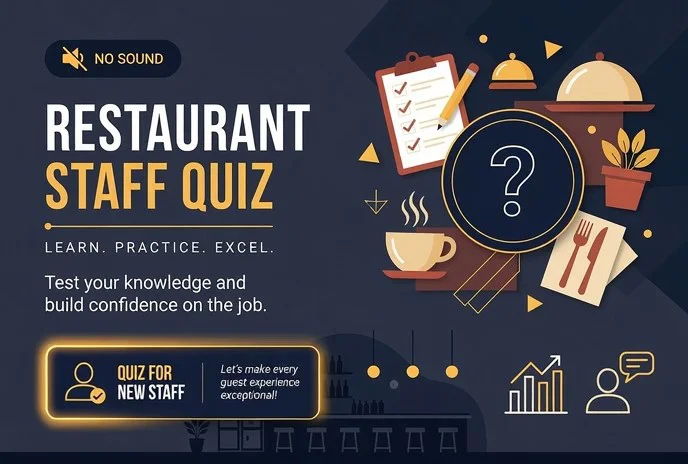
We use Flat Design in training quizzes to boost engagement and material retention. We think through the scenario, design characters and locations, and assemble interactive tasks—and you get a tool that employees use with genuine interest, not under duress.
When learning becomes clear and lively, engagement isn't the only thing that grows: mistakes go down, new standards are adopted faster, and learning stops being a formality and starts driving results.
What a 3D Training Quiz Brings Your Team
An employee completes a course just to check a box, and a week later can't remember the key rules. The reason is not laziness—it's the format: text and lectures don't create emotions, so they don't stick in memory.
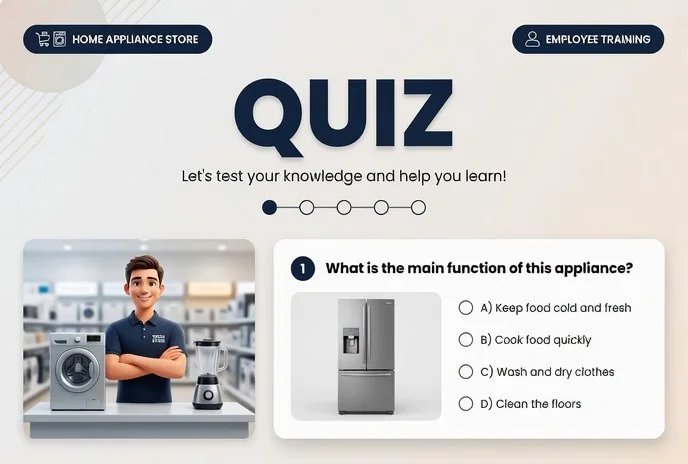
A 3D training quiz solves this: interactive game mechanics hold attention and make learning a natural part of the work process.
Here's what a company gets when its team plays a Flat Design quiz instead of watching a boring presentation:
- Knowledge growth without rote memorization. Employees answer questions, see 3D objects, and immediately understand where they went wrong. Knowledge is reinforced through action, not through note-taking.
- Whole-team engagement. Game mechanics, points, and a shared leaderboard create healthy excitement. Even people who usually stay quiet in trainings get involved and discuss the answers.
- Transparent results for managers. The administrator can see who completed the training, which topics are causing difficulties, and where the material needs to be revisited. This is a clear picture with no paper reports.
- A stronger employer brand. The modern format shows that the company invests in employee development. This increases loyalty and reduces staff turnover.
- Business impact. Fewer errors on the job, faster adaptation for new hires, and higher service quality. Training stops being a cost item—it begins to produce results.
our team creates these quizzes for your company's needs: with your scenarios, standards, and corporate identity. We handle the production of 3D objects, question logic, and launch—all you have to do is receive a ready-made tool that works toward business results.
Flat Design Training Quiz Formats
Different business goals require different learning approaches. The same test won't work for onboarding a new hire, an annual performance review, and team spirit building.
That is why we at our team have developed a line of Flat Design quiz formats—each one solves its own task and easily integrates into an existing training system.
Flat Design in training games gives the client two key advantages: the interface looks modern and isn't overwhelming for employees, and the quizzes load quickly on any device—from a laptop to a smartphone. This means the test can be taken at a convenient time, with no additional software to install.
| Format | Who it is for | What it gives the client |
|---|---|---|
| Onboarding quiz | New employees | Fast introduction to the product, values, and regulations; reduced anxiety in the first days on the job |
| Assessment test | Current employees | Objective knowledge checks and transparent results for HR; fewer disputes and subjective evaluations |
| Team-building quiz | Departments and teams | Lively communication, informal atmosphere, team cohesion, and higher engagement |
| Jeopardy!-style game mechanics | All employees | A competitive element, motivation to complete training without reminders, and better material retention |
Game mechanics—points, levels, leaderboards—turn boring testing into an exciting process. Employees are more willing to return to quizzes, and managers see not only final scores but also each participant's progress.
How a Quiz Is Developed: Steps and Timeline
We have structured the process so you see an interim result at every step and can influence the project without unnecessary approvals. A Flat Design quiz typically launches in 3–4 weeks—the timeline depends on the number of questions and the number of game scenes.
- Development brief. You tell us about your goals, audience, and the desired employee behavior. We clarify the details and propose a concept that solves exactly your task—whether that is increasing engagement or verifying knowledge after training.
- Flat Design. We create the visual style: clear, calm, and in your corporate colors. We approve the mockups before content creation begins, so the design matches your brand from the first attempt.
- Scenario approval. We write the questions, answer options, and explanations for the correct answers. You see the scenario in a simple document and can make edits before changes would require rebuilding the game.
- Quiz assembly. We build the game on a professional engine—this guarantees stable operation on any employees' computer or laptop. We add animation, sound, and automatic score calculation.
- Refinements. After the test version, you receive a link, take the quiz as a participant, and leave comments. Two iterations are usually enough to account for all feedback—from wording to slide transition speed.
- Game launch. We publish the quiz, provide a short employee instruction, and support the first launch. A week later we provide statistics: who completed it, which questions caused difficulties, and which topics are worth reviewing.
After launch, we stay in touch: we update questions, add new rounds, and help with technical issues. If you need to change the design or expand the game, it can be done within the same quiz without starting a new project.
What Is Included in the Training Game Delivery
The delivery includes everything needed to launch training: scenarios, visual assets, interface, animations, and source materials.
You receive a finished product, not just an “engine” or a set of files—every component is tailored to your tasks, and the team can use it immediately after handover.
- Quiz scenario — a complete set of questions with answer options, explanations, and a scoring system. The scenario is ready to use and can be easily adjusted to your specifics: company rules, products, and work standards.
- 3D characters and Flat Design locations — bright, clear visuals that engage employees and help them remember the material. Design without unnecessary details speeds up perception and works on any device—from computers to tablets.
- Interface — simple navigation, large buttons, and clear hints. Employees don't waste time figuring out where to click and complete the quiz without distractions.
- Animations — smooth transitions, emphasis on correct answers, and “alive” characters. All of this holds attention and turns learning into a game, not a dull exam.
- Source files — all materials are handed over to you: projects, graphic files, texts, and instructions. You are not tied to the developer and can make edits, order improvements from any team, or reuse the assets in other tasks.
- Methodological guide — a description of how to run the training, what results to expect, and how to interpret employees' responses.
All components are interconnected: the scenario, graphics, and animations work as a single system. That is why the quiz launches quickly, without lengthy setup, and your employees gain a positive learning experience.
Case Study: How a Quiz Improved Training Effectiveness
Before the quiz was introduced at the federal chain Lotos—500 stores across the country—training was a 40-minute presentation with low engagement.
Only 55% of employees actually completed it, and a week later they had forgotten most of the merchandising and product-handling rules.
We turned the material into an interactive 3D game in Flat Design style: short rounds accessible to any skill level, and the ability to train from a phone during a break.
The game was built on Unity—it launches quickly even on older smartphones, with no installation or special programs. Inside is a virtual store where a new employee arranges products, answers customer questions, and handles conflict situations.
Flat design here is not just a visual technique: large icons and simple illustrations help employees remember the sequence of actions without getting distracted by details.
When they walk into the real store, employees rely on the same visual cues they saw in the game—so there are fewer mistakes.
Results after two months: 92% of employees completed the course instead of 55%, the average score in mystery shopping assessments rose by a third, and onboarding time dropped from forty minutes to fifteen.
The head of training at Lotos wrote in a review: “Employees are asking on their own when the next module will be ready—for us, this is a first.”
Six months later, the chain ordered an updated version of the quiz for a new product line and expanded it to its warehouses. This is how gamification and a well-thought-out interface turned dull onboarding into a tool that visibly affects business metrics.
How to Choose the Right Quiz Format for Your Task
Choosing a quiz format starts not with trendy mechanics, but with answering the question: what should the game change in employee behavior? If the task is to check knowledge of regulations after a course, a quick multiple-choice test is enough.
If you need to build a skill, get people engaged, and reinforce the material through practice, immersive scenarios work better—for example, Flat Design training locations where an employee makes decisions in a situation close to real work.
The target audience determines the complexity of the material. New employees need simplicity and hints; experienced employees need a challenge and speed.
Consider age, technical readiness, and stress levels: for production staff, formats with minimal text and clear navigation work best; for office teams, you can add competitive elements and team rounds.
The more precisely the format matches the audience's habits, the higher the completion rate and the greater the business benefit.
Budget and timeline are the second key factor. A classic platform test can be assembled in a few days and requires minimal investment.
An interactive quiz with 3D models and voiceover takes more time but provides a completely different level of engagement: employees praise the game, share screenshots, and absorb knowledge without feeling like they are being forced to learn. This is not just an expense—it's an investment in loyalty and the speed of staff adaptation.
Finally, think about how the result will be measured. If you only need simple statistics on correct answers, standard reports are enough.
If what matters is the dynamics of decisions in work situations and simulating the consequences of mistakes, you will need a format with branching scenarios. In that case, we help design the mechanics so you get exactly the metrics that affect your business indicators.
Our task is not to push you toward the most expensive solution, but to choose a format that solves your problem within your timeline and budget.
At the start, we conduct a short brief, clarify the goals and audience, and then offer the best option—from a simple test to a full training game with 3D locations. You get a clear plan and confidence that your money and time are spent wisely.
Answering Doubts Before Ordering
Before ordering a corporate quiz, doubts usually concern not the value but the implementation. Clients ask: is it hard to launch, will employees reject the new format, what will happen to the content in six months, and who will help if something goes wrong. These are natural questions—we have answers based on dozens of projects.
We handle the technical side. The quiz is integrated into your internal environment through a simple link, fully adapted to your brand—from the color palette to corporate memes—and question updates happen without developer involvement. Employees complete the training in their usual browser, with no additional programs to install.
Will implementation take a lot of time and distract employees from work?
No. The quiz is launched via a link or through an internal portal; nothing needs to be installed. Preparation takes a few days, and we handle all the technical work. You get a ready-made mechanic that does not disrupt the work rhythm.
Will employees treat the training as a chore and complete it half-heartedly?
We make the quiz a game format: short 5–7 minute rounds, leaderboards, rewards, and a competitive spirit. In our projects, 80–90% of the team takes part in such training, and the percentage of repeat completions grows with every launch. People come back on their own to improve their results.
How do we update content, and will we need a programmer?
You can upload new questions, answer options, and hints in a simple admin panel without knowing code. It takes minutes, so the quiz can easily become an always-living knowledge base.
What happens with technical support after launch?
We support the project throughout its entire operation. We monitor stability, quickly fix any possible issues, and stay available during business hours. You always know who to contact.
Order a Training Quiz—Get a Result
Submit a request for a cost estimate, and on the very first day you will get a consultation on format, content, and timelines. We will call you back, clarify your goals, and show how a training quiz will fit into your motivation system. You don't need to understand gamification—we have already done that for you.
We work on a transparent model: from the first conversation to launch, you see what you are paying for and when you will get the result. That is why we have put together the typical stages of cooperation.
- Request for estimate — you leave your contact details, and we clarify the training topic and the number of employees.
- Consultation — we discuss the scenario, Flat Design style, and technical requirements for the platform.
- Cost and plan — we fix the estimate, timeline, and list of stages so that nothing changes along the way.
- Demo version — we show a working part of the quiz on real questions and make edits.
- Launch and support — we publish the game, help run the first launch, and collect statistics.
After the request, you receive:
- personal consultation with a manager without hidden conditions;
- a detailed cost estimate for your task and number of employees;
- examples of already-launched Flat Design quizzes;
- a demo version—so you can evaluate the experience before full payment;
- support at all stages and after the launch.
The request is not binding: even if you decide to do everything in-house, you will still have a clear estimate and work plan. Leave your contacts—we will show you the result on a real quiz.