

Trainings Don't Work: Photogrammetry-Based Quizzes for Engagement
Corporate training often becomes a formality: employees sit through lectures and presentations, and a week later cannot remember key rules. Staff engagement drops, and with it the return on training investments.
Without practice, knowledge evaporates within a few days, and the company pays again for retraining.
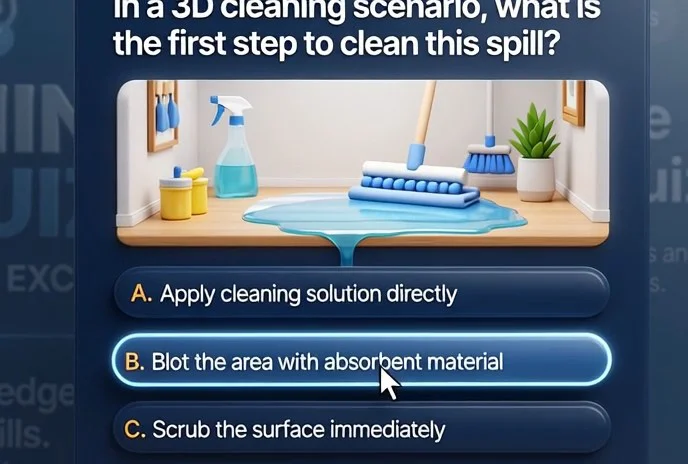
Photogrammetry-based quizzes solve this problem. Instead of boring slides — an interactive simulator where employees explore realistic 3D models of real objects, spaces, or processes created with photogrammetry technology.
The employee sees not a static image but a detailed model they can interact with: rotate, inspect, take actions, and see the consequences. Tasks are designed so participants find answers themselves, test actions, and receive instant feedback.
This turns learning into a game: excitement, competitiveness, and the desire to complete a level and show results appear. Such interactive trainings hold attention longer than traditional formats, and material retention is several times higher than with passive listening.
Educational quizzes for employees can be taken individually or in teams, with leaderboards and reward systems added — this further boosts engagement.
For business, this means not only improved staff qualifications but also measurable results. Photogrammetry-based quizzes suit new hire onboarding, regular knowledge checks on quality standards, safety procedures, or product handling.
You see completion statistics, understand which topics cause difficulties, and adjust training programs in time. The company gets employees who have truly absorbed the material — meaning fewer errors and higher productivity.
We develop photogrammetry-based quizzes tailored to your company's goals: from simple tests to large-scale simulators based on real locations. This is a way to restore employees' interest in corporate training and turn a mandatory process into a useful and engaging activity.
The result: more qualified staff, confidence in knowledge quality, and greater return on every training investment.
What an Educational Quiz Delivers: Engagement and Measurable Results
Lively Interest Instead of Boring Lectures
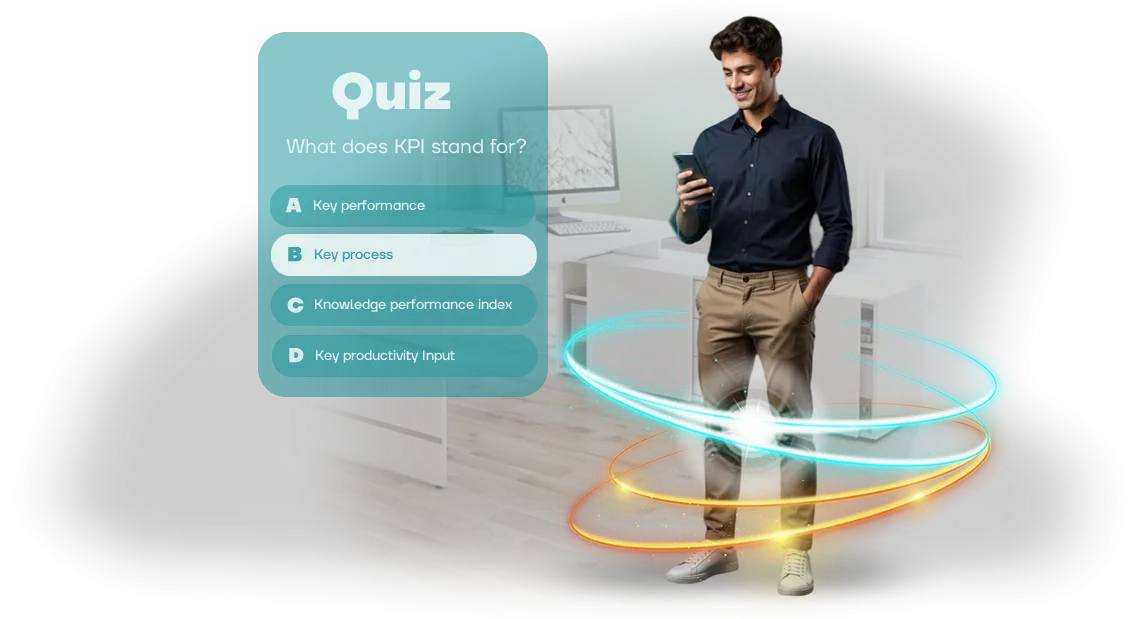
Employees remember what interests them. Regular briefings are boring, while a quiz turns learning into a game: colleagues compete, complete levels, and receive instant feedback. The excitement holds attention to the end.
The interactive format is especially effective for remote teams and young specialists. They participate willingly because it's not an obligation but an engaging activity. The quiz achieves high participation, and employees themselves ask for more.
Knowledge Growth and Practical Reinforcement
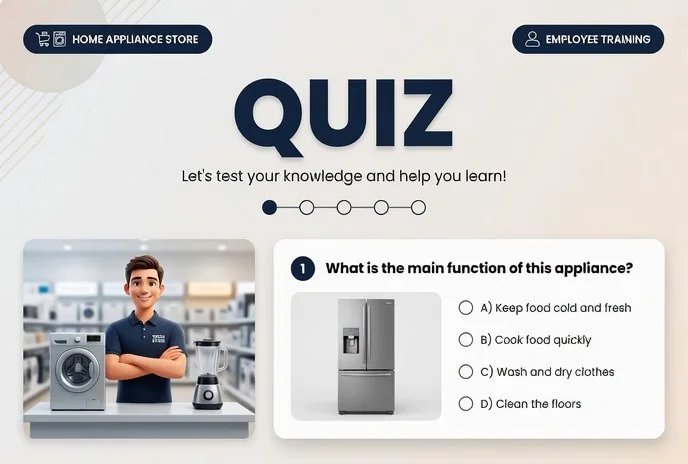
Simply reading instructions isn't enough — knowledge sticks when applied. Questions are built around real work situations: the employee chooses the right solution rather than guessing the answer. This way they practice skills for daily work.
Mistakes become part of learning: after an answer, the quiz explains why it's right or wrong. This improves material comprehension and reduces the number of typical errors.
Clear Metrics for Management
Managers need to see training effectiveness. The quiz provides an objective picture: who passed, who is falling behind, which topics need review. Data is collected automatically and available in a clear visual format — no manual feedback collection.
Based on these metrics, it's easy to adjust the training program and make personnel decisions: identify potential mentors or arrange additional sessions.
Employer Brand Recognition
Modern training is part of company image. A vivid quiz with 3D graphics shows that the business invests in team development. This strengthens employee loyalty and attracts candidates.
When employees share quiz results on social media, the company gains additional visibility. Training becomes a tool for attracting talent.
Photogrammetry-Based Quiz Formats: For Any Business Goal
Photogrammetry technology turns real objects and spaces into interactive 3D scenes. The employee doesn't read dry text or look at flat images — they move through digital space, examine details from different angles, and answer questions right in a familiar environment.
This approach multiplies engagement and material retention. For business, it means faster onboarding and lower retraining costs.
But one quiz doesn't cover every business need. A newcomer needs fast onboarding, an experienced specialist needs knowledge checks, and a manager needs certification. We've divided the formats so you choose based on a specific goal rather than fitting the goal to the format.
Formats for Your Task
| Format | For Whom | What It Gives the Client |
|---|---|---|
| New hire onboarding | HR specialist, department head | Employee masters work processes through a 3D tour in the first days, with less stress and fewer mistakes |
| Knowledge check | Department manager | Objective picture of team readiness, gaps visible immediately, without interrupting work |
| Certification | HR director, company management | Transparent competence assessment, results in a clear report, fewer disputes and less subjectivity |
| Product training | Marketing, sales department | Team studies the product on realistic 3D models and presents it to clients more confidently |
Content and difficulty depend on the format: onboarding focuses on navigation and basic rules, certification focuses on accuracy and speed of decisions. This is a flexible set: you can start with one task and later add others on the same scenarios. We'll help you choose the right format and tailor the quiz to your specifics.
Quiz Development Stages: From Brief to Launch and Support
Developing a quiz is like building a house — the client needs to understand how long the project will take and at which stages they can influence the outcome.
We've structured the process so you control every step while we handle the routine — from timeline estimation to final deployment on employee devices.
What the Project Includes and Where Your Input Is Needed
-
Brief and learning goals. We define what knowledge needs to be tested: product, regulations, sales scripts. We determine the number of questions, difficulty, and desired outcome — for example, the share of employees passing the quiz without errors.
-
Quiz scenario. We turn training materials into questions with answer options and instant feedback. At this stage, you see the draft and make edits so the wording accurately reflects the company's internal regulations.
-
Project approval and checkpoints. You approve the scenario, structure, and stage list. Then we work according to the agreed plan: each stage closes with a clear result — a finished scenario, a complete 3D model, a working prototype on Unity.
-
Game build on Unity. We add photorealistic location models, augmented reality elements, and reward logic.
Importantly, we use professional equipment and a software stack — you get stable visuals and smooth performance on different employee computers, not just technical specifications.
-
Testing and training launch. We verify the quiz works correctly on work computers and laptops, displays results, and prevents retakes. We launch training on a convenient schedule: during work hours or downtime periods, without disrupting business processes.
-
Corporate training support. We support the project after launch: update questions when products or regulations change, address employee feedback, and add new levels. You don't need to keep a developer on staff — we stay in touch and make changes quickly.
What You Get as a Client
A transparent process and a clear entry point: you always know what stage the project is at and what comes next. Approvals happen in a convenient format — you can discuss the scenario in person, via video call, or in writing. We handle the technical side while you focus on training content.
In the end, you get not just a quiz but a working knowledge-assessment tool: with clear analytics per employee and the ability to update content quickly. This lets you reuse the project for new areas without commissioning development from scratch.
What's Included in the Delivery: A Complete Kit for Training and Knowledge Control
The delivery kit is a complete solution for launching training and knowledge control. It includes all materials, settings, and instructions your team needs from day one: from scenarios and 3D locations to analytics and reports for managers.
- Quiz scenarios tailored to your goals. Questions, answer options, and scoring logic are configured for your subject area and ready to use.
- Realistic 3D locations in photogrammetry-based style. Employees train in a familiar environment, which boosts engagement and material retention.
- Rules and difficulty settings. You control the number of attempts, topic sets, and passing criteria, and can change them without developer involvement.
- Administrator guide. A simple manual: how to upload the quiz, update questions, add employees, and grant access.
- Real-time training analytics. See who passed, who made mistakes, and which topics cause difficulties — this helps refine the program precisely.
- Reports for management. Summary data by department and group for making personnel decisions and planning future trainings.
- Usage rights. An official license for the materials gives you the right to use them in training without restrictions on duration or number of employees.
Case Study: How a Quiz Cut Onboarding Time and Boosted Sales
For a large retail chain Meridian, we created an educational quiz instead of multi-hour lectures. Salesperson onboarding took nearly two weeks, turnover ate the budget, and mentors repeated the same things to newcomers. They needed a format that quickly conveys work rules and product specifics.
How the Case Was Built
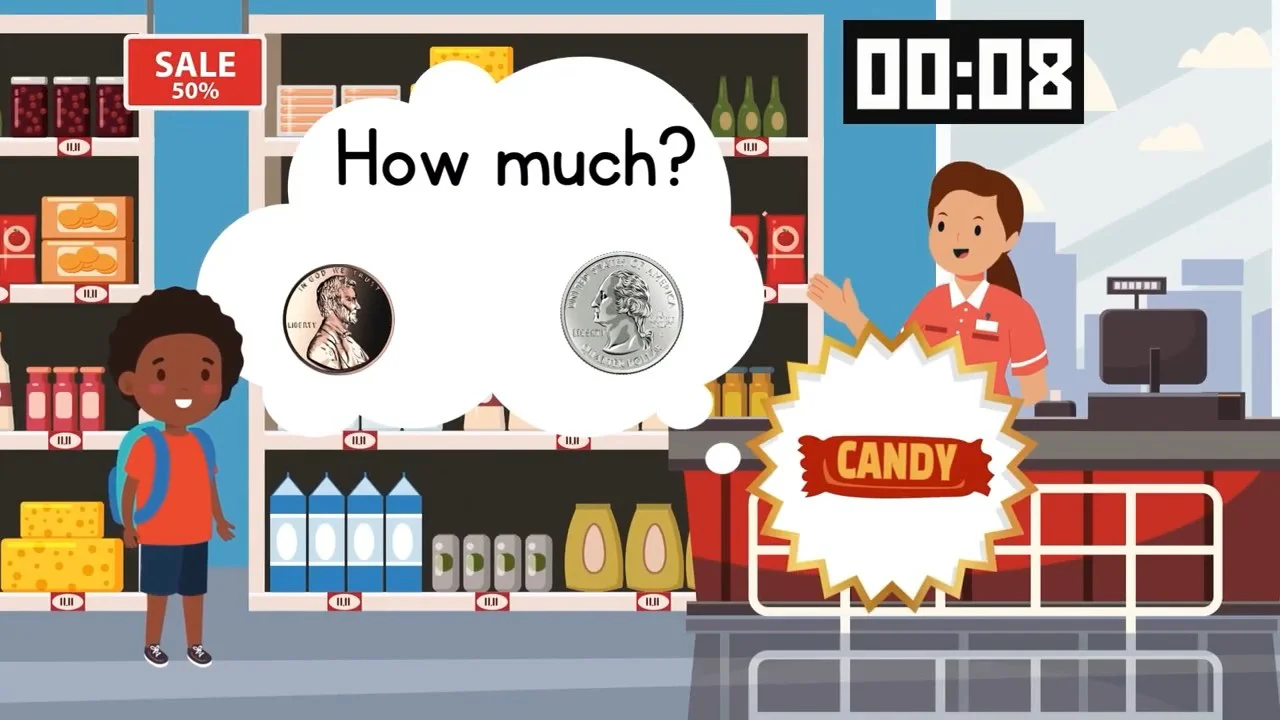
Instead of slides — a game scenario with real situations from the sales floor: objections, product selection, service standards. Employees earned points for correct decisions, and mistakes were explained in hints.
The foundation was photogrammetric captures of displays and packaging — a newcomer sees familiar products before their first time on the floor.
Results for the Company
Onboarding was cut from eleven days to four, and new hire sales grew by 17% in the first month. Mentors spent half as much time on explanations, and turnover dropped by a third in three months.
Control measurements confirmed a lasting result, so the quiz was added to the permanent training program for all new stores, and a course for line managers was ordered next.
Thus, the corporate training result became measurable: faster onboarding, higher sales, and less burden on mentors.
How to Choose the Right Educational Quiz Format for Your Company's Goal?
You can't choose an educational quiz format "to taste" — it must serve specific business goals. If you need to get newcomers up to speed quickly, a short quiz with hints works.
If the goal is to boost sales or product knowledge, a scenario analyzing real situations is better. And for regularly reinforcing important regulations, a quiz with competitive elements is convenient.
The second important step is the employee audience. Young specialists prefer dynamic formats with points and levels, while experienced employees tend to value substantive cases and error explanations.
We ask how your people are used to learning, how engaged they are, and how much time they're willing to spend. This helps avoid mistakes with mechanics and difficulty.
The third criterion is content and the learning lifecycle. If material will be updated monthly, you need a simple admin panel and quick question replacement. If the quiz is tied to a rare event, one-time development is enough. We assess scope, urgency, and frequency of changes to propose an appropriate format and budget.
Selecting training shouldn't turn into endless approvals — that's why we act as a partner. First, we have a short consultation about the quiz: clarifying business goals, audience profile, and desired outcome.
Then we offer 2–3 format options describing what each will give your company, and help you choose the best one. This way you get a solution, not "just another game for the sake of a game."
Frequently Asked Questions About Developing Educational Quizzes
Managers most often ask about timelines, employee convenience, and compatibility with existing systems. Here are answers to the main concerns.
How long will quiz development take?
A compact quiz on typical questions is assembled in a couple of weeks. If you need a story-driven training game with 3D locations in Photogrammetry-based style, the timeline is up to several months: first we design the scenario, then produce the content. We'll give an exact date after the brief.
Will it be difficult for employees?
No, the interface is self-explanatory: each person opens a link in the browser and completes the scenario in 10–15 minutes. What's assessed is knowledge of the material, not technical proficiency.
How do we integrate the quiz into existing training?
We provide results for each employee: percentage of correct answers, completion time, and a completion marker. You export them into your training or reporting system; if needed, we prepare a separate summary report for management.
What if the questions need to be updated?
Content doesn't stand still: change questions, add scenarios and materials without rebuilding the whole game. Send us new data and we roll out an updated version. No need to wait for the next budget cycle.
Let's Discuss Your Task: Get an Educational Quiz Plan in 2 Days
Submit a development request, and within two business days we'll send you a preliminary plan for the educational quiz. It will include a project assessment, stage breakdown, question formats, and estimated launch timelines.
You don't need to understand technical details: we speak the language of business goals. If you need a quiz with 3D models and locations or photogrammetry-based content, we'll include it in the plan right away.
We understand that employee training must deliver measurable results. That's why we offer a free training consultation: we'll discuss goals, audience, and expectations for the quiz.
Based on the conversation, we'll prepare a turnkey training plan — from scenario to launch readiness.
What you'll get in the preliminary plan:
- an assessment of task complexity and honest implementation timelines;
- a description of the quiz structure and task types for your employees;
- delivery options: text, video, 3D locations, photogrammetry-based models;
- a list of materials needed from your side;
- recommendations for employee engagement and result tracking;
- a clear scope of work and stages with checkpoints;
- budget calculation only after plan approval.
Then it's your decision: order the entire quiz or bring the plan to your team. Either way, you'll have a working document. Submit your request — let's take the first step toward a modern training program that employees will complete with interest and management will see results.