

Boring Lectures Don't Motivate: How Retro Quizzes Hold Attention
Employee training often turns into a formality: people sit through lectures just for the record and forget 80% of the material within a week. The manager invests time and budget, but the team doesn't apply new knowledge at work—and that hurts business metrics.
The problem isn't employee laziness; it's the delivery format. When information is presented dryly and monotonously, the brain doesn't form an emotional attachment—and discards it as unnecessary noise.
That's where the retro quiz comes in: arcade aesthetics familiar from childhood, game mechanics, and a competitive edge make employees not just listen but actively engage in the learning process. Our team build training around emotions, not around slides.
Retro style isn't just a pretty picture. The nostalgic atmosphere lowers the defensive barrier ("training again?"), and the game format turns knowledge testing into an exciting competition.
Employees want to answer because it's interesting, not because they "have to." It's at that moment that information becomes fixed in long-term memory.
We fully address this pain point: we take your training material, turn it into a retro quiz scenario with levels, points, and a leaderboard, and you get a tool employees complete on their own, without coercion.
The result is higher team engagement, better material retention, and a faster move from theory to practice.
Training stops being a "must-do" and becomes an event people look forward to. It works both for onboarding new hires and for upskilling experienced employees—in either case, you get a team that truly knows what it's doing.
What an Educational Quiz Gives Employees and the Business
An educational quiz turns a boring mandatory program into an event employees look forward to. Instead of passively watching presentations, they actively participate with excitement and healthy competition.
That's why the material is absorbed much better: the game format engages emotional memory, not just logical perception. Employees don't just read rules or regulations—they immediately apply knowledge in practice and get instant feedback.
An additional plus is team spirit. A quiz can take the form of a competition between departments or mixed teams, which breaks down barriers and builds horizontal connections. People get to know each other better, learn to work together, and feel part of a single whole.
For the business, this means lower turnover and a warmer atmosphere within the team, which directly affects results.
Managers get measurable outcomes instead of vague "seems like everyone understood" assessments. The analytics system shows which topics caused difficulties, which employees answered uncertainly, and which sections are worth reviewing again.
Based on this data, you can adjust the training program, identify weak spots, and strengthen staff preparation in a targeted way. This saves time and budget: you know for sure that training worked.
And finally, motivation. The quiz gives employees a clear goal, a chance to stand out, and recognition. Ratings, prizes, titles—all of this creates positive reinforcement and the desire to keep developing.
When training stops being an obligation and becomes an engaging game, employees themselves want to learn new things. And the business gets a competent team that adapts quickly to change and works more efficiently.
Retro Quiz Formats for Any Company Goal
Every company uses training to solve different problems: sometimes you need to quickly introduce new hires to regulations, sometimes to refresh knowledge before a season, and sometimes to unite distributed teams.
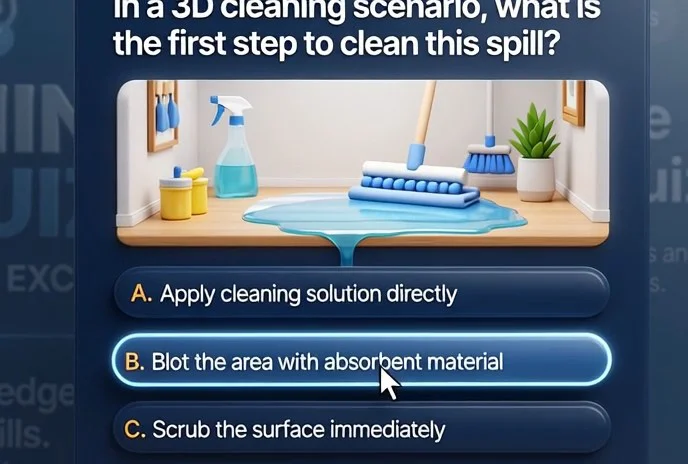
For every scenario, there's a suitable quiz format: from a light 10-minute quiz to a full-fledged 3D game with locations that employees will return to on their own.
Retro style becomes the common denominator: it evokes nostalgia, relieves tension, and makes even strict certification feel like an adventure.
Regardless of format, the mechanics are the same—employees don't memorize material; they experience it in the game, so knowledge sticks naturally.
| Format | For whom | What it gives the client |
|---|---|---|
| Short quiz at a meeting | Quick knowledge checks, staff meetings, welcome training | Engages from the first minutes, reveals team gaps, requires no employee preparation |
| Retro-style board game quiz | Team training, team building | Live communication, competitive spirit, practicing interaction in an informal setting |
| 3D quiz with locations | Systematic training, new hire onboarding, certification | Deep immersion, high reach, scenario can be repeated without losing interest |
| Hybrid: online quiz + offline tournament | Distributed teams and branches | Brings together employees from different cities, creates shared memories and discussion topics |
Formats are easy to combine and scale: you can start with a short quiz at the next meeting and later expand it into a full 3D game with multiple levels and a story.
The content always remains yours—we upload real regulations, standards, and product knowledge, not abstract questions.
We'll help you choose a format that fits your task, budget, and timeline. Tell us what goal your training is aimed at—we'll suggest which Retro quiz option will deliver results fastest.
How the Project Works: 5 Steps from Brief to Launch
So you always understand what's happening at each stage, we've broken the project down into transparent steps. You don't just set a task—you participate in creating the quiz and approve key decisions. This removes the risk of "it didn't turn out right" and helps meet deadlines.
-
Training brief. We gather what knowledge and skills need to be tested, who your audience is, and what outcome you expect. We determine the quiz format—from simple questions to a story-driven retro quest with 3D locations.
-
Scenario approval. We prepare the quiz scenario: questions, answer options, feedback, and scoring logic. You see the text before development starts and can make edits without extra costs.
-
Design and style. We create visuals in your chosen direction—for example, retro style. We approve sketches of locations and characters so the game immediately looks like your brand.
-
Development and testing. We build the quiz on a professional platform and set up adaptation for various devices. We check that everything works stably and show you an intermediate version.
-
Quiz launch. We upload the quiz to your platform or provide access via a link. We help with a technical dry run so employees can start training without delays.
-
Post-launch support. We monitor results, answer questions, and promptly fix any issues that arise. If needed, we refine the content for new training scenarios.
This approach guarantees the quiz solves your specific business problem: it increases employee engagement, tests knowledge, and saves time on manual checks.
What's Included in the Delivery: Scenarios, 3D Locations, and Instructions
When you order an educational quiz, it's important to understand exactly what you get in the end. We prepare a turnkey project—from scenario to training your team—so you don't have to finish anything yourself. Below is the full delivery package, ready to use immediately after handover.
- Quiz scenario — ready-made questions, answer options, explanations, and scoring logic. Employees complete it without developer involvement, and you get a clear knowledge-check tool.
- Retro-style 3D locations — designed spaces for each round. Atmospheric settings hold attention and turn routine training into an event people want to finish.
- Characters and animations — hosts, assistants, or rivals that accompany participants. The game feels alive, and complex topics are explained through images rather than dry slides.
- Sound design — music, responses to correct and incorrect answers, dynamic transitions. All of this boosts engagement and helps material stick.
- Instructions for facilitators and participants — step-by-step guides: how to launch the quiz, what to say before starting, and how to review results. Any employee can handle it, even without technical experience.
- Training for your team — a short online session where we show how to set up game sessions and work with reports. After that, you launch the quiz yourself.
All 3D locations and characters are styled in retro, creating a recognizable atmosphere and making training memorable. We hand over source materials and stay in touch: if questions come up, we'll help; and if needed, we'll quickly refine the scenario for new topics.
As a result, you get not just a game, but a ready-made employee training tool. The quiz can be launched multiple times for different teams—it's already configured, tested, and equipped with everything needed.
Case Study: How a Quiz Boosted Engagement by 40%
Employees of a retail chain completed mandatory training "for the record": they opened the course, flipped through slides, and closed the tab. Knowledge didn't stick, and checkout mistakes kept repeating. The task was simple—make training something people wanted to complete.
We suggested a retro-style quiz with 3D locations on Unity. Instead of dry tests, an employee entered a virtual store of that era: arrange goods on a shelf, answer a customer's question correctly, find a display violation. Each answer immediately showed how it affected real work.
Training Results
For the federal chain RetroMart, we created 12 levels in two months and rolled out training to 200 employees. Training engagement rose by 40%, and the share of employees who reached the final test nearly doubled—from 32% to 61%.
Checkout errors dropped by a quarter, and the average score on verification tasks went from 68% to 89%.
The results hold after launch: employees replay the quiz to beat their colleagues' records. The chain is so pleased with the result that it ordered a second season—now with new levels and a competitive mode between stores.
Why It Works
The 3D environment creates a familiar context: the brain attaches rules to a picture rather than abstract text. Plus gamification—points, timer, rating—triggers healthy excitement.
In the end, training stopped being a duty and became a game, and its results are visible in business metrics.
How to Choose a Quiz Format for Your Team's Specifics?
Choosing a quiz format isn't a matter of "like it or not"—it's about balancing the training goal, team composition, and the time employees can realistically set aside.
Before proposing a scenario, we find out three things: what an employee should remember after the game, what pace the team lives at (is there 15 minutes a day or only an hour at a quarterly meeting), and how many different roles are involved in training.
Everything depends on the answers: the number of questions, mechanics, difficulty level, and even visual style.
For example, employees with different schedules are better served by short rounds they can complete at convenient times, while an office team might prefer a live tournament at the end of the month. Below are guidelines we use as a starting point and then adapt to your specifics.
| Format | For whom | Development timeline | What it gives the client |
|---|---|---|---|
| Short 10–15 minute quiz | For teams with no separate training time, "in the flow" | from 2 weeks | Quick engagement, knowledge check without pulling people away from tasks |
| Series of quizzes by topic (4–6 issues) | For departments where material needs to be reinforced gradually | 4–6 weeks | Systematic training, progress control before and after |
| Competitive game with ratings and prizes | For motivation, large departments, and distributed teams | from 5 weeks | Higher engagement, healthy competition, a reason to discuss results |
| Story-driven retro quiz | For teams where emotions and retention matter | 6–8 weeks | A memorable event, team discussions, high product recognition |
These aren't rigid limits: a retro-set employee quiz can be a short quiz or a long series—the question is what task you're solving.
We help you choose a format for your team's specifics, lock in timelines at the brief stage, and show examples of similar projects so you know what result to expect.
A common mistake is starting with "we want a game" rather than "we want employees to learn the rules, product, or regulations." So our first step is always a quick analysis of your audience and goals. That way, you get not just a pretty game but a tool with a clear outcome and accurate deadlines.
Answering Frequently Asked Questions About Educational Quizzes
Clients rarely ask about the "inner workings"—they worry about how the quiz will work in real conditions. The questions repeat: what if employees can't figure it out, the tech fails, or the content becomes outdated in a month? Let's look at the main pain points—briefly and to the point.
How will the quiz work for employees if they have different devices?
The quiz works in a regular browser—nothing needs to be installed or configured. An employee receives a link or QR code, opens it, and takes the test on a smartphone, tablet, or computer.
We pre-check how it displays on popular device models and browsers, so everyone gets stable access regardless of their hardware.
What if an employee loses connection while taking the quiz?
The quiz is designed so that interruptions don't cause lost results. Answers are saved on the server, and once the connection is restored, the employee can continue from the same place. An administrator can see each participant's status and grant an additional attempt if needed.
Can questions be updated after launch?
Yes, you decide when and what to change. You can add new questions, adjust wording, or update scenarios through an easy-to-use control panel—no developers needed.
This is useful when regulations change, new products are released, or you want to add fresh material for the next quarter.
What technical support is provided?
We support the quiz at every stage—from preparation to the end of the campaign. If employees have trouble accessing or viewing the quiz, our team helps remotely on the same day.
For corporate launches, we provide a dedicated support line so you don't get distracted from your own tasks.
In short: we handle everything related to technology, launch, and support. You provide the content and goals, and we make sure the quiz works predictably for every employee—today and after updates.Ready to Make Training Memorable? Let's Discuss Your Task
Employee training isn't just about transferring knowledge—it's a tool for engagement and company growth. The retro quiz format turns routine material into a living game: employees compete, remember key rules, and leave with vivid impressions.
This approach improves retention and creates a positive association with training, which ultimately drives business results.
When you reach out to us, we take over the entire journey—from idea to launch. You get not just a "pretty picture" but a ready-made solution embedded in your training system.
Right from the start, we provide a consultation, audit the task, and offer a prototype so you can see how it will work specifically for you.
When you contact our team, you receive:
- Advice on the quiz format and how to adapt it to your goals.
- An audit of your current training system: we find growth points and areas that would benefit from a game format.
- A retro-style quiz prototype—before full development begins, you see how it looks and works.
- A transparent estimate with no hidden payments: we fix the scope, timeline, and cost upfront.
- A launch plan: stages, responsible parties, integration into the employee training schedule.
- Support at every stage—from development to first results.
Leave a request, and we'll discuss your task, answer your questions, and propose a solution that will make training truly memorable. We'll launch the quiz on time, and you'll get engaged employees and measurable results.