

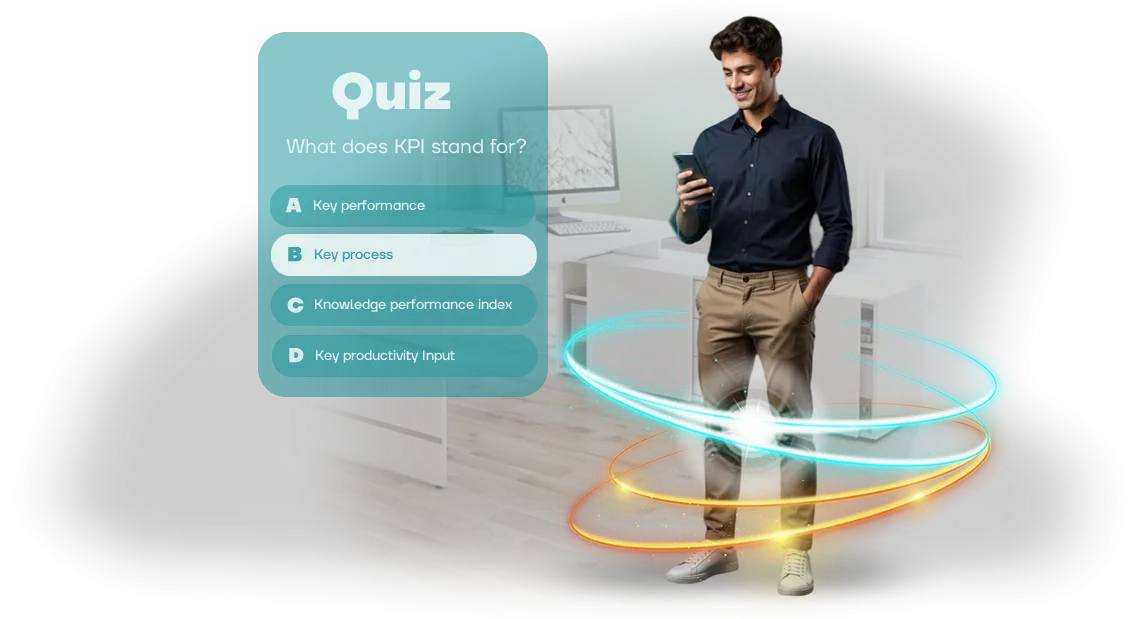
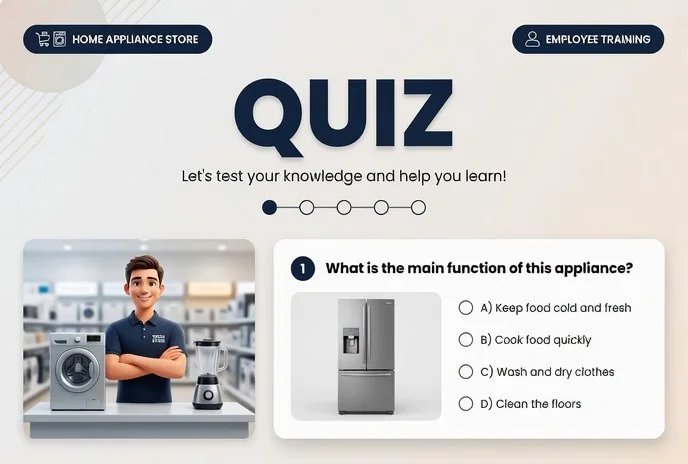
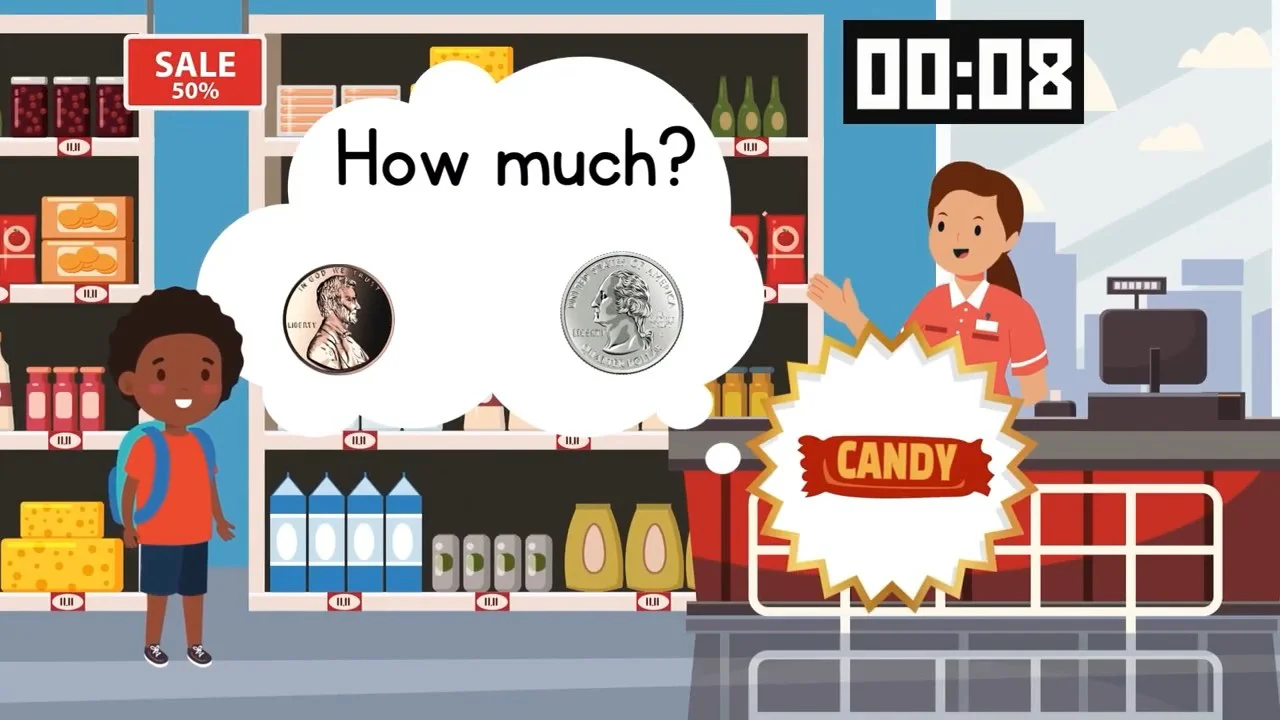
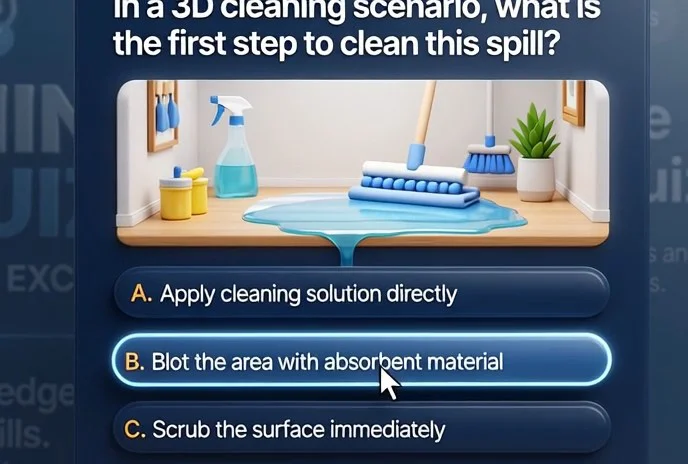
Employees yawning at tests? Let's turn training into a Technical-style game
Corporate training often turns into a formality: employees take tests just to check a box, and knowledge doesn't last beyond the next day. Boring slides and repetitive questions kill engagement, and the company pays for training that doesn't change the team's behavior.
Yet quizzes and game mechanics are exactly what can hold attention and turn routine into excitement.
Technical specialists are especially sensitive to boredom: they are used to solving puzzles and figuring out complex systems, so classic tests make them yawn.
A Technical-style game is not entertainment for entertainment's sake, but a way to present regulations, standards, and products through engaging scenarios.
When an employee goes through training as a quest, they actually remember the material because the brain engages logic and a competitive spirit.
Wedevelop training quizzes in the Technical style: live scenarios, points, difficulty levels, and clear feedback.
Employees go through this kind of corporate training with interest, and HR sees real engagement: completion time, number of attempts, mistakes, and progress.
We address the main pain point — we smoothly implement game-based learning without team resistance and with tangible business benefits.
What benefits will the business get from a training quiz?
A training quiz in the Technical format turns boring corporate training into a game that employees play with interest. Instead of passively watching presentations, there is active participation, excitement, and a desire to test your knowledge.
This directly affects engagement: employees don't just sit through it, they get involved in the process, which means information is absorbed, not simply "listened to."
The main value for the business is material retention. Game scenarios with 3D locations and interactive tasks engage visual and motor memory, so knowledge is remembered better and longer.
A quiz lets employees practice real work situations in a safe environment, which speeds up the onboarding of new employees and improves the performance of experienced ones.
A manager sees each participant's progress and can adjust training in time without waiting for the final certification.
Another benefit is a stronger employer brand. A bright branded quiz created in the company's style shows that the business invests in staff development and keeps up with modern formats.
Employees readily share their results on social media, and that means additional mentions of the company in the labor market. This way, training works for the HR brand and attracts strong candidates who value development.
Gamification also reduces the cost of retraining. Short game rounds can be completed at a comfortable pace, and the built-in hint and feedback system reduces the number of mistakes in real work.
As a result, the company gets a trained team faster and with less effort than with classic lectures or tests that are quickly forgotten.
We work with professional equipment and proven tools to ensure the quiz runs smoothly on any employee device — from an office computer to a smartphone.
Easy launch and an intuitive interface allow you to integrate the game into an onboarding or ongoing training program without involving external IT specialists. You get a ready-made tool that pays off through increased engagement, material retention, and faster staff training.
Technical-style quiz formats: from express surveys to 3D quests
Technical-style quiz formats differ not only in appearance but also in the depth of knowledge testing. For some tasks, a quick survey is enough; for others, it's important to immerse the employee in an environment close to real work.
That's why we develop quizzes of various scales — from simple express surveys to full-fledged 3D quests.
An express survey is 5–10 questions on knowledge of instructions, safety rules, or regulations. It takes a couple of minutes, easily fits into the work process, and gives an instant picture of the entire team.
Such quizzes are convenient to run regularly — for example, once a week — and to track training dynamics.
A 3D quest is a completely different level. The employee moves through a virtual location, finds objects, and solves tasks in conditions as close to real life as possible. This tests not only knowledge of theory but also the ability to apply it in practice.
To create such scenes, we use Unity — a professional engine that ensures smooth graphics and stable performance on any device.
| Format | Who it's for | What the client gets |
|---|---|---|
| Express survey | All employees, regular checks | Quick knowledge snapshot, minimum time, automatic statistics |
| Branching scenario | New employees, process training | Immersion in decision logic, practicing algorithms |
| 3D quest | Technical staff, complex skills | Practice in a virtual environment, high engagement, learning by doing |
Which format should you choose? Focus on the goal: if you need to quickly test knowledge, a survey is enough; if practicing a skill is important, choose a quest.
We will help you determine the right level of complexity and scale for your budget and timeline, and also prepare recommendations on how often to run it. A properly chosen format increases employee engagement and reduces retraining time.
How we create a quiz: project stages for the client
We have structured the process so you always understand what is happening with the project and what results you get at each step. No hidden stages or surprises — only clear approvals and specific deadlines.
-
Brief and task immersion. We analyze which employees need training, what knowledge to cover, and which business metrics to improve. You get a clear understanding of the future quiz structure and a work plan.
-
Scenario and questions. We create questions, answer options, and a reward system — from simple to complex, taking your company's specifics into account. You see the texts before development starts and can make edits without rework.
-
Design and style. We create visual design in your corporate style: characters, locations, interface. You approve the mockups, and only then development begins — this eliminates unnecessary costs.
-
Development and assembly. We build the game on a professional engine, set up the progression logic, score calculation, and results for each employee. You get a working product that is convenient to use on any device.
-
Testing and refinement. We test the quiz on real users, identify weak points, and fix errors. You don't have to deal with broken scenarios at the most critical moment.
-
Launch and support. We deploy the system, connect your administrators, and train them to work with reports. After launch, we stay in touch — we answer questions and refine the quiz as new tasks arise.
Thanks to this approach, you always know what stage the project is at, what is ready, and when the training will be launched. We take care of the technical part so you can focus on the result — improving your team's skills and growing your business.
What's included in the delivery: a complete training launch kit
You get a complete kit for launching training, not a set of scattered files. Everything is already configured, tested, and packaged so that employees can start the quiz on the day of delivery, and you can see the first results in the system.
The delivery includes:
- Training scenarios — questions and branching adapted to your business tasks, guiding the employee from simple to complex and immediately showing knowledge gaps.
- 3D models and Technical-style locations — a visual environment in Unity, rendered to match your brand and corporate colors, so the training looks modern and appeals to employees.
- Infrastructure setup — integration with your corporate portal, learning management system, or any other place where you conduct training.
- Administrator guides — clear materials on how to add questions, change levels, and onboard new employees without contacting developers.
- User guides — a short guide for employees so they can jump into the game right away and not overload your support.
- Training launch and support — we help with the initial launch, answer team questions, and stay in touch after the start.
All materials stay with you: you can change questions, add locations, and scale the training without involving developers. No "we'll finish it later" — you get a working product, not a description. That is delivering results.
Case study: how a quiz increased course completion by 40%
The problem is typical for many companies: employees complete mandatory courses formally, just to check the box. The material doesn't stick in memory, which means training money doesn't bring results. Managers see low completion and test scores but don't know how to change it. Ordinary slides provide no feedback, and HR doesn't see where the employee loses interest.
We suggested turning boring training into a game. For the federal retail chain Praktik, we created a training quiz based on 3D scenes in the Technical style — with a storyline, levels, and points.
Instead of dry text, employees went through scenarios close to real work situations and immediately saw the consequences of their decisions.
The result exceeded expectations: full course completion grew by 40%, and training time dropped by a quarter. The numbers confirm that employees stopped viewing training as a chore.
At the same time, the average final test score increased by 18% — employees actually absorbed the material instead of just clicking through slides. A month later, we received a repeat order for the next three modules.
For the business, this means quickly getting new employees to productive results and reducing the load on mentors. The quiz easily scales to thousands of employees, and training results are visible in clear statistics — you know exactly which topics need refinement. This directly affects customer service quality and the speed of completing work tasks.
How to choose the right quiz format for your task?
The quiz format is determined not by the gamification trend but by the learning goal. If you need to quickly check knowledge of regulations, a light text-based questionnaire works well.
If the task is to practice actions in an emergency situation, a scenario with branching choices is better, where a mistake immediately shows the consequences.
For mass training of large teams, a fast pace works well: short rounds, automatic checking, and clear statistics for each department.
For developing practical skills, a quiz-simulator is effective: the employee enters a simulated production situation and makes decisions, while the system records exactly where difficulties arise.
When choosing a format, it's important to consider the company's specifics: number of staff, branch geography, technical equipment, and team engagement level.
A young team prefers dynamic interactive formats; experienced specialists prefer deeper case-based tasks where they can demonstrate expertise.
The rule is simple: first we formulate a measurable goal — "error-free compliance with new standards," "reduced onboarding time," "greater accuracy in working with clients" — and then we choose the format, mechanics, and difficulty level to match it.
That's exactly what we do at the start of a project: we discuss the task, analyze the audience, and propose a quiz that solves your specific problem — without extras and without missing details.
Frequently asked questions about development and security
Before a project starts, clients often have similar questions: whether employee data is protected, whether we'll meet the deadline, and how the quiz will align with internal standards. Below are direct answers to help clear up doubts and plan the launch.
Is it safe to conduct training through a quiz?
The quiz works through employee authentication; only training participants get access to the tasks. Results and progress are stored in a secure, closed environment, and you control access rights and data export. This allows the training to be integrated into your corporate system without the risk of leaks.
Will we launch the quiz by the target date?
Timelines depend on the volume of materials: the number of questions, scenarios, levels, and the need for 3D models. At the briefing stage, we set dates, map out stages, and give you a calendar plan.
A standard quiz usually takes two to four weeks; a complex scenario takes longer, but we always align on interim milestones.
How will the quiz fit into corporate standards?
We adapt the interface to your brand: logo, corporate colors, and a recognizable visual style. The quiz launches via a browser link, requires no software installation, and integrates easily with corporate portals.
If you need to connect results to an internal learning portal, we'll work that out at the planning stage.
Get a quiz that engages your employees. Submit your request
Employees remember only what engages them. Familiar tests and presentations lose attention after a couple of minutes, and training turns into a formality.
We create training quizzes in the Technical style: the employee enters a detailed 3D location, goes through a scenario, and immediately sees the result. This format holds concentration, increases engagement, and helps the material stick. As a result, you get training that is free of boredom and has measurable impact.
Submit a development request — and we will offer a solution tailored to your task. After you contact us, you will receive concrete materials to get started:
- a consultation on the quiz format and mechanics so you can immediately see if it fits your employees;
- a ready development plan with stages, timelines, and milestones — you see the full picture;
- a preliminary cost calculation based on your content volume and complexity, with no hidden charges;
- examples of our quizzes and approaches that have already proven themselves in other companies;
- recommendations for integrating with your existing training system and motivating employees;
- clear support: we answer questions, make edits, and provide assistance after launch.
After receiving your request, we will contact you, clarify the details, and prepare a calculation. This is not binding in any way — you will get useful materials and can make an informed decision.
We have been working remotely for over 10 years, so we can quickly join the project and won't depend on your office. We take care of the technical side — all you have to do is evaluate the result and launch the quiz for your employees.