

Employees make mistakes in HoReCa standards — profit is lost.
HoReCa standards are what guests pay for: speed of service, cleanliness, greeting, food presentation. But employees don't break them out of malice — the knowledge from onboarding briefings fades within a week.
Guests notice the small details and leave to competitors, leaving negative reviews behind. Every such mistake means lost repeat visits, average check, and revenue.
Typical staff training in restaurants and hotels means lectures and cheat sheets. They don't create engagement, so the rules aren't remembered and aren't applied in stressful situations.
When a waiter forgets to greet a guest for the fourth time, the problem isn't the employee, it's the training system. It doesn't practice real service scenarios and doesn't give instant feedback.
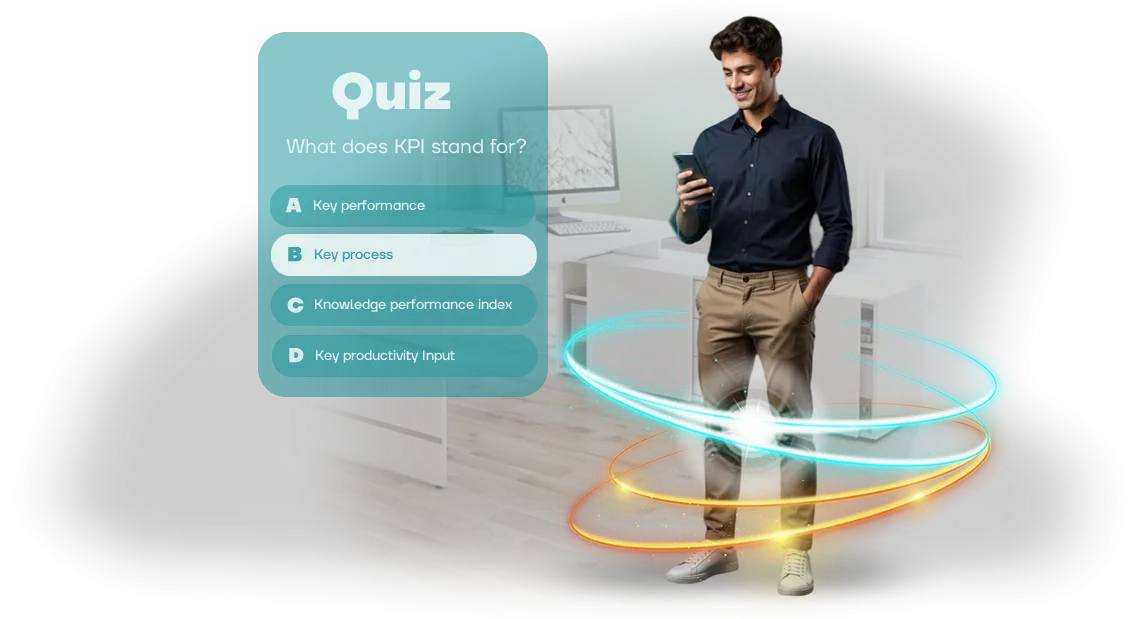
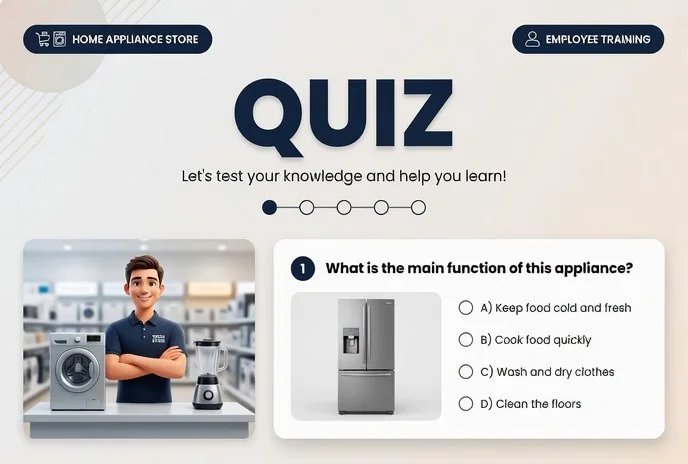
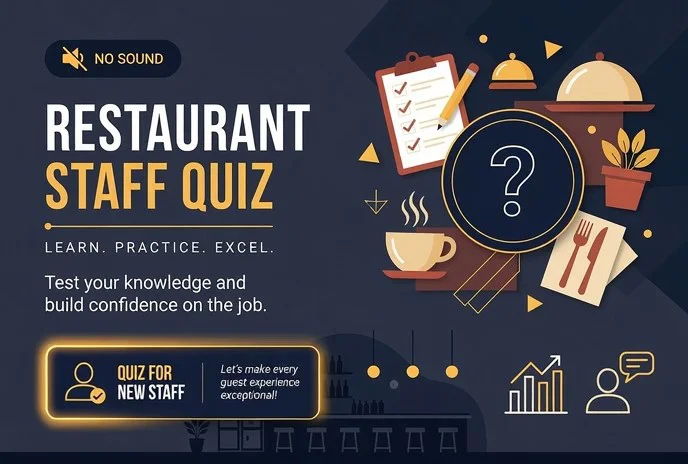
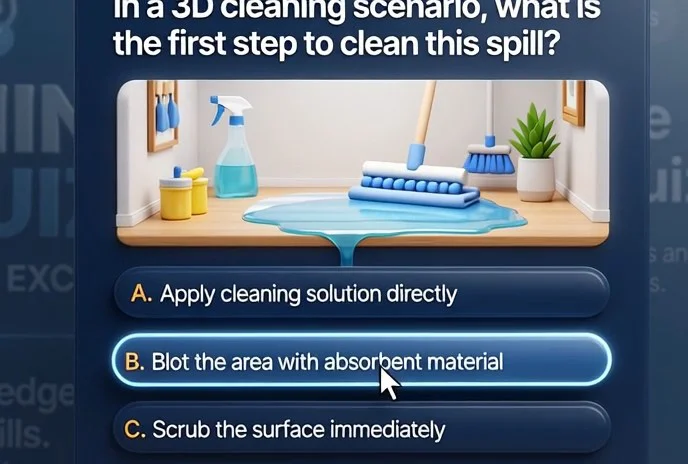
The solution — training quizzes embedded into the everyday workflow. Employees go through short game rounds, analyze cases like "a guest has been waiting 10 minutes" or "a request to replace a dish," and immediately see how to act correctly.
The game format holds attention, and the competitive aspect motivates them to return for more. our team develops such quizzes tailored to your establishment's standards.
We create quizzes on a professional platform that works on smartphones and tablets: employees train at a convenient time, and the manager sees each person's results. HoReCa standards turn into a habit, not a set of rules.
This solves the establishment's biggest pain point: training stops being a formality and directly affects profit through consistent service, guest loyalty, and repeat visits.
What does the quiz give your business and team?
Ordinary briefings and lectures don't solve the main problem: employees listen, but within a few days the material is forgotten. This is especially critical in HoReCa, where service standards and menu knowledge directly affect revenue and the guest's impression.
A training quiz changes the approach: material is delivered through game questions, the employee immediately sees the correct answer and remembers it through emotion.
This multiplies training effectiveness, and team engagement becomes natural — people want to take the quiz, not avoid it.
Here's what it gives your business — in the table.
| Benefit | Business result |
|---|---|
| Team engagement | Employees learn with interest, resistance to training and turnover decrease. |
| Standard accuracy | Staff makes fewer service mistakes, and service quality becomes consistent. |
| Time savings | The quiz takes 15–20 minutes before a shift instead of hour-long lectures and meetings. |
| Sales growth | Menu knowledge and upselling techniques help confidently offer dishes, drinks, and additional services. |
| Training effectiveness | Material is remembered better than with passive reading, and it's easy to review. |
At the same time, the quiz is easy to integrate into the workflow: it requires no special equipment — just a tablet or computer in the kitchen or staff room. And because questions can be changed to match seasonal offers or new standards, training always stays relevant.
Our team designs these quizzes for the specific needs of a restaurant, hotel, or chain: with your scenarios, branded design, and clear reports for management. This is a ready-made tool that pays off through increased engagement and sales.
HoReCa quiz formats: choose one for your task
Training in HoReCa faces a typical problem: staff turnover is high, and service quality directly impacts repeat guest visits. New employees need to be brought up to speed quickly, experienced ones kept on their toes, and knowledge objectively checked before a promotion. Instead of three different tools, we offer one quiz that can be configured for each task.
| Format | For whom | What it gives the client |
|---|---|---|
| Onboarding for beginners | New waiters, bartenders, hostesses | Fast ramp-up: the employee learns standards through real cases from your establishment, remembers rules without boring lectures, and reaches the required service level faster. |
| Regular training | All line staff | Keeping skills sharp: short quizzes once a week refresh knowledge, review common mistakes, and reduce their occurrence on the job. |
| Knowledge assessment | Employees after probation, candidates for promotion | Objective competency evaluation without a manager's involvement: you see who has learned the material and make staffing decisions based on data, not guesses. |
The formats are easy to combine: onboarding at the start of a shift, training once a month, assessment after probation. We develop questions based on your standards, and employees take the quiz on a tablet, smartphone, or computer — at a convenient time. You get a tool that simultaneously trains, controls, and motivates your staff.
How the project goes: from brief to game launch
We've structured the process so you see results at every stage and can make edits before the game is ready. We account for HoReCa specifics: shift schedules, different staff roles, and the need for fast training.
You don't need to understand development — we handle the implementation, and you oversee the key milestones.
- Brief. We discuss what the quiz should teach: service standards, scripts, new menu items. We identify the audience — waiters, cooks, managers — and the desired level of material retention.
- Work plan. We set timelines, stage structure, milestones, and the project team. You know in advance who is responsible for what and when to expect the finished result.
- Scenario and design approval. We show the question structure, answer options, and graphic style. You make edits before core development starts — this eliminates rework after launch.
- Quiz development. We create the game, fill it with content, and configure the logic for scoring and explanations of correct answers. We make sure the interface is clear to every employee, regardless of age or skill level.
- Testing. We test the game on different devices, fix errors, and make sure all questions and scenarios work correctly. If needed, we organize a pilot launch with a small group of employees.
- Launch. We place the game on the necessary devices — tablets, computers, smartphones — or connect it through your corporate training portal. We do a short team training so everyone starts using the quiz right away.
- Support. We stay in touch after launch: update questions, add new materials, and help with technical issues. Warranty and ongoing support are documented in the contract.
What you get in the final product
When we deliver the project, you receive not just a game, but a ready-to-use training tool for your staff. It's a complete package that your team starts using right after launch.
Here's what's included in the final delivery:
- Training quiz game — adapted for HoReCa tasks: questions on service standards, regulations, and communication scripts. Employees take it on tablets, phones, or computers.
- Admin panel — you manage content yourself: change questions, add scenarios, set deadlines without contacting developers.
- Reporting system — shows who completed the quiz, each employee's results, and common mistakes. This helps you understand which topics need to be reviewed at a meeting.
- Methodological materials — recommendations for implementing the quiz: how to use it for onboarding, regular knowledge checks, and increasing engagement.
- Administrator instructions — step-by-step guide to setting up questions, managing access, and exporting results.
- Team training — an online meeting where we show how the admin panel works and go through typical scenarios. After that, your employee works independently.
In the end, you get measurable project results: the number of trained employees covered, increased engagement, and fewer service errors. All materials stay with you — you can scale the game to new branches and update content without extra payments.
Case study: a coffee shop chain increased standard accuracy by 40%
In a coffee chain with 200 employees, service standards "existed on paper," but in practice baristas acted differently: some didn't heat milk according to instructions, some forgot the greeting standard.
After implementing the training quiz from our team, we measured changes two months later — standard compliance accuracy rose by 40%.
What's important is that this isn't the result of "cramming" before an inspection. The quiz is built as short real-life scenarios: how to greet a guest, what to do during a return, how to distinguish fresh coffee from overheated.
Employees went through them on a tablet during their shifts, 10–15 minutes a day. The knowledge gained was immediately reinforced in practice.
The numbers the chain owner saw
Over two months, we covered all 35 locations of the chain. Standard compliance accuracy rose from 62% to 87%. Guest complaints dropped by a third — that's hundreds of saved visits per month.
Onboarding of new baristas was cut in half: instead of two weeks of mentoring, three to four days with the game course is enough.
At the same time, the quiz didn't turn into a boring test: competitive elements and team rankings kept interest through the end of the program. Even those who resisted training got involved and asked for new levels.
Coffee chain "Territoriya Aromata" extended the quiz license for another year — for us, that's the main indicator of value.
The training manager noted that previously they had to organize in-person trainings and pull staff away from work, but now the topic of standards is practiced without stopping the floor.
If your chain has a similar pain point — staff know the rules but don't apply them — start with a pilot quiz at one location. In a month, you'll get measurable results and understand how to scale the training.
How to choose the right quiz format for your HoReCa specifics?
There is no universal quiz for the entire HoReCa industry — and that's normal. The format should be based on three parameters: number of locations, type of establishment, and current staff skill level.
If these factors are considered at the start, the game will work toward results, not just entertain.
Number of locations. For a single establishment, a simple scenario of 10–15 questions that can be run before a shift is enough.
If there are multiple locations, you need a system that allows you to adapt content for each site, change questions for specific menus, and collect statistics across the whole chain.
Otherwise, training turns into chaos: in one restaurant the staff knows the standards, in another they don't.
Type of establishment. In a sit-down restaurant, it's convenient to run short sessions on the floor when there are no guests. In a hotel or at a reception desk where employees work shifts, the ability to complete the quiz at a convenient time from a smartphone is important.
For fast food with high turnover, an intensive format of 5–7 questions every day works better. It's important that the quiz doesn't interfere with work processes but integrates into them.
Current knowledge base. If staff already knows the standards well, choose advanced scenarios that break down complex situations and mistakes. If the base is weak and turnover is high, you need a training mode with hints and explanations after each answer. This reduces onboarding time for newbies and lowers the burden on mentors.
We help you choose a format for your specifics: we analyze scale, schedules, and team skill level, then offer a solution that addresses exactly your needs.
As a result, you get a quiz that employees complete with interest, and you see measurable knowledge growth without interrupting work.
Common doubts when ordering a quiz
Doubts before ordering a quiz are normal. Most often, owners and managers worry that employees won't figure out the mechanics, implementation will drag on, the budget will be wasted, and the game will break right after launch.
These concerns are understandable, but most can be resolved at the planning stage — you just need to describe the scenario and roles in advance.
We've built training quizzes for restaurants and hotels, so we know the HoReCa specifics: shift schedules, high workload, varying staff skill levels. The quiz addresses these features instead of adding hassle. Below, we'll go through the common doubts clients bring to us.
Employees won't understand how to play and will abandon the quiz?
The interface is built on the "open and play" principle: two or three taps are enough, and instructions appear right on the screen. No dedicated person is needed to launch it — just send a link in chat.
The team gets started in a couple of minutes, and short rounds are easy to complete between shifts or before opening.
Implementation will take a lot of time and stop workflows?
Implementation runs in parallel with restaurant operations and doesn't require dedicated hours. We collect questions and rules in advance, prepare the quiz, and employees take it at a convenient time.
A typical launch takes a few days — from brief to working link — without disrupting existing processes.
It's expensive and won't pay off?
The cost depends on the amount of content and format, but there is always a scenario for your task. We measure payback through business value: clear service standards, fewer mistakes when working with guests, faster onboarding for new staff. The quiz replaces several hours of in-person training and works toward a unified service standard.
What happens after launch — will the game break and be left without support?
After launch, we stay in touch: we monitor performance, update questions when standards change, and help connect new employees. We specify the support period in the contract, so you won't be left alone with technical issues. If something goes wrong, we solve it quickly so the quiz continues to deliver value.
If the described risks don't apply to you, we'll show you how the quiz works in practice and give examples for HoReCa. The goal is simple: resolve your doubts and decide whether the format suits your team before launching anything.Launch a quiz that actually trains your team
Training in restaurants and hotels often comes down to boring lectures and tests that employees complete just "for show." Within a week, service standards, dish ingredients, and guest handling rules are forgotten.
The quiz turns training into a game: it engages, creates competition, reinforces knowledge in practice — and does it on phones, without interrupting the shift.
Order a quiz tailored to your establishment's needs, and we'll design it so it fits into your training system.
After you contact us, you'll receive not just a commercial proposal, but a ready launch plan and a working game prototype — even at the approval stage, you'll see how employees react to the format.
What you get after contacting us:
- A cost assessment for a quiz tailored to your scale: from a single restaurant to a chain.
- A game prototype with questions from your real practice — you can show it to your team and managers.
- A launch plan: how to integrate the quiz into onboarding, pre-shift briefings, and assessments.
- Motivation ideas: points, ratings, prizes — so employees return to training on their own.
- Technical recommendations: whether the quiz works with your equipment and where it's best to use it.
- Clear timelines and work stages: you know when you'll get the finished product and what results it will deliver.
Take a pause for one call — let's discuss which knowledge is critical for your team right now and how the quiz can reduce the burden on mentors. We'll calculate the cost and propose a solution that will pay off through improved service quality and repeat guest visits.
Leave a request — and within two business days you'll receive a cost estimate, a prototype, and a launch plan.