

Why retail employees forget standards and how to fix it
In retail, standards decide everything: how to greet a customer, how to display products, how to handle objections. But even after engaging training, employees quickly fall back into old habits — especially when turnover is high and new sales associates join every week.
As a result, standards exist only in manuals, while customers face indifference and lose their way to purchase.
The losses are direct: fewer receipts, fewer repeat visits, more negative reviews.
A manager spends time on control instead of development, and staff training becomes a formality — “read and forgot.” The problem is not employee laziness, but that knowledge never gets anchored in practice.
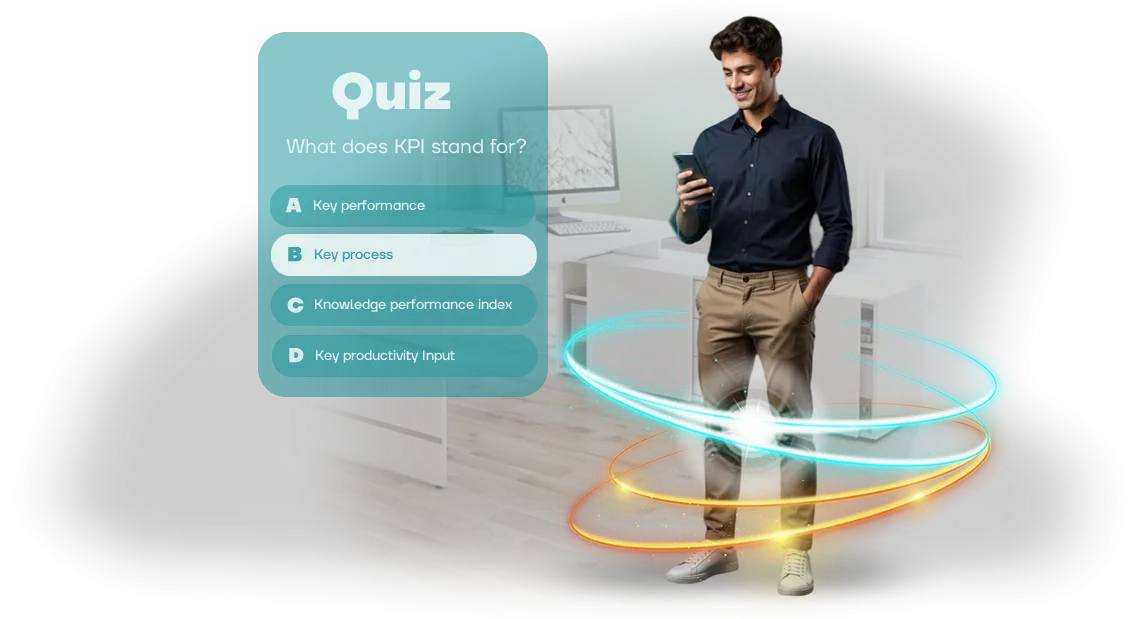
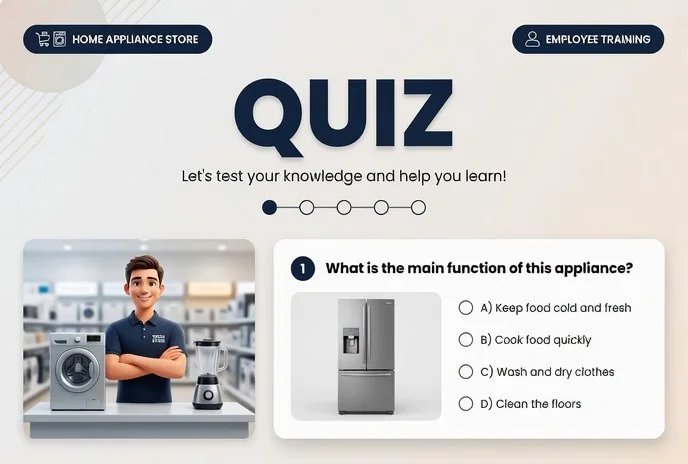
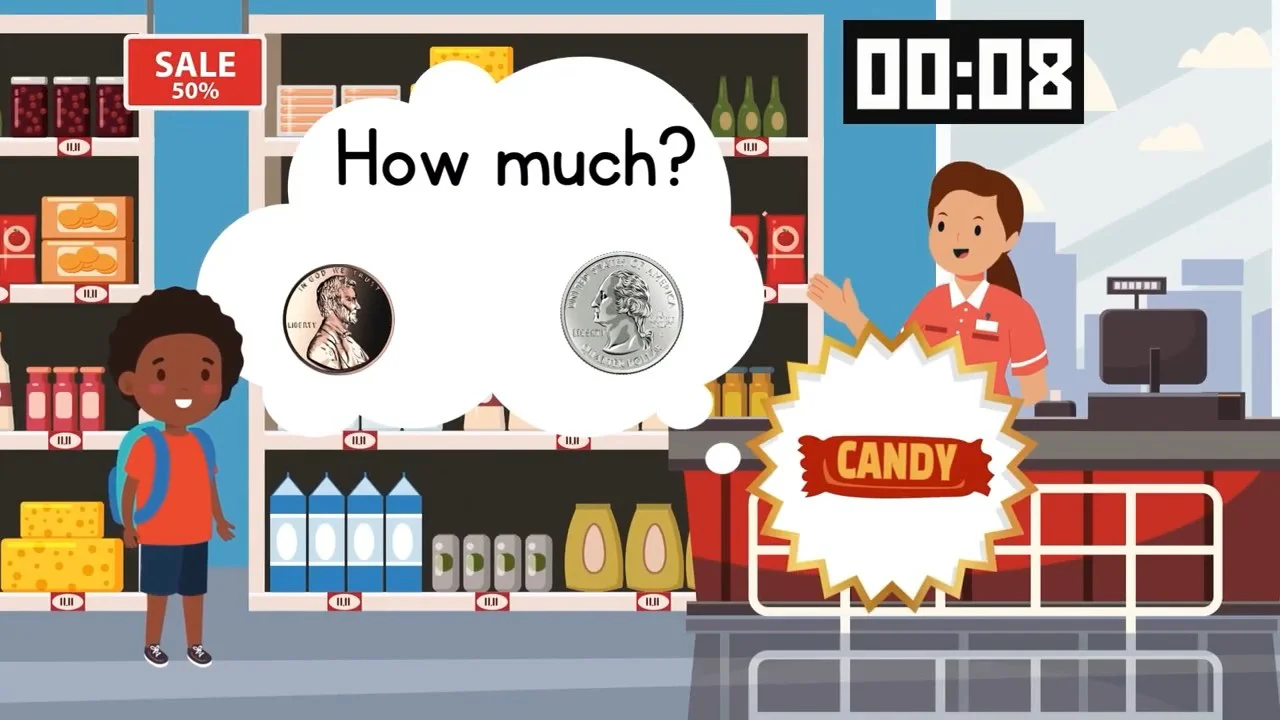
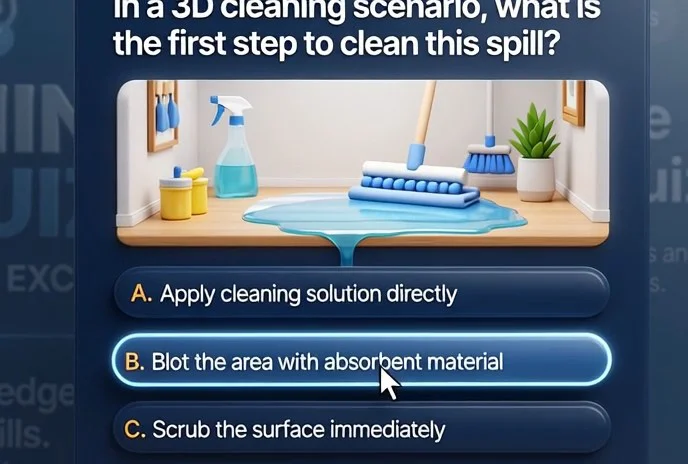
Regular training in the form of short quizzes helps fix this. Instead of tedious lectures, there is a game scenario that engages and tests knowledge on real situations from store life.
We design such 2D quizzes on a professional platform: employees take them on a tablet, phone, or computer, while the manager sees who has absorbed the material and who needs support.
This format covers several tasks at once: fast onboarding of new employees, regular checks of retail standards without disrupting work, and engagement of experienced salespeople.
A quiz can be completed in five minutes before a shift — this turns knowledge checks into a habit rather than a punishment.
Companies using this approach adapt newcomers faster, lose fewer customers due to staff mistakes, and generate stable revenue. Employees start applying standards because they understand the logic behind them, not just memorize them. Below, we break down how we build a training program for your store or chain.
What an educational quiz delivers: growth in knowledge and sales
Gamified training: employees engage on their own
Boring briefings and presentations fail to hold staff attention: after 15 minutes, information is forgotten and motivation drops. An educational quiz turns the process into an engaging game — employees compete, answer questions, get feedback, and want to reach the next level. As a result, gamified training increases staff engagement without administrative pressure.
Staff engagement: training becomes part of work, not a duty
The quiz can be completed at a convenient time: before a shift, during a break, or at the workplace — it does not require stepping away from tasks and causes no resistance.
When training looks like a game rather than an exam, employees return to it voluntarily, which is especially important for frontline retail staff with high turnover. The manager gets a team that genuinely knows the product and service standards.
Sales growth: knowledge turns into revenue
The quiz questions are built on real scenarios from the sales floor: customer objections, product features, display rules, and upsells. In the game, an employee practices what they later do at the register — so knowledge immediately transfers into sales.
Retailers using such quizzes report a higher average check and a larger share of repeat purchases thanks to confident staff.
Knowledge assessment: transparent control without stress
Managers no longer need to guess who understood the material and who “spaced out.” The quiz automatically shows each employee’s result: number of correct answers, completion time, and progress across attempts.
This is an objective knowledge assessment without an exam atmosphere — data is instantly visible in convenient statistics, making it easy to plan additional training for those lagging behind.
Quiz formats for retail: from onboarding to certification
Retail involves several categories of employees at once: some are just starting their shifts, others already know the product, and still others must confirm their qualifications.
A universal quiz cannot solve all these tasks — different formats are needed for each stage of working with personnel. So we design training games as a system that accompanies an employee from day one until they are cleared for complex tasks.
Three formats for retail tasks
| Format | Who it is for | What it gives the customer |
|---|---|---|
| Welcome quiz | New hires in their first or second week | Fast immersion in standards, fewer mistakes in the first months |
| Regular competition | Current employees and entire locations | Maintaining knowledge, team spirit, and healthy competition |
| Certification before approval | Employees moving into a new role or assignment | Transparent readiness check, protection against risks from untrained staff |
The welcome quiz helps a newcomer remember store layout, display standards, and customer communication rules without boring briefings.
Regular competition games keep knowledge at the required level: once a month, sales associates complete a short quiz, see the rating, and fix weak spots. Certification before approval gives you an objective picture: who is truly ready to work and who needs further training.
The formats are easy to combine. For example, the welcome quiz turns into a series of competitions, and the final certification becomes the natural completion of the cycle.
We customize quizzes to your specifics — cashiers, salespeople, merchandisers — and integrate them into your existing training system so staff can play at a convenient time and on any device.
How quiz development works: 7 steps from brief to launch
You fill out the brief, and we handle everything else — from scenario to launch. The process is structured so you see results at every stage and can make edits without missing deadlines. Here is how it works.
- You fill out the brief, and we clarify the goals. You answer short questions about the audience, training objectives, and format — enough to get started.
- We prepare the quiz scenario and questions. Based on your regulations and materials, we assemble the quiz structure: topics, difficulty, number of rounds.
- You approve the training with us. We send a draft scenario and test questions — you make edits until the wording is perfect.
- We build the game quiz on a professional engine. We assemble mechanics and screens and adapt it to your employees’ devices — it looks like a modern application.
- We run internal testing. We complete the quiz ourselves, look for errors and flaws, and test it on different phones and computers.
- We launch the training game for employees. The quiz is published on your platform, links are shared, and we help organize the first round.
- We provide support and analyze results. We track who completed it, which questions caused difficulty, and adjust materials or extend access if needed.
What is included in the delivery: a complete kit for launching your quiz
When you order an educational quiz for retail, you receive not just a game file but a ready-to-launch kit. Everything is packaged so that a responsible employee can start the training without developer help — all that’s left is to pick a date and send the link to the team.
The delivery kit includes:
- A ready 2D quiz game — a quiz with your questions, branded style, and difficulty settings. Employees only need a short link: nothing to install or configure.
- Instructions for staff — simple guides: how to open the game, how much time to set aside, and how to view results. No technical jargon and no extra steps.
- Administrator instructions — a step-by-step launch scenario: how to send links, answer common questions, and extend the deadline if someone missed it.
- A training statistics panel — clear reports on who completed the quiz and which topics cause difficulty. You see the team’s progress, not just the fact that a link was sent.
- Editable materials — you can change questions, add points, and update hints without involving a developer. The quiz is easy to adapt for a new task or the next quarter.
- Motivation recommendations — ideas for rewards, competitions between departments, and repeat attempts so employees complete training with interest.
The entire kit is delivered ready-made — along with instructions and launch links. All you have to do is pick a date and invite your employees.
Case study: how a quiz increased sales in a store chain
For a convenience-store chain called “Always Nearby”, ordinary lectures and briefings no longer worked: knowledge faded within a week, and service standards were only partially met.
After introducing a quiz into the onboarding program and monthly training, the situation changed within two months.
The quiz was built not as a “right-wrong” test but as short scenarios from real work: how to greet a customer, what to propose alongside the main product, how to handle objections.
Employees completed levels straight from their phones, for 10–15 minutes a day, receiving instant feedback and points.
| Indicator | Before the quiz | After 2 months |
|---|---|---|
| Service standard compliance | 54% | 84% |
| Average check | 100% | +12% |
| Share of repeat completions | 25% | 70% |
Training results immediately reflected in revenue: average check grew, and upsells on the sales floor increased. Retail success confirmed that a quiz holds employees’ attention and turns training into a clear game, not a duty.
After the first stage, the client expanded the quiz across all departments of the chain. This repeat order is the main proof that training delivers measurable value to the business.
How to choose a quiz format for your task?
Choosing a quiz format starts not with questions but with the training goal. In retail, there are three typical scenarios: fast onboarding of newcomers, regular maintenance of service standards, and certification after training.
Each task needs its own rhythm, depth, and delivery method — otherwise employees lose engagement and results become a formality.
For onboarding new employees, a short quiz with instant feedback and hints works best. In the first weeks, a newcomer is already overloaded with information, so the material is delivered in small portions, and mistakes are explained rather than punished.
This format reduces anxiety, speeds up entry into the role, and immediately anchors basic standards — from greetings to handling objections.
If the goal is to regularly maintain knowledge — for example, updating the assortment or reminding about cashier procedures — choose short weekly sessions with a competitive element.
Employees complete the quiz in five to seven minutes, see their store or team rating, and training becomes a healthy habit rather than an obligation. This format is especially effective for retail, where staff work in shifts and it is hard to gather everyone at once.
For certification, a stricter format is needed: fixed time, order of questions, and result metrics. It is important to eliminate chance — for example, shuffle answer options and limit the number of attempts.
In the end, you get an objective picture: who really absorbed the material and who needs retraining. The same data can be used to evaluate trainers and adjust programs.
How to decide quickly: write down what will change in the employee after training — they will start doing something differently or better. If it is about first steps, create an onboarding quiz. If the goal is not to forget, use a format with regularity and ratings.
If a check is needed, choose strict certification. Based on this logic, we select and develop the format for your task so that results are measurable and employees are engaged.
Common concerns: what if employees do not complete the quiz?
Managers often worry that training will turn into a formality: employees will open the quiz “just to check the box” and close it within a minute. The concern is understandable — ordinary tests really are tedious.
But the quiz is built differently: short rounds, a competitive moment, and visible progress naturally push people to get involved.
We address this on three levels: motivation, technical support, and integration into the work rhythm. Below are answers to the most common questions asked before launch.
What if employees do not complete the quiz?
The quiz is designed as a game, not a test: there are points, a rating among colleagues, and rewards for completion. People enjoy competing and seeing their level — this works stronger than reminders.
Besides, a round takes no more than 5–7 minutes. It can be completed at a convenient moment — between tasks or at the end of a shift. We help choose the right launch moment and suggest how to involve managers in motivating the team.
What if technical issues occur during the quiz?
We support the launch: before the start, we check how it works on employees’ devices, and in the first days we answer questions and quickly resolve problems. For employees, the interface is extremely simple — there is nothing to install or configure.
We use proven tools and professional equipment, so failures are ruled out. If something does go wrong, you will not be left alone with the issue — technical support is available.
How will the quiz fit into the workflow without distracting from tasks?
The quiz integrates into existing training processes: it can be launched after a briefing, as part of scheduled training, or as an independent stage of newcomer onboarding. We discuss with you the most convenient moment and customize the interface to your scenario.
Results data is automatically collected into clear reports — you will not have to check each person manually. The manager sees who completed it, who succeeded, and who needs an additional consultation, and can quickly integrate this into the department's work.
Order an educational quiz for your employees
Employee training in retail is not just a briefing — it is an investment in service quality and sales. Classic lectures and presentations fail to hold attention, and knowledge quickly evaporates.
The game quiz format solves this problem: it engages, competition drives memorization, and results are easy to track.
We create educational quizzes in the 2D format on Unity, adapted to the needs of retail chains. We have already helped retail companies reduce onboarding time for new hires and increase staff engagement.
Instead of a boring test, employees complete an engaging quiz that can run on any device. This accelerates adaptation and reduces turnover.
To see how it works in practice, order a quiz demo. We will prepare an example tailored to your specifics and show how to integrate it into your current training processes. You will also receive a commercial proposal with clear terms.
What you get when ordering development:
- A commercial proposal with a transparent cost estimate and timelines.
- A quiz demo based on your data and within your subject area.
- An individual scenario reflecting your chain’s standards.
- Knowledge checks without disrupting work — on a phone or tablet.
- Integration with your learning management system.
- Support and regular question updates to match new standards.
- Completion reports and analytics for each employee.
Ordering a quiz now means launching training that actually works. Discuss your task with us — we will send a commercial proposal and a quiz demo.
Write to us today, and within a few days you will see your employees enthusiastically competing in knowledge about the product and work standards.