


Why Employee Training in Telecommunications Doesn’t Deliver Results
In telecom, employees have to keep a huge volume of information in mind: rates, technical parameters, communication scripts, regulations, and new promotions. Traditional corporate training formats — lectures, presentations, and mandatory tests — overload but do not engage.
As a result, employee training becomes a formality: knowledge fades right after passing the test, and in real conversations with subscribers this leads to mistakes, lost customers, and extra support requests.
The main reason is not a lack of desire to learn, but low engagement. Adults remember only what interests them and what they have experienced in practice. When an employee passively listens to an instructor or flips through slides, the brain does not retain details.
This is especially acute in large telecom operator teams, where skill levels and motivation differ — and a single boring format works neither for beginners nor for experienced specialists.
The indirect losses from such training are visible in the numbers: repeat calls about the same issues, long pauses in dialogue, mistakes when activating services. Managers spend time on debriefs and additional training, yet the result remains unstable.
Corporate training should change behavior, not just be “ticking the box”. Until that happens, any investment in courses and simulators fails to pay off.
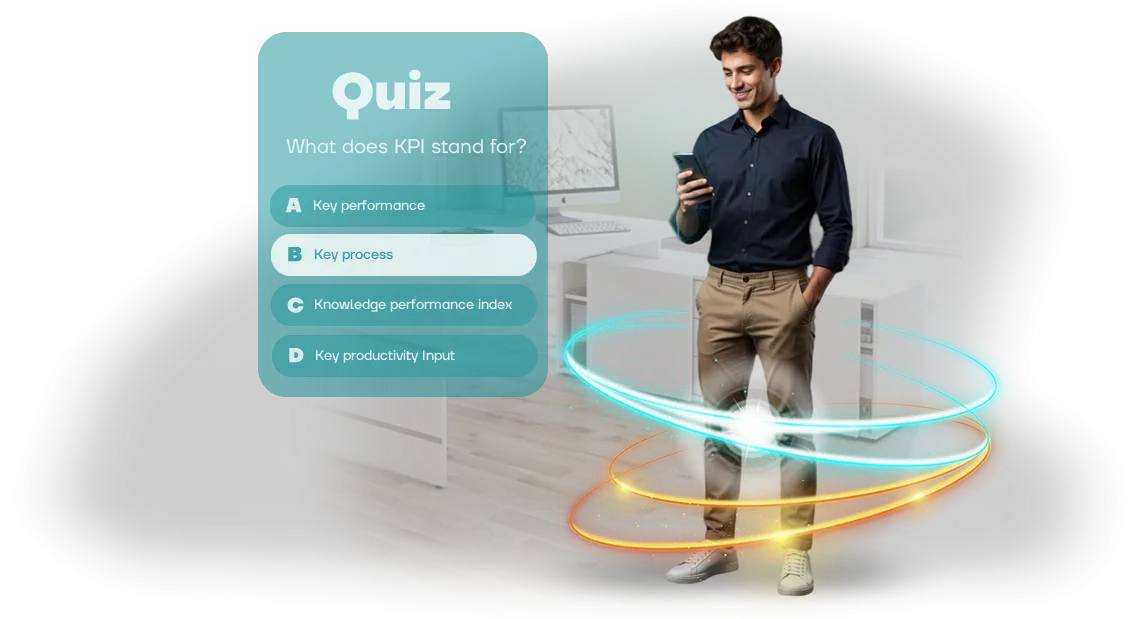
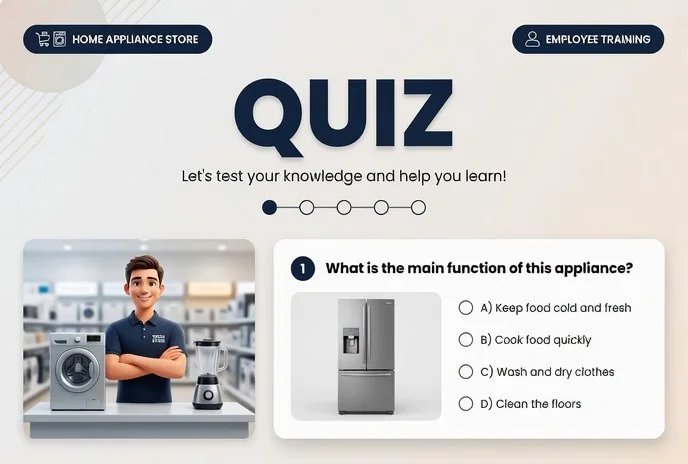
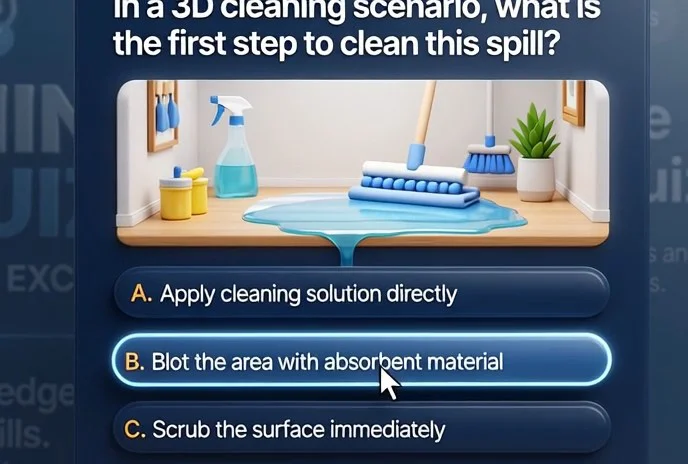
The solution is to change the format — a quiz for telecommunications. This is not a test for the sake of assessment, but a live game in which an employee competes, sees progress, and immediately understands which topics are “lagging”.
Excitement and elements of competition boost engagement: employees go through the material voluntarily, not “under duress”. In a game format, a mistake becomes experience, not punishment, so knowledge is reinforced faster and stays with the person at work.
That is why we develop educational quizzes that fit into a regular staff development system for telecom companies. Instead of dull tests, an employee gets a dynamic game under your brand, and a manager gets clear statistics on knowledge retention.
This format solves the problem of low engagement and makes employee training a tool that genuinely improves service quality.
Checking length: approximately 1380 characters. Keywords: employee training, quiz for telecommunications, low engagement, corporate training — all present. The text has no lists/tables, only paragraphs. It ends with a bridge. Years are not mentioned, anglicisms are not used. Everything is within limits.
In telecom, employees have to keep a huge volume of information in mind: rates, technical parameters, communication scripts, regulations, and new promotions. Traditional corporate training formats — lectures, presentations, and mandatory tests — overload but do not engage.
As a result, employee training becomes a formality: knowledge fades right after passing the test, and in real conversations with subscribers this leads to mistakes, lost customers, and extra support requests.
The main reason is not a lack of desire to learn, but low engagement. Adults remember only what interests them and what they have experienced in practice. When an employee passively listens to an instructor or flips through slides, the brain does not retain details.
This is especially acute in large telecom operator teams, where skill levels and motivation differ — and a single boring format works neither for beginners nor for experienced specialists.
The indirect losses from such training are visible in the numbers: repeat calls about the same issues, long pauses in dialogue, mistakes when activating services. Managers spend time on debriefs and additional training, yet the result remains unstable.
Corporate training should change behavior, not just be “ticking the box”. Until that happens, any investment in courses and simulators fails to pay off.
The solution is to change the format — a quiz for telecommunications. This is not a test for the sake of assessment, but a live game in which an employee competes, sees progress, and immediately understands which topics are “lagging”.
Excitement and elements of competition boost engagement: employees go through the material voluntarily, not “under duress”. In a game format, a mistake becomes experience, not punishment, so knowledge is reinforced faster and stays with the person at work.
That is why we develop educational quizzes that fit into a regular staff development system for telecom companies. Instead of dull tests, an employee gets a dynamic game under your brand, and a manager gets clear statistics on knowledge retention.
This format solves the problem of low engagement and makes employee training a tool that genuinely improves service quality.
What a Corporate Quiz Will Give Your Business
Corporate training often becomes a formality: employees watch presentations, nod, and a week later forget the key rules. A quiz turns training into a game format — this is gamification, which makes the brain work actively rather than passively absorb.
Instead of boring lectures, you get an engaging process that involves everyone — from frontline staff to managers.
The first and main benefit is a growth in real knowledge. When an employee answers questions, he recalls, analyzes, and applies information.
A mistake in a quiz is remembered better than a correctly read slide, so the material is absorbed more deeply and stays in memory for a long time. This directly affects the quality of customer service, compliance with regulations, and speed of decision-making.
The second benefit is employee motivation. The competitive element, ratings, points, and symbolic rewards turn training into an exciting game. People themselves strive to complete the quiz, prepare, and show results.
In this way, you develop healthy competition within the team and create a culture of continuous development rather than forced listening to instructions.
The third benefit is strengthening the employer brand. A modern company that invests in engaging training is perceived by employees and candidates as a progressive employer.
This increases the loyalty of the current team and helps attract talent in the market — people want to work where they are cared for and taught without boredom.
Finally, a quiz accelerates the onboarding of new hires. Instead of days of immersion in documents, a new employee goes through short game rounds that introduce the product, standards, and internal processes.
This reduces stress, gets them up to speed faster, and shortens the time to first successful results. This is why a corporate quiz is not entertainment, but a working tool for staff development that pays off through the growth of team competence.
Educational Quiz Formats for Your Company’s Tasks
In telecom companies, employees constantly have to learn new things: rates, services, standards of communication with subscribers. The same training format will not suit frontline staff, the office, and distributed teams alike.
That is why we develop different quiz formats — from large-scale games for the whole team to short simulators for targeted knowledge control.
Formats are selected according to the specific task: to unite the team, test knowledge after a course, or regularly maintain qualifications. Below are the main options that have already proven themselves in telecom.
| Format | For whom | What it gives the client |
|---|---|---|
| Mass quiz | The whole company team | Engages even remote teams, creates a shared news hook, and increases loyalty |
| Team quiz | Departments, shifts, project groups | Develops a competitive spirit and helps memorize material through team discussion |
| Training simulator | New hires, contact center employees | Reduces time to full proficiency, checks readiness for work without stress |
| Blitz survey | Regular knowledge review | Keeps employees on their toes and quickly identifies gaps |
This is not a complete list, but typical scenarios. Formats can be combined, difficulty levels added, and adapted to corporate standards.
We will help you choose the right type of educational game, design the mechanics, and fill it with your company’s content. Training in a game format will become a tool that employees look forward to rather than put off. Contact us — we will select a quiz format for your team based on your task.
How We Develop a Quiz: A Step-by-Step Process
We structured the process so that you always know what is happening with the project and what comes next. Each stage is a control point: you see the result, make edits, and understand what you are paying for. No “black boxes” — just transparent work with clear deadlines.
A personal manager oversees the implementation: they gather requirements, keep track of the schedule, and remain available even after launch.
-
Brief and audience. We discuss the learning goals, employee profiles, and problem areas in knowledge. We determine which topics matter specifically for your team and in what format to present them, so that employees truly engage rather than go through the motions.
-
Scenario and content. Together with you, we develop questions, answer options, and explanations. We agree on the quiz logic: topic order, difficulty, and mechanics — from simple to complex or by employee role.
-
Prototype and approval. We show how the quiz will look and work on the first questions. You see the future product before full development and make edits without losing budget or time.
-
Project implementation. We build the full version: your brand styling, game mechanics, a scoring system, and a clear interface. We work with professional tools, which ensures stable operation on any employee device.
-
Testing and launch. We test the quiz on a focus group of employees: we see where difficulties arise and refine it. Then we hand over the finished product with launch instructions — you can start on your own or with our support.
-
Support and analytics. We help launch the quiz, add questions if needed, or change the scenario for new tasks. You get completion data: how many people participated and how they answered, so you can see learning progress.
What’s Included in the Project: A Complete Launch Kit
By ordering the development of a quiz for employees, you get not just a game, but a ready-made learning tool. We put together a complete package — from scenario to results analytics. So you launch training without diving into technical details and immediately see the effect.
- Scenario and content. We create questions and answers based on your products, service standards, and regulations. For the telecom industry, this includes checking knowledge of rates, technical parameters, and customer communication rules.
- Corporate-style design. Styling with your logo, brand colors, and fonts. The quiz looks like part of the company’s internal system, not a third-party program.
- Customization for your task. You choose the quiz length, number of questions, and exam or training mode. The tool suits both new-hire onboarding and regular department knowledge checks.
- Team instructions. We prepare a cheat sheet for employees and an admin guide. No complex training — the quiz launches in a couple of clicks.
- Technical support at launch. We help install the quiz, configure access, and test it on your devices. We answer questions until you launch the training.
- Results analytics. See which employees completed the quiz, which questions caused difficulty, and how long it took. This data helps refine training materials.
All this is included in one project — no hidden work or additional approvals. You get a tool that works from day one and gives a clear picture of knowledge in your team.
Case Study: How a Quiz Boosted Telecom Employees’ Skills
For the telecommunications company Telecom-Region, we developed an educational quiz for 400 employees: contact center operators, installers, and sales managers.
Previously, training was based on PDF instructions and standard tests — it was completed “for show” and real knowledge was not retained.
We turned the program into a series of short game rounds with questions about products, rates, and regulations. Employees completed the quiz from their phones and immediately received error breakdowns, while managers saw who had mastered the topic and who was “struggling”.
Results That Confirmed the Effectiveness of the Quiz
A month later, the share of employees who fully completed the training grew from 58% to 94%. The average score on repeat attempts increased by 35% — meaning the knowledge was not just memorized but truly absorbed.
Engagement turned out to be higher than with traditional training: 87% of participants completed additional rounds to compete with colleagues in the overall rating. The company received not formal control, but a tool that turns training into a working habit.
Why This Matters for Your Team
For telecommunications companies, where the product is complex and service depends on employee skill levels, a quiz solves the task without taking people away from work. After the first case, the client ordered a second quiz for a new product — the solution works and scales.
This quiz case study shows that training can be measurable and engaging without requiring dozens of hours. We handle development, content, and analytics so you get skill growth and clear statistics for each employee.
How to Choose a Quiz Format for Different Departments?
A universal quiz that works equally well for all departments is a myth.
Each unit has its own tasks: salespeople need to practice communication scenarios, technical specialists need knowledge of equipment and troubleshooting algorithms, and managers need to test their decision-making.
If this specificity is ignored, training turns into a formality: employees pass the test but do not gain the skills they actually use on the job.
In telecommunications companies, the difference is especially pronounced. A frontline employee must quickly navigate rates in a couple of minutes, while an engineer needs to identify the cause of a network failure.
Therefore, we select the quiz format for the task: for some teams — short questions with answer options and analysis of typical situations; for others — scenarios with sequential steps and strategy choices.
Difficulty is also adjustable: beginners get basic topics and educational feedback, experienced employees get complex cases and analysis of decision consequences.
This approach solves two problems. On the one hand, an employee does not feel awkward when facing questions outside their area of responsibility — they see only relevant material.
On the other hand, a manager gets an honest picture: where knowledge is lagging, which topics need additional training, and where the team is ready for a higher workload. This is exactly what adaptation to individual department requirements looks like.
As a result, a quiz becomes not just a check, but a development tool: employees settle into their roles faster, make fewer mistakes in real tasks, and work with customers more confidently.
We help choose the format, content, and difficulty level for a specific department — from first-line support to engineers and project managers in telecommunications. Based on your specifics, we will create a quiz that solves exactly your problem.
Common Client Doubts Before Starting a Project
Doubts before the start are a normal stage of any serious project, especially when it comes to employee training and investment in team development. We have worked with telecom companies and other industries for many years, so we know typical client fears well. Below are the most common questions we hear before the start and how we address them.
What if employees don’t complete the quiz?
We don’t abandon the project after delivery. Before the launch, we run a pilot with a small group — we see which questions cause difficulties and adapt the level to your audience.
The game includes hints and material repetition, so an employee can go through a topic several times and consolidate knowledge.
As a result, you get completion statistics: it’s clear who has absorbed the material and who needs additional support. Implementation is smooth, not like an exam with strict requirements.
What if the game breaks down at the height of the launch?
Before the launch, we test the quiz on different devices and scenarios. During the active phase, we provide technical support — a specialist is available to quickly resolve any issue. After release, you get a guarantee on the product, so risks are minimal.
How safe is it to store corporate data and employee data?
We work under a contract and sign a confidentiality agreement. We use secure server architecture; access to statistics is available only to authorized employees of your company.
We do not transfer information to third parties and, after project completion, delete everything at your request.
How long will development take, and will the project drag on?
We fix deadlines in the contract and break the work into stages — from brief to final launch. A basic quiz is usually ready in 3-4 weeks, a more complex scenario in 6-8 weeks. You see intermediate results at every stage, so the process is transparent and controlled.
What support will be provided after launch?
The package includes a support period: we monitor stability, fix inaccuracies, and help update questions. If later you want to add new topics or change the design — write to us, and we’ll offer a solution.
Order Quiz Development for Your Company’s Tasks
Turnkey quiz development starts with a single step — a request. We’ll figure out the task ourselves, choose the format, and offer a solution that fits your timelines and budget. You don’t need to understand gamification or technical details.
Just leave a request on the website, and we’ll get in touch within one business day. We’ll have a short consultation, clarify goals and audience, and then prepare a preliminary estimate. This is free and non-binding.
How to Order a Quiz
- Request. You leave a request on the website or write to us in a messenger — it takes a couple of minutes.
- Consultation. We clarify tasks, subject matter, and number of employees, and answer questions.
- Estimate and timeline. We create a transparent commercial proposal with a fixed cost and launch date.
- Development and approval. We prepare a prototype, content, and design; you make edits at every stage.
- Launch and support. The quiz is integrated into your process — we conduct training, hand over materials, and stay in touch.
Order quiz development today — and within a few days your employees will start learning material in an interactive format.
Leave a request to get a consultation and a preliminary estimate without any obligations. ---