

Why employee training in the tourism business doesn't produce results
Classic trainings at a tourism company often turn into a formality: employees listen to a lecture, write down procedures, but a week later they work the same old way. The reason is not lazy staff, but the fact that passive perception of information does not create a skill.
Service standards can be learned, but in a stressful situation at the reception desk or in a conflict with a tourist, only a practiced reflex will work — not a notebook.
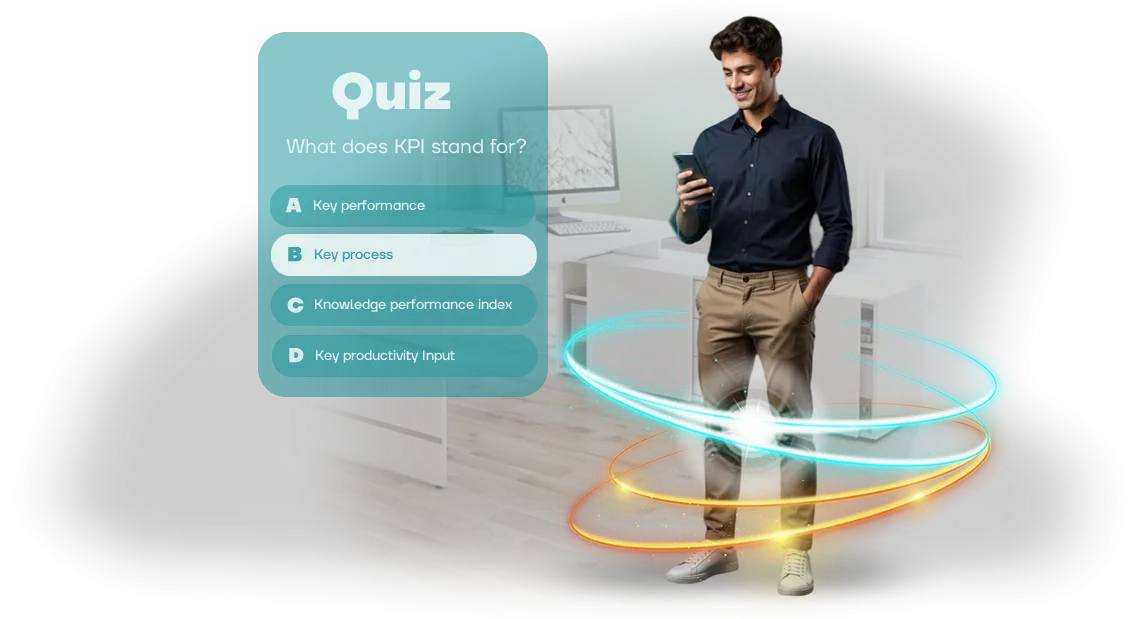
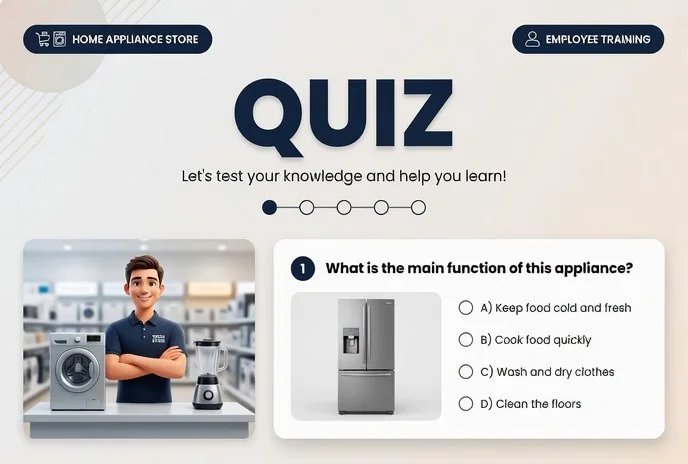
Corporate training delivers results when an employee experiences the situation himself rather than watching it from the sidelines. A game format with questions, scenarios, and immediate feedback engages the same mechanisms as real client work.
A mistake in a game costs less than a mistake in a live conversation, and the correct reaction is reinforced through repetition and emotional involvement.
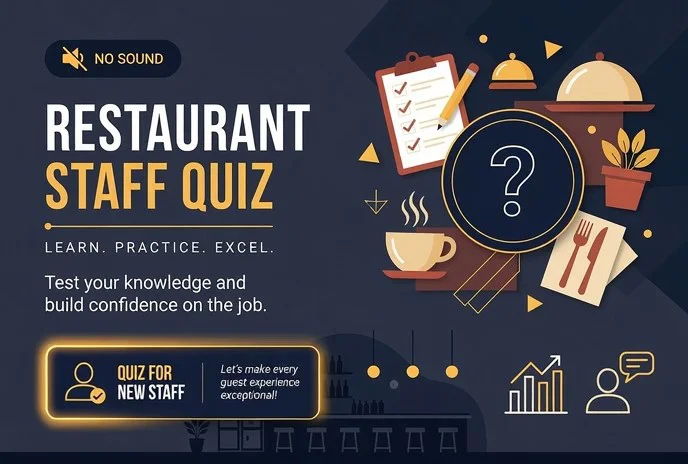
We close this gap: we turn boring standards into an educational quiz where every employee of a tourism company goes through scenarios for bookings, refunds, objections, and difficult guests. Instead of lectures — competition and genuine interest.
Instead of forgotten instructions — a skill that stays with the manager and brings more sales and customer loyalty.
What the game format of employee training provides
Tourism business employees answer dozens of questions every day: about tour selection, entry rules, hotels, and insurance. Mistakes here cost money — the client goes to a competitor and the company's reputation suffers.
Traditional briefings and presentations overload employees with information, and they remember only a small part of it. Game-based training solves this: the material is delivered through excitement, competition, and curiosity.
When training is built as a quiz, employees engage voluntarily — they enjoy passing levels, earning points, and seeing their progress. Employee engagement grows, and so does the completion rate of training programs.
The company gets not formal "checkmarks" but real knowledge retention. This is especially important in tourism, where seasonal workload leaves no time for long courses.
Gamification of training brings practical results: faster onboarding for newcomers, fewer sales errors, higher booking conversion. A confident employee works bolder and calmer, and the client senses that competence and comes back again.
Game mechanics make it easy to update content — carrier rules or visa requirements change, and the quiz automatically keeps the team up to date.
Game-based training also supports brand loyalty inside the company. When an employer invests in development and does it engagingly, employees value that employer more.
This reduces turnover and builds a team that speaks the same language with tourists, shares company values, and treats the product with greater warmth. The workforce becomes more stable, and service becomes more consistent.
We develop 2D quizzes tailored specifically to tourism business challenges: from destination knowledge to objection-handling standards. The format easily integrates into training at any stage — for the office, remote managers, or field staff.
You get a tool that requires no complex implementation and gives quick feedback: you can see how much the team has grown and which topics need reinforcement. This is training that generates profit, not just takes up time.
Formats of educational quizzes for the tourism business
Educational quizzes solve the main pain of the tourism business — the gap in employee knowledge that hurts sales. A travel agent who confuses hotels, doesn't know visa nuances, or misunderstands destinations loses the client and the company's money.
The quiz turns training from an "obligation" into a tool that quickly drives knowledge to automaticity.
Each stage of work with staff has its own format — from short checks for newcomers to team games that unite the workforce. The format is chosen to match the specific task and the result the business needs.
Three formats for your tasks
| Format | For whom | What it gives the client |
|---|---|---|
| Newcomer adaptation quiz | New travel agency employees | Fast path to first sales: in 2–3 sessions the newcomer masters the destination base and work standards |
| Product quiz | Sales managers and senior specialists | Fewer errors in tour selection, higher conversion and average check |
| Team game quiz | The entire office or agency network | Motivation and healthy competition, knowledge is reinforced with positive emotions |
Each format is easy to combine: start with an adaptation quiz for newcomers, and a month later run a team game for the whole office. This way employee knowledge stays current without taking time away from work and without boring lectures.
We select the format for your team — we take into account the number of employees, the specifics of your destinations, and how sales are structured. As a result, training doesn't distract from work — it works for revenue.
How a quiz for your team is developed
We have structured the process so that you always understand what stage the quiz development is at and what you will get in the end. You don't need to understand technical details — every stage of the quiz creation is accompanied by clear reports and checkpoints.
-
Brief and immersion into your tasks. We discuss who your employees are, what knowledge needs to be reinforced, and how the quiz will fit into your current training. We collect examples from your practice so that the questions speak the language of your team.
-
Scenario and questions. We turn your materials into engaging questions with answer options and explanations. We agree on the style and difficulty so that the quiz is interesting for both newcomers and experienced employees.
-
Prototype and design. We create a visual concept in your company's corporate style. You see the mockups before the main development begins and can make edits without wasting time.
-
Build and configuration. We assemble the scoring logic, hints, levels, and, if needed, integration with your training system. At this stage the quiz starts working as a full-fledged tool.
-
Testing and launch. We run a test with real employees, polish out the rough edges, and launch the full version. You get a ready solution, not a "raw" product.
-
Implementation and support. We provide instructions for administrators, help with the first launch, and stay in touch for refinements and new questions.
As a result, you get not just an entertaining quiz but a training tool already embedded in the work process. An average project takes 2–4 weeks — after the first launch you immediately see the team's engagement and progress.
What's included in the delivery of an educational quiz
Once the project is complete, you get a ready-made tool that employees can use from day one. The package includes everything needed to launch training without additional preparation — from game mechanics to facilitation methodology.
- A ready-made quiz in corporate style. The design is adapted to your brand and the screens of the devices your team uses: from a tablet at the reception desk to a smartphone on the road.
- A complete question bank on your product. We fill the quiz with content about destinations, hotels, booking rules, and service standards, and we prepare the content together with your experts.
- An administrator's personal account. You manage the questions yourself: add seasonal promotions, new excursions, and, if necessary, update outdated information in a couple of minutes.
- Completion statistics and a results table. You immediately see who has already completed the training, which topics are lagging, and who needs additional explanation — this helps you raise the team's level with precision.
- A methodology guide for the manager. We show you how to run a competition between departments, what prizes to offer, and how to make the quiz a regular practice rather than a one-time event.
- A training session for your administrators. We demonstrate how to change questions and review reports so that you can fully manage the system without us.
- Technical support and a guarantee of stable operation. We resolve all issues within a business day, and updates require no special knowledge from you.
You get not just a game but a training system that improves service quality and reduces turnover. All materials stay with you, and the quiz content can be easily updated as your product changes.
Case study: how a quiz increased a tourism company's revenue
We launched our quiz for the tour operator "Globus Travel" with a clear goal: to speed up the adaptation of new managers and reduce sales errors.
Previously, the company trained employees with presentations and spreadsheet tests — newcomers needed almost two months to confidently select tours, and part of the hot leads was lost because of incorrect answers to clients.
We built the quiz scenario on real customer objections and typical booking situations. Instead of dry theory, employees went through short game rounds where they immediately saw the correct sales logic.
The company launched the quiz as a mandatory training stage, and for experienced managers — as a monthly competition with a team rating.
Business result
Two months after launch, the average time for a newcomer to reach their target dropped from eight weeks to three. Errors in tour selection fell by 30%, and the conversion of hot inquiries into sales grew by 18%.
They also noted that the quiz was completed more willingly than regular tests: even experienced employees started retaking it to improve their rating.
The main point — training stopped being a formality. Knowledge is reinforced in a game format and immediately applied in conversations with clients, so the effect is visible in revenue and repeat bookings.
After the first quarter, the client renewed the quiz for the new season and added a block on new destinations. This confirms: effective gamification is not entertainment for the sake of a checkbox, but a working tool that generates income.
Frequently asked questions about developing educational quizzes
The same doubts come up before ordering an educational quiz. Let's address the main objections and explain how we close each risk in tourism business projects.
Employees will see the quiz as a game and won't take training seriously
The quiz is built on real work situations: tour selection, guest objections, route specifics. Gamification increases engagement, so material is remembered faster than when reading instructions. The employee applies the acquired knowledge immediately after completing the quiz.
How long does development take, and will you make it before the season?
A typical project takes 2–4 weeks. We fix the timeline in the contract and break the work into stages: brief, scenario, question development, testing, and launch. If you already have training materials, the timeline is shortened.
We don't have a programmer. Who will update the questions?
You can change the questions yourself through a simple admin panel or a spreadsheet — you just rewrite the text and answer options. New data about tours, hotels, and services can be added in a couple of minutes with no need to contact developers.
How do we know the training worked?
In the admin account, you can see who completed the quiz, how many attempts they made, and which questions caused difficulty. Based on this data, you refine training materials and close knowledge gaps before the season begins.
Get a quiz implementation plan for your employees
Leave a request — and we will calculate for free how a quiz for employees will work specifically in your tourism business. No need to build a plan yourself or figure out where to start.
We will send you a ready-made solution tailored to your specifics: number of staff, destinations, guest interaction scenarios. No generic words — only concrete details for your company.
First, we will have a short consultation about training: we will clarify where employees most often lose ground, which format is easiest for them to understand, and how to integrate the quiz into current training without disruption.
Based on this, we will prepare a free estimate: timeline, stages, question volume, and a quiz implementation scenario. You will receive a document you can use to make a decision and align the budget within the company.
What you get in the implementation plan:
- An assessment of current employee knowledge and "blind spots" — you see right away what needs to be trained.
- A suitable quiz format for training newcomers, monitoring standards, or post-hire adaptation.
- Recommendations on questions and scenarios for your tourism product: tours, excursions, hotels.
- Implementation stages with time estimates for each step — from scenario to launch.
- A pilot launch option for one team and evaluation criteria for management to assess results.
To order a quiz, simply fill out the form below. We will contact you within one business day, clarify the details, and prepare a personalized proposal for your task.
Leave a request — within a day you will have a ready plan, and the first step toward systematic employee training will take no more than an hour.
How to choose a quiz format for the company's task?
Choosing a quiz format starts with the question of what task the company is solving: whether you need to test knowledge after training, introduce employees to new tours, or regularly maintain their awareness of destinations.
This determines whether the quiz will be a memory test, a situational simulator, or a team competition with game elements.
For the tourism business, it is important that employees can select a tour that matches the client's request. Therefore, in the quiz format we combine questions on geography and hotels with real situations: a non-standard request, a difficult client, an urgent booking. This approach shows where an employee is confident and where they need preparation.
If the task is to quickly assess a group after training, a compact format with answer choices and a time limit is the right fit. If you need to hold attention — we add a competitive mode with ratings and rewards. And for regular training, series of short quizzes on new destinations work well.
We help you choose a quiz based on your task and team specifics. At the consultation we clarify who will take the training, how much time employees can allocate, and what result matters to management: sales growth or staff confidence.
We then propose the right format and question structure, and explain how we will measure the result.
The main thing — don't overload employees and choose a quiz that drives business metrics. A well-chosen quiz is short, clear, and immediately reveals knowledge gaps rather than merely entertaining.