

The Price of Anesthesiologist Errors: What's at Stake for Clinics
Anesthesiologist errors are not just a medical risk — they are a direct threat to a clinic's financial stability. Every anesthesia incident can lead to lengthy investigations, claim payouts, and loss of patient trust. Yet the stakes often only become clear after the fact, when nothing can be fixed.
Most clinics limit themselves to lectures and briefings, but that approach can't train for real scenarios — sudden blood pressure changes, allergic reactions, complex drug combinations.
It's precisely in stressful situations that the gap between theory and readiness to act becomes apparent. Patient safety directly depends on how many times a doctor has already lived through similar cases in conditions close to the operating room.
We offer anesthesiologist training on interactive simulators that model clinical cases in real time. The doctor makes decisions, sees the consequences, and learns to correct mistakes without risk to the patient.
This kind of training for medical staff turns rare critical situations into a well-practiced skill rather than a source of panic.
The clinic gets not just a "check-the-box" training record, but a team that works in sync even in unusual situations. This reduces the number of medical errors, strengthens the medical center's reputation, and boosts the confidence of patients and insurance partners.
Systematic anesthesiologist training pays off through surgeons' peace of mind, patient loyalty, and the absence of high-profile incidents.
What a 3D Quiz Brings to Staff Training
Traditional anesthesiologist training often comes down to lectures and tests, where the doctor passively absorbs the material. Real work, however, demands quick reactions in non-standard situations — and this is exactly what classic programs lack.
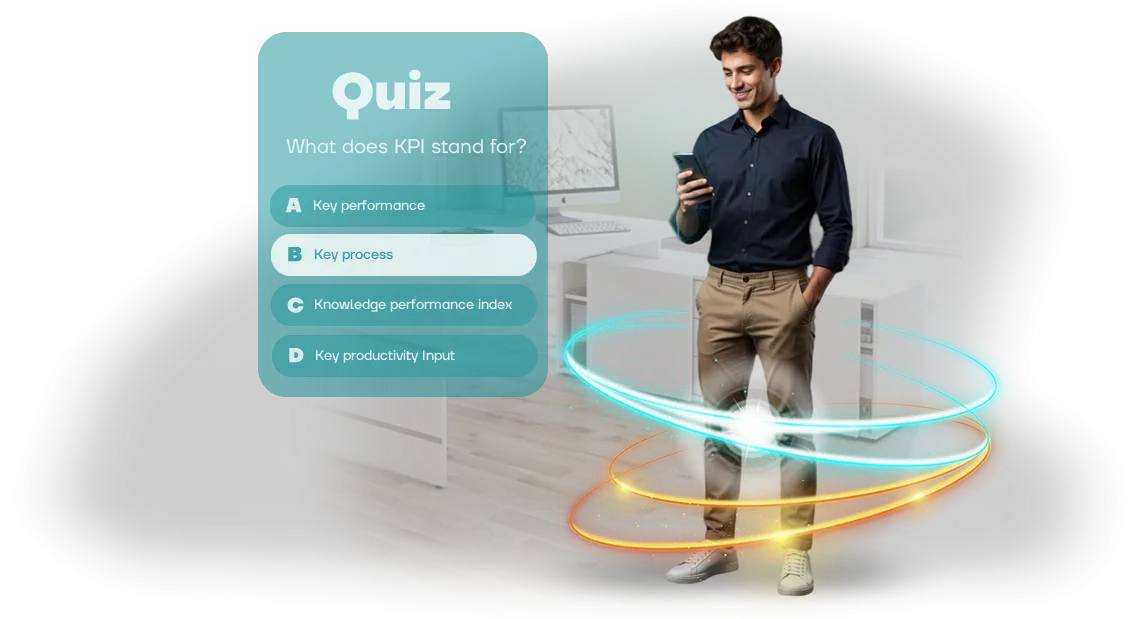
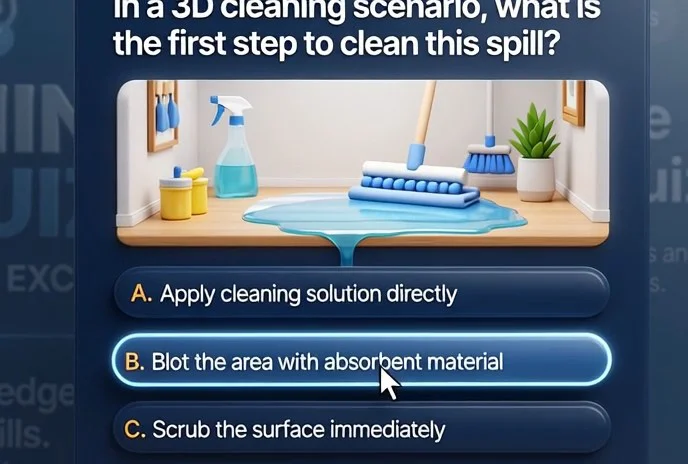
A 3D quiz moves training into an interactive environment: the doctor enters a virtual operating room where decisions must be made in real time.
This format includes natural gamification: points, levels, and scenarios with increasing difficulty. This boosts employee engagement — they complete training not just to "tick a box" but because it's genuinely interesting.
And when people are engaged, they retain material several times faster: knowledge is reinforced through practical actions rather than reading instructions.
| Benefit | How it works | Result for the clinic |
|---|---|---|
| Higher engagement | Employees compete, earn points, and receive feedback | Training is completed on time and with interest |
| Faster knowledge retention | Practice in 3D scenarios instead of notes | Doctors apply new knowledge faster at work |
| Lower risk | Complex cases practiced without consequences for patients | Fewer errors in real practice |
To make the simulation as close to reality as possible, we use Unity — one of the most reliable environments for creating 3D training. It lets us detail anatomy, monitor behavior, and patient reactions in depth while maintaining high performance on a regular clinic computer.
In the end, the clinic gets training that genuinely reduces risk: anesthesiologists practice rare and dangerous scenarios dozens of times until actions become automatic. High engagement guarantees that knowledge won't remain on paper but will become part of daily practice.
3D Quiz Formats for Anesthesiologists
Anesthesiologist training is not just lectures and tests. Clinics juggle different tasks: checking the basic knowledge of newcomers, regularly maintaining staff qualifications, and practicing rare but critical clinical cases.
A one-size-fits-all quiz doesn't help much here — you need quiz formats that match the level of training and the specific learning objective.
We develop custom training quizzes — from compact tests to deep 3D scenarios. This lets you choose a format for the clinic's budget and expectations, rather than forcing training into a template.
The main formats we use for anesthesiologist training:
| Format | Who it's for | What it gives the clinic |
|---|---|---|
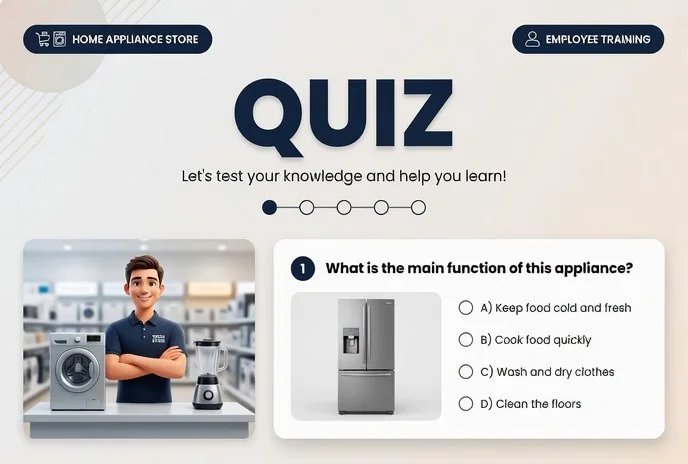
| Short multiple-choice tests | Quick knowledge checks or entry assessment | Time savings, objective assessment of each employee's level |
| Branching scenarios | Practicing clinical algorithms | Develops clinical thinking, visual error review |
| 3D simulation with a virtual patient | Complex and rare cases | Safe practice without risk to patients |
| Adaptive quizzes with difficulty levels | Employees with different experience levels | Adjusts to each level, gradual difficulty increase, sustained motivation |
All formats can be combined: start with a short test, move on to scenarios, and finish with a 3D simulation. This creates adaptive training where each anesthesiologist works at their own pace and gets exactly the quiz scenarios they need for their growth. We'll help you choose a format and build a quiz plan around your goals.
Quiz Development Stages: From Brief to Launch
We work in stages, and at every step you see intermediate results — no "black boxes." The whole process takes two to four weeks, depending on the scope of the scenario and quiz format.
-
Brief and immersion in the task. We discuss which employees need to be trained and in what, which errors occur most often, and what format is more convenient for training — a 15-minute quiz or a full-scale simulator. We lock down goals, audience, and success criteria.
-
Scenario development. Our methodologists turn your protocols, action algorithms, and real clinical cases into multiple-choice questions with detailed explanations.
The scenario is written in the language of your field — anesthesiologists will immediately recognize their own work situations.
-
Scenario approval. You receive the quiz text in an easy-to-use format and make edits before development begins. Usually one or two iterations are enough for the scenario to become medically accurate.
-
Quiz development and assembly. We build the interactive game: questions, hints, a timer, a progress bar, and a final screen with results and explanations. The interface is adapted to your employees' devices and your brand style.
-
Pilot group testing. We launch the quiz with 5–10 employees, collect feedback, and analyze which questions cause difficulties. We refine the wording, difficulty balance, and transition logic.
-
Training launch and support. We host the quiz on your platform or our server, provide access credentials, and a short administrator guide. After launch, we stay in touch: answering questions, helping with reports, and updating content when protocols change.
This workflow keeps the process transparent and manageable. You're not just ordering "game development" — you're helping build a tool that raises anesthesiologists' qualifications and reduces risk in the workplace.
What's Included: What the Clinic Receives
In addition to the 3D quiz itself, the clinic receives a complete package to launch training without bringing in a contractor at every stage. Everything is packaged so that a department head or methodologist can launch the process the day after handover.
Source files and warranty — that's our responsibility. We transfer the content rights and source files of the quiz, so the clinic isn't locked into us for future development.
If you want to extend the scenarios, you can do it with your own methodologist or order the expansion from us.
Staff training is conducted remotely. We show how to add new questions, change difficulty settings, and export results. One responsible employee is enough to get started — no separate IT department needed.
The warranty is stated in the contract. We fix errors and answer questions during the warranty period, and after that we remain available in the format of scheduled support. You get a working system, not an "as-is" file.
Request the delivery package — we'll show which items can be adapted to your clinical protocols.
Case Study: How a Quiz Improved Anesthesiologists' Accuracy
At the regional medical center MedGarant, anesthesiologists faced a typical problem: after continuing education courses, knowledge didn't translate into daily practice.
Every fourth doctor made errors when assessing a patient's condition before surgery, and case reviews took hours. The head of the anesthesiology department approached us for a solution that would reinforce skills without taking staff away from work.
How the training worked
We developed a training quiz based on real clinical cases: each scenario required choosing a course of action — from risk assessment to drug dosing. The quiz was delivered in a mobile format so doctors could complete it between surgeries. Over three weeks, 40 anesthesiologists took part — nearly the entire department staff.
A measurable result
After the course, the accuracy of anesthesiologists' diagnoses and actions increased by 30%. Cases with incorrect assessment fell by a third, and the time needed to choose the correct algorithm nearly halved.
The key proof of effectiveness was a repeat order: the clinic purchased a license for the next quarter and extended the quiz to the surgical department.
This case study shows how a quiz turns knowledge into durable skills. Anesthesiologists hesitate less at critical moments, which lowers the risk of complications. That's why we build scenarios around real cases, not abstract questions.
How to Choose a Quiz Format for Your Clinic's Goals
Choosing a quiz format starts not with technical capabilities but with questions: who and what are you teaching, which work scenarios need to be practiced, and how much time employees have for training.
Anesthesiology has its own specifics — what matters is not only the theoretical foundation but also the speed of decision-making in non-standard situations, so the format must model real conditions, not just test fact recall.
Some clinics only need quick tests on protocol knowledge — they cover regular monitoring and fit easily into shift schedules. Others need full immersion: a case simulation where the doctor sequentially chooses actions, sees the consequences, and receives an error review.
This is exactly where a 3D quiz works — it turns knowledge into skill, provides a sense of real responsibility, and boosts engagement even among experienced specialists.
We match the format to the clinic's goals, not the other way around. At the first stage, we break down the objectives: advanced training, practicing rare scenarios, post-course assessment, or onboarding of new staff.
Based on that, we propose an option — from modular tests to interactive simulation — and show how it will fit into existing training and how much of your staff's time it will take.
Custom quizzes for a clinic take into account not only medical specifics but also internal regulations, your team's typical errors, and department characteristics.
This approach delivers results that are felt in practice: staff navigate critical situations faster, make fewer typical mistakes, and training stops being a formality.
We don't offer a "box" — we design a format around your situation and support the launch until full integration. Describe your task, and we'll tell you which option will deliver the most value within your timeline and resources.
Frequently Asked Questions About Training Quiz Development
Clients rarely dive into the technical side of development, so the main questions usually concern timelines, cost, and post-launch support. Let's briefly address these concerns — so you understand how the work proceeds and what you get as a result.
How long does it take to develop an anesthesiologist quiz?
A typical project takes two to four weeks: from brief and scenario to a ready-made quiz with test questions. If materials are already prepared, the timeline is shorter.
The only factors affecting speed are scenario complexity and the number of game levels — the technical part is already fine-tuned from previous projects.
What goes into the cost?
The main items are scenario work, interface design, game mechanics, and integration with your learning platform. The cost depends on the number of questions, content formats, and the level of interactivity. We use proven reusable components, so you don't overpay for standard quiz mechanics.
Can we update questions after launch?
Yes, you can change questions and answers without developer involvement — through an intuitive admin panel. If no one on your side can update content, we'll offer ongoing support: we'll regularly make changes in line with new standards and protocols.
How is data security handled?
Access to the quiz is role-based: each employee sees only their own statistics, while results are visible to authorized specialists. We follow internal confidentiality policies and don't share data with third parties, so training remains corporate information.
If your questions go beyond these answers, we'll send work samples, a detailed plan, and a cost estimate for your project. All that's left will be to approve the concept, and we'll handle the launch.Order Quiz Development for Your Clinic
For anesthesiologists to master protocols quickly and act confidently in unusual situations, text instructions aren't enough. An interactive quiz with realistic scenarios turns theory into skill and becomes a tool for the clinic to monitor staff preparedness. We build these solutions turnkey — from scenario to launch and technical support.
To make sure your quiz order goes off without rework, check that the contractor covers all the clinic's needs. Here's our checklist:
- Scenarios based on your protocols and clinical cases — training reflects the real practice of anesthesiologists.
- Visual 3D scenarios: intubation, anesthesia, emergency conditions, and actions for complications.
- Employee results panel: see who has completed the quiz, which topics caused difficulties, and where additional training is needed.
- We train your staff to use the quiz and provide instructions — implementation won't disrupt your schedule.
- Questions can be updated and new scenarios added without a programmer.
- Post-launch support and refinements — covered within the contract.
Already at the consultation stage, we'll help you calculate the quiz cost based on your number of employees and scenario complexity. We'll show you demos of similar projects so you can see the format and interface before signing the contract.
To get started, leave a request on our website or give us a call. We'll develop a quiz that benefits both anesthesiologists and management: it will raise the quality of training and reduce risks associated with human error.