

IT Professional Training: Why Boring Lectures Don't Work
Traditional lectures and presentations rarely work when it comes to training IT professionals. This audience is used to rapid information flow, interactivity, and instant results — passive listening leads to boredom and rejection.
As a result, employees formally attend sessions but don't engage with the content and don't retain the key points.
That's where the core problem of corporate training lies: without engaging IT staff, investments in team development don't pay off. The material is forgotten within days, skills aren't reinforced, and employees keep working the same way on real tasks. Managers see low test scores and realize that time and budget have been wasted.
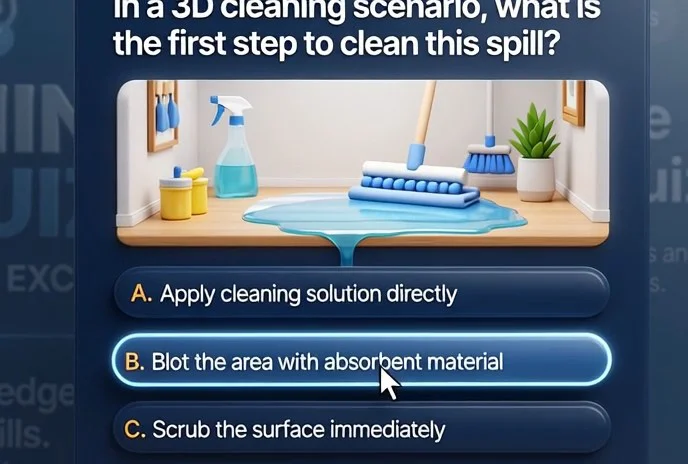
A quiz for IT helps turn the situation around — a format where training becomes active competition. Employees don't just listen; they immediately apply knowledge, answer questions, see their mistakes, and compare results with colleagues. The thrill and game mechanics hold attention, while feedback reinforces the material.
When IT professional training is built around a quiz, effectiveness rises noticeably. IT staff engagement increases, course dropout rates drop, and employees see training as an interesting event rather than an obligation.
After such a program, knowledge stays with the team: specialists find solutions faster, make fewer typical mistakes, and act more confidently in non-standard situations.
We cover this need: we build quizzes that embed into corporate training and deliver measurable results. Instead of formal lectures — a live format that motivates the team to grow and genuinely improves the quality of work.
What a Training Quiz Delivers: Engagement, Knowledge, and Loyalty
When IT specialists go through repetitive courses and briefings, attention fades within 10–15 minutes. A quiz turns training into a game: the employee doesn't read a "boring manual," but solves tasks, competes with colleagues, and sees their own progress.
That's exactly what boosts engagement several times over. People complete the quiz not "for show," but out of interest — they want to answer better, overtake colleagues on the leaderboard, and earn recognition. This makes training a regular habit rather than a forced duty.
The second important effect is knowledge retention. The multiple-choice format forces recall of the material, and instant feedback helps lock in corrections.
After a few weeks, the quiz can be run again: employees refresh the information, and you see which topics are firmly absorbed and which need extra explanation.
The third benefit is loyalty. When a company invests in engaging training, employees feel that their development is not just empty words. This strengthens the employer brand: such projects get discussed, shared on social media, and recommended to friends. In the IT market, where the war for talent never stops, this is a serious advantage.
And finally, analytics. The quiz gives you an objective picture: who has mastered the topic, who is falling behind, and which questions tripped up the majority.
You get clear data for HR and managers — no manual feedback collection or guessing about how effective the training was.
In essence, it's one tool that solves four tasks: engages the team, reinforces knowledge, increases loyalty, and delivers transparent assessment. Without extra organizational overhead — employees take the quiz remotely in 15–20 minutes, and you see the results immediately.
Quiz Formats for IT Specialists: From Tests to 3D Quests
For IT specialists, training quickly becomes a formality if the delivery is dull. Regular tests check memory but don't create engagement, and lectures don't spark competitive drive. The quiz format should match the task: certification, onboarding, or a team event.
We've chosen formats that cover these tasks — from a quick online test to a full-fledged 3D quest. All of them have been validated on real IT teams, so the table shows who each option is for and what it delivers.
| Format | For Whom | What It Delivers to the Client |
|---|---|---|
| Online test | Knowledge check after a course or release | Fast certification, objective results for the manager |
| Interactive quest | Onboarding of new employees | Integration into the team from day one, lower risk of leaving during the probation period |
| IT competition | Team motivation, healthy excitement | Higher engagement in training, an extra reason for teamwork |
| 3D quiz | Corporate event, conference, company presentation | A memorable event, photos and social media buzz, brand reach |
| Hybrid format with gamification | Long-term regular training | Continuous repetition of material, visible team progress metrics |
Quiz Development Stages: From Brief to Launch and Analytics
A clear process means a predictable result. We break quiz development into stages so that you see progress and know when your input is needed. This turns the project into a manageable process, not a "black box."
- Brief and immersion. We clarify training goals, audience, topics, and brand accents. We set timelines and success criteria — you get a clear technical specification.
- Quiz script. We develop questions, difficulty levels, and a story line. We align the wording with your team's language so the material is relevant and engaging.
- Training branding. We pick the visual style and tone. The quiz becomes part of the corporate ecosystem, not an external tool.
- Implementation and testing. We build the game on a professional platform, test it across devices, and integrate it with your learning management system.
- Launch and support. We provide instructions, help with the kickoff, and answer employee questions. You get a working solution, not a "raw" prototype.
- Support and analytics. We collect completion statistics and results by topic. We prepare a report: what knowledge stuck and what's worth revisiting.
This approach removes surprises: you stay in control of the timeline, shape the script, and get a measurable impact — from employee engagement to better training outcomes.
What's Included in Delivery: Script, Content, Integration, and Report
When you order a training quiz, it's important to know exactly what you're getting. We put together a complete delivery package — from script to reporting — so you don't have to assemble the solution piece by piece or spend time on fine-tuning.
- Quiz script and structure — a ready-made storyline with questions organized by topic and difficulty level. You get a document you can review and adjust before development begins.
- Graphic design and styling — the quiz looks consistent with your brand: corporate colors, logo, and adaptation to your brand identity. No stock images or out-of-place elements.
- Ready-made questions for IT specialists — a question bank on current topics: programming languages, tools, processes, and approaches. The questions are pre-tested, and each comes with an answer explanation — the employee doesn't just guess, they remember the correct solution.
- Integration with your LMS — the quiz connects to your learning management system, and results automatically sync to the employee profile. No manual transfer and no data loss.
- Methodological materials — an administrator guide and recommendations for HR specialists and managers: how to use the quiz in onboarding, certification, or training gamification.
- Reporting — you see who completed the quiz, which questions caused difficulties, and the percentage of correct answers. This is ready-made analytics for improving training programs and identifying knowledge gaps in the team.
It's a complete package: all you do is pick a date, invite your employees, and get the result. Everything else — from script to integration and reporting — we handle.
Case Study: How a Quiz Helped an IT Company Reduce Onboarding Time
Every week an idle new IT specialist costs the company not only a salary but also team velocity. Product and process training usually takes two to three months, and during that time the employee is only partially productive.
For one corporate software development company, we created a training quiz that compresses onboarding to two weeks.
For DataCore — let's call the client that — we built a quiz based on real questions from team leads: product specifics, internal tools, security policies, and the rare scenarios developers actually face. The quiz became a mandatory part of the first week.
New employees completed it on any device, received instant feedback, and compared their results with other newcomers.
A month later, HR shared the numbers by which the business measures value:
- IT onboarding accelerated by 35% — on average from 12 weeks down to 8.
- 90% of newcomers made it to the end and passed the final test on the first attempt.
- Training NPS rose to 8.9 out of 10 — employees themselves suggested adding the quiz to onboarding.
From a business standpoint, this creates three effects: the new hire starts adding value sooner, mentors stop spending hours on basics, and HR sees knowledge gaps before the probation period ends.
A few months later, the client came back asking for a separate quiz for an adjacent department. A repeat order is the best proof that the quiz works.
How to Choose a Quiz Format for Your Team's Specifics
When choosing a format, start from your team composition and training goals, not from trendy solutions. If the office has up to 15 people and everyone works side by side, a live team quiz maximizes face-to-face interaction and healthy competition.
When there are more employees or part of the team works remotely, an online quiz brings everyone together regardless of location — all you need is a laptop and a stable connection.
First, decide what matters more: team bonding or knowledge assessment. For an informal corporate event, a dynamic quiz with teams, discussion, and a shared scoreboard works best — it relieves tension and pulls in even the skeptics.
If the goal is to verify understanding of a product or internal processes, choose individual completion with instant feedback: each employee sees their own result and growth areas, while you get an objective picture of the whole team.
Technical capabilities matter too, but they shouldn't scare you. The online format works in any browser and requires no special equipment, while an offline quiz needs only a screen and a projector.
Interactive elements with voting and ratings boost engagement, but you can always start with a simple scenario and gradually make it more complex.
We help you pick the right format before development begins: we analyze team size, training goals, and available equipment, then propose the optimal solution. The result is a quiz that employees complete with genuine interest — and managers get clear metrics for team development.
Frequently Asked Questions: Timelines, Cost, Technical Support
Before any project starts, every client asks the same things: how long it will take, what it will cost, and what happens after launch.
We answer directly — timelines and budget are locked in at the brief stage, and after delivery we stay on call, so the quiz keeps running smoothly and never goes stale.
How long does quiz development take?
The timeline depends on the number of questions and the complexity of the scenario. A basic version with 50–100 questions takes 2–3 weeks; a project with a 3D scene and LMS integration takes 4–6 weeks. We fix the exact schedule in the contract, so you know the launch date in advance.
What makes up the cost?
The price has three components: content preparation, interface and 3D scene development, and integration setup with your training platform. We prepare a detailed cost estimate after the brief — no hidden items, so you always know what you're paying for.
Can we update the questions ourselves after launch?
Yes. We configure the admin panel so that your employee can update the question bank independently, without involving a developer. The result: the quiz stays current — new topics go live within a day, not after a long chain of approvals.
What technical support is included?
After delivery, you get a guarantee of uninterrupted operation and ongoing support. We monitor the quiz's performance, update it for new browsers and hardware, and when connected to your learning platform, we ensure correct transfer of training results.
Discuss Your Task and Get a Training Plan for Your Employees
IT specialists quickly lose interest when training follows a template: slides, lectures, tests for the sake of ticking boxes. A quiz turns the process into a game with clear goals, competition, and visible feedback — this holds attention and improves material retention.
We handle the full turnkey development: from question script to launch inside your company. You don't need to write a technical specification or learn new tools — just describe the task, and we'll suggest a format and calculate the cost.
After your inquiry, you'll receive:
- a cost and timeline estimate tailored to your IT specialists' specifics;
- a quiz demo — a concrete example of the mechanics so you can judge the format right away;
- a training plan broken down by topics and roles: developers, testers, analysts;
- a script prototype with questions from your domain;
- a commercial proposal with final milestones and scope of work;
- a personal manager who runs the project from brief to launch.
Ordering a quiz is simple: leave a request — we'll respond within one business day and send the estimate and plan. We'll start with a small pilot for one team so you can see the result with your own employees and make an informed decision.